Category Archives: handicapp

My First Long Cruise: A Journey to Hawaii

I had never been on a real cruise. I say that because back in the 1990s I went on a small 2-night cruise from Florida to the Bahamas that was part of a time-share promotion. It was a small ship, and you could easily walk from one end to the other in about three minutes. No one even worried about not knowing where their kids were because it was impossible to get lost. I always wanted to try a longer cruise, but I didn’t book one until 2025.

In 2025, Princess Cruises advertised a discount on a 16-day cruise to Hawaii departing the Port of Los Angeles in March 2026. Paul had been on several cruises in the past, but none this long, and he had never been to Hawaii. I had spent a week on Oahu, Hawaii in the 1990s, but had never been on anything beyond that 2-night cruise years ago. We decided we could cross something off each of our bucket lists, so we booked the cruise.

Having never been on a long cruise, I read everything, explored excursion and add-on options, and booked everything in advance. We elected to purchase a package that included specialty restaurant dining, up to 20 drinks per day, all digital photo downloads, and three printed 8 x 10 photos each. It was worth the price. Even though Paul does not drink alcohol and I am not a huge drinker (the most alcoholic drinks I had in one day was about eight), the specialty dining and photo downloads made it worth the price.

Korean Friendship Bell

Rather than fly, we made the four-hour drive from our home in Arizona to the Los Angeles Port. We arrived two days before the cruise and stayed at the Best Western Hotel only about 10 minutes from the port. The two-night early arrival gave us time to shop and explore the area before cruise time. This gave us some pre-cruise time to shop and explore the area, and guaranteed we wouldn’t run into any transportation delays on the day of embarkation. Very close to the port is the Friendship Bell, a gift from Korea, beautifully displayed and worth taking some time to visit.

Even the best laid plans can falter. The parking lot at the Los Angeles World Cruise Center was poorly marked and a bit confusing. We entered the lot by mistake, then had to exit to drive around to the ADA loading spot where I could drop off Paul, our luggage, and Paul’s walker before parking the car.

One requirement many may not be aware of is that you must scan a credit card when entering the parking lot. You must scan that same card to leave the parking lot at the end of your cruise. You do not receive any slip or receipt; the fees are charged to our credit card. Parking is $23 per day at the port, so you’ll want to add that to your overall trip expense if driving. Handicap parking was full, but I was able to park only two spots down from the end of the handicap parking.

Once I got back to Paul, we checked in. Princess is very well organized for processing their ADA passengers. Be aware that boarding is a long walk, even if you are ADA. Paul uses a walker for distance, but it is actually me who is placard-plated for handicap parking due to injuries I sustained in 2010. I made the mistake of wearing flip-flops; given the extensive walking, tennis shoes for added stability would have been better for boarding.

Before leaving home, you receive your medallions. The medallion is worn everywhere on the cruise. They are necessary to board the ship, serve as your room key and credit card on board, advise restaurants, servers, and photographers on the ship who you are and what packages (alcohol, restaurants, etc.) you have purchased. It allows not only the cruise line to know where you are and locate you on board if necessary but also allows you and your fellow travelers to track each other’s location on the ship. This can be both positive and negative at the same time. One day, when Paul and I were meeting for lunch, he looked me up and then sent me a message saying I was walking in the wrong direction. My reply: not for the ladies’ restroom!

On departure day, we knew we would likely not see our luggage for several hours, as they have hundreds of bags to deliver to their respective cabins. Don’t worry, they had it there in plenty of time for us to dress for dinner. In the meantime, the atmosphere is festive at the departure port, with a poolside band and a party vibe. Going on a 16-day cruise across the ocean from California to Hawaii, this was the last time we would see land for six days. You must also participate in the muster activity, so you know where to go in case of an emergency while at sea. Again, they know you have participated because you are required to scan your medallion at the muster station.

As a first-time cruiser, I have to say those days at sea were peaceful and relaxing. If you are a partier, there is always something to do on board. You can be as busy or as inactive as you choose every day. I decided to sign up for the Princess Cruise Book Club. There were only three meetings. The initial meeting was when you received the book, which is on loan only and not available for purchase. The club coordinator does not select the book; Princess Cruises tells them which book to use that month. Ours was Birnam Wood by Eleanor Catton. You then have a mid-trip meeting to review the book up to the point the slowest reader has reached. The final meeting is a full review of the book and when you turn in the books. I had never participated in a book club where everyone reads the same book, so I found the experience interesting.

Paul and I fell into a routine after a couple of days. We always started with breakfast in the banquet room, then we would usually go our separate ways to different activities. Paul enjoyed several presentations on Hawaii, ocean life, and more. I participated in jewelry-making classes, a few games, and spent a considerable amount of time reading. We would then meet after our morning activities, usually around 11:30-noon, at the International Café for lunch. This has a nice walk-up counter with sandwiches, soup, and desserts. There is also a spot to get coffee and a bar for alcohol.

After lunch, Paul and I again went our separate ways, either to additional presentations or just to relax and read. I quite often went to either the library or my favorite lounge on board, where they had a drink called The Dunes that I favored. Another favorite spot for afternoon reading was O’Malley’s, where I could get an Irish Coffee. Paul liked to go out on the deck to sit and read, but I found the ocean air cool so preferred to stay inside most of the time.

I would meet Paul in our room around 4:00-4:30 to dress for dinner. Except for the three formal nights, dinner was dress-casual, which meant slacks and shirts for men, and dresses or slacks with a nice blouse for women. While specific time dining is available in two of the dining rooms, we chose walk-in dining. That means you can arrive at any time during the dining room’s dinner service and be seated either as a couple or with other diners, depending on which seats are available. Sitting with a variety of others always makes for interesting conversation.

The optional package we purchased included dining at specialty restaurants on board. During our cruise, we enjoyed dinner at the Italian restaurant, the BBQ restaurant, and went to Crowley’s Steak House twice. It doesn’t matter whether you are in the dining room or at a specialty spot; the service and food are excellent. I always found it interesting that if you weren’t quick enough, the waiter would place your napkin in your lap for you. They also cleared and replaced all the silverware after every course, regardless of whether you had used it. The meals were relaxing and comfortable. There is also a buffet, which we went to for one meal, but we were not impressed. We found the food to be barely warm or cold, and finding a spot to sit was especially difficult. While some love this type of casual setting, we decided it wasn’t for us.

After dinner, we tried to catch the 7 pm show in the Princess Theatre every night. They have two shows per night, at 7 pm and 9 pm, but the early show seating was always packed so we tried to get there early. Every night of the cruise is a different show. After the show, Paul usually went up to our room for the evening. My plans varied depending on what else was going on. Karaoke was held in one of the lounges on certain nights at 10 pm, and I always made sure to go down for it. They had some talented singers on board, and it was always a good show.

We spent Easter on board, and we were surprised by how many children were aboard when the Easter Bunny appeared. They also had large, decorated chocolate eggs on display in front of all the food establishments. Princess does not cater to the family crowd, and is more of an adult-oriented cruise, which is nice for those without children. However, they do take special steps to make things nice for those with little ones.

The six days at sea went quickly, and we were arriving in our first Hawaiian Port. We had four Hawaiian islands to visit—Hawaii (the Big Island), Oahu, Maui, and Kauai; one port per day. We had pre-booked our excursions, deciding that we preferred morning tours and returning to the ship in the early afternoon. The variety of options was expansive, and we took care to choose based on our mobility concerns.

On Hawaii (the Big Island), we did a tour of the 1,000-acre O.K. Farms, which was well narrated by our driver and interesting. We were given a tram tour of various areas of the farm to view where they grow fruit, coffee, macadamia nuts, spices, and cacao (chocolate). The tour included a short walk among the spice trees to sample and learn about the various spices. We had a sampling of fruit and macadamia nut cracking. We visited two waterfalls on the farm, including the famous Rainbow Falls. It was an educational and fun excursion.

Paul and I at Rainbow Falls Overlook on O.K. Farms

On Oahu, we visited Pearl Harbor. There was a wide range of tour options available for this historical site. Unfortunately, the information on the Princess website listed far more items as part of the tour than what we received. Pearl Harbor has expanded massively since I was there in the 1990s. The three-hour excursion we booked did not even give us enough time to fully enjoy the film and the museum; we had to cut our time there short. Paul enjoys reading museum exhibits thoroughly, and I had to go back and point out that our three-hour time was running short and that he needed to hurry through them.

None of the excursions include a trip out to the Arizona Memorial; you are on your own to get tickets on a first-come, first-served basis once your bus arrives at Pearl Harbor. We elected to spend our time visiting attractions on the ground rather than standing in line in hopes of getting tickets. Even given our advance planning, we did not have time to walk around and enjoy other areas of the site beyond the movie and museum. The excursion we booked had also listed a drive past King Kamehameha’s palace, a tower, other sights, and a stop for a photo op in downtown Honolulu, but none of this occurred.

After returning to the cruise ship, we complained at the excursion booking desk that our outing did not include everything listed on the cruise line’s website. The woman at the excursion desk commented that there isn’t enough time to do all those things in three hours. I explained that it should not have been listed in the overview when I was booking, as we had no way of knowing that. The next day, we received a message on our cabin phone that Princess had refunded part of the cost of our excursion. If you are visiting Pearl Harbor, I recommend allowing several hours at this location. If, like us, you cannot navigate certain areas included in the preplanned excursions, such as the submarine, I would consider taking a taxi and handling Pearl Harbor on your own.

I can’t forget the chickens and roosters. Everywhere you go on the Hawaiian Islands you see chickens and roosters everywhere. Early Polynesian voyagers brought red junglefowel, called moa, to the islands over 1,000 years ago. Later, European and Asian settlers brought domestic chickens to creat a hardy hybrid. When major storms, including Hurrican Iwa in 1982 and Hurrican Iniki in 1992 smashed open backyard chicken coops and game farms, thousands of chickens and roosters escaped into the wild. Because there are no predators on the island, the chickens are able to multiply and enjoy warm year-round weather and plentiful food. We were told these wild chickens are not good for eating.

Our excursion on Kauai was the Wailua River Cruise and visit to the Fern Grotto. It was a relaxing and scenic trip up Hawaii’s only navigable river to the Fern Grotto, which is a natural lava-rock cave. The area is famous for its upside-down ferns and tropical plants. It is only accessible via the boat tour we took. The boat cruise includes live Hawaiian music, a hula demonstration, and narration about the local history and culture. After we departed the river cruise area, our tour guide stopped the bus so everyone could view Opackaa Falls. The name stands for falling shrimp, because the area was once plentiful with freshwater shrimp. There was also an overlook of the river we had traveled down during the river cruise.

Our final stop in Hawaii was Maui, where our excursion took us to the Maui Ocean Center and the Maui Tropical Plantation. The Maui Ocean Center, also known as the Aquarium of Hawaii, showcases marine life found in Hawaiian waters. You will view coral reefs, sharks, rays, and sea turtles, as well as a wide variety of other fish and sea life. This is definitely a must-see on the island, and we enjoyed it immensely. The second stop on our Maui excursion was the Maui Tropical Plantation, which offers a tram tour through its lush gardens, a stop at an art carver’s area, and a demonstration of coconut husking. The farm grows over 40 varieties of crops and, for the more adventurous, offers ziplining. The gift shop carries a variety of snacks, food, and beverages.

The four days in Hawaii went by quickly, and we were soon back on the ocean for five days, en route to Ensenada, Mexico. Our time on the water was relaxing, and we fell back into the routine we had cruising from California to Hawaii. Most cruise lines are licensed outside the U.S. and must include at least one international port to maintain their licenses. For that reason, our Hawaiian cruise included a stop in Mexico.

Ensenada, Mexico, is located in Baja California. It is a nice little tourist town, and we purchased the Dancing Horses Excursion. To reach the location for this equestrian performance, you will travel through the Mexican countryside. A complimentary glass of Sangria was provided to all guests at the ranch; those who preferred an alcohol-free option received an alternative beverage. The thoroughbred horses are well-trained and perform rhythmic footwork set to traditional Mexican music. There was also time to walk around and view the horses in their stables. After the performance, we were taken back into the town of Ensenada, where we enjoyed tequila tasting. There is a wider variety of tequila flavors than I was aware of; many I really enjoyed, but the cost per bottle was higher than I cared to pay.

Sadly, our 16-day cruise was soon over, and we were back at port in Los Angeles. If you have never cruised, be aware that the night before disembarkation you must place all your luggage outside your cabin door by 6 pm. You then depart the cruise ship after breakfast, in stages, according to the group you have been assigned to. After being scanned out of the ship and through customs, you proceed to the luggage terminal to collect your suitcases.

This is where an enjoyable cruise turned into a departure nightmare. One of our suitcases was not in its designated spot. We walked around nearby but could not locate it, so we asked a worker for assistance. He finally found it across the building, but workers are not allowed to touch luggage, so I had to walk over to retrieve it myself. We then got a luggage porter to load our luggage onto a cart and transport it to the parking lot. They are only allowed to go just inside the fence area, not to your vehicle, so I left Paul, his walker, and all the luggage there and went to get the Jeep.

I walked in the direction I had come from when I originally parked the car. When I got to the end of the handicap parking, not only wasn’t our Jeep there, but I could tell the lot didn’t curve at that corner as it did where I had parked. That is when I realized that we had come back into dock two ports over from where we had left, for example, leaving for the cruise from Port 91, but returned to Port 93. I stopped someone who worked in the port and asked about getting to the spot where my vehicle was. I learned it was a considerable distance over, beyond a bridge, and there was no way to walk through the fenced area between the lots. I had to walk back the way I had come, around a fence, then across two parking lots to the far corner to reach my vehicle. Now, keep in mind, I am handicap-plated, and there were no trams at the port for transporting people to or from their vehicles. By the time I reached our vehicle, my ankle was extremely swollen and sore. I then had to navigate the Jeep back across those two lots and get into line to pick up Paul and the luggage. Not a good way to end a fabulous cruise!

I was not happy that we returned so far from our departure location and there were no accommodations for getting people to their cars. While I don’t hold Princess 100% responsible, I assume they have considerable pull with the port authority given the number of cruises they have going in and out. I made sure to let Princess know about this huge problem when I filled in my survey.

Overall, my opinion is that my Princess Cruise was a fantastic trip and I would 100% cruise with this line again.

Leave a comment

Filed under Activities, disabilities, environmental, events, handicapp, Kitchen, Life is a Melting Pot, memoir, nature, spring, summer, tourism, travel, vacation

Learning History Every Month

I have been writing a series of articles on special days or weeks each month. It is a fun undertaking; I find it interesting what I have learned about each of these special “holidays.” Here is a quick overview of the articles published so far in 2026. I am providing a short overview of the content. I hope you find the subject interesting enough to click the links and read the articles in full.

Valentine’s Day: I kicked it off by writing about Martyrs, Fertility, and Greek mythology: the strange history of St. Valentine’s Day, which begins on the cover page of the February Edition of The Freshwater Reporter. You will learn about the saints the day is named after and the day’s pagan connections, including the cute, chubby Cupid we are all familiar with. I then cover the American Valentine’s Day card giving craze that empties our pocketbooks each year.

Michigan Wildfires: Turn to page 3 in the March edition of The Freshwater Reporter to learn about Michigan’s Historic Wildfires: What We Know Today. In this article, I cover the facts about Michigan’s history of wildfires, including its holding two spots on the list of the 10 Worst Wildfires in U.S. History. Learn about three large wildfires that have taken place in Michigan: The Great Michigan Fire, Oct. 8-10, 1871; The Peshtigo Fire, Oct. 8, 1871; and The Thumb Fire, Sept. 4-6, 1881. Although those three fires occurred in the 1800s, Michigan wildfires continue to affect the state, averaging 8,000 to 10,000 annually.

Easter Bunny and Easter Eggs: The History of the Easter Bunny and His Eggs begins on page 8 of the April edition of The Freshwater Reporter. It is a fun look at the history, with me being surprised that it began in the Neolithic era of Europe with a religious ritual in which hares and humans were buried side by side because the hare represented rebirth. When we move on to decorating and coloring Easter eggs, you will learn that these practices date back to the 13th century, when eggs were forbidden during Lent. The traditional Easter Egg Hunt began in the 1600s in Germany and came to the U.S. in the 1700s. History sheds new light on what we consider simple, fun events.

Foster Care: In the May edition of The Freshwater Reporter, I shared The History of Foster Care, which begins on page 5. There are over 365,000 children in foster care throughout the U.S., and understanding the origins of this organization and what it represents is important. The article covers the early placement of children and its evolution into a system of care. Foster care systems are similar throughout the United States, so when learning about the childcare network in Michigan, you can assume similar procedures are used in other states. The article concludes with information on the effects of foster care on children and how people can become foster parents.

Juneteenth: For the month of June, I wrote about Juneteenth and Its Historical Significance, which begins on the front page. This is a federal holiday of historical significance, yet many Americans do not understand its purpose. The day honors Black Americans who suffered enslavement over a 400-year period. The date commemorates Emancipation Day, specifically the day slaves in Texas learned they had been declared free two years earlier. Learn how even the 13th Amendment, which made emancipation national policy, contained a loophole that allowed for black people to be used for prison labor. You will learn about the education barriers they encountered, how these barriers were recognized, and how the wealthy attempted to help them overcome these as far back as 1861. It took 156 years for Americans to recognize the significance of Juneteenth and establish it as a federal holiday; today, only 30 states recognize it as a paid legal holiday for workers.

Disability Pride Month: I sidestepped the typical Independence Day history and chose to write In Celebration of Disability Pride Month, beginning on page 5 in the July edition of The Freshwater Reporter. July was selected as Disability Pride Month to coincide with the anniversary of the Americans with Disabilities Act (ADA). The purpose is to honor the experiences, history, and achievements of the disability community. You will learn the background of this month’s significance, including centuries of disabled people being segregated from the public, denied education, stripped of rights, and often institutionalized. The Rehabilitation Act of 1973 was the first civil rights law that prohibited disability-based discrimination. How people in the community perceive and communicate with people who have disabilities is the key to overcoming negative attitudes and stereotypes. Physical barriers to mobility continue to impact their ability to enjoy everyday tasks and enjoyment. Learn more about the challenges these people face and what can be done to help anyone you know who deals with visual, hearing, or physical challenges.

I hope you enjoy history as much as I do, take the time to read some or all of the articles above, and share your impressions with me in the comment section below.

Leave a comment

Filed under Adoption, assumptions, Child Protective Services, children, Coping, CPS, decisions, disabilities, Discoveries, education, employment, events, Family, Festivals, Foster Care, handicapp, Holidays, impressions, Life Changing, Life is a Melting Pot, Michigan, reality, work

Five Problems With Social Media

Social media ball with various images on it

When I was growing up, there was no social media. No one owned cell phones or computers, and phones were attached to a wall in our home.

Fast-forward to today; there are numerous social media platforms on which you can be active. While there are many positives to electronic vs personal contact, including regular contact with distant family and friends, there are also negatives. Here are five problems with social media.

1. Rude Behavior

People can hide behind the wall of a social media platform. Even those you know are more likely to behave rudely. When it is people with whom you have no personal relationship, bullying becomes even worse. When people converse in person, things you disagree with are politely disputed or let pass. Under the guise of a social media platform, people are more likely to insult and attack those with whom they disagree, referring to them as stupid, ignorant, old, or in any other way demeaning them.

According to an article in Psychology Today, anonymity contributes to rudeness and trolling. However, the lack of eye contact is the chief contributor to a person’s inability to control inappropriate behavior online. Before the advent of social media, people tended to be more courteous, even when disagreeing on specific points. Social media allows people to hide behind their computers and be aggressive and rude.

2. Time Spent/Wasted

The average user between 16 and 64 spends approximately 2.5 hours on social media platforms daily, with YouTube and TikTok experiencing the highest usage. That doesn’t sound like much out of 24 hours until you consider that it adds up to 14 to 17.5 hours per week that we no longer spend on other activities.

Even more concerning is that teens spend an average of 4.8 hours on social media daily.  That is over 33 hours a week! When you consider how easy it is for adults to fall into bad online behavior, think about how vulnerable teens are to cyberbullying and its impact on their self-esteem. Suicide rates among teens have increased during the social media era, and about 42% of teens admit that social media use keeps them from connecting with their friends in person.

3. Political Hostility

Before the advent of social media, politics adhered to the rules of proper etiquette. Etiquette traditionally held that three topics were never discussed in polite company–religion, politics, and money. Social media has eroded the belief in being courteous and following the rules of etiquette. This has impacted political discussions and encouraged people to become outright hostile toward those with differing beliefs.

A University of Michigan study found that political anger and cynicism are rising in the United States and democracies worldwide. Social media contains a lot of political information and news, but much of the content is toxic rather than factual. These toxic news streams are often hostile and insulting, which increases anger and bad behavior toward those with differing beliefs.

When was the last time you held a cordial exchange of political information on a social media platform with someone supporting an opposing candidate? It may start okay, but eventually, one person will become insultingly aggressive and argumentative. This undermines the ability to exchange information, leading commentators to prioritize presenting their side over engaging in an open-minded exchange of facts.

The problem is that algorithms reward hostile behavior because they perceive heated exchanges as more engaging. This shifts political attacks to the forefront of media platforms, increasing their visibility and distorting public opinion. People should conduct research using various sources rather than relying on social media when making decisions about election candidates or policies.

4. Cyberbullying and Cyber-Harassment

Cyberbullying is bullying that is done through SMS, text messaging, apps, gaming, or social media platforms. It encompasses sending, posting, and sharing false, negative, harmful, or mean content about another person. The information shared can be personal or private and is done with the intent to cause that person embarrassment or humiliation. This behavior can cross the line into criminal or otherwise unlawful behavior.

Examples of cyberbullying:

  • Sharing embarrassing pictures or videos online
  • Posting rumors on social media
  • Sharing someone else’s private information online
  • Threatening someone online
  • Creating fake accounts and posting information to embarrass someone

Cyber-harassment is behavior intended to torment the recipient. This occurs on public forums and is carried out by the harasser to seek peer approval or build their image to appear superior and vital.

Examples of cyber-harassment:

  • Threatening or harassing emails or instant messages
  • Using electronic technology to bully, harass, or intimidate
  • Spreading rumors
  • Sharing private information
  • Spreading hurtful information
  • Intentionally provoking or annoying someone online

Visit the Stopbullying.gov website to learn about the laws and policies against bullying in your state. Click on your state for additional information about state, commonwealth, and territory cyberbullying laws and policies. Seven states have laws only; most states have laws and policies.

5. Addiction

Although not formally recognized in the medical profession, social media is more addictive than cigarettes or alcohol. Addiction can lead to negative consequences that impact mental health. The main tell-sign is an obsessive need to check and update social media platforms frequently to the extent that it disrupts real-world relationships and activities.

It is easy to become addicted because social media platforms are designed to trigger the release of dopamine. This triggers a feeling of pleasure, reinforcing the desire to repeat the process. Any positive feedback received, such as likes, comments, and shares, validates and encourages repeat usage.

Signs that you may be addicted to social media include spending an exorbitant amount of time on your platforms, sometimes to the extent that you forgo other responsibilities or activities. Your reliance on social media may become so obsessive that you feel compelled to check it constantly, and any inability to do so leaves you feeling anxious and stressed. This can also lead to depression if you find yourself comparing your abilities with those of others online.

To manage your social media interactions for better mental health, set time limits for platform use and plan regular breaks when you engage in real-life relationships and activities. Establish times when social media is not accessed, such as during meals or when socializing with friends and family. It is also helpful to turn off notifications so you are not constantly distracted.

Social Media is here to stay. In 2005, only 5% of Americans were using social media; that number grew to 72% by 2021. Over 4.8 billion people worldwide are active on social media daily, and estimates are that by 2027, that number will reach six billion. It is essential to exercise caution when using the platform’s responsibility.  We must not allow ourselves to fall into a pattern of abuse toward others, nor should we tolerate such behavior from others. If you or someone you know becomes a victim of cyber harassment or bullying, report it to the appropriate legal authorities.

Leave a comment

Filed under communication, Coping, Family, habit, handicapp

Shedding Skin and Learning to Walk

Two steps forward, one step back.  The circle of life can make you feel as if you are repeating a vicious cycle and the only hope is that you will somehow break free of the rotation and get on the straight path to success.

Such is my life this past week, which I have spent shedding skin and learning to walk.  Sound strange doesn’t it?  On the 15th of November I had surgery, an ankle fusion.  It was a three-month, non-weight bearing recovery and when you are living alone that is enough of a challenge, not to mention isolation.  On the 10th of February I was told that my ankle is completely healed, I can’t hurt it.  The hard cast was removed and I am free to walk on it.walk-fly-crawl

I was warned that the foot would be very sensitive.  They weren’t kidding!  Walking is agony.  I am so glad I still have the medical cane from the original accident six  years ago…the kind that has four feet and stands on its own.  The ankle doesn’t hurt – the foot itself does.

How bad is the foot pain?  I hate shoes, they are generally the first thing I shed when I walk in the door.  However my tennis shoes provide padding, much needed padding.  I wore shoes inside my house all last weekend, and I am wearing tennis shoes to work this week.  Once I take the shoes off inside my house I haven’t been able to walk on the cane; I have had to use my knee cart.  Things are improving though.  This morning I was able to walk, barely, with my cane when barefoot.  Tonight barefoot meant the knee cart.  I am hoping by the weekend I will finally be able to make it up the stairs and into my own bed.

At least I have stopped leaving a dead-skin trail, sort of.  I had never been in a hard cast before, and after three months the leg and foot were extremely dry.  I felt like a crocodile that was shedding it’s skin.  I discovered moisturizing shaving cream was the best thing for washing it; better than a moisturizing soap.  I now treasure my 24-hour body cream more than I ever have.  I’m still slightly flaky, but not as bad — no comments from the peanut gallery please.

So I am now shedding my skin and learning to walk.  I haven’t bounced back as quickly as I had hoped, but I am seeing progress every day.  This morning I was able to walk out the front door and onto the porch by myself, but needed my bag carried.  I hope that after a few more days I’ll be able to carry my own things in and out of the house and start driving myself to work.  That is if they don’t kill me in physical therapy, which begins on Thursday.

1 Comment

Filed under Coping, disabilities, handicapp, home, Life Changing, Life is a Melting Pot

One Legged Living

I did it six years ago and I’m doing it again now.  Living life on one leg comes with its own set of challenges.   When living with such an inconvenience one must keep a positive eye on the future, for this will change and the future holds promise of greater mobility once again.

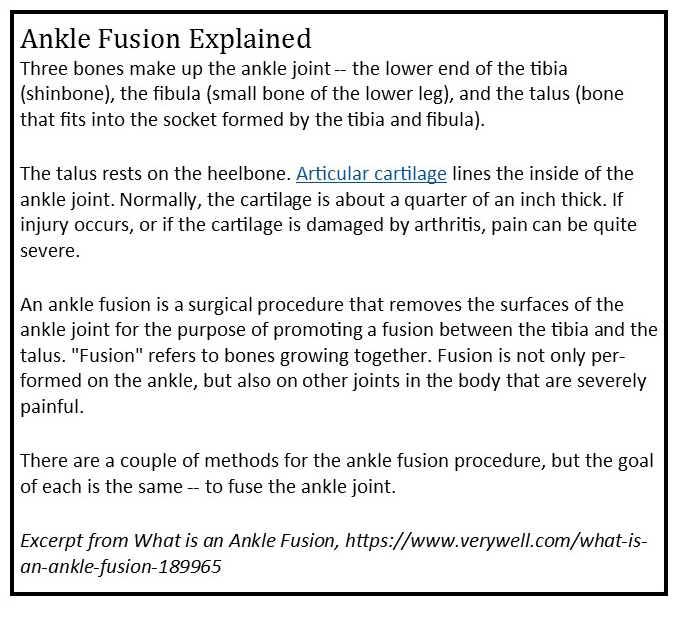
If you have been a reader for a while you know that six years ago I was riding my motorcycle when I was broadsided by a car.  As a result of that accident I had numerous injuries, including my left leg suffering three breaks and my ankle two breaks so severe they weren’t sure they could save my foot.   As time passed the ankle deteriorated to the point were it required an ankle fusion, which I had done on November 15, 2016.'As far as dancing goes, the doctor says you need to stay off my feet for 6-8 weeks.'

The procedure literally fuses my ankle at a 90-degree angle to the leg so I will never have flexibility in the ankle again.  The advantage, the ability to walk without pain. The disadvantage, it is a three-month non-weight bearing recovery.   I had to set up my house to live on the main floor for three months.  I have to depend on others to pick me up and drive me everywhere.

In my own domain I have mastered the basics of functioning on one leg within my own home.    Knee scooters are the next best thing since sliced bread.  My little scooter allows me to stand without risk of putting weight on the ankle while providing the ability to move fairly freely within the home, or any other building or surface where I am.  All I need is a transport person with the ability to lift my scooter in and out of their vehicle….and of course a vehicle that will hold the scooter!

I have mastered running my scooter with a hot cup of coffee in one hand, at least on most trips.  Carpet cleaning will be scheduled in the spring to remedy mishaps.  I can back up (frequently over my own toes, but we aren’t mentioning that), lift and drop the wheels to gain a better angle.  The scooter is handy when doing simple things like cooking and laundry.   I have also mastered locking the wheels, bending over with my knee on the scooter and placing my hands on the floor beside or in front of me to retrieve any item I may need.  This includes reaching to the back on the lowest level of cabinets.   I would give a safety specialist heart failure.

Now, all the wild maneuvers I have made which are outside the realm of safety have never caused me any issue.  Leave it to me to blow it when following all the rules.  Once evening I stood up to go somewhere within my own home I don’t know what happened but somehow I fell.  I thought I had my knee on the scooter when suddenly my body was tipping sideways.  I realized I was headed head-first into the exercise machine and grabbed onto the handle to avoid clobbering myself in the head while concentrating on keeping my leg bent and flat to the ground so as to lessen the impact and avoid putting weight on the ankle.  Once on the ground lifting myself back up using my right leg was a walk in the park.

That knee scooter is my lifeline to mobility and happiness no matter where I am.  It is wonderful for shopping, and allows me to easily navigate a restaurant when dining out.  I am held back only by my inability to manipulate it in and out of the vehicle and drive myself.

Now that winter has hit I am inhibited by my ability to operate the knee scooter  on ice and snow.  It tends to be uncooperative when offered those challenges.   For that reason I asked my daughter’s boyfriend to drop me at the front door a grocery store with my scooter, only to have him step out of the vehicle and immediately go down on the slippery surface.  Luckily he was not injured and quickly sprung back up off the parking lot while saying “I’m good.”    Needless to say precaution goes to the extreme when your support person wipes out in the parking lot and your foot hasn’t yet touched the ground.

Weather always offers its own set of challenges.  My daughter and I learned that when one of the platform steps she built for me to hop up and down the porch was covered in ice.   She was holding the edge of the walker to make sure it didn’t slide as I hopped down.  The problem arose when I leaned forward too much and our heads hit.   Knocking the assistant out with a head-butt is not recommended.  Luckily she maintained her footing and was none-the-worse for the knocked noggin.

"It's just a sprain. But let me put a cast on it so you won't look like an idiot for screaming like a freakin' schoolgirl."

Work is always interesting.  An empty trash can turned upside down makes a great footstool under your desk, but confuses clients who ask if that thing under there isn’t blocking the way of my leg.  An office chair on wheels is wonderful when navigating in a small space near your desk.  Boarding house reach also works beautifully for retrieving necessary materials no matter where I stand or sit.

Being immobile does have certain advantages.  My mail is picked up and delivered to the inside of my house.  I don’t have to stand outside and pump gas.  I don’t have to take out the trash.  I can make a “to do” list and have someone else do the running up and down the stairs to obtain whatever I need.   Unfortunately all the paperwork I thought I would be tackling full-force is not getting done as quickly as I had hoped.    Don’t ask…I haven’t thought up an excuse for that yet.

So the bottom line is, living life on one leg isn’t the easiest thing, but it isn’t the most horrid thing that could happen either.  Life is a Melting Pot of adventures, and this is just one of mine.


1 Comment

Filed under Coping, handicapp, Life Changing, Life is a Melting Pot

When the time arrived, I was fine

I had been nervous contemplating ankle surgery for the past two months.  The day finally arrived on November 15, 2016 and surprisingly I was very calm…well, except for a slight rise in blood pressure.  However that went down once they had successfully inserted the IV and I no longer had to fear a vein collapsing and causing problems.

I answered the name, birth date, and what procedure are you here for question numerous times — their way of making sure the patient is aware of what is going on around them.  My daughter had her three children with her and had to pick me up at 4:45 am to get me to the hospital on time.  Once we had me in my pre-surgery room I told her they might as well leave.  That would allow her to get the oldest two to school relatively on time and since it was 2-1/2 hours until my surgery would actually begin there was no purpose in her staying around.  My sister-in-law was scheduled to arrive and pick me up after surgery.

The time passed quickly and before I knew it they transferred me down to another pre-surgery room where I received a block on my leg from the knee down that would not wear off for 16-24 hours.    They had me place my initials on the appropriate surgical leg.  The block went in easily, but I am still wearing the wonderful iodine colored antiseptic they used before the procedure.  An ankle surgery and I have iodine up to the thigh.   When they placed the surgical hat over my hair I laughed and said “isn’t this wear I should have my cell phone to take the selfie of myself just before surgery?”

After that they must have run some good knock-out drugs through my IV, I remember them asking me to breath into a mask, and the next thing I know I was in a post-op room and everything was done.  I don’t even remember being in recovery.  I woke up about 1-1/4 hours after they had anticipated I would be ready to go home.  My sister-in-law had gotten lost and arrived almost right on the dot with when I was actually ready.

So how are things now that the surgery is done and I am home?   We discovered in the hospital that crutches are not my thing.  I also tried them at home and had difficulty as well.  I am very fearful of losing my balance on them and accidentally putting pressure on the leg, which is non-weight bearing for three months.  I am thankful that I have a walker I brought from my parents home, which is much more stable, especially for hopping up and down platform steps to get in and out of my house.  The knee scooter works very well for most things.

Getting dressed is tricky.  My ankle is bandaged/cast very thick.  Stretch sport pants stretch over it.  I’m not sure if I will be able to wear my dress slacks or jeans until after I have been re-cast at least once.  Dressing for work this coming Monday could be interesting.

I am doing well with pain control.  The block wore off in the middle of the night and I woke up in pain at 3:45 am.  A Norco and ice with elevation helped alleviate that within about 45 minutes and I was able to sleep again.  Pain pills are allowed every four hours as needed, I am only needing them about every five hours.

The next three months during which I am non-weight bearing and dependent on others to drive me will be frustrating, but once I am able to put weight on the leg things should get much easier.   I am looking forward to an active 2017 with a repaired ankle and no pain.

what-is-an-ankle-fusion

Leave a comment

Filed under decisions, handicapp, Life Changing, Life is a Melting Pot

The Gift You Are

This morning I was listening to some music and the song The Gift You Are by John Denver came on.  It is a wonderfully simple, basic song and yet it says so much.  Each person has value, each person is like a ray of sunshine in the world.  How often this is forgotten.

There are two things we tend to do.  The first is we tend to lose value in ourselves.  It is easy to become overwhelmed with the stresses of life, especially when things are not going according to the plan we laid out.  It is easy to lose faith in your own ability to accomplish those things that are before you.

Sometimes it is not so much losing faith in yourself as disconnecting from the world, withdrawing as you try to deal with whatever is before you.  That is when it is important to dream of a bright tomorrow and know that your dream will come true.  Stay focused, remember that you have the ability to accomplish whatever you set your mind to…remember The Gift You Are.

The second thing we as humans tend to do is judge others, or maybe I should say misjudge others.  We tend to make assumptions about the abilities of people who do not seem to have the same beliefs, mental abilities, physical abilities, or financial standing as ourselves.  When you do that what you are doing is devaluing the person.

Every person that you encounter has value, you just have to take the time to learn what that value is…maybe that value is they are just different from you and both of you can learn from the relationship.  A person with less mental capabilities may have strong determination to succeed, strong artistic talent, an unusual gentleness with animals.  Those are valuable qualities.   A person with physical disabilities may have undergone a struggle you are unaware of that shows their ability to persevere in times of struggle. These are valuable qualities, remember the gift that each person is.

People are people.  Every person has value.  Remember as you go through life The Gift You Are and remember that every person you encounter is also a gift and if they are struggling remind them of the gift they are.

Link to the song The Gift You Are by John Denver.  Lyrics are below.

The Gift You Are
by John Denver

Imagine a month of Sundays
Each one a cloudy day
Imagine the moment the sun came shining through
Imagine that ray of sunshine as you

Remember your darkest hour
With dawn still far away
Remember the way that you longed for mornings light
And think of yourself as a candle in the night

Make believe this is the first day
Everything all brand new
Make believe that the sun is your own lucky star
And then understand the kind of gift you are

The gift you are
Like the very first breath of spring
The gift you are
All the joy that love can bring

The gift you are
All of our dreams come true
The gift you are
The gift of you

You are the promise of all the ages
You are the Prodigal Son
You are the vision of prophets and sages
You are the only one

Dream of a bright tomorrow
Know that your dream will come true
Carry your dream in a sparkling crystal jar
Then you will know the kind of gift you are

The gift you are
Like the very first breath of spring
The gift you are
All the joy that love can bring

The gift you are
All of our dreams come true
The gift you are
The gift of you

The gift you are
Like the very first breath of springtime
The gift you are
All the joy that love can bring

The gift you are
All of our dreams come true, yes, they do
The gift you are
The gift of you
The gift you are
The gift of you

Leave a comment

Filed under assumptions, communication, Coping, disabilities, freindship, friends, friendship, handicapp, impressions, Life is a Melting Pot, reality

Traveling Solo

Memorial Weekend was not the first time I have ever traveled solo, but it is the first time I have done so since the passing of my husband in December 2015.  It was a good trip.  It was a fun trip.  It was a relaxing trip.  It was a lonely trip.    Rather than elaborate in paragraph form, I decided to do a list of bullets, highlights various activities, thoughts, and observations.


  • Destination Sault Ste. Marie via Newberry, Michigan.  For those who do not know, these cities are in Michigan’s upper peninsula and are a 5-1/2 to 6 hour drive from my home.
  • Even though I set the cruise control at 74 instead of my normal 85 I still made the trip in the projected six hour time frame going to Newberry on Saturday morning, and that included two stops along the way.  I made it home from Sault Ste. Marie in 5-1/2 hours on Monday with three stops along the way.
  • For those of you who do not know, I have a son in Newberry Correctional Facility and was going to visit him.  I was very surprised to find that it was not busy at all with visitors.  I had anticipated a wait due to the holiday weekend, but was pleasantly surprised to find I could get in right away.
  • Stopping along a two-lane road near a wooded area in the upper peninsula to shoot, from a distance, a large group of trilliums results in an attack of nats, no-seeums, or baby flies (I was told they were all three of those things).  The invasion was so intense that just getting in and out of my car resulted in a large quantity inside, which I was then rolling down the window and trying to shoo out as I drove away.  Maybe it would have been better had I not been wearing perfumed lotion?

    DSC_8365

    Trilliums along roadway. Photo by Grace Grogan, Copyright 2016.

  • Drinking a margarita with my meal resulted in me going from being a good tipper to an exceptionally generous tipper, but I’m sure the waiter was happy.
  • Having a GPS in the car is great, especially when it tells you your hotel is in one spot, which is a hotel under construction.  After placing a phone call you find out your hotel is about 1/2 a mile farther down the road and on the opposite side of the road.   However it did have a handy landmark – across the street from Walmart, and next to the State Police post.  Hmmmm, I never once saw a State Police vehicle the entire time I was there.
  • No-leak ice pacs will create a puddle in your fabric insulated lunch box if they thaw completely and will leave a stream behind you when you attempt to carry it.
  • On Sunday morning all the country music stations, actually almost all the radio stations in general, are either talk shows or church sermons/music.  I found a rock station out of Traverse City/Kalkaska playing music, so of course I had to crank it up and dance my way from Sault Ste. Marie to Newberry for my second day of visiting with Patrick.
  • My favorite place for breakfast in Newberry had several new books by local authors, but I only selected and purchased one.  That is what I most often buy when I travel, books written about the area in which I am visiting and/or by local authors.    I also purchased a book in a gift shop in Sault Ste. Marie by another local author.  DSC_9246
  • It is great to discover that your cousins from the Traverse City area happen to be visiting Newberry as well and you are able to get together for an impromptu dinner and chat for a couple hours.
  • I am a chicken when it comes to setting up my tripod and taking photos in the dark on an unlit street when by myself in an area with which I am not familiar when by myself.  I never gave it a thought when Ron was with me.
  •   The International Bridge looks awesome at night lit up in red, white, and blue, but I have no pictures (please refer to my previous post above).
  • At America’s Best Value Inn an accessible room is truly accessible.  When I am staying at a location where I am unsure on whether or not they have elevators I will book an accessible room to make sure I am not climbing stairs alone with my suitcase, etc.  (I have a very bad ankle).    Usually “accessible” is a room that is on the main floor or not far from the lobby or elevator, but beyond that nothing unusual.  The one in Sault Ste. Marie was wheelchair accessible, had a wooden floor, a fully wheelchair accessible shower, and a raised toilet seat.   Of course the best part was a king size bed, which I had all to myself.
  • I greatly overestimated how much time I would have in the room to read and/or write and packed way more items than needed.
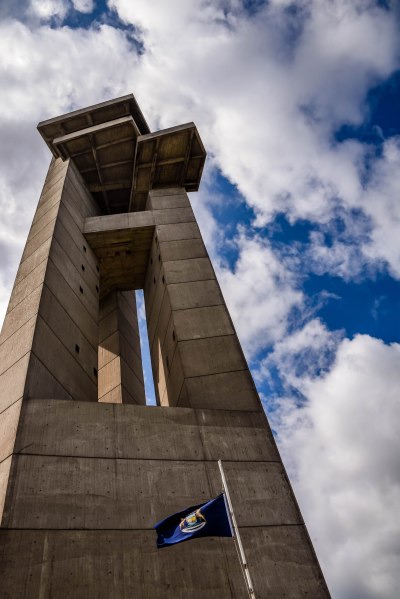
  • The Tower of History in Sault Ste. Marie provides a nice view of the entire city and locks.  There is a small museum on the main level.

DSC_8808

Tower of History.  Photo by Grace Grogan, Copyright 2016.

  • There is an island, Sugar Island, that is accessed by ferry that would be interesting to explore on a future trip.  It is inhabited by a small amount of people and also houses some businesses, but is also supposed to have nature areas.
  • It is hard to access and walk the areas near the water and locks when downtown.  The park where the locks are located is gated, has a security entrance, and closes at 9:00 pm.  The park itself is quite large and features two stories of viewing platforms for watching ships/boats go through the locks.  Unfortunately I missed seeing any go through.
  • Lockview Restaurant has very good fresh whitefish that can be ordered done in five different methods.  I chose broiled and it was very good.
  • Patrick informed me that Street Outlaws is an awesome program.  Monday night was a season premier that was two hours long.  I did enjoy the parts I saw, but unfortunately fell asleep and missed a good portion of the races.  It was rather cool that they were racing Detroit in that episode.
  • My ankle is impacting my decisions on what I do or do not do, which means it is affecting my day-to-day quality of life.  If it does not improve by fall I think I will need to go in for a consultation with my surgeon and likely have an ankle fusion done over the winter.  As someone who is terrified of surgery, that statement and acceptance of the likely need is huge.
  • I am a much more conscientious spender when traveling alone than I was with Ron.  This does not mean I was previously a spender by nature, quite the contrary.  I was and am more likely to put off doing things, whereas Ron was always more likely and willing to buy or do whatever he or I wanted and figure out how to pay for it later.  I guess he was either a good influence or a bad influence, depending on how you look at it.
  • DSC_8736

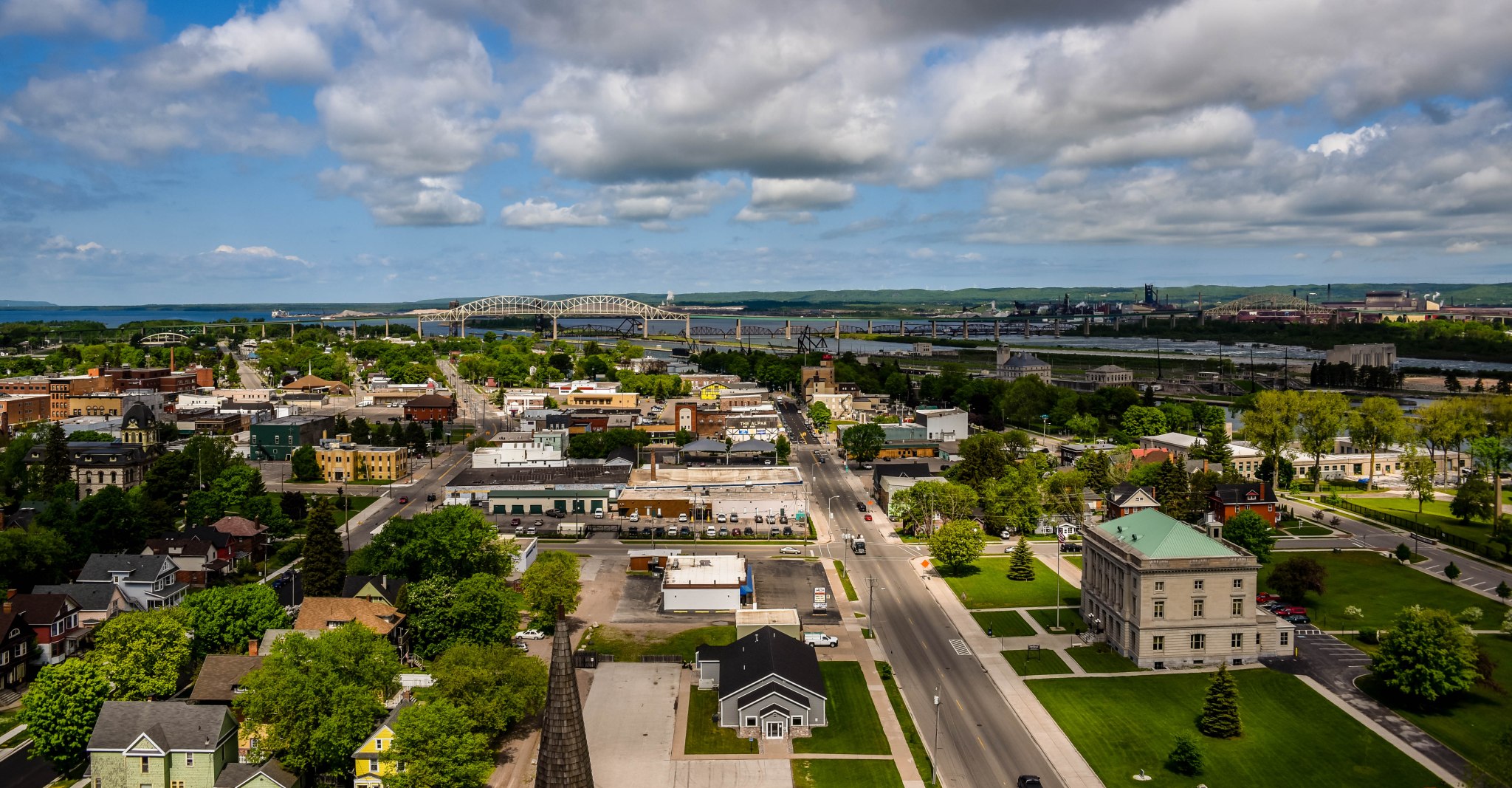
    Sault Ste. Marie and International Bridge.   Photo by Grace Grogan, Copyright 2016.

  • I need to plan a longer stay to do and see some things I want in Sault Ste. Marie.
  • Buying a bag of fresh on sale at the fudge shop is good.  Munching on it to stay awake all the way home and in the process eating the entire bag is not.  I had a miserable stomach ache later to remind me not to make that mistake again!

Overall I had a fun time this weekend.  I managed to traverse the city at night without getting myself horribly lost.  I forgot to take my book with me for the times I was dining, so utilized social media to keep myself entertained instead.   My first weekend trip as a widow was fun.  It was relaxing.  It was lonely.    The next one will be better.


2 Comments

Filed under decisions, exploration, habit, handicapp, Holidays, impressions, Life Changing, Life is a Melting Pot, Photography, travel, Upper Penninsula

Evolution of Women

The passage of time can make one forget the history they have lived through or witnessed.  We are so used to having women executives, doctors, police officers, professional athletes, newscasters, and more that we forget there was a time in the not so distance past when those type of careers were not possible for women.

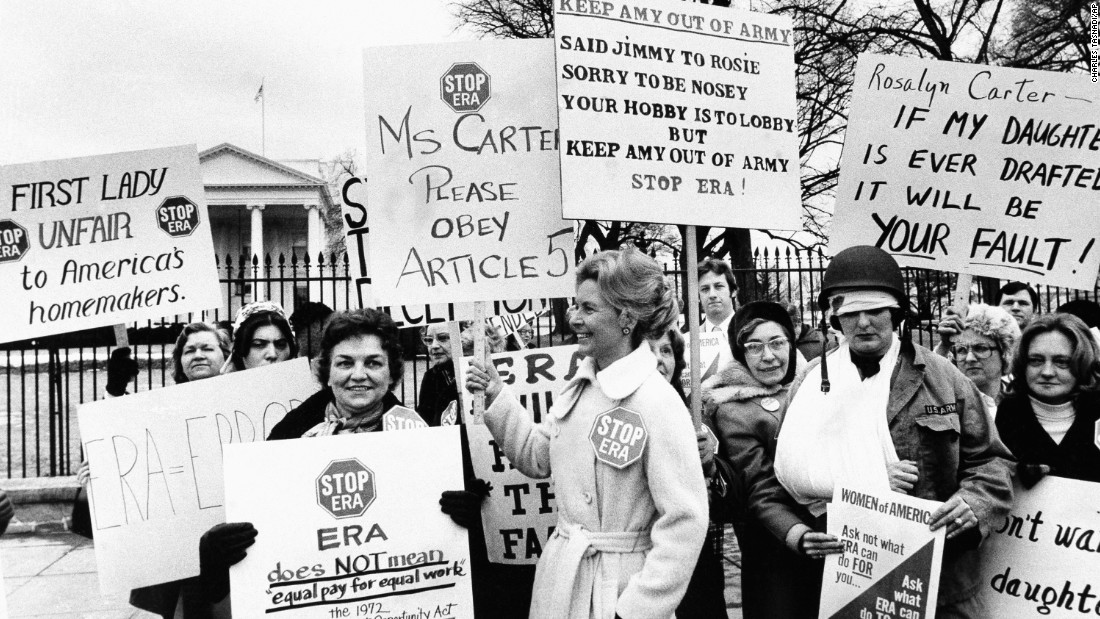
I stumbled upon some newspaper articles from 1972, 1976 and 1980 regarding women and their changing role in society.  It was interesting to read what people thought and accomplished back then.  My teen years, the 1970’s, were spent during a time of great strides in equality and achievement for women.   Not all believed those accomplishments were to the woman’s benefit.70's picketers equal rights

Women that were 92 years old and 73 years old contributed to an article written in 1976.  These women believed that in the past men treated women with much more respect.  Women were treated like fine porcelain, something special that a man was lucky to get.  These elderly women felt times were better when women were put on a pedestal and a “man was a man” and provider.  Women were homemakers, did not vote, did not work outside the home, and were never subjected to profanity.  Women were the protected sex.  70's screw sexists

But women did not want to be protected.  They wanted to achieve equal rights, and the 1970’s helped them march toward that goal.  An article I read from 1980 stated that the status of women has never been altered so suddenly or dramatically as in the 1970s.  Until I read the article it never occurred to me, but in brought back memories.  I do remember these things being achieved and making news.  Here are a few 1970’s achievements:

  • Equal Rights Amendment
  • Introduction of the word chairperson and Ms.
  • Legal permission for women to keep their names after marriage
  • Title IX of the Education Amendments in 1972 prohibited discrimination in education.
  • Boom in women participating in collegiate sports
  • Class action lawsuits for sex discrimination
  • Forbid sex bias with creditors against women — prior to this a woman had to obtain her husband’s consent to obtain credit in her own name.
  • Unemployment benefits could not be withheld from pregnant women
  • Pregnancy Discrimination Act in 1978 prevented women from getting fired from their workplace for being pregnant.
  • Equal Employment Opportunity Commission in 1980 was the first time the court recognized sexual harassment in the workplace.
  • 1972 – Ability to participate in the Boston Marathon.
  • Most states would recognize marital rape, but it did not become criminalized until 1993.
  • Roe v. Wade, 1973 protected woman’s right to have an abortion.
  • Girls obtained the right to play little league baseball.
  • Service academies were ordered to admit women
  • Women became more visible politically
  • Big gains in sports: women became jockies, professional players of basketball, tennis, golf and football;
  • Large gains in jobs:  firefighters, police, construction, building trades, airline pilots.

70's - picketers against eraEven with all those accomplishments there was still inequality.  Equal pay for equal work was not achieved in 1980.  Women still held was were termed “pink collar” jobs, meaning they still held the lesser level and lower paying jobs of secretary an clerk.  Women earned 57% of men’s wages; women with four years of college earn less than a man with an 8th grade education.
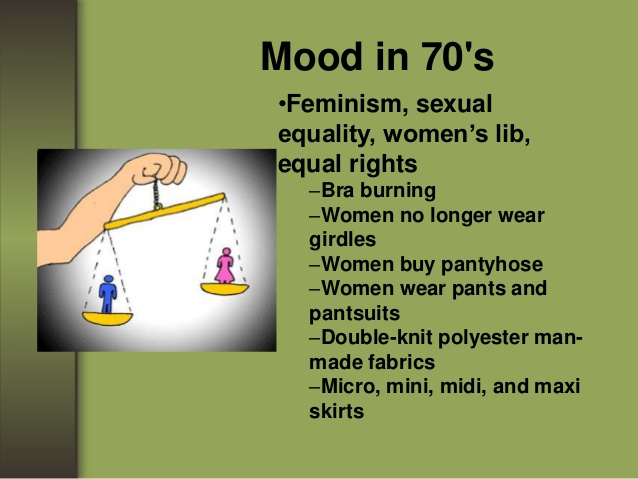
When something stirs a memory, other memories come into play.  I remember my parents discussing some of those achievements with disgust.  They too felt that women were overstepping their boundaries and becoming unfeminine.    Women today acknowledge their feminine side in dressing, but in the 1970’s the goal was to achieve a look similar to a mans.  Pantsuits were high fashion.  To accomplish your goals in a man’s world you must look and act like a man.  70's - Mood in 70's

The Evolution of Women has taken place, and the female gender continues to evolve as we achieve greater standing in the eyes of the world.  It will be interesting to see where this next decade takes us.

Leave a comment

Filed under career, communication, Coping, decisions, education, employment, handicapp, Life Changing, Life is a Melting Pot, memoir, time

Impression v. Reality

We all have an impression in our mind of what certain people should look like or behave like. Impressions that are imbedded in our minds from past experiences, misconceptions or any other wide range of factors. When we meet someone who does not meet the criteria our mind has set forth the reality is quite shocking. Chances are everyone who is reading this post has either been the subject of or subjected someone else to impressions that do not match reality.

Photo found on the internet that depicts the writer's impression of "grandma"

Photo found on the internet that depicts the writer’s impression of “grandma”

When I think of the term “grandmother” I picture my own grandmothers, grey haired ladies who did their hair with pin curls, wore full length aprons, never worked, never drove a car, and were great cooks.  That is the image that always comes to mind for grandmother, but I and numerous friends are the living reality that that is not the case now.  Modern day grandmothers work full time, drive cars, travel, are involved in activities, and although some of us may be great cooks we do not wear aprons.   So why can’t I shake the image in my mind of what a grandmother should look like?   Because that is what my grandmothers looked like and it is most likely what most grandmothers looked like in that era, but it is no longer the reality.

Motorcycle Gear - a photo of my friend Vicki dressed to ride.  Photo obtained from her Facebook page.

Motorcycle Gear – a photo of my friend Vicki dressed to ride. Photo obtained from her Facebook page.

My husband and I participating in a poker run.

My husband and I participating in a poker run.

What does a biker look like?  Back when I was in physical therapy following my motorcycle accident, one of the other patients asked what happened to me and when I told her she responded “You don’t look like a biker.”     She thought that people who rode motorcycles were always dressed in their leather vests, coats and biker boots.  I explained to her that people who ride motorcycles only dress that way when they are riding, but they are ordinary people who hold a variety of jobs, doctors, lawyers, salesmen, etc. and they wear normal, everyday clothing suitable to their profession.   When I was riding I did encounter people who treated me differently when I was dressed in my motorcycle gear, to the extent that I would say some were nervous.    What was funny was had I approached them without the leather vest or jacket they would likely have treated me the same as they were others.  Regardless of my clothing I was the same person.  People allow their minds to cloud reality and the impression they have set in their minds can cause them to prejudge.

handicap parkingI recently read a person’s letter to the editor in a newspaper in which the writer was commenting on a person who entered the McDonald’s he was at and voiced an objection about a non-handicap marked vehicle being parked in a handicap spot.  The writer was the person who had parked in that spot, did not have the state-mandated handicap tag but was on crutches and parked there.  In referencing the person that had objected to the spot being taken, the writer stated he “seemed to have nothing wrong with him other than being a bit overweight.”    What classifies a person as being handicapped?  They do not have to have an obvious physical disability that stands out and screams “I am handicapped.”  Persons who have obtained handicap markings for their vehicles have to obtain a doctor’s note specifying why they need handicap designation and then that document goes to the Secretary of State to obtain the appropriate tag for the vehicle.   Most people who do not know me do not realize that I have been in an accident and have a handicap parking designation on my vehicle.  I worked very hard to not have a limp after my accident, so when I walk into a building people do not realize that under my slacks I am wearing a compression sock and either a leather boot that supports my ankle or an ankle brace and that my ankle almost always has some level of swelling.    I have mastered the technique of getting in and out of my car so that people do not realize that to exit my vehicle I have to be able to open my car door all the way to put both feet firmly on the ground before standing up or that to get back into the vehicle I have to open the door all the way to get my left leg in a specific position to sit down.    My disabilities are for the most part not detected by the general viewer.  Therefore the impression of what a handicapped person is and whether or not they should be using a designated handicap parking tab and the reality of what may qualify a person for such a designation can be very different.

A wedding ceremony.  Photo by Grace Grogan

A wedding ceremony. Photo by Grace Grogan

I recently photographed a wedding in which I was shocked when I realized who the minister/pastor  was.  My impression of a clergyman is someone who is conservative, soft spoken, and always uses a traditional version of the bible.  Wrong!  The pastor/minister that conducted the ceremony was a very nice person, but did not fit my mind’s impression at all.    He was tattooed, had some piercings and used an electronic pad instead of a traditional bible.   I was very surprised when I realized he was the person officiating the ceremony and not a guest.   Had I met him on the street I would never believed he was a minister/pastor.  The combination of the handicap posting and my surprise at the minister/pastor’s appearance at the wedding is what led to the creation of this post.

Impression v. Reality can be a fun experience if you accept that what you mind thinks is correct may not be accurate.  The experience of learning how the mind plays tricks on you can be very enlightening.   If you have experienced the surprise of Impression v. Reality please share you experience here.

2 Comments

Filed under assumptions, decisions, handicapp, impressions, Life Changing, Life is a Melting Pot, mind, reality