Category Archives: disabilities

My First Long Cruise: A Journey to Hawaii

I had never been on a real cruise. I say that because back in the 1990s I went on a small 2-night cruise from Florida to the Bahamas that was part of a time-share promotion. It was a small ship, and you could easily walk from one end to the other in about three minutes. No one even worried about not knowing where their kids were because it was impossible to get lost. I always wanted to try a longer cruise, but I didn’t book one until 2025.

In 2025, Princess Cruises advertised a discount on a 16-day cruise to Hawaii departing the Port of Los Angeles in March 2026. Paul had been on several cruises in the past, but none this long, and he had never been to Hawaii. I had spent a week on Oahu, Hawaii in the 1990s, but had never been on anything beyond that 2-night cruise years ago. We decided we could cross something off each of our bucket lists, so we booked the cruise.

Having never been on a long cruise, I read everything, explored excursion and add-on options, and booked everything in advance. We elected to purchase a package that included specialty restaurant dining, up to 20 drinks per day, all digital photo downloads, and three printed 8 x 10 photos each. It was worth the price. Even though Paul does not drink alcohol and I am not a huge drinker (the most alcoholic drinks I had in one day was about eight), the specialty dining and photo downloads made it worth the price.

Korean Friendship Bell

Rather than fly, we made the four-hour drive from our home in Arizona to the Los Angeles Port. We arrived two days before the cruise and stayed at the Best Western Hotel only about 10 minutes from the port. The two-night early arrival gave us time to shop and explore the area before cruise time. This gave us some pre-cruise time to shop and explore the area, and guaranteed we wouldn’t run into any transportation delays on the day of embarkation. Very close to the port is the Friendship Bell, a gift from Korea, beautifully displayed and worth taking some time to visit.

Even the best laid plans can falter. The parking lot at the Los Angeles World Cruise Center was poorly marked and a bit confusing. We entered the lot by mistake, then had to exit to drive around to the ADA loading spot where I could drop off Paul, our luggage, and Paul’s walker before parking the car.

One requirement many may not be aware of is that you must scan a credit card when entering the parking lot. You must scan that same card to leave the parking lot at the end of your cruise. You do not receive any slip or receipt; the fees are charged to our credit card. Parking is $23 per day at the port, so you’ll want to add that to your overall trip expense if driving. Handicap parking was full, but I was able to park only two spots down from the end of the handicap parking.

Once I got back to Paul, we checked in. Princess is very well organized for processing their ADA passengers. Be aware that boarding is a long walk, even if you are ADA. Paul uses a walker for distance, but it is actually me who is placard-plated for handicap parking due to injuries I sustained in 2010. I made the mistake of wearing flip-flops; given the extensive walking, tennis shoes for added stability would have been better for boarding.

Before leaving home, you receive your medallions. The medallion is worn everywhere on the cruise. They are necessary to board the ship, serve as your room key and credit card on board, advise restaurants, servers, and photographers on the ship who you are and what packages (alcohol, restaurants, etc.) you have purchased. It allows not only the cruise line to know where you are and locate you on board if necessary but also allows you and your fellow travelers to track each other’s location on the ship. This can be both positive and negative at the same time. One day, when Paul and I were meeting for lunch, he looked me up and then sent me a message saying I was walking in the wrong direction. My reply: not for the ladies’ restroom!

On departure day, we knew we would likely not see our luggage for several hours, as they have hundreds of bags to deliver to their respective cabins. Don’t worry, they had it there in plenty of time for us to dress for dinner. In the meantime, the atmosphere is festive at the departure port, with a poolside band and a party vibe. Going on a 16-day cruise across the ocean from California to Hawaii, this was the last time we would see land for six days. You must also participate in the muster activity, so you know where to go in case of an emergency while at sea. Again, they know you have participated because you are required to scan your medallion at the muster station.

As a first-time cruiser, I have to say those days at sea were peaceful and relaxing. If you are a partier, there is always something to do on board. You can be as busy or as inactive as you choose every day. I decided to sign up for the Princess Cruise Book Club. There were only three meetings. The initial meeting was when you received the book, which is on loan only and not available for purchase. The club coordinator does not select the book; Princess Cruises tells them which book to use that month. Ours was Birnam Wood by Eleanor Catton. You then have a mid-trip meeting to review the book up to the point the slowest reader has reached. The final meeting is a full review of the book and when you turn in the books. I had never participated in a book club where everyone reads the same book, so I found the experience interesting.

Paul and I fell into a routine after a couple of days. We always started with breakfast in the banquet room, then we would usually go our separate ways to different activities. Paul enjoyed several presentations on Hawaii, ocean life, and more. I participated in jewelry-making classes, a few games, and spent a considerable amount of time reading. We would then meet after our morning activities, usually around 11:30-noon, at the International Café for lunch. This has a nice walk-up counter with sandwiches, soup, and desserts. There is also a spot to get coffee and a bar for alcohol.

After lunch, Paul and I again went our separate ways, either to additional presentations or just to relax and read. I quite often went to either the library or my favorite lounge on board, where they had a drink called The Dunes that I favored. Another favorite spot for afternoon reading was O’Malley’s, where I could get an Irish Coffee. Paul liked to go out on the deck to sit and read, but I found the ocean air cool so preferred to stay inside most of the time.

I would meet Paul in our room around 4:00-4:30 to dress for dinner. Except for the three formal nights, dinner was dress-casual, which meant slacks and shirts for men, and dresses or slacks with a nice blouse for women. While specific time dining is available in two of the dining rooms, we chose walk-in dining. That means you can arrive at any time during the dining room’s dinner service and be seated either as a couple or with other diners, depending on which seats are available. Sitting with a variety of others always makes for interesting conversation.

The optional package we purchased included dining at specialty restaurants on board. During our cruise, we enjoyed dinner at the Italian restaurant, the BBQ restaurant, and went to Crowley’s Steak House twice. It doesn’t matter whether you are in the dining room or at a specialty spot; the service and food are excellent. I always found it interesting that if you weren’t quick enough, the waiter would place your napkin in your lap for you. They also cleared and replaced all the silverware after every course, regardless of whether you had used it. The meals were relaxing and comfortable. There is also a buffet, which we went to for one meal, but we were not impressed. We found the food to be barely warm or cold, and finding a spot to sit was especially difficult. While some love this type of casual setting, we decided it wasn’t for us.

After dinner, we tried to catch the 7 pm show in the Princess Theatre every night. They have two shows per night, at 7 pm and 9 pm, but the early show seating was always packed so we tried to get there early. Every night of the cruise is a different show. After the show, Paul usually went up to our room for the evening. My plans varied depending on what else was going on. Karaoke was held in one of the lounges on certain nights at 10 pm, and I always made sure to go down for it. They had some talented singers on board, and it was always a good show.

We spent Easter on board, and we were surprised by how many children were aboard when the Easter Bunny appeared. They also had large, decorated chocolate eggs on display in front of all the food establishments. Princess does not cater to the family crowd, and is more of an adult-oriented cruise, which is nice for those without children. However, they do take special steps to make things nice for those with little ones.

The six days at sea went quickly, and we were arriving in our first Hawaiian Port. We had four Hawaiian islands to visit—Hawaii (the Big Island), Oahu, Maui, and Kauai; one port per day. We had pre-booked our excursions, deciding that we preferred morning tours and returning to the ship in the early afternoon. The variety of options was expansive, and we took care to choose based on our mobility concerns.

On Hawaii (the Big Island), we did a tour of the 1,000-acre O.K. Farms, which was well narrated by our driver and interesting. We were given a tram tour of various areas of the farm to view where they grow fruit, coffee, macadamia nuts, spices, and cacao (chocolate). The tour included a short walk among the spice trees to sample and learn about the various spices. We had a sampling of fruit and macadamia nut cracking. We visited two waterfalls on the farm, including the famous Rainbow Falls. It was an educational and fun excursion.

Paul and I at Rainbow Falls Overlook on O.K. Farms

On Oahu, we visited Pearl Harbor. There was a wide range of tour options available for this historical site. Unfortunately, the information on the Princess website listed far more items as part of the tour than what we received. Pearl Harbor has expanded massively since I was there in the 1990s. The three-hour excursion we booked did not even give us enough time to fully enjoy the film and the museum; we had to cut our time there short. Paul enjoys reading museum exhibits thoroughly, and I had to go back and point out that our three-hour time was running short and that he needed to hurry through them.

None of the excursions include a trip out to the Arizona Memorial; you are on your own to get tickets on a first-come, first-served basis once your bus arrives at Pearl Harbor. We elected to spend our time visiting attractions on the ground rather than standing in line in hopes of getting tickets. Even given our advance planning, we did not have time to walk around and enjoy other areas of the site beyond the movie and museum. The excursion we booked had also listed a drive past King Kamehameha’s palace, a tower, other sights, and a stop for a photo op in downtown Honolulu, but none of this occurred.

After returning to the cruise ship, we complained at the excursion booking desk that our outing did not include everything listed on the cruise line’s website. The woman at the excursion desk commented that there isn’t enough time to do all those things in three hours. I explained that it should not have been listed in the overview when I was booking, as we had no way of knowing that. The next day, we received a message on our cabin phone that Princess had refunded part of the cost of our excursion. If you are visiting Pearl Harbor, I recommend allowing several hours at this location. If, like us, you cannot navigate certain areas included in the preplanned excursions, such as the submarine, I would consider taking a taxi and handling Pearl Harbor on your own.

I can’t forget the chickens and roosters. Everywhere you go on the Hawaiian Islands you see chickens and roosters everywhere. Early Polynesian voyagers brought red junglefowel, called moa, to the islands over 1,000 years ago. Later, European and Asian settlers brought domestic chickens to creat a hardy hybrid. When major storms, including Hurrican Iwa in 1982 and Hurrican Iniki in 1992 smashed open backyard chicken coops and game farms, thousands of chickens and roosters escaped into the wild. Because there are no predators on the island, the chickens are able to multiply and enjoy warm year-round weather and plentiful food. We were told these wild chickens are not good for eating.

Our excursion on Kauai was the Wailua River Cruise and visit to the Fern Grotto. It was a relaxing and scenic trip up Hawaii’s only navigable river to the Fern Grotto, which is a natural lava-rock cave. The area is famous for its upside-down ferns and tropical plants. It is only accessible via the boat tour we took. The boat cruise includes live Hawaiian music, a hula demonstration, and narration about the local history and culture. After we departed the river cruise area, our tour guide stopped the bus so everyone could view Opackaa Falls. The name stands for falling shrimp, because the area was once plentiful with freshwater shrimp. There was also an overlook of the river we had traveled down during the river cruise.

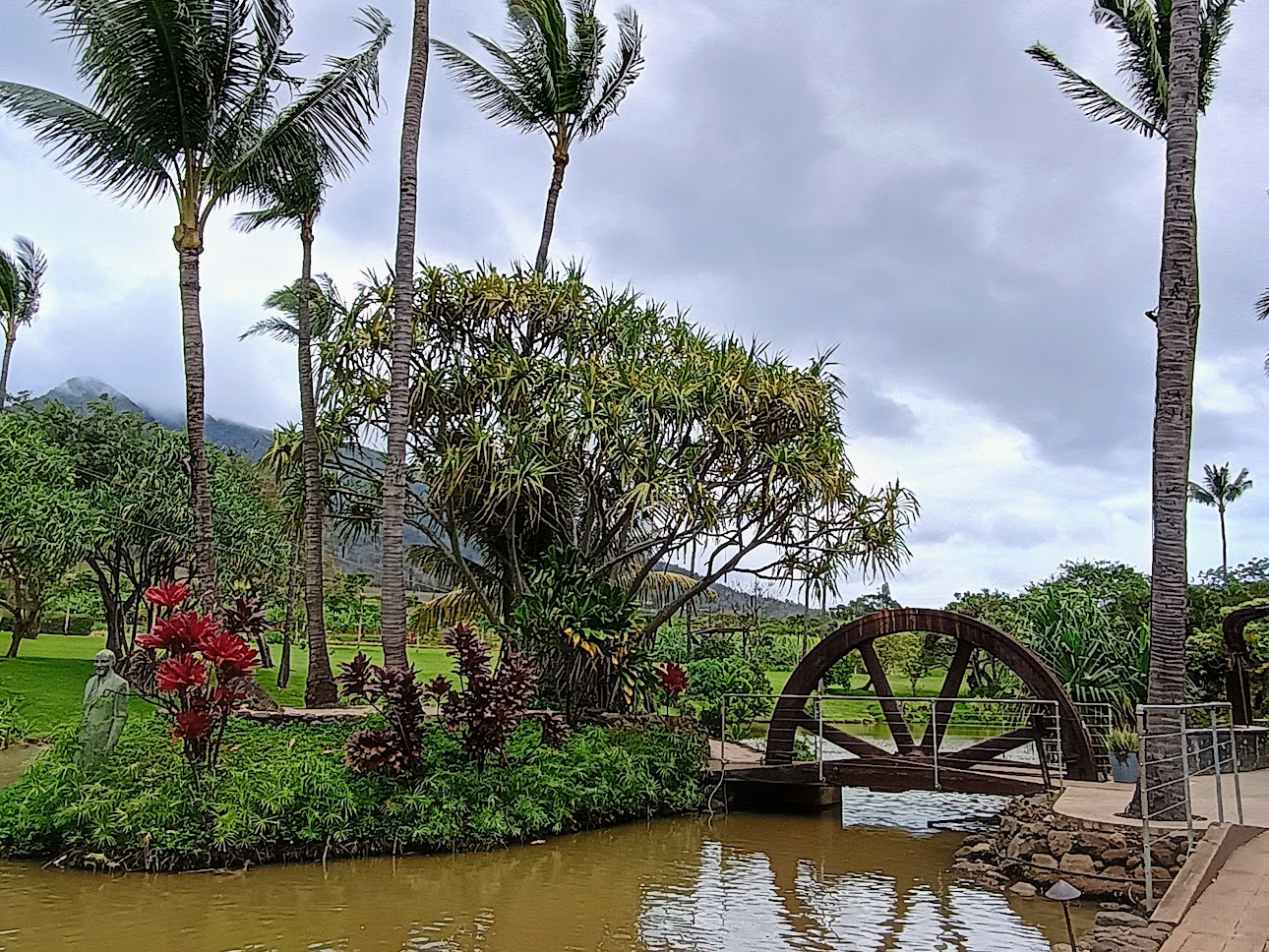
Our final stop in Hawaii was Maui, where our excursion took us to the Maui Ocean Center and the Maui Tropical Plantation. The Maui Ocean Center, also known as the Aquarium of Hawaii, showcases marine life found in Hawaiian waters. You will view coral reefs, sharks, rays, and sea turtles, as well as a wide variety of other fish and sea life. This is definitely a must-see on the island, and we enjoyed it immensely. The second stop on our Maui excursion was the Maui Tropical Plantation, which offers a tram tour through its lush gardens, a stop at an art carver’s area, and a demonstration of coconut husking. The farm grows over 40 varieties of crops and, for the more adventurous, offers ziplining. The gift shop carries a variety of snacks, food, and beverages.

The four days in Hawaii went by quickly, and we were soon back on the ocean for five days, en route to Ensenada, Mexico. Our time on the water was relaxing, and we fell back into the routine we had cruising from California to Hawaii. Most cruise lines are licensed outside the U.S. and must include at least one international port to maintain their licenses. For that reason, our Hawaiian cruise included a stop in Mexico.

Ensenada, Mexico, is located in Baja California. It is a nice little tourist town, and we purchased the Dancing Horses Excursion. To reach the location for this equestrian performance, you will travel through the Mexican countryside. A complimentary glass of Sangria was provided to all guests at the ranch; those who preferred an alcohol-free option received an alternative beverage. The thoroughbred horses are well-trained and perform rhythmic footwork set to traditional Mexican music. There was also time to walk around and view the horses in their stables. After the performance, we were taken back into the town of Ensenada, where we enjoyed tequila tasting. There is a wider variety of tequila flavors than I was aware of; many I really enjoyed, but the cost per bottle was higher than I cared to pay.

Sadly, our 16-day cruise was soon over, and we were back at port in Los Angeles. If you have never cruised, be aware that the night before disembarkation you must place all your luggage outside your cabin door by 6 pm. You then depart the cruise ship after breakfast, in stages, according to the group you have been assigned to. After being scanned out of the ship and through customs, you proceed to the luggage terminal to collect your suitcases.

This is where an enjoyable cruise turned into a departure nightmare. One of our suitcases was not in its designated spot. We walked around nearby but could not locate it, so we asked a worker for assistance. He finally found it across the building, but workers are not allowed to touch luggage, so I had to walk over to retrieve it myself. We then got a luggage porter to load our luggage onto a cart and transport it to the parking lot. They are only allowed to go just inside the fence area, not to your vehicle, so I left Paul, his walker, and all the luggage there and went to get the Jeep.

I walked in the direction I had come from when I originally parked the car. When I got to the end of the handicap parking, not only wasn’t our Jeep there, but I could tell the lot didn’t curve at that corner as it did where I had parked. That is when I realized that we had come back into dock two ports over from where we had left, for example, leaving for the cruise from Port 91, but returned to Port 93. I stopped someone who worked in the port and asked about getting to the spot where my vehicle was. I learned it was a considerable distance over, beyond a bridge, and there was no way to walk through the fenced area between the lots. I had to walk back the way I had come, around a fence, then across two parking lots to the far corner to reach my vehicle. Now, keep in mind, I am handicap-plated, and there were no trams at the port for transporting people to or from their vehicles. By the time I reached our vehicle, my ankle was extremely swollen and sore. I then had to navigate the Jeep back across those two lots and get into line to pick up Paul and the luggage. Not a good way to end a fabulous cruise!

I was not happy that we returned so far from our departure location and there were no accommodations for getting people to their cars. While I don’t hold Princess 100% responsible, I assume they have considerable pull with the port authority given the number of cruises they have going in and out. I made sure to let Princess know about this huge problem when I filled in my survey.

Overall, my opinion is that my Princess Cruise was a fantastic trip and I would 100% cruise with this line again.

Leave a comment

Filed under Activities, disabilities, environmental, events, handicapp, Kitchen, Life is a Melting Pot, memoir, nature, spring, summer, tourism, travel, vacation

Learning History Every Month

I have been writing a series of articles on special days or weeks each month. It is a fun undertaking; I find it interesting what I have learned about each of these special “holidays.” Here is a quick overview of the articles published so far in 2026. I am providing a short overview of the content. I hope you find the subject interesting enough to click the links and read the articles in full.

Valentine’s Day: I kicked it off by writing about Martyrs, Fertility, and Greek mythology: the strange history of St. Valentine’s Day, which begins on the cover page of the February Edition of The Freshwater Reporter. You will learn about the saints the day is named after and the day’s pagan connections, including the cute, chubby Cupid we are all familiar with. I then cover the American Valentine’s Day card giving craze that empties our pocketbooks each year.

Michigan Wildfires: Turn to page 3 in the March edition of The Freshwater Reporter to learn about Michigan’s Historic Wildfires: What We Know Today. In this article, I cover the facts about Michigan’s history of wildfires, including its holding two spots on the list of the 10 Worst Wildfires in U.S. History. Learn about three large wildfires that have taken place in Michigan: The Great Michigan Fire, Oct. 8-10, 1871; The Peshtigo Fire, Oct. 8, 1871; and The Thumb Fire, Sept. 4-6, 1881. Although those three fires occurred in the 1800s, Michigan wildfires continue to affect the state, averaging 8,000 to 10,000 annually.

Easter Bunny and Easter Eggs: The History of the Easter Bunny and His Eggs begins on page 8 of the April edition of The Freshwater Reporter. It is a fun look at the history, with me being surprised that it began in the Neolithic era of Europe with a religious ritual in which hares and humans were buried side by side because the hare represented rebirth. When we move on to decorating and coloring Easter eggs, you will learn that these practices date back to the 13th century, when eggs were forbidden during Lent. The traditional Easter Egg Hunt began in the 1600s in Germany and came to the U.S. in the 1700s. History sheds new light on what we consider simple, fun events.

Foster Care: In the May edition of The Freshwater Reporter, I shared The History of Foster Care, which begins on page 5. There are over 365,000 children in foster care throughout the U.S., and understanding the origins of this organization and what it represents is important. The article covers the early placement of children and its evolution into a system of care. Foster care systems are similar throughout the United States, so when learning about the childcare network in Michigan, you can assume similar procedures are used in other states. The article concludes with information on the effects of foster care on children and how people can become foster parents.

Juneteenth: For the month of June, I wrote about Juneteenth and Its Historical Significance, which begins on the front page. This is a federal holiday of historical significance, yet many Americans do not understand its purpose. The day honors Black Americans who suffered enslavement over a 400-year period. The date commemorates Emancipation Day, specifically the day slaves in Texas learned they had been declared free two years earlier. Learn how even the 13th Amendment, which made emancipation national policy, contained a loophole that allowed for black people to be used for prison labor. You will learn about the education barriers they encountered, how these barriers were recognized, and how the wealthy attempted to help them overcome these as far back as 1861. It took 156 years for Americans to recognize the significance of Juneteenth and establish it as a federal holiday; today, only 30 states recognize it as a paid legal holiday for workers.

Disability Pride Month: I sidestepped the typical Independence Day history and chose to write In Celebration of Disability Pride Month, beginning on page 5 in the July edition of The Freshwater Reporter. July was selected as Disability Pride Month to coincide with the anniversary of the Americans with Disabilities Act (ADA). The purpose is to honor the experiences, history, and achievements of the disability community. You will learn the background of this month’s significance, including centuries of disabled people being segregated from the public, denied education, stripped of rights, and often institutionalized. The Rehabilitation Act of 1973 was the first civil rights law that prohibited disability-based discrimination. How people in the community perceive and communicate with people who have disabilities is the key to overcoming negative attitudes and stereotypes. Physical barriers to mobility continue to impact their ability to enjoy everyday tasks and enjoyment. Learn more about the challenges these people face and what can be done to help anyone you know who deals with visual, hearing, or physical challenges.

I hope you enjoy history as much as I do, take the time to read some or all of the articles above, and share your impressions with me in the comment section below.

Leave a comment

Filed under Adoption, assumptions, Child Protective Services, children, Coping, CPS, decisions, disabilities, Discoveries, education, employment, events, Family, Festivals, Foster Care, handicapp, Holidays, impressions, Life Changing, Life is a Melting Pot, Michigan, reality, work

Shedding Skin and Learning to Walk

Two steps forward, one step back.  The circle of life can make you feel as if you are repeating a vicious cycle and the only hope is that you will somehow break free of the rotation and get on the straight path to success.

Such is my life this past week, which I have spent shedding skin and learning to walk.  Sound strange doesn’t it?  On the 15th of November I had surgery, an ankle fusion.  It was a three-month, non-weight bearing recovery and when you are living alone that is enough of a challenge, not to mention isolation.  On the 10th of February I was told that my ankle is completely healed, I can’t hurt it.  The hard cast was removed and I am free to walk on it.walk-fly-crawl

I was warned that the foot would be very sensitive.  They weren’t kidding!  Walking is agony.  I am so glad I still have the medical cane from the original accident six  years ago…the kind that has four feet and stands on its own.  The ankle doesn’t hurt – the foot itself does.

How bad is the foot pain?  I hate shoes, they are generally the first thing I shed when I walk in the door.  However my tennis shoes provide padding, much needed padding.  I wore shoes inside my house all last weekend, and I am wearing tennis shoes to work this week.  Once I take the shoes off inside my house I haven’t been able to walk on the cane; I have had to use my knee cart.  Things are improving though.  This morning I was able to walk, barely, with my cane when barefoot.  Tonight barefoot meant the knee cart.  I am hoping by the weekend I will finally be able to make it up the stairs and into my own bed.

At least I have stopped leaving a dead-skin trail, sort of.  I had never been in a hard cast before, and after three months the leg and foot were extremely dry.  I felt like a crocodile that was shedding it’s skin.  I discovered moisturizing shaving cream was the best thing for washing it; better than a moisturizing soap.  I now treasure my 24-hour body cream more than I ever have.  I’m still slightly flaky, but not as bad — no comments from the peanut gallery please.

So I am now shedding my skin and learning to walk.  I haven’t bounced back as quickly as I had hoped, but I am seeing progress every day.  This morning I was able to walk out the front door and onto the porch by myself, but needed my bag carried.  I hope that after a few more days I’ll be able to carry my own things in and out of the house and start driving myself to work.  That is if they don’t kill me in physical therapy, which begins on Thursday.

1 Comment

Filed under Coping, disabilities, handicapp, home, Life Changing, Life is a Melting Pot

The Gift You Are

This morning I was listening to some music and the song The Gift You Are by John Denver came on.  It is a wonderfully simple, basic song and yet it says so much.  Each person has value, each person is like a ray of sunshine in the world.  How often this is forgotten.

There are two things we tend to do.  The first is we tend to lose value in ourselves.  It is easy to become overwhelmed with the stresses of life, especially when things are not going according to the plan we laid out.  It is easy to lose faith in your own ability to accomplish those things that are before you.

Sometimes it is not so much losing faith in yourself as disconnecting from the world, withdrawing as you try to deal with whatever is before you.  That is when it is important to dream of a bright tomorrow and know that your dream will come true.  Stay focused, remember that you have the ability to accomplish whatever you set your mind to…remember The Gift You Are.

The second thing we as humans tend to do is judge others, or maybe I should say misjudge others.  We tend to make assumptions about the abilities of people who do not seem to have the same beliefs, mental abilities, physical abilities, or financial standing as ourselves.  When you do that what you are doing is devaluing the person.

Every person that you encounter has value, you just have to take the time to learn what that value is…maybe that value is they are just different from you and both of you can learn from the relationship.  A person with less mental capabilities may have strong determination to succeed, strong artistic talent, an unusual gentleness with animals.  Those are valuable qualities.   A person with physical disabilities may have undergone a struggle you are unaware of that shows their ability to persevere in times of struggle. These are valuable qualities, remember the gift that each person is.

People are people.  Every person has value.  Remember as you go through life The Gift You Are and remember that every person you encounter is also a gift and if they are struggling remind them of the gift they are.

Link to the song The Gift You Are by John Denver.  Lyrics are below.

The Gift You Are
by John Denver

Imagine a month of Sundays
Each one a cloudy day
Imagine the moment the sun came shining through
Imagine that ray of sunshine as you

Remember your darkest hour
With dawn still far away
Remember the way that you longed for mornings light
And think of yourself as a candle in the night

Make believe this is the first day
Everything all brand new
Make believe that the sun is your own lucky star
And then understand the kind of gift you are

The gift you are
Like the very first breath of spring
The gift you are
All the joy that love can bring

The gift you are
All of our dreams come true
The gift you are
The gift of you

You are the promise of all the ages
You are the Prodigal Son
You are the vision of prophets and sages
You are the only one

Dream of a bright tomorrow
Know that your dream will come true
Carry your dream in a sparkling crystal jar
Then you will know the kind of gift you are

The gift you are
Like the very first breath of spring
The gift you are
All the joy that love can bring

The gift you are
All of our dreams come true
The gift you are
The gift of you

The gift you are
Like the very first breath of springtime
The gift you are
All the joy that love can bring

The gift you are
All of our dreams come true, yes, they do
The gift you are
The gift of you
The gift you are
The gift of you

Leave a comment

Filed under assumptions, communication, Coping, disabilities, freindship, friends, friendship, handicapp, impressions, Life is a Melting Pot, reality

Learning to Live in a Language Based World

I am not a big fan of “Awareness” months, but I am going to make an exception.  I have a 9-year old grandson, Austin, who has Autism Spectrum Disorder.  When I was in college a few years back I was required to write a paper for an English and Culture class.   I chose to write about the difficulties people with Autism endure as they typically struggle with both social skills and communication.  Autism is a spectrum disorder, no two people are the same.  Each person is unique in which areas they are most challenged and to what degree.

Austin is doing well.  He is in a special needs class in second grade.  He is learning to read and has greatly expanded his ability to communicate and express needs since I wrote the paper.  What people need to understand is that although people with Autism have learning difficulties, they are intelligent people who are misunderstood and frequently have their abilities underestimated.  The trick is figuring out what needs to be done to communicate and get the message across to them.

I hope you will take the time to read the article I have posted below.  I would love to hear from those who deal with people who are autistic, people who themselves are autistic, or anyone who has read and learned about the struggles these people encounter in their every day lives.

Learning to Live
in a Language Based World

Imagine you need something but are unable to formulate the words to express your needs. How do you get someone’s attention? How do you communicate your wishes? This is the frustration a person with autism spectrum disorder deals with their entire life.

Cultures throughout the world are based on verbal communication and social interactions. A person with autism struggles to learn language, has difficulty holding a conversation, and lacks social skills. The inability to communicate can leave a person feeling lonely and isolated. An autistic person’s ability to live successfully in a language based world requires them to adjust to living outside their comfort zone. To help people with autism accomplish that goal, society needs to develop an understanding and compassion for the needs, feelings, frustrations and learning style of people with autism spectrum disorder.

As many as thirty percent (30%) of people with autism are unable to speak (Apps for Autism, 2011). Children with autism are found to have hyper-acute hearing that creates an inability to filter out and properly process ordinary everyday sounds. Buzzers, alarms, a dishwasher running, a lawn mower being used, and all the other miscellaneous sounds that the average brain filters out may sound as if they are on a super high volume and jumbled together to the autistic person.

The inability to properly process auditory input results in an inability to understand the meaning of words, an inability to express needs and wants, and a lack of social skills that leaves the autistic person feeling detached and unconnected to “normal” people (Notbohm, 2005). As Temple Grandin, who is autistic, said “There’s nothing more frustrating than not being able to communicate” (Valentine, 2006, para. 11).

Ellen Notbohm, author of Ten Things Every Child With Autism Wishes You Knew, stated “The ability to communicate, whether through spoken language, pictures, signing/semaphore or assistive technology, is bedrock” (2005, pp. xvii-xviii). “Words are the essential building blocks of spoken communication…” (McGregor, 2008, para 2). A child who lacks social skills, including the ability to read body language and facial expressions, finds communicating and fitting into society very difficult. The autistic child often stands out in society as a social oddball (Notbohm, 2005).

Children with autism are considered social outcasts because they lack the ability to communicate verbally and display behaviors that help them cope within their environment. People make negative assumptions that a child with autism is unwilling to cooperate, temperamental, and lacking in intelligence. Autistic children are known for their “meltdowns”. A meltdown is an autistic child’s manner of communicating to the outside world that there is something wrong. The child can be hungry, thirsty, cold, tired, or any other range of things. The adult has to figure out what the trigger to the meltdown is because the child is unable to express their need. It is important to remember that behavior is a way of communicating, and that a child who lacks verbal skills is unable to tell you what is wrong (Notbohm, 2005).

As the grandmother of an autistic child I have witnessed meltdowns and how they can easily be remedied by analyzing what the trigger is. Meltdowns in public can be exceptionally frustrating when people who do not know the child feel free to make rude, insulting remarks about their behavior. When my grandson, Austin, was two years old I was trying to put him into his car seat and he was arching his back, crying and kicking. “All behavior is communication” and “all behavior happens for a reason” (Notbohm, 2005, pp. 21, 22).

Austin’s behavior was because he hadn’t said goodbye to grandpa, who had ridden to the park in a different vehicle. Austin’s behavior confused me; what upset me was a man parked beside us. As I lifted Austin out of the car during the meltdown the man said very clearly “what a spoiled brat.” Looking back I wish I had taken the time to express what I thought of his rude behavior and assuming comments about a child he did not know. The man’s behavior is best summed up by Temple Grandin, “Normal people have an incredible lack of empathy…they don’t have much empathy for the autistic kid who is screaming at the baseball game because he can’t stand the sensory overload. Or the autistic kid having a meltdown…I’m frustrated with the inability of normal people to have sensory empathy.” (Valentine, 2006, para. 24 ). A child who lacks the ability to communicate normally in a social situation needs understanding and assistance. They should not have to endure insults and rejection from adults.

It is important to create circumstances where the autistic child can practice social skills with success. “Social navigation is necessary at every turn in our lives: at home, at work, at school, in our travels about the community, in our shopping, recreation and worship.” (Notbohm, 2005, p. 71) It is important to understand that fitting into society socially requires a tremendous amount of effort from the person with autism. The autistic person must learn to cope with the demands of society while trying to understand what is expected of them and using what abilities they have to make those adjustments. (Notbohm, 2005).

In Ten Things Every Child With Autism Wishes You Knew the seventh item on the list is “Help me with social interactions” (Notbohm, 2005, p. xxviii). A child with autism may feel lonely and left out because they lack the social skills to enter a play situation or start a conversation. They may not be able to talk to the other children and are unable to read facial expressions, body language or emotions of others. It is easy to assume the child doesn’t want to participate in activities, but what they really need is guidance on how to join the fun.

The way to successfully teach a child with autism spectrum disorder is to focus on their positive abilities. The autistic child may lack the ability to process verbal information, but they are usually very good at paying attention and are visual learners (Gordon, 2007, para. 3). The sixth item listed in Ten Things Every Child With Autism Wishes You Knew is “Because Language is so difficult for me, I am very visually oriented. Please show me how to do something rather than just telling me.” This is followed by the seventh item, “Please focus and build on what I can do rather than what I can’t do” (Notbohm, 2005, pp. xxvi, xxvii).

A child cannot learn and function well in an environment where they are made to feel that they are not good enough. Often peers, teachers, siblings, and relatives focus on what the child is not doing, rather than what the child’s strengths are (Notbohm, 2005). A computer can help an autistic person with both learning and social skills. The computer is not critical and has unlimited patience, allowing the child to repeat skills as needed until the task is mastered.

The Apple iPad and other tablet computers are offering special applications that allow people with autism to communicate. By using pictures or characters on the computer screen the autistic person is able to make selections and use the computer to “speak” on their behalf. The computer allows the autistic person to voice their thoughts and needs, helping them to function in society.

A 60 Minutes episode called Apps for Autism: Communicating on the iPad featured the utilization of computer applications for people with autism. The use of tablet computers was demonstrated by Joshua Hood, 27 years old, who was unable to communicate until he received the Apple iPad. Joshua is now able to go to a restaurant and use the picture apps on the iPad to order his own meal. Prior to receiving the iPad Joshua rarely looked at people, but the iPad has given him the ability to interact with others. His therapist, Tammy Taylor, said “He’s part of the community. I mean, communication is the essence of being human. And here he is, communicating fully now” (Apps for Autism, 2011).

The use of computer applications is allowing professionals to realize how intelligent people with autism are, people that were once considered to have below average intelligence. At the Beverly School in Toronto, Canada half the students are severely autistic. The impact of the iPad is demonstrated by its effect on the attention span and willingness of those children to socialize. Ten year old Nuno does not talk and was believed to have the intelligence of a toddler. An iPad vocabulary application was used to test Nuno. The school was amazed at Nuno’s vocabulary and learned that he has a love of classical music and opera (Apps for Autism, 2011).

Whether a person with autism is learning to communicate through the use of a computer or through traditional learning methods, it is important to understand the stages of their learning and the need to guide them in developing social skills. Speech and language deficiency are defining characteristics of autism spectrum disorder, but it is important to remember that each person is an individual, with their areas of difficulty and ability to learn unique to them. An awareness of whether the person is mindful of being spoken to, if they try to communicate in any form, and whether they are attempting to use speech is important. If they are talking, are they speaking naturally or are they echolalic? A child that is echolalic will repeat sounds or words that are spoken to them, which indicates that the child can perceive and articulate speech (Gordon, 2007, para. 5).

A child that is using echolalia to communicate can create the impression that they are understanding and using language in a comprehensive manner, when in reality they are not. Temple Grandin was teased as a teenager because when she talked she reused the same phrases, and kept talking without letting other people respond.

Some people with autism do not have a problem with the mechanics of language, but they do not understand the process of having a conversation (Hamilton, 2006). Echolalia are messages that are memorized from the world to compensate for language deficits. These can be groups of words they have heard people say, or phrases from TV shows or movies. The person with autism does not necessarily understand what they are saying, but they know that a specific set of words can be used to provide a reply, ask for something, protest, or deny requests (Notbohm, 2005). This was used by my grandson when he needed help. It started when Austin would need assistance on the computer, he would come up and rub a person’s hand or arm and say “sorry”. We would respond “what do you need?” and taught him to reply “help on the computer”. It wasn’t long before that memorized set of words was used for anything he needed help with, be it the computer, opening a door, or getting something from the refrigerator. “Help on the computer” was a set of words that got someone to come and give assistance.

Whether a person with autism is learning to speak, using a computer for communication, or exercising echolalia to converse, it is important to remember that “…having a means of functional communication, whatever it may be, is what’s truly essential, to any child, but even more so to the child with autism” (Notbohm, 2005, p. 42). It is also important to reward the autistic child’s efforts to communicate in a positive way. My daughter always asks Austin if he wants chicken nuggets, then she makes the decision on whether to get him just the nuggets or a happy meal. A few weeks ago she asked Austin if he wanted chicken nuggets and he said yes. When she pulled into the McDonald’s drive-thru from the backseat she heard “chicken nuggets, French fries, chocolate milk, trick-or-treat”. His statement was rewarded with a full happy meal, all the items he requested in the Halloween trick-or-treat bucket. Verbal interactions and positive results help the child learn not only the mechanics of speech, but also how to use them to function in society.

Understanding the way an autistic person processes information and the way they are best able to learn is imperative to helping them fit into their community. Whether the person is able to converse, speaks in echolalia, utilizes a computer application, or demonstrates coping behaviors, it is important to recognize and accept them as a growing, feeling, human being who is trying to adapt to the world around them. As Temple Grandin said, “normal people find it difficult to put themselves in an autistic person’s shoes and see the world from their perspective” (Valentine, 2006, para. 4). For a person with autism spectrum disorder to live successfully in a language based world, society must learn to recognize the needs, feelings and frustrations these people experience on a daily basis and make appropriate accommodations for them to function within their community.

References
*  Apps for Autism: Communicating on the iPad. (2011, October 23). 60 Minutes. New York, New York. Retrieved October 23, 2011, from http://www.cbsnews.com/video/watch/?id=7385686n&tag=contentmain;contentBody

*  Gordon, B. (2007, April 2). Speech and Language Problems in Autism Pectrum Disorders. Retrieved from Kennedy Krieger Institute: http://www.iancommunity.org/cs/articles/speech_and_language_problems

*  Hamilton, J. (2006, July 9). Autism Reveals Social Roots of Language. Retrieved from NPR: http://www.npr.org/templates/story/story.php?storyId=5503688

*  McGregor, K. B. (2008, October 6). Learning Word Meanings. Retrieved from Kennedy Krieger Institute: http://ww.iancommunity.org/cs/articles/wordmeanings

*  Notbohm, E. (2005). Ten Things Every Child With Autism Wishes You Knew. Arlington, Texas: Future Horizons, Inc.

*  Valentine, V. a. (2006, July 9). Q&A: Temple Grandin on Autism & Language. Retrieved October 2011, from NPR: http://www.npr.org/templates/story/story.php?storyId=5488844

Leave a comment

Filed under assumptions, children, Coping, decisions, disabilities, Family, grandchildren