Category Archives: habit

I’m a Bookaholic

I’ll admit, I’m a bookaholic—a person with a deep love for reading and an insatiable desire to buy and collect books, or both. There are various other terms for people with this obsession, depending on how far they take it. For instance, a bibliophile loves physical books, viewing them as objects, while a lectiophile’s affection is for the act of reading in any form, be it books, magazines, blogs, etc. Tsundoku is a Japanese term for people who habitually buy books but never read them.

My book collection is not as extensive as it used to be, and that includes both read and unread volumes. When I lived in my house, I had tubs of read books I didn’t want to part with stored in my basement. In my bedroom there was a 7-foot bookshelf, double- and triple-stacked with unread books, and still I purchased more.

When I sold my house to live and travel full-time in a 35-foot motor home, I was forced to reduce my collection. It was a long, painful day of sorting and re-sorting until I reduced my collection down to fit into a plastic tub that would hold what I had room for. I laid out all the unread books on my bed and sorted them into two piles, the ones I could part with, the ones I wanted to keep. The “keep” pile didn’t fit into the plastic tub. I then took my “keep” pile and sorted it again into keep and part-with piles. I repeated this process about four times, each more painful than the prior one, before they finally fit into the plastic tub. Believe me, it was packed tight, filling every little space to get as many in as possible. 

Most of the books that didn’t make it into the plastic tub, went into my estate sale. Most of the tubs in my basement went into the estate, sale, but some books I gave to my kids. There were many good books, copies with author signatures, the complete works of Mark Twain, Poor Richard’s Almanacs, the original, hard cover set of The Chronicles of Narnia, all of the hardcover Children’s Book of the Month Club books from when my children were growing up, and more. I gave my son his favorite childhood book, Home for a Bunny, falling apart from continuous use.

 Now I own a park model, which is only 406 square feet of living space, so my storage options  are still tight. The RV Park where it is located has a free book exchange, and there are a lot of readers in the park. I regularly contribute books I’ve read and pick up books I haven’t read. My constant accumulation doesn’t stop there; I have a habit of buying books whenever I travel. My  newest obsession is visiting used bookstores, so I doubt I will ever run out of reading material.

Image shows the author's bookshelves inside their park model home. This provides a visual confirmation on the limited space they have for storage.
The bookshelves in my park model. The top right is almost empty because that is where I place the books as I finish reading them. When the shelf is full, I determine what to keep and put those into a tub in my shed, then donate the rest. The refilling of the shelf with read books begins again.

I recently stumbled across an article titled The Benefits of Buying Books You’ll Probably Never Read. I never purchase a book without the intent of reading it, but I know that I may not read it immediately, or a year from now, or five years from now. I sometimes own books that are 10+ years old before I read them.  Why? The topic is of interest to me, but I may not be in the mood to read it immediately. I like to “shop” my bookshelf to see what catches my eye as a read-now topic when selecting my next book. Remember that tub I brought from my home in 2019? Most of those books are still in it because I had an additional 15-20 books I brought and placed inside the RV for easy access, plus I purchase additional books every year during my summer travels. I periodically pull a few out of that plastic tub, but who knows when I’ll get through them all.

As I said above, I’m a bookaholic—a person with a deep love for reading and an insatiable desire to buy or collect books, or both. Because of my limited space, I no longer go to extremes —in my opinion — but others may dispute that. I consider myself a bookaholic who reads many but saves few. That said, the article about the benefits of buying books you’ll probably never read piqued my curiosity. This is especially true since I always thought it would be awesome to own a huge mansion with a designated library filled with books, along with a writing desk and comfy chairs near a fireplace for reading. I know —it’s a big dream for someone who has downsized into a small home.

I do love bookstores and museums, historical spots, and tourist attractions with book sections in their gift shops. Purchasing anywhere from 10 to 25 books while traveling is not unusual. Where do I fall mentally for this practice?

The Japanese Tsundoku practice has evolved to take on a positive connotation, with the act of surrounding yourself with books seen as a good thing. It indicates you have a fruitful relationship with knowledge and signals your need or desire for continuous discoveries and learning. Once I learned I’m mentally in good shape due to my book-buying habit, I decided to roam a bit further into this topic.

According to Psychology Today, the number and types of books you read can reveal insights into your intelligence, self-control, ambition, time management, and overall outlook on life. The article references a 2014 study published in Child Development that found that stronger early reading skills may predict higher verbal and nonverbal intelligence later.

A 2018 Pew Research Center study found that 67% of adults in the United States read an average of 12 books a year. Intelligent, highly successful adults are usually avid readers and far exceed the average. This is supported by the reading practice of well-known business people, such as Bill Gates, who reads about 50 books per year, and Elon Musk, who read the entire Encyclopedia Britannica by age nine and science fiction for over 10 hours a day as a child. Billionaire Warren Buffett spends an average of five to six hours per day reading. While the article only sighted successful men, I decided to delve into the female side of this.

Oprah Winfrey (mid-2025 ranked number one on Forbes list of America’s Richest Women Celebrities and number four on Forbes World’s Billionaires list) was reading by the time she was three and, like many top businesspeople, follows the 5-hour rule. This means reading at least one hour a day, or five hours a week.  Taylor Swift (ranked number nine on Forbes  World’s Celebrity Millionaires List 2025) is an avid reader and supporter of literacy and libraries. She was only 24-years old (she is now 35) when she partnered with Scholastic Books to make book donations to libraries in her hometown of Reading, Pennsylvania and current residence of Nashville, Tennessee.  Francoise Bettencourt Meyers is a French entrepreneur, philanthropist, writer, billionaire heiress, the second richest woman in the world. She is also an avid reader and the author of several books and is known for being a reclusive intellectual who spends her time at home reading and playing the piano.

While I haven’t yet achieved millionaire status (one can hope), my reading level usually meets the 5-hour rule. If things go according to plan, I have 1-1/2 to 2 hours of reading time every morning before Paul (my partner) gets up and turns on the TV, interrupting my quiet time. Depending on my schedule, I sometimes spend an hour or two outside reading in the afternoon, and a trip to the laundry mat gets me about two hours of reading time. If I’m alone for any meals throughout the day, I read while eating.

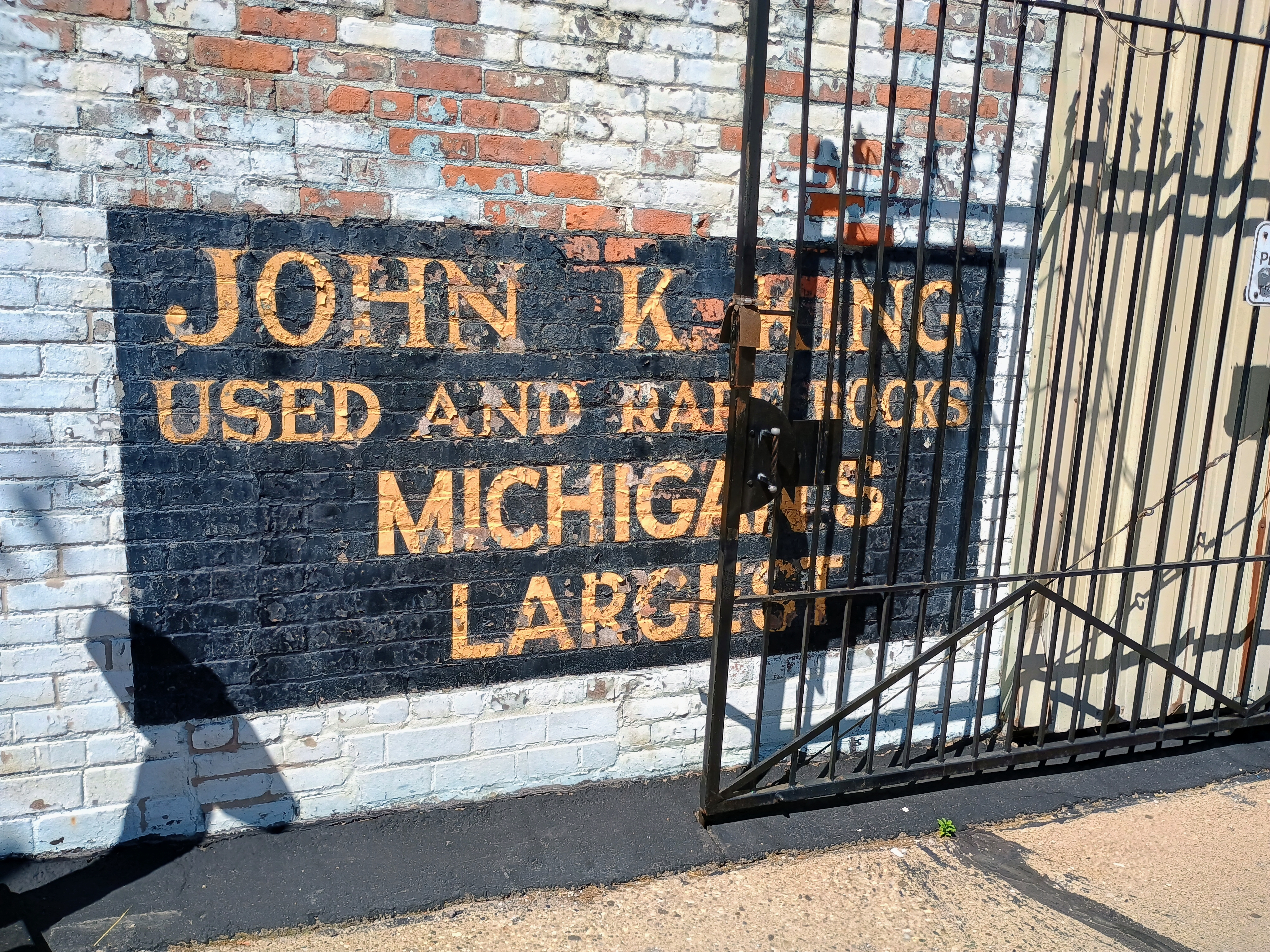
Painted on the brick of an old 4-story warehouse is the name John K. King Used and Rare Books Michigan's Largest.
Painted on the brick of an old 4-story warehouse building in Detroit, Michigan, is the name of the J. K. King Used and Rare Books, Michigan’s Largest. This is the largest used bookstore in the state, and well worth the visit.

For several years, I have kept a list of the books I read during the year. At the end of each year, I print the list and place it in the “All About Me” notebook I keep. The total number of books I read in a year range from 6 to 26. I’m going to beat that this year, as I’m already working on book 26 with two months of reading to go. Yippee! I love breaking my own record.

According to the Psychology Today article, I am an optimist. I don’t view my unread books as a burden or failure of self-control and time management. I see them as a future opportunity to engage with their content. I primarily read non-fiction, so most of my reading is a learning experience. I do blend a few pieces of fiction into the mix for fun. While I have more books than I could read in a year, collecting them is not compulsive hoarding, nor is it damaging to my social interactions.

With few exceptions, I now donate the majority of books I have read rather than keeping them, due to space limitations. I enjoy visiting used bookstores, where you can buy books at much lower prices. I maintain my membership with Barnes & Noble, though, because sometimes I have to purchase and read a new release. The Psychology Today article suggested slowing down the rate of acquisition and becoming more selective, not purchasing a new book until you’ve read one of a similar size. I don’t think that’s possible. I can’t wrap my head around such a ridiculous limitation.

Leave a comment

Filed under decisions, Discoveries, education, exploration, Full-Time RV, habit, hobbies, home, Life is a Melting Pot, memoir, Michigan, summer, time, travel

Why Didn’t the U.S. Adopt the Metric System? – Part 3 of a 3 Part Series

In Part 1 of this series, I explained how I became curious about the planned conversions from the Imperial to the Metric systems of measurement in Canada and the United States. In Part II, I provided a history of Canada’s laws that enforced the conversion and where the country stands now in utilizing the Imperial versus Metric measuring systems. Now, let’s examine the United States’ history regarding the metric system, followed by my opinion on why it failed to implement the planned conversion.

The United States is a muddled mess when it comes to its measuring system. This inconsistency and lack of follow-through dates back to our founding fathers and continues through our failure to complete the transition to the metric system in the 1970s.

History:

 When the American Colonies were being formed, the Founding Fathers decided to use an antiquated measurement system they inherited from the British Empire. Article 1, Section 8, of the Constitution of the United States provided that Congress should have the power “to coin Money… and fix the Standard of Weights and Measures.” Thomas Jefferson, Secretary of State in 1790, endorsed the use of a decimal system of measurement. The only fear was that the United States would be unable to verify the metric units without sending a delegation to France, which would be costly.

The metric system originated in France. The goal was to establish a uniform standard for all measurements and weights. The unit of length was a portion of the Earth’s circumference, and volume and mass were derived from the length unit. This was achieved by multiplying or dividing by 10 and its powers. Ten is much easier to work with than dividing by 16 (to convert ounces to pounds) or 12 (to convert inches to feet). The metric system is a decimal system with a base of 10, allowing for calculations by shifting the decimal point.

The French government officially adopted the metric system on April 7, 1795. A scientific conference was held from 1798 to 1799 to validate the system and design prototype standards, with representatives from Denmark, Italy, the Netherlands, Spain, and Switzerland in attendance. The adopted standards became official in France on December 10, 1799.

The United States was snubbed by France when it invited the other dignitaries to travel to Paris to learn the metric system in 1978. This snubbing was due to the U.S. entering into the Jay Treaty of 1796 with Great Britain, a French rival. France viewed this as a violation of its own treaty with the United States. It retaliated by seizing American merchant ships and refusing to invite them to the conference on the metric system.

The United States, having not taken part in this gathering, adopted the U.S. Customary System as our official form of measurement under Secretary of State John Quincy Adams in 1821. Part of the reason for this decision was fear that the metric system might fail following Napoleon Bonaparte’s reign during the early 19th century. Napoleon imposed the metric system on the countries he conquered, making it a symbol of French control. When European countries revolted against French control, they returned to their original means of measurement. Even with this revolt against France, the metric system continued to grow in popularity. By the end of the American Civil War in 1865, most of Europe had adopted the decimal-based measuring system.

The metric system was gaining popularity worldwide, and although we had not been invited to the 1798 gathering in France to learn about the system, President Andrew Johnson recognized its importance. In 1866, President Johnson signed the  Kasson Act, making it “lawful throughout the United States of America to employ the weights and measures of the metric system in all contracts, dealings, or court proceedings.”

France held another meeting of the world’s leading nations to discuss a new international version of the metric system, and the United States received an invitation and sent delegates. During the 1875 meeting, the United States and 16 other countries signed the Treaty of Metre, establishing the International Bureau of Weights and Measures. The treaty also created the International Committee for Weights and Measures to oversee the Bureau and the General Conference on Weights and Measures to consider and adopt changes. A lab in Sevres, near Paris, was selected to house the international metric standards. The U.S. received its copies of these documents in 1890.

The Mendenhall Order of 1893 stipulated that the fundamental standards for length and mass in the U.S. would be based on metric units. This means the U.S. officially and legally recognized the metric system 159 years ago when Tomas Jefferson, in 1790, endorsed the decimal system of measurement. That standard was confirmed 132 years ago with the signing of the Mendenhall Order.

Current U.S. Standards

If you are like me, you probably read those last two dates and went “what!!!” If this has been our standard for over 132-159 years, why are we still not using the metric system? In my opinion, it is a combination of laziness, unwillingness to invest financially in the change, and, most importantly, lawmakers who were weak in committing to the change and developing a law that would mandate the conversion. Here is what happened that led me to that thought process:

Fast forward 78 years from the entry of the Mendenhall Order to 1971. The United States is still operating under the Customary Imperial system. The U.S. National Bureau of Standards recommended in 1971 that the U.S. transition to the metric system over the course of 10 years. This would mean that by 1981, the country would be fully converted to the metric system. The first problem was the weak law that enacted this process.

The Metric Conversion Act was signed into law by President Gerald Ford on December 23, 1975. It states that the metric system is “the preferred system of weights and measures for United States trade and commerce.” Still, it permits the U.S. customary units in all activities. It states that all conversions to metric are “completely voluntary” rather than establishing the 10-year deadline recommended by the U.S. National Bureau of Standards. Schools began teaching children the metric system, and some businesses made the change; however, the majority of conversions never took place.

Due to the U.S. failing to complete the conversion to the metric system, conducting business with foreign countries became more difficult. In 1988, the Omnibus Trade and Competitiveness Act amended the 1975 Metric Conversion Act. Federal agencies were now required to use the metric system in business activities, including procurement grants, by the end of the 1992 fiscal year. It designated the metric system as the preferred standard for trade and commerce and assigned the Federal Government the task of helping industry make a voluntary conversion to the metric system. The problem is that the conversion remains voluntary, and the private sector has no obligation to implement the change.

The result of these non-mandatory laws is that they left the United States out of sync with the rest of the world. It also means that some industries made partial or complete changes, while made no change at all. The United States is a hub of various measuring standards that are not mutually compatible.

Today, the U.S. uses the SI (International System of Units) on a daily basis. About 30% of products manufactured in the U.S. use metric units. Pharmaceuticals are all metric, and beverages show both U.S. customary and metric units. Film, tools, and bicycles are metric. U.S. coins & currency are produced using metric specifications. Wine and distilled spirits have been using only metric measurements since the early 1980s. Packaging uses metric units to provide net quantity, nutrition, and health-related information for prescription drugs, over-the-counter medications, vitamin supplements, and other products. The U.S. lighting sector uses metrics for light output (lumens), peak beam intensity (candela), beam distance (in meters), and impact resistance (in meters).

Understanding Imperial Standards

This article begins with Part 1, which explains my curiosity about how our current measures were established. I’ve taken a wide-ranging approach to the subject, due in part to my curiosity and love of history, and partly because I believe that to understand where we are, we must know where we came from.

While all this history is fascinating, it still didn’t answer my question of how the Imperial System of measurements was established. These measurements appear to date back to around 450 CE (Common Era; a secular version of AD). It was then that the Germanic tribes invaded England and established a system of measurement that remains in use today:

  • An inch (ynce) was the length of three (3) barleycorns.
  • A foot was initially based on the length of a human foot. This led to inconsistencies in measurement, so the 12-inch foot was officially codified by King Edward II, likely because 12 has more factors, making it easier to subdivide for carpentry and construction.
  • A yard was established as a 3-foot construction standard.
  • An acre means a field and was considered the size of a field that a farmer could plow in one day.
  • A gallon represents the volume equivalent to eight pounds of wheat.
  • A mile was established by the British Parliament as eight (8) furlongs, or 5,280 feet. A furlong was a length based on a single furrow in a plowed field and was standardized by England’s government around 1300.

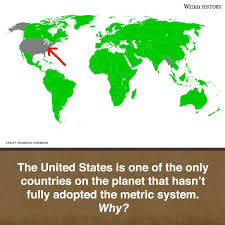
The United States is the only industrialized nation that hasn’t made the metric system compulsory. While cost is one factor, the main reason is the failure of Congress to make the metric system mandatory in all 50 states, the District of Columbia, and all U.S. territories. The U.S. made the conversion voluntary in laws enacted in both 1866 and 1975. The country has failed to adopt a unified system of metric measurement for transactions that affect the lives of ordinary citizens.

This has led to a hubbub of mixed measuring standards:

  • A football field is measured in yards, but footraces are measured using meters.
  • Mechanics use horsepower to measure an automobile engine’s power, but the same engine’s displacement is in liters.
  • Air pressure is expressed in pounds per square inch, which is equivalent to millibars for air pressure aloft, and inches of mercury for surface atmospheric pressure.

In the U.S. Customary System, there are over 300 different units used to measure various physical quantities. The failure of Congress to make conversion to the metric system mandatory has resulted in the U.S. being a hodgepodge of imperial and metric systems.

Basic Measurement Conversions:

1 mile = 1.6 kilometers.
1 foot (12 inches) = 30 centimeters
1 inch is about 25 millimeters or 2.54 centimeters
1 yard (3 feet) is almost 1 meter
1 kilogram is just over 2 pounds
1 pound is about 454 grams
In the U.K., 14 pounds = 1 stone

Converting Fahrenheit to Celsius is easy:
0 degrees Celsius (°C) is equal to 32 degrees Fahrenheit (°F)
24 degrees Celsius is equal to 75 degrees Fahrenheit
To convert Celsius to Fahrenheit, use the formula of (c x 1.8) + 32

If you want to know more, you can use the World Wide Metric Conversion Calculator for converting pressure, temperature, length, weight, and volume. Just enter the measurement you have, and it will fill in all other boxes within that area.

In closing, should the United States have enacted firmer laws mandating the change to metric? Do you think it would be better if we were on the same measuring system as the rest of the world, or do you like being a stand-alone country using the U.S. Customary System adaptation of the British Imperial System? Share your thoughts in the comments below.

Leave a comment

Filed under assumptions, Canada, communication, decisions, Discoveries, education, habit, Michigan, reality, travel

Five Problems With Social Media

Social media ball with various images on it

When I was growing up, there was no social media. No one owned cell phones or computers, and phones were attached to a wall in our home.

Fast-forward to today; there are numerous social media platforms on which you can be active. While there are many positives to electronic vs personal contact, including regular contact with distant family and friends, there are also negatives. Here are five problems with social media.

1. Rude Behavior

People can hide behind the wall of a social media platform. Even those you know are more likely to behave rudely. When it is people with whom you have no personal relationship, bullying becomes even worse. When people converse in person, things you disagree with are politely disputed or let pass. Under the guise of a social media platform, people are more likely to insult and attack those with whom they disagree, referring to them as stupid, ignorant, old, or in any other way demeaning them.

According to an article in Psychology Today, anonymity contributes to rudeness and trolling. However, the lack of eye contact is the chief contributor to a person’s inability to control inappropriate behavior online. Before the advent of social media, people tended to be more courteous, even when disagreeing on specific points. Social media allows people to hide behind their computers and be aggressive and rude.

2. Time Spent/Wasted

The average user between 16 and 64 spends approximately 2.5 hours on social media platforms daily, with YouTube and TikTok experiencing the highest usage. That doesn’t sound like much out of 24 hours until you consider that it adds up to 14 to 17.5 hours per week that we no longer spend on other activities.

Even more concerning is that teens spend an average of 4.8 hours on social media daily.  That is over 33 hours a week! When you consider how easy it is for adults to fall into bad online behavior, think about how vulnerable teens are to cyberbullying and its impact on their self-esteem. Suicide rates among teens have increased during the social media era, and about 42% of teens admit that social media use keeps them from connecting with their friends in person.

3. Political Hostility

Before the advent of social media, politics adhered to the rules of proper etiquette. Etiquette traditionally held that three topics were never discussed in polite company–religion, politics, and money. Social media has eroded the belief in being courteous and following the rules of etiquette. This has impacted political discussions and encouraged people to become outright hostile toward those with differing beliefs.

A University of Michigan study found that political anger and cynicism are rising in the United States and democracies worldwide. Social media contains a lot of political information and news, but much of the content is toxic rather than factual. These toxic news streams are often hostile and insulting, which increases anger and bad behavior toward those with differing beliefs.

When was the last time you held a cordial exchange of political information on a social media platform with someone supporting an opposing candidate? It may start okay, but eventually, one person will become insultingly aggressive and argumentative. This undermines the ability to exchange information, leading commentators to prioritize presenting their side over engaging in an open-minded exchange of facts.

The problem is that algorithms reward hostile behavior because they perceive heated exchanges as more engaging. This shifts political attacks to the forefront of media platforms, increasing their visibility and distorting public opinion. People should conduct research using various sources rather than relying on social media when making decisions about election candidates or policies.

4. Cyberbullying and Cyber-Harassment

Cyberbullying is bullying that is done through SMS, text messaging, apps, gaming, or social media platforms. It encompasses sending, posting, and sharing false, negative, harmful, or mean content about another person. The information shared can be personal or private and is done with the intent to cause that person embarrassment or humiliation. This behavior can cross the line into criminal or otherwise unlawful behavior.

Examples of cyberbullying:

  • Sharing embarrassing pictures or videos online
  • Posting rumors on social media
  • Sharing someone else’s private information online
  • Threatening someone online
  • Creating fake accounts and posting information to embarrass someone

Cyber-harassment is behavior intended to torment the recipient. This occurs on public forums and is carried out by the harasser to seek peer approval or build their image to appear superior and vital.

Examples of cyber-harassment:

  • Threatening or harassing emails or instant messages
  • Using electronic technology to bully, harass, or intimidate
  • Spreading rumors
  • Sharing private information
  • Spreading hurtful information
  • Intentionally provoking or annoying someone online

Visit the Stopbullying.gov website to learn about the laws and policies against bullying in your state. Click on your state for additional information about state, commonwealth, and territory cyberbullying laws and policies. Seven states have laws only; most states have laws and policies.

5. Addiction

Although not formally recognized in the medical profession, social media is more addictive than cigarettes or alcohol. Addiction can lead to negative consequences that impact mental health. The main tell-sign is an obsessive need to check and update social media platforms frequently to the extent that it disrupts real-world relationships and activities.

It is easy to become addicted because social media platforms are designed to trigger the release of dopamine. This triggers a feeling of pleasure, reinforcing the desire to repeat the process. Any positive feedback received, such as likes, comments, and shares, validates and encourages repeat usage.

Signs that you may be addicted to social media include spending an exorbitant amount of time on your platforms, sometimes to the extent that you forgo other responsibilities or activities. Your reliance on social media may become so obsessive that you feel compelled to check it constantly, and any inability to do so leaves you feeling anxious and stressed. This can also lead to depression if you find yourself comparing your abilities with those of others online.

To manage your social media interactions for better mental health, set time limits for platform use and plan regular breaks when you engage in real-life relationships and activities. Establish times when social media is not accessed, such as during meals or when socializing with friends and family. It is also helpful to turn off notifications so you are not constantly distracted.

Social Media is here to stay. In 2005, only 5% of Americans were using social media; that number grew to 72% by 2021. Over 4.8 billion people worldwide are active on social media daily, and estimates are that by 2027, that number will reach six billion. It is essential to exercise caution when using the platform’s responsibility.  We must not allow ourselves to fall into a pattern of abuse toward others, nor should we tolerate such behavior from others. If you or someone you know becomes a victim of cyber harassment or bullying, report it to the appropriate legal authorities.

Leave a comment

Filed under communication, Coping, Family, habit, handicapp

How Wedding Traditions Came to Exist

An average of 2.4 million weddings occur in the U.S. annually, or about 5,000 per day. When planning a wedding, most couples incorporate several traditions, including a wedding shower, an engagement party, the father giving away the bride, tossing the bouquet, going on a honeymoon, and more.

Have you ever wondered how these traditions came to be? I was surprised to learn that many derive from superstition, monetary transactions, and the transfer of female ownership. Once I started reading about these traditions, I wanted to know more. The list is long, so I’ve made it easy to skim down and find the practices you are curious about. I hope you end up like me, wanting to learn about them all.

Engagement Party— In ancient Greece, the engagement party was a financial contract between the bride’s father and the man she would be marrying. The bride was not present during the business agreement. An ordinary party was held by the bride-to-be’s father, during which the bride’s father would announce his daughter’s engagement to everyone in attendance. The bride was often just as surprised as the guests to learn she was to be married. Marriages were not based on love until the late 1700s, and even after that time, arranged marriages continued. In some cultures, they still exist today.

Dowry—The original purpose of a dowry was for the groom to compensate the bride’s family for losing her labor and reproductive potential. Sometime before the Ancient Roman period, the custom reversed, with the bride’s family giving a dowry to the new husband’s family to help support her and the expense of setting up a new household. It is believed that the modern tradition of the bride’s family paying for the bulk of the wedding is an evolved practice that replaces the dowry system.

Engagement Ring—This tradition goes back to ancient Rome, when women would wear a ring of bone, copper, flint, iron, or ivory to signify a business contract or that an affirmation of love and obedience had been made. This was derived from the ancient Egyptian practice of using a ring of hemp or reeds to signify eternity.

It was in 850 CE when the official purpose of an engagement ring was introduced by Pope Nicholas I. He declared the ring to represent a man’s intent to marry. Although rings adorned with diamonds were not popular until the 1940s, the first diamond appeared on an engagement ring in 1477. That is when the Archduke Maximilian of Austria proposed to Mary of Burgundy with a stone setting in the shape of the letter M.

In the 15th Century, gimmel rings served the purpose of engagement. This set of three rings was used, with the bride and groom each wearing one ring during the engagement. On the wedding day, the two bands were connected with the third, and all were worn by the bride as her wedding set.

Diamond engagement rings became popular and ornate during Victorian times because of Queen Victoria’s love of diamond jewelry. Although diamond engagement rings have been in the U.S. since 1840, they did not gain popularity until 1947. That is when the British company, De Beers, was mining diamonds in South Africa and launched an advertising campaign, “A diamond is forever.” This sales ploy skyrocketed diamond sales for wedding engagement rings.

Bachelor Party—The bachelor party dates to the 5th century B.C. when ancient Spartans devised a celebration of the groom’s last night as a single man. The term bachelor meant a young knight or student with a bachelor’s degree and first appeared in Canterbury Tales in the 14th century.

The term bachelor party was first used in 1922 in a Scottish publication, meaning a “jolly old party.” The modern parties were traditionally black-tie dinners hosted by the groom’s father to honor and toast the groom. They did not become the current parties of beer, strippers, and drugs until the 1980s.

Popular Saying—The traditional saying about what a bride must wear on her wedding day is based on a 19th-century Old English rhyme in Lancashire. There is a reason behind each item in the phrase:

Something old— traditionally a personal gift from the bride’s mother, usually symbolizing wisdom for married life.

Something new—symbolizes the establishment of a new family created by the marital union.

Something borrowed—by borrowing something from a happily married woman, the bride is borrowing marital bliss to carry into her new union.

Something blue—The robes of pagan Roman maidens had blue trim on their borders, symbolizing modesty, fidelity, and love. For Christians, blue symbolizes the purity of the Virgin Mary.

And a sixpence for your shoe—often left out of the rhyme, and the British coin is no longer in production. The purpose was to bring prosperity to the newlyweds. 

Bridal Gift Registry—This was started by a Marshall Field’s store in Chicago in 1924. It was a marketing pitch that allowed brides to select their fine china and silver for the big day. This successful advertising campaign soon gained popularity throughout the county, with many businesses expanding on the idea to include other items the newlyweds would need.

Bridal/Wedding Shower—Showers date back to 16th century Holland. The bridal shower is a dowry alternative that began when a bride’s father was too poor to provide a dowry. It was also held if the bride’s father opposed the union.

The tradition is based on a Dutch story about a high-society girl falling in love with a poor miller’s son. The girl’s family objected because of the miller’s low class, but she insisted on marrying him. The girl’s father said he would withhold her dowry as punishment for her refusal to marry the wealthy pig farmer he chose for her.

To help the couple in their misfortune, the bride’s friends showered her with gifts as a dowry substitute. Touched by the generosity of his daughter’s friends, the father finally agreed to the marriage. This began the tradition of a bride’s family and friends showering her with gifts before a wedding.

Bridal showers grew in popularity in the U.S. during the late Victorian era. Upper-class society ladies saw them as an opportunity to celebrate, gossip, and exchange gifts, thoughts, and food for the bride-to-be. Gifts were usually modest, simple, useful household goods the bride would need in her new home, including bed linens, kitchen items, China, and more. By the 1930s, the tradition had extended to middle and lower-class families.

A bridal shower is thrown for the bride and traditionally attended only by females. A wedding shower is a modern version of the shower. It is thrown for the couple and includes the groom in the party and opening of gifts. Guests may also be mixed gender.

Rehearsal Dinner—The dinner may be an evolution of an event that occurred hundreds of years ago when attending a wedding meant days of travel. The night before the wedding, the manor house, castle, hut, or tent would be packed with friends, relatives, and emissaries needing to be fed. Out of necessity, a meal would be held the night before the wedding. This was also wrapped in superstition. The belief was that if those attending the dinner were loud and rambunctious, they would scare away evil spirits trying to destroy the couple’s chance of having a happy life.

Today the rehearsal dinner follows the wedding rehearsal. I couldn’t find anything about when wedding rehearsals began, which appears to be strictly an American tradition. Rehearsals may have begun as wedding parties grew, allowing everyone to become familiar with exactly what would occur during the ceremony to hopefully prevent any glitches.

Not Seeing the Bride Before the Wedding—Before the 18th century, pre-arranged marriages were common. It was considered unlucky for a bride and groom to see each other before the wedding because the groom might back out of the arrangement if he saw the bride-to-be and didn’t like her appearance. This is also one reason for the veil.  

Bridal Veil—The veil establishes that a woman is spoken for and disguises the bride so evil spirits wishing to harm the couple will not recognize the bride. It also was a way of securing the marriage contract. Many brides and grooms met for the first time on their wedding day at the altar. The veil was only lifted after the ceremony, so the groom could not back out of the wedding if he didn’t like his wife’s appearance.  

Giving Away the Bride—This practice dates back to when women were the property of men.  Women were unable to live independently of men, could not own property, have a job, or inherit money. They belonged first to their fathers, then their husbands, and if their husband died, their sons.

By walking his daughter down the aisle and giving her in marriage, the father transferred ownership of his daughter to her new husband. This dates back to when an engagement was a business transaction, not an act of love between two people. By being at the wedding ceremony and presenting his daughter in marriage, the father ensured the wedding would take place, fulfilling his part of the agreement.

Wedding Ceremony and Vows— God established marriage in the garden with Adam and Eve based on a covenant promise in Genesis 2:24, which defines marriage as joining two into one. The traditional wedding vows we are familiar with are not in the bible but are based on biblical principles.

The first recorded evidence of a marriage ceremony uniting a man and woman is around 2350 B.C. in Mesopotamia. Over several hundreds of years, marriage evolved into an accepted union by Romans, Greeks, and Hebrews. The primary purpose was to bind women to men, guaranteeing that a man’s children were his biological heirs. The father would hand over his daughter and say, “I pledge my daughter for the purpose of producing legitimate offspring.” If a wife failed to produce offspring, her husband could give her back and marry someone else.

The first mention of marriage vows was in a prayer book from the Medieval Church in England, written in 1549. The book has marriage vow examples that modern vows have incorporated. If you would like to learn more about the different areas of traditional wedding vows and where in the bible they stem from, check out this article on Wedding Wire.

Wedding Rings—Ancient Egyptians were the first to exchange rings made of braided reeds and hemp. They placed them on the fourth finger of the left hand because of their belief that a ‘vein of love’ ran from that finger to the heart. The circle of the ring also was symbolic of an endless circle of eternal love with no end, the promise of bonding forever.

Ancient Romans and Greeks wore rings of ivory, bone, or leather. Wealthy people began creating rings of gold and silver for their marriage commitments. Romans believed the left hand to be unholy and untrustworthy, so they placed their wedding rings on the right hand. The right hand serves as a symbol of loyalty, honor, and trust. Today there are about 20 countries where married couples place their rings on the right hand.

The first diamond wedding ring was recorded in the will of a widow who died in 1417. The oldest surviving diamond ring is from the late 100s CE in Rome when diamonds were valued for their harness rather than brilliance.

Men’s Wedding Rings—Wedding rings for men didn’t become popular until WWII. It was then soldiers wore them as a way to remember their wives back home. Many of the weddings in 1942 were quick, taking place within a week of the announcement because of a soldier being deployed.

The tradition of soldiers wearing wedding rings continued through the Korean War. The practice eventually caught on for non-soldiers as well.

Bridal Party—While the purpose of the bride and groom is clear, why do we have all the other members of the bridal party? What was their original purpose?

BridesmaidsIn ancient Rome, bridesmaids protected the bride. They would all wear the same dress as the bride to confuse evil spirits and prevent them from finding the bride. This prevented the couple from being cursed on their wedding day. Roman law also required ten witnesses to every wedding, so there would be five bridesmaids and five groomsmen.

GroomsmenDerived from an ancient tradition of kidnapping a bride, a man would employ his friends to help him fight other warriors and prevent the bride’s family from finding the couple. Because weddings were a business transaction rather than a union of love, the groom needed an excellent swordsman to retrieve a runaway bride or fend off a bride’s angry family not approving the marriage. The term Best Man referred to the quality of a man’s swordsmanship, and the groom’s main warrior companion was the equivalent of today’s best man. 

Flower GirlIn ancient Rome, a young virgin would carry sheaths of wheat, believed to bring well-being and good fortune to a newly married couple. Over time the sheaths of wheat were replaced by flowers scattered along the bride’s path to the altar.

Ring BearerIn Victorian times, a pageboy would carry the bride’s train down the aisle, along with a prayer book. During this time, Victorians began displaying the ring on a small pillow to show their wealth. Pillows were expensive, luxury items that only the elite members of society could afford. Over time, the pageboy carried the ring pillow down the aisle. That tradition evolved into today’s ring bearer.

Witnesses to the Wedding—Ancient Roman law required ten witnesses to be present at a wedding. At that time, the legal witnesses were all men, but the bride was also escorted by female attendants. Not only did witnesses watch the marriage ceremony, but they also witnessed the consummation of the couple on their wedding night.

Yes, the newlyweds had sex in the presence of witnesses. This was usually done with the bed curtains closed and the observers on the room’s outer edges. If the marriage was not consummated, it could be declared null and void, and the couple granted an annulment. The witnesses were present to confirm the couple had sex, forming an unbreakable union. In modern times, witnesses only have to sign a marriage license as confirmation that a couple has legally married.

Unity Candle – The unity candle became popular in the second half of the 20th century in American Christian weddings. This is attributed to a 1981 General Hospital episode where a couple used a unity candle. The candle symbolizes the merging of two individuals, creating a blended family.

Sealed With a Kiss—This tradition began in Ancient Rome when marriage was a contract. Instead of signing your name, you confirmed your commitment to the agreement with a kiss. It was believed that by binding the marriage with a kiss, the couple exchanged spirits, sending part of themselves into their spouse, binding them as one. 

Bridal Bouquet—Ancient Greeks and Romans carried aromatic herbs, garlic, and grains to drive away evil spirits and bad luck during the wedding. Floral garlands the bride and groom wore symbolized a new beginning and hopes of fertility, fidelity, and happiness. Some bouquets included rosemary for loyalty, wheat for fertility, ivy for an unbreakable bond, heather, thistle, thyme, or basil for protection, and dill as an aphrodisiac. Carrying aromatic flowers was also a way for brides to mask their body odor before frequent bathing was practiced.

Bouquet Toss—Tossing of the bridal bouquet dates back to 14th century England when unmarried women tried to rip off pieces of a bride’s dress or flowers to gain some of her good luck, hoping to become the next one married. The bride would toss her bouquet into the crowd and run for safety to prevent being mobbed. 

By the 1800s tossing the bouquet became a wedding tradition, with single women wanting to catch the bouquet as a sign of good luck for their future marriage. At that time, marriage was the only way a woman could bring her family out of poverty.

Garter Toss—Garters were originally a necessity, holding up the stockings of both men and women. The toss dates back to the same safety problem in England and France when guests would try to rip off a piece of the bride’s clothing for luck. To protect his bride, the groom would take his new wife’s garter and throw it out into the crowd, and the couple would escape.

Receiving Line—I couldn’t find any information on when this practice began and assume it was a tradition before wedding receptions were a standard part of weddings. The receiving line immediately after a wedding is the couple’s first opportunity to “receive” guests as a married couple. The line usually includes the bride and groom, their parents, and members of the wedding party. It provides each guest a moment with the newlyweds to offer congratulations. It also ensures that the couple can personally thank each of their guests for attending.

Reception—Wedding receptions were not frequently held until the early 1960s. Before that time, if a reception was held, it was usually a casual affair at the home of the bride’s parents with cake and punch.

Carry Bride Over Threshold— This tradition goes back to ancient Rome when the groom dragged a bride unwilling to leave her parent’s over the threshold of her new home.

In medieval Europe, it was believed that brides were vulnerable to the invasion of evil spirits through the soles of their feet. To protect his new wife, the groom would carry her through the front door.

Later, it was believed that if a bride tripped entering her new home, it would bring bad luck to the marriage. The groom carried his new wife across the threshold to prevent her from tripping.

Tying Cans to Car Bumper—This custom dates back to sixteenth-century France and early twentieth-century Appalachian customs. The idea is to harass newlyweds on their wedding night through a noisy celebration with friends and neighbors banging pots and pans, singing, and making noise outside the couple’s window.  Eventually, the newlyweds would invite everyone in for refreshments.  It is believed that tying cans to the back of a newly married couple’s vehicle is an adoption of the noisy shivaree.

Wedding Dances—Many wedding party dances are popular, and I wondered how they all came into existence.

The First Dance dates back to 17th-century Europe when formal balls were popular. It was customary for the guest of honor or person of the highest social status to lead the first dance. This led to the tradition of a married couple having their first dance at a wedding.

The dance is the couple’s first cooperative and joint endeavor, symbolizing the consummation of the wedding. Their manner of dance, expression, and steps reveal the harmony between the bride and groom.

The Father-Daughter Dance dates back to when marriages were arranged as a monetary contract rather than love. The father-daughter dance was a final demand of the bride’s father on his daughter before her husband became the most important man in her life. After the father-daughter dance, the bride could dance with her new husband, whom she had likely just met. 

In modern society, the father-daughter dance usually occurs after the bride and groom have first danced together. It now symbolizes the bride’s love and appreciation of her father.

The Mother-Son Dance is a modern addition to a wedding reception. It is comparable to the father-daughter dance and allows a groom to show his love and appreciation for his mother.

Bride Changing Last Name—The practice of a woman taking her husband’s last name dates back to the Middle Ages when societies were becoming organized. Under English common law, women were barely acknowledged and had no legal rights. The concept of coverture was the basis of a woman taking a man’s last name in marriage. Coverture was the legal status of a married woman. Because women had no legal identity, coverture placed them under their husband’s protection and identity.  

Women were under the control of their fathers and then their husbands. They had no legal ability to make contracts, own a business, or own property. They had no legal rights to their possessions, clothing, children, or their bodies, and marriage rape was legal. If their husbands sent them out to perform labor, the husband collected the wages.

Within the U.S., the first break in coverture took place under the Married Women’s Property Act of 1848. Over time that act underwent amendments so that women could eventually attend school, obtain driver’s licenses, work, and vote. It took a long time for women to gain rights. Women in the U.S. could not get a driver’s license, passport, or register to vote if they didn’t take their husband’s last name. Marital rape did not become illegal until the 1970s.

Though no longer legally bound to take their husband’s last name, about 70% of women follow the tradition. This makes it easy for a married couple and their offspring to show daily unity.

Wedding Cake—In ancient Rome, wheat cakes were broken over a bride’s head to promote fertility. It later became customary to stack the wheat cakes on top of each other, and the bride and groom were challenged to kiss over the tower without knocking it over. If successful, they would enjoy a life of good fortune.

In modern times, white cake symbolizes purity.  The joint task of the bride and groom cutting the cake represents their first joint task of married life, and feeding it to each other symbolizes the commitment they are making to each other.

Saving the top layer was originally for use at their future child’s christening. The bride was expected to be pregnant within the first year of marriage. The top layer is now used to celebrate the couple’s first marriage anniversary.

Tie The Knot—Handfasting dates back to ancient Celtic times and is a spiritual ritual of tying a bride’s and groom’s hands together during the wedding ceremony. The phrase “tying the knot” stems from binding the couple’s hands together during this ceremony with colored cords to symbolize their union of love.

For a three-cord handfasting, the colors of white for purity, blue for fidelity, and red for passion were braided together. Other colors include green for fertility and growth, purple for spiritual strength, and gold for wisdom.

The couple’s hands are not released until the marriage is complete. In modern times, a couple says their vows while bound together, then finish the ceremony with rings. Historically, the binding remained in place after the wedding ceremony, and the couple was escorted to the bedchamber to consummate their union. It was believed that if the couple survived the day bound together, they would survive their marriage together.

Throwing Rice—Marriage was traditionally seen as a way of building a family and increasing a person’s assets. Ancient Romans often threw wheat or oat seeds, which meant the birth of new life. The change to rice was likely because it was often available and low cost. Whichever grain was used, it symbolized fertility and prosperity. Tossing grain over newlyweds signified good luck and best wishes toward producing babies and good harvests.

Honeymoon—The term honeymoon dates back to the 5th century when the calendar was represented in moon cycles. After marriage, a couple would drink mead, an alcoholic beverage made from honey, during their first moon of marriage. Drinking the fermented honey liquor under the moon was believed to boost fertility and increase the odds of producing children early in the union.

The American honeymoon tradition dates back to 19th century Great Britain when relatives could not always attend the wedding. The newly married couple would travel by train and carriage to visit those unable to attend. This was called a bridal tour and often lasted for weeks or months.

Not Married? Be glad it isn’t 1860 to 1880 when the term Spinster was used to describe women who never married. During that time period, eleven percent of the American female population didn’t marry. This was probably because of the Civil War, which killed 600,000 men.  It was during this period that women began obtaining a college education. The male opinion was that a female college graduate would be a poor homemaker.

Were you surprised at how many traditions deal with monetary transactions, ownership of women, and superstition? Let me know what you think in the comments below.

Leave a comment

Filed under celebration, events, Family, habit, impressions, Life is a Melting Pot, marriage, time

Oldies Observations

We were unable to get any local stations while traveling this summer and found a TV station playing some prime-time oldies.  Watching shows from the past leads to some interesting observations. This includes the way people were portrayed in the ’50s, ’60s, and ’70s.

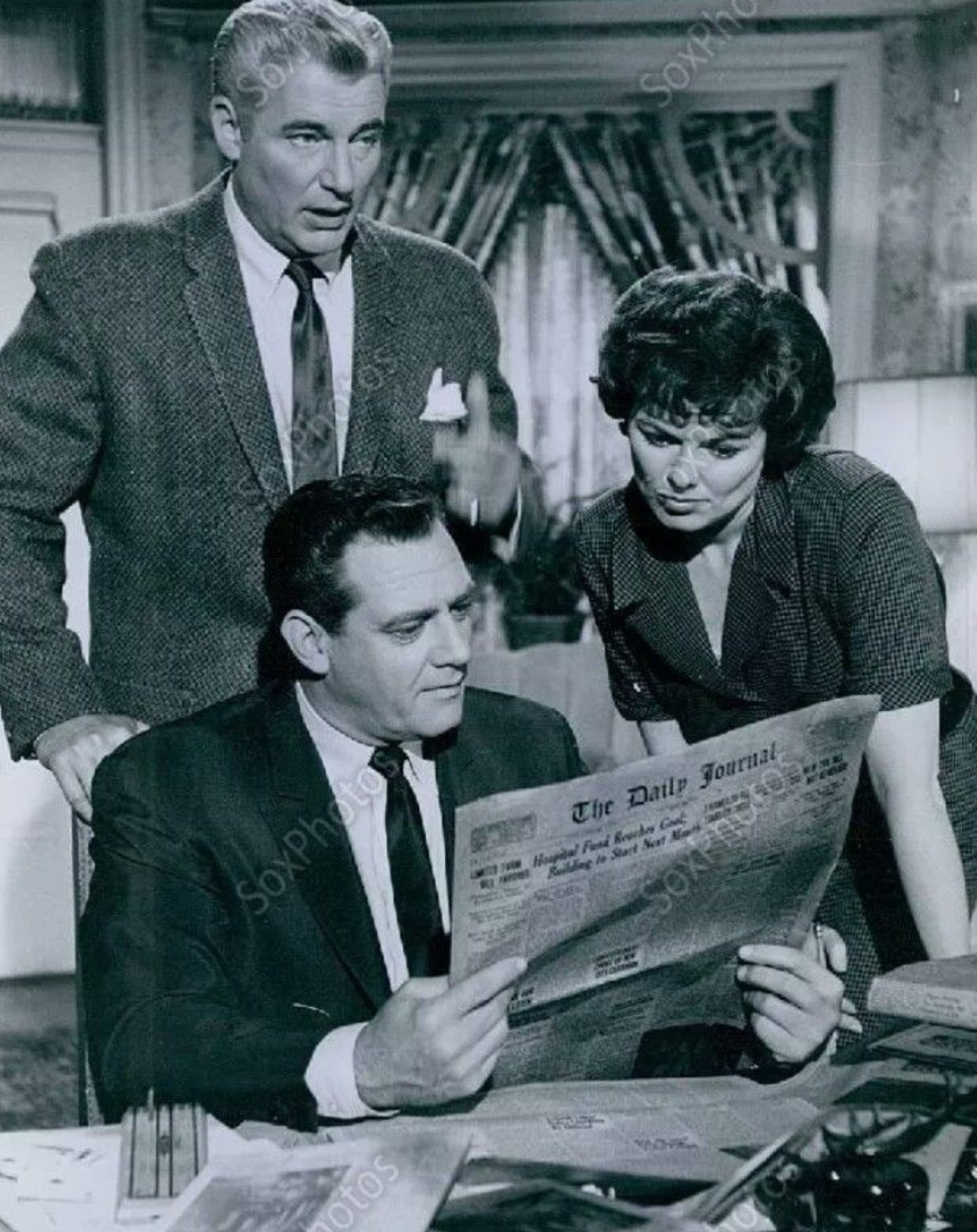
Perry Mason (1957-1966)

Perry Mason is an attorney who always wins his case. This almost always happens during a trial by showing that someone else in the courtroom is guilty of the crime his client is charged with. Through witness testimony he leads to the truth, and either the witness testifying or someone else in the courtroom inevitably stands up with an “I did it” announcement. Of course, once this announcement is made, Perry has won the case for his client.

Perry’s secretary/legal assistant, Della, is a smart, single woman who is always at Perry’s side. She sits in his office while they work, is there when he meets with clients or with his private investigator, Paul Drake. Della also goes to clients’ homes and attends special events or dinner appointments with Perry.

Della is portrayed as very intelligent and capable, but almost every other woman in every episode fits the “dumb blonde” profile. They appear very naive or lacking in intelligence. They are highly emotional and unable to cope with the slightest bit of stress.

Paul Drake Standing, Perry Mason at Desk as Della looks over Perry’s shoulder

Paul Drake is a private investigator that does work on every case Perry handles. Paul is always available at a moment’s notice. The same goes for Della. It appears neither Paul nor Della has a private life. Their entire existence revolves around Perry’s business needs.

It is a good show that I enjoy watching. The outcome is very predictable.

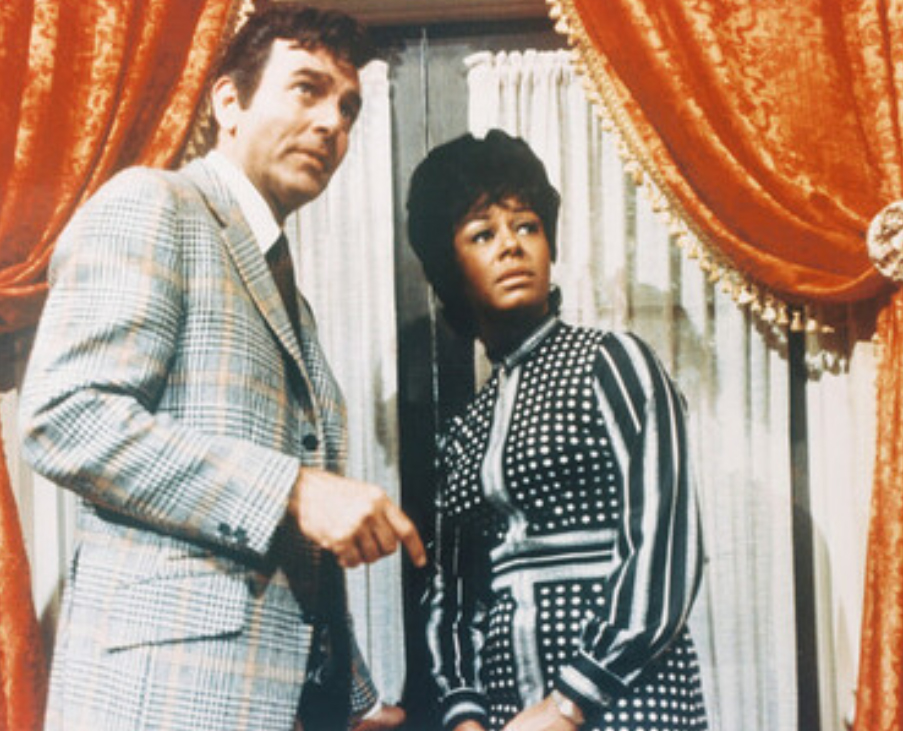
Mannix (1967-1975)

Mannix is a Los Angeles private detective. He is good-looking, drives a convertible, and women in mini-skirts are always after him. He has an attractive secretary, Peggy. Peggy is the widow of a police officer and is raising a young son on her own.  

At a moment’s notice, Peggy is always able to find a babysitter so she can work late, work weekends, stay with female clients overnight, and more.

Throughout every episode, Mannix will get into at least one fistfight, get shot at, and have his car run off the road. Remarkably he never gets a black eye but does sometimes suffer injuries. His car is always repaired quickly. The “bad guys” frequently show up at the office, putting Peggy in dangerous situations as well.

This is a fun one for finding errors where writers and producers didn’t check their facts. For example, in one episode Mannix was preventing a plane from leaving the ground. The pilot was knocked unconscious but still in the pilot’s seat. Mannix is standing by the pilot’s seat, leans over and pulls up the yoke, and turns it to the left. The plane turns to the left and stops. This would never have happened in real life.

Joe Mannix and secretary Peggy

Pulling back on the yoke in an airplane causes the plane to climb in altitude or lift off the ground if there is enough speed. Turning the yoke causes the plane to bank in flight, but does nothing on the ground.

When on the ground you turn the plane using the foot pedals, and you stop the plane by pushing the top of both foot pedals forward simultaneously. How do I know? I live with a pilot!

By the time we reached the 1970s, women in TV shows were being portrayed as intelligent and emotionally stable.  

Barney Miller (1975-1982)

This is a comedy set in a New York City police station in Greenwich Village. The goofy situations the detectives deal with are so off-the-wall that you have to assume they represent real police incidents. The show’s characters are an ethical mixture of good-hearted, comical professionals who manage to get the job done.

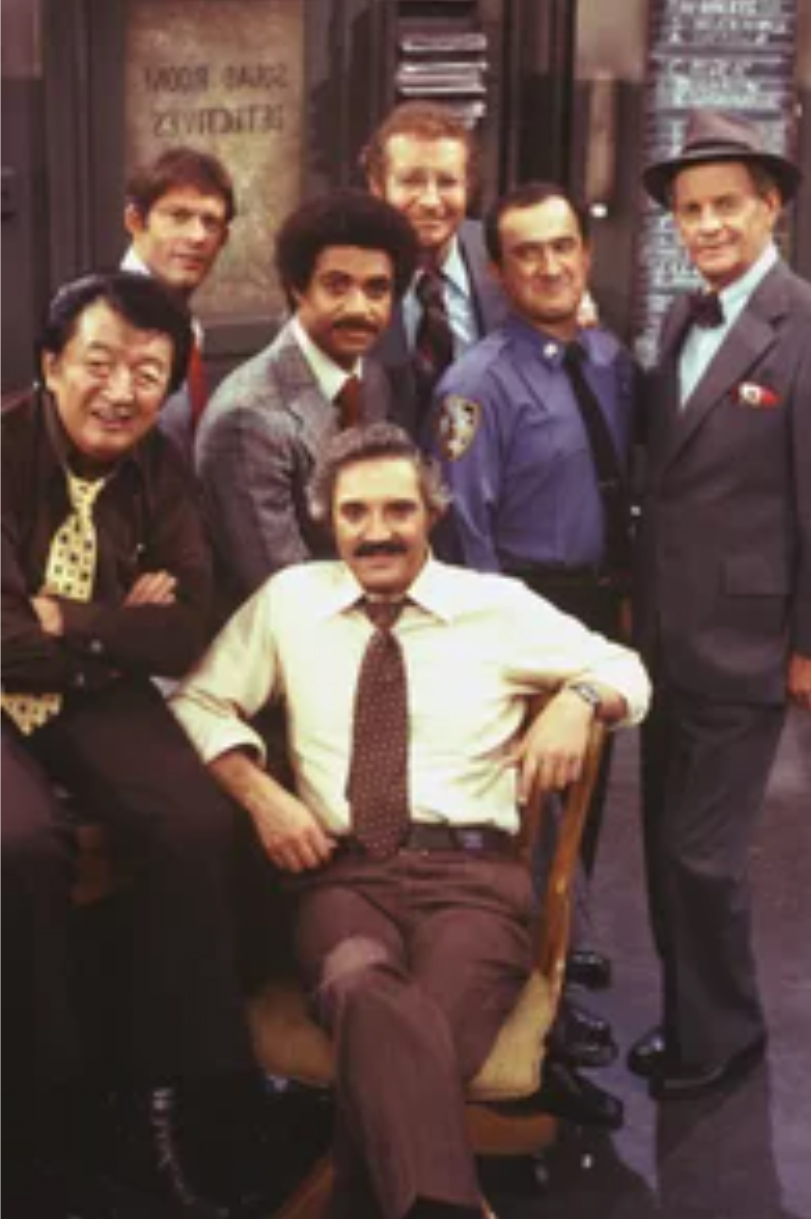
Captain Barney Miller is in charge of the precinct. He is level-headed and serious about getting the job done, despite having a bunch of partially inept people working for him.

 “Wojo” is short for Wojciehowicz. True to the era’s habit of joking about Polish intelligence, Wojo is well-meaning, physically attractive to ladies, but lacking in intelligence. Although successful in getting the bad guys, he always manages to bumble something.

Harris is a good-looking, fashion-conscious, cultured black man who is aspiring to become a successful writer. He is always placing notes about incidents at the station into a mini-cassette recorder for use in his writing. Harris is the classy type who can fix you a perfect cup of tea and take you to the symphony.

Yemana is Japanese, introverted, and always reading and trying to avoid work. One of his “duties” is to make the coffee at the precinct, and it is horrible. He never makes a decent pot, yet everyone continues drinking it. He is also responsible for the filing, but no one can ever find anything he files.

Dietrich is a curly-haired blonde, brainy, and always able to fill everyone in on any subject they are discussing. He is the type of person you picture as a kid reading encyclopedias and enjoying homework.

Fish is on the edge of retirement and has a condition that always has him running to the bathroom. Married for years to Bernice, he constantly makes subtle complaints about her or marriage. Bernice always calls him at work for some goofy reason.

The cast of Barney Miller – Barney seated, from left to right Yemana, Wojo, Harris, Dietrich, Levitt, and Frank Lugar

Inspector Frank Luger is constantly stopping in, trying to catch the precinct doing something they shouldn’t. He is both annoying and likable at the same time.

Last but not least is Officer Carl Levitt. Levitt is still in uniform and delivers the mail daily. He wants to move into Barney’s department and become a detective. Levitt is constantly pointing out his achievements, no matter how small. He is also very sensitive about being shorter than the others and tries to stress when his shorter stature is beneficial.

I recently watched the final episode of the series from 1982. Although not a longtime watcher, it was a sad moment when everyone had to leave the precinct for the last time and go their own way.

What oldie TV shows do you enjoy watching?  
What are your observations when you go back and view old shows today?

Leave a comment

Filed under Discoveries, freindship, habit, impressions, Uncategorized

5 Problems With Social Media

The most frequent use of our phones is social media. The average person picks up their phone 58 times per day, which includes sending or looking at text messages, checking email, placing calls, playing games, and social media. The total daily time spent on smart phones averages between three hours fifteen minutes to four and a half hours on their phone every day.

Social media is addictive. I became multi-connected for the purpose of promoting my photography and writing. The most addictive for many is Facebook, with a few others close behind.

What are the problems with social media?  Let’s take a look.

1.         Addiction

Social media is used for everything from personal connections to business promotions. It has become a necessity of life. The problem is many people are unable to walk away from it, even for a short period of time. Those are the addicts.

You see them everywhere. Have you ever been in a restaurant where people are sitting at a table together, but everyone is on their phone? Why are they unable to put down their phones and converse with each other?

We all know people who if you make a comment and tag them, they respond immediately regardless of whether it is morning, night, or the middle of their workday. They can’t resist the “ping” that tells them they have a notification for something.

Addiction came to my attention recently when I responded to a political question on Facebook. The poster said, “you didn’t answer within 12 hours.”  She had a time limit on when anyone could give an answer!

That shows she is addicted to social media and assumes everyone else lives their lives wrapped up in it as well. I hadn’t looked at Facebook posts within that amount of time so my answer was, to her, invalid due to being “late.”

I will admit, I sometimes will “share” things to Facebook without going into the program, so I probably fall into a posting habit trap.

2.         Brain Saturation

Social media is a means of sharing information that 50 years ago no one cared about. Do we really need to know that someone is out to dinner and where? Do we need to see a photograph of what they cooked for dinner? Is it important we know they got their hair cut, had a pedicure, got new glasses or went to the doctor?  

That is there life, not ours. This is the type of useless information we now know about everyone we are connected to. We are all guilty of sharing those tidbits at least part of the time. Probably now more than ever due to social distancing orders. Social media is now providing us with human connections that we are unable to get on a more personal level.

3.         Lack of Face-to-Face Interaction

While this is a benefit during the Covid-19 pandemic, it also creates social distancing. Zoom meetings are a wonderful way of connecting from the comfort of your own home, and remote work is great, especially when you live on the road as I do. The concern is whether we will become withdrawn from society as a whole.

Will face-time phone calls replace getting together? Will we remain socially distanced by having our conferences and meetings held remotely, or will we return to in-person gatherings that require more forethought and planning?  Hopefully it will become a combination of the two.

I think the virtual meetings have benefits. There are those who are unable to make it to in-person meetings due to health or distance. Those virtual meetings add personal human connections to their lives.  However I also think nothing can replace in-person interactions we have without the assistance of a computer or phone.

4.         Cyber-Bullies

Social media brings out the hostility in people. When you are not looking at someone face-to-face it is much easier to be rude. This has happened frequently during the presidential race, most likely inspired by our own president using social media to cyber-bully everyone from people in his own administration to leaders of foreign nations.

I have been called racist, old, a murderer (when discussing right-to-choose re abortion), idiot, ignorant, etc. all because of my political views. Would those same people have said those things to my face? Most likely not. Have I said things on social media I most likely would not have said in person? Yes.

The point is, social media provides a protective barrier that allows people to let down their guard and be rude to people in a way they otherwise would not be. This is especially true because the majority of people are connected through groups, etc. to people they never have and probably never will see in person. If you wouldn’t say it in person, you shouldn’t say it on social media.

5.         Personal Privacy

There are people that post all their personal issues online. If they have a fight with their spouse, it is out there. If they have an encounter with someone at the grocery store, they rant about it online. Have a dispute with your neighbor, it is out there for the world to see. Your child runs into a problem at school, everyone on Facebook knows about it.

People have lost their desire to keep private matters private. They no longer consult with their best friend for support, they now post it on social media for 200 of their closest acquaintances to chime in on and/or share with their social media acquaintances.

Everyone should give consideration to the delicacy of the information they are sharing about their personal relationships prior to posting.

So Where are We Now?

Social media is here to stay. We are a cyber-connected world now, and if you haven’t embraced it thus far, eventually you will be forced into it. The world revolves around our ability to be online for banking, paying bills, work, and communicating.

What social media platforms are you connected to? What are your favorites? What is it you like about them?  Enjoy cyber-life, but don’t forget about real life in the process.

My Social Media Platforms:

I invite you to check out some of my pages and subscribe to my blog and/or YouTube channel.

Facebook Photography Page – I share photographs I have available for sale, sometime videos I have posted onto YouTube, and other tidbits of information on my Times Gone By Photography Facebook page.

Facebook Grace Grogan, Writer Page – Where I share links the genealogy column I write for The Lakeshore Guardian, links to my blogs that are posted here on WordPress, and other things connected to writing.

Fine Art America – this is the place to view all my photographs I have available for sale, which can also be placed on various items such as shower curtains, throw pillows, mugs, beach towels, tote bags, etc.  

Fine Art America – Ron Grogan – This is the page my deceased husband had for viewing and selling his photography, which I continue to manage

Pinterest – a collection of tidbits, including links to my writing and photography

LinkedIn – my business profile, I also share my photography, blogs and genealogy column here. https://www.linkedin.com/in/grace-grogan-0870a433/

WordPress – this is where you will find my personal blog, Life is a Melting Pot 

Instagram – This is where I post photos, mostly pictures taken with my cell phone or older photos from the past.

Twitter – I am not a frequent user, but do share my videos, photographs, and blog here.   https://twitter.com/glgrogan?s=03

YouTube Channel – Rolling Thru North America Travel With US! is a joint page with Paul Cannon and contains videos and slide shows of our travels throughout North America.

Leave a comment

Filed under communication, decisions, freindship, friends, friendship, habit, Life is a Melting Pot, mind, reality

Planning Flexibility

We all plan out our lives, whether it is the routine we use at work, getting the kids to bed and then up again for school, or what we will do on vacation, we all have a plan.  What happens when that plan doesn’t work, or something happens that means those plans need to be changed?  Do you get stressed or just “go with the flow?”

There are times when no matter how well you have activities planned, something will happen that throws a wrench into the pot — it can be job loss, car problems, an accident, a fire, natural disaster, or someone made a mistake.Blessed-are-the-flexible-for-they-will-not-be-bent-out-of-shape_

In dealing with problems I have noticed there are those who get stressed, angered, frustrated, and do not cope well.  There are others that may feel frustrated but seem to be more flexible, adapt where necessary, and continue on without experiencing much stress.

Why is it people are so diverse on how they cope with problems that arise in their life?  Is it learned from when they were children observing their parents?  Is it their natural personality?  Is it something that happened in their lifetime that impacted their manner of handling stress?

In my opinion, it is all of these combined together to create a personality and coping ability that is unique to each person.   A person’s everyday lifestyle, economic level, personal experiences, and childhood combine together and impact how each person will handle different challenges as they occur.  The same challenge may be handled with ease by one person, but create immense stress in another.  There is no right or wrong, it simply is.

A person who has always lived a financially strong life will likely find it difficult to handle a sudden loss of income that leaves them unable to purchase everything they need, much less want but don’t need.  A person who grew up in a low income family or has spent the majority of their adult life with financial struggles would also find loss of income difficult, but they are more prepared mentally and emotionally to handle dealing with meager funds.

Someone who grew up in an environment where every minor problem was over-exaggerated into a major catastrophe will likely not have the coping mechanisms of someone who grew up in an “accidents will happen” and “life goes on” mindset.  The first would teach you to always be on edge and the person will likely “fly off the handle” at bumps in the road, while the second is more likely roll with whatever life throws at them.     While there is not a right or wrong personality, it is likely that the person with better coping mechanisms will have a less stressful life. 

What about someone who has encountered war, been in a horrible accident, experienced death of a loved one, or been assaulted?  There are uncountable incidents that could happen to a person which may have a profound effect on their way of thinking, what they fear, what angers them and how they react to various events.  Those lifetime encounters impact their way of thinking, how they plan their life and how flexible they are.

Whatever your personality type and how well you cope with upsets to your daily or lifetime plans, keep in mind that the more flexible you are, the happier you will likely be. Stress is normal in life, and there will be times when the best laid plans are disrupted.  Allowing those disruptions to create undue stress can make you more irritable and does nothing to resolve the problem.  Stay calm, focus on the solution, and make adjustments where needed.  Remember, flexibility does not always, but can, result in something better than you originally planned.


Leave a comment

Filed under Coping, decisions, habit, Life Changing, Life is a Melting Pot, mind, parents

SEVEN WEEKS AND ROLLING

This slideshow requires JavaScript.

Hard to believe it has been seven weeks since I started my new lifestyle of living on the road full time in a motor home (a/k/a full-time RV).  In that amount of time I have visited Ontario, Quebec, New Brunswick, Prince Edward Island and Nova Scotia, Canada and Bar Harbor/Acadia National Park, Maine in the United States.

One thing you have to do when living this way is be conservative, be flexible, and enjoy life.  Sometimes things go well, and other times the best laid plans can be foiled.  Highlights of my travels and learning curve:

  1. The best laid plans can be foiled when you make a day trip three hours away only to discover that town’s power is out and all businesses (including museum you wanted to visit) are closed.
  2. Pulling off for a quick lunch break takes more planning in a 35-foot motor home towing a vehicle than it does in a car.
  3. Ottawa, Ontario is the capitol of Canada and is a very interesting city, but bring your walking shoes.  There is one parking lot in the entire city and a lot of area to cover.   If you take a double decker bus tour it is a great way to get around, but you may end up with a tour guide who has a strong French accent and is difficult to understand.
  4. Canadians are very pro recycling The question in grocery stores is “Do you have your own bag?” not “paper or plastic?”  Some stores charge you for use of their bags.
  5. You can not stock up when items are on sale.  There is no extra room beyond the refrigerator and pantry.
  6. There is a large percentage of people in Canada who hang their laundry outside to dry….many on pulley-style clotheslines.
  7. When living in an RV, laundry is a necessary evil that must be done in a laundromat (most campgrounds have them) every 2-3 weeks.
  8.   You can live in a house for years and never wave at your neighbors, but in a campground everyone waves at everyone else.
  9. The architecture and culture of Quebec City, with its fortification wall, Citadelle, and French influence is like taking a step into another country.
  10. When you travel full time you need down time.  This is not a vacation, it is a lifestyle.
  11. When you give up on the road signs being true and think you will never see a moose, one shows up on the side of the road and you do not have the camera ready.
  12. No matter how many times you see them, the difference between high tide and low tide at the Bay of Fundy is amazing.  This is where you see the world’s largest tides.
  13. Getting your mail an average of once every four to six weeks takes planning so it arrives in a city where you plan to be at the appropriate time.
  14. A GPS can be your best friend and your worst enemy.  Our Trucker GPS in the RV took us down a road that had been re-done two years ago and no longer goes through — it is now a dead end.  When towing you cannot back up because it damages the tow unit, so we had to disconnect the jeep, turn the RV around and then re-connect before we could continue.  Of course it would have helped if Ellsworth, Maine had put up a “Dead-End” sign, as a woman on the road said it happens all the time and they have been after the city to do something.
  15. In many spots what is promoted as a “scenic drive” is overgrown with nothing to see.
  16. Convection oven cooking is not difficult, just different.  The three burners on the stove-top is much harder to adjust to as it does not easily accommodate large pans.
  17. I have not adjusted to the feel of the motor home when driving in high winds or uneven pavement.  That one is going to take some time!
  18. This is an awesome way to live and I’m glad I took the plunge and jumped in with both feet.

As time goes on I look forward to sharing more of my travel adventures with everyone.


Leave a comment

Filed under Activities, assumptions, Canada, Coping, decisions, Discoveries, environmental, exploration, freindship, friends, friendship, Full-Time RV, habit, home, impressions, Kitchen, Life Changing, Life is a Melting Pot, Meals, memoir, nature, Photography, reality, spring, summer, time, tourism, travel, vacation, winter, Writing

Writing to Relax

I have been, and continue to be, in the whirl-wind of trying to sort through 36+ years of belongings accumulated in my house and reduce the “keep” items down to what I can take with me in a 35-foot motor home, in which I will live and travel the United States and Canada.  Needless to say, this is a monumental task.  I am on the downside now, with only a few things left to complete, and the estate sale is scheduled May 2-6, 2019.

I have been sorting through old items, boxes never unpacked from when we moved here in February 2004, and family heirlooms, mementos and photographs.  Those special items I have painstakingly gone through and divided between my two adult children.  In the midst of all this my son has been moving out.  Between working long hours and moving about 45 minutes away, he has taken a long time in the process with a couple trailer loads of items still left to move.  This has made for a very stressful situation.   We are now down to “crunch time” as the estate seller will need to come into the home and get things priced.  My son made a comment about me pushing my sale back, but I refuse to do that.  I need to get my house emptied, ready for sale, and sold quickly.

closet cleaningI have spent weekend after weekend at home, sorting through all my current items and those in boxes, preparing for my estate sale.  Today I took some “me” time and attended the #RochesterWriters Spring Conference.  I enjoyed a day of informative keynote speakers and instructors, plus socializing with other writers.  It was time well spent, combining instruction in self-publishing with networking.   There is something about spending a day with other writers that inspires one to write.  Even though you haven’t seen me here in quite a while due to everything going on in my personal life, I find myself here tonight writing a quick blog, just to say hi and let you know I am still alive and kicking.

Once the sorting and packing is complete and I have moved into the RV, which will happen on or about April 23, 2019, you will begin to hear from me more often.  As I move into fall and begin to travel the country I plan to post travel blogs of my adventures, and hopefully expand into writing some travel articles for magazines as well.  What the future holds for me one can not be certain, but it will definitely be an adventure and a change in lifestyle.

1 Comment

Filed under Activities, assumptions, career, Cleaning, communication, decisions, Discoveries, events, Festivals, freindship, friends, friendship, habit, impressions, Life Changing, Life is a Melting Pot, reality, time, tourism, travel, Writing

Holiday Greetings

vicchristmastradToday I participated in two holiday traditions, a Christmas gathering for the Blue Water Shutterbugs Camera Club and the writing of my annual Christmas letter, which I do in lieu of a card.  The writing of Christmas greetings and handling out of Christmas gifts are two areas where I recently learned the history of the tradition.
In the early 1850’s the first American made Christmas card was distributed by H. Pease, a printer and variety store owner in Albany, New York.  Louis Prang, a German immigrant and printer perfected color printing and introduced a new colorful Christmas card in 1874.  Within five years the sales were over 5 million.  Popularity grew and Americans began sending cards instead of writing Christmas letters or making personal visits.  Cards held their popularity until the 21st Century.  The increased use of the internet led to a 60% decrease in the sale of Christmas cards in the past decade.  In 1958 the average U.S. family mailed 100 Christmas cards.  In 2001 that figure was down to an average of 28 cards per family sent and received.    I know I have dropped my card sending down from about 75 to 30, and the number I receive has also substantially declined.

About eight years ago I went back to what I recently learned was the original tradition.  Instead of purchasing and mailing Christmas Cards, I created a Christmas Newsletter that gave all the information on my family newspaper style.  I use articles and columns to lay out my newsletter for easy reading.  The first year I did this I received many positive responses.  Friends and family enjoyed getting this newsworthy mailing rather than a purchased card with just a signature inside.  Today I wrote and have printed my 2018 Christmas newsletter.

The Christmas party I attended today included a white elephant gift exchange, which is a bit different since it involves the giving of a used item from your home that is no longer of use to you but may be of use to someone else.  They are given wrapped, but do not have the giver’s name attached.  This provides a festive yet inexpensive way to enjoy the act of giving and receiving gifts.

Gift giving was not always part of Christmas tradition.  The act of giving gifts increased from the 1820’s through the 1850’s, when shopkeepers re-shaped the holiday tradition.  Prior to that time people gave unwrapped gifts.  Then Americans began wrapping the gifts they gave, as a gift hidden in paper heightened the excitement and designated it as a gift.  As this grew in popularity gifts from stores, factories and homes of laborers were wrapped in paper that advertised the material status of the giver.  The more grand stores used distinctive colored paper and adorned them with tinsel cords and bright ribbon.

Gift giving became a symbol of materialism, as it signified family ties and the importance of the recipient to the giver.  In 1856 Harper’s Magazine attached the security of a relationship to gift giving when it stated “Love is the moral of Christmas…What are gifts but proof of Love.”  Gifts were given on a declining scale based on a person’s relationship.  The best gifts were given to family and close social circles, lesser gifts in descending order of value to relatives and acquaintances.  The deserving poor received the least valuable and least personal gifts.

The act of giving gifts was controversial, as some perceived it to be a materialistic perversion of a holy day.  Affluence was viewed as a reward from God and charitable gifting as a Christian duty.  A rich man could escape condemnation by acting in a generous fashion to help those in poverty.   Best and Company had an advertisement in 1894 that suggested while purchasing items for Christmas the shopper should think of Children less fortunate and for them the store suggested “a gift of serviceable clothing” be chosen from a group of marked down goods that “would be more than welcome.”

In today’s society the act of giving to those less fortunate is seen in all aspects of our life, including toy donation boxes in stores, mitten trees, and the annual Salvation Army Red Kettle Drive to gather money for providing meals, toys, and other items to those in need.   Over the years I have participated in various forms of charitable giving, including shopping for a needy child and/or family, donating to mitten trees, working as a server at a soup kitchen, donating a stuffed Christmas sock for a designated sex/age child.

As you go through your holiday preparations think about where the traditions came from, jot a personal note in that Christmas card and if you are able, help out a child or family in need.  After all, it is an American tradition.


Leave a comment

Filed under assumptions, celebration, decisions, Discoveries, events, Festivals, friends, friendship, habit, Holidays, Life is a Melting Pot, winter

Don’t Overlook Life’s Small Joys

Quotes have a way of making you think, of getting you to take a step back and analyze things.  If you have been a reader of my blog for a while then you know that quotes frequently pop up as a topic for my blogs.  When life is especially stressful applying the thoughts in this simple quote I found can bring peace to an overly processed world.

Watch a sunrise once a year…..there is something absolutely beautiful about getting out of bed and watching the sun peak over the horizon in the morning.  This is especially true if you are near a body of water.  It is a refreshingly positive way to start the day.  Sunsets are beautiful as well, but if it has been a while since you’ve watched the sun rise, set the alarm and partake in the experience.   Refreshing!

Put marshmallows in your hot chocolate……this seems so ordinary.  So “take off the chill” normal happening in fall or winter.  Then it occurred to me that as I got older I would make a cup of instant hot chocolate, but somewhere along the line I stopped dropping in the marshmallows.  Forgo the whipped cream that has become commonplace, or worse the “naked” chocolate without any fattening additives, and go back to your youth.  Enjoy a few marshmallows melting in your hot chocolate.  Yummy!

Lie on your back and look at the stars…..remember being a child, laying on the ground and looking up at the stars, amazed at the pure beauty and wonder of them.  What a peaceful way to enjoy the nighttime sky.  So many of us live in the city hustle and bustle where there are always lights and we forget to look up at the beauty of the night sky.   As you are walking into your house after dark take the time to look up and enjoy glimmer of the moon and stars above you.  Heavenly!

Never buy a coffee table you can’t put your feet on…..being that I haven’t owned a coffee table in about thirty-seven years, I can’t say too much in this area.  I think this message has more to do with being comfortable your own home.   My parents always had a coffee table which held things like coasters, display pieces such as an antique photo viewer, or large coffee table books, but never a person’s feet!   As I prepare to downsize and move I am considering re-purposing my mother’s Lane cedar chest (the old fashioned hope chest) into a coffee table.  It would be convenient for storing afghans in the living room and could serve dual purpose as a coffee table.  Of course having owned reclining couches for several years, the idea of a coffee table may be defunct if I continue with that type of furniture.  At the same time the idea of a traditional couch with a table in front has its appeal.  Comfy!

Never pass up a chance to jump on a trampoline…..to me this says experience life, be adventurous.  While some of us may be able to climb onto and jump on a trampoline, others may not have the physical ability to do so.  Don’t let small limitations hold you back from what you can do.   Go forth and try new things, take risks.  Live life to the fullest and never pass up the opportunity to try something new.  Exhilarating!

Don’t overlook life’s small joys while searching for big ones…..this is something way too many of us do, especially when young and career oriented, which often overlaps with the time-filled days of raising children.  We get our mind set on not just keeping up with, but also exceeding “the Jones’s,” and in doing so miss out on a lot of life’s simple pleasures.   If you find yourself caught up in the rush-rush lifestyle a good way to rejuvenate is to take a walk with a child, or better yet spend an afternoon with one.  They will take you on an adventure of all the things you have forgotten to enjoy.  The pleasure of blowing bubbles, watching a butterfly, gathering stones from a beach, stomping in mud puddles, gathering fall leaves, the smell of flowers, the rustle of the wind in the trees, the joy of watching birds, or even playing with your shadow.  Relaxing!

I hope each of you reading this will take the time to do not only these things, but others that will bring you peace of mind and relaxation from the every day stresses of life.

Watch a Sunrise Once a Year

Leave a comment

Filed under Activities, assumptions, backyard, birds, children, Coping, Discoveries, environmental, exploration, Family, flowers, habit, impressions, Life is a Melting Pot, nature, spring, summer, winter

When was the last time…

…..you did something for the first time?

That is a line in a song I enjoy by Darius Rucker, just click here to hear it.  I was listening to the song and it got me to thinking about how we all develop set patterns of life.  We get up, go through the same routine during the day, go to bed, get up and repeat.

The song goes on to say “Yeah, let yourself go, follow that feeling, Maybe something new is what you’re needing, Like a real life, let your hair down, feel alive, When was the last time, you did something for the first time?”

Those are thoughts we should all put into action when our life is feeling a bit ho-hum.  It can be something major or something minor.  Just spice it up a bit to re-build your energy and enthusiasm for life.

In July I took a 10-day vacation when I flew to Alberta, Canada for the Calgary Stampede.  While it is not the first vacation I have ever taken, nor the first international flight (I flew to Mexico with a school group in 1978), it was my first time in Alberta, Canada and my first time attending the Calgary Stampede.   It was also the first true vacation I have taken since 2014.when-was-the-last-time-you-did-something-for-the-first-time-quote-1

I am currently in an active sort-of first time events project.  I have started doing some preliminary scouting of homes.  I am planning to downsize and packing and moving an entire home, not to mention selecting and purchasing a home entirely on my own will be a first.   When you have always done things with others, doing them on your own the first time is a different experience.

So, when you hear the question, When was the last time, you did something for the first time?  What is your answer?  What is on your bucket list?  Throw out some ideas….I may want to incorporate your ideas into my list.


Leave a comment

Filed under Activities, assumptions, decisions, Discoveries, exploration, habit, impressions, Life Changing, Life is a Melting Pot, mind, reality, time, tourism, vacation

Killing Myself Preparing for Vacation


Am I the only one who feels like they have to go into overdrive in order to prepare for a vacation?  I recently planned for a 10-day trip to Calgary, Alberta, Canada.  In order to prepare I had to complete several things.travel-checklist-suitcase-world-map-260nw-449655331

  • Book Airline Flight
  • Reserve parking for my vehicle near airport
  • Passport due to expire five months before my flight, six months is the minimum,  passport renewed
  • Go to bank to get US money exchanged for Canadian funds to take on trip — but my bank doesn’t have them plus charges a $12 fee; go to second bank that does not charge a fee and lets me obtain funds, which they have on hand, because I have a credit card issued by their bank.
  • Go back to bank closer to trip to withdraw US funds to travel with.
  • Check for good photo ops where I will be traveling to
  • Order meals for the two flights (coming and going) that are in excess of four hours.
  • Check the airline baggage requirements for international travel; order a suitcase that meets airline specifications for checked luggage
  • Measure my carry-on bag to make sure it meets airline requirements.
  • Check the list of airline regulations to make sure I am not doing anything to raise the hackles of TSA.
  • Make last-minute checklist so I don’t forget anything
  • Make sure all camera batteries are charged, SD cards clear, all camera gear needed is ready to go.
  • Continuously analyze whether I want to pack my laptop, just an external drive to download photos onto using my friend’s computer, or if just the SD cards will be enough and I can download after returning home.
  • Get haircut.
  • Work extra hours to get everything organized for when I am away.
  • Wash clothes on an “off day” so they are clean to pack and/or ready for return to work after vacation.
  • Pack suitcase and carry-on bags
  • Print boarding passes
  • Leave for trip — See ya when I return!

How many of you go through similar rituals when preparing for a trip?  Do you have any tips to make travel prep easier?

Leave a comment

Filed under Coping, decisions, exploration, habit, Life is a Melting Pot, Photography, summer, time, tourism, travel

Dreams + Action = Reality

How often we have a dream of something…a place to travel, an advancement in career, weight loss, or a lifestyle change.  Often whatever that dream may be seems so far off in the distance that we feel it is unachievable.   The problem is that we fail to create a plan of action.  Without a plan the dream is impossible, because without action the reality of the dream will never be achieved.

Some people formulate plans in their head.  Other people, like me, make lists and cross things off as accomplished.  Some are able to just dive in and start working without a plan of action.  Whatever works for you is fine, as long as it works.  Too often when a task seems overwhelming it is easy to let it slide; even if you have the list you never act on it.  Other times set-backs can throw us off balance or cause a backwards slide.  When that happens get your footing and push forward.

The Distance between dreams and realityI am dealing with dreams in various aspects of my life, and the reality is I have been slow in taking action, but every small step I make gives me a feeling of accomplishment and the desire to push forward….I just need to start doing it at a faster pace!

Each of my dreams deals with a different part of my life.  Each has a different game plan.  Each will be worked on and accomplished at different speeds, and some may need to be put on hold while I push to accomplish others.  That is okay.  Even putting some on hold can be part of the overall plan of action.  The important part is to act on the plan.

So, what are my Dreams + Action = Reality goals?

Asset Control:  This sounds strange, but I have inheritance money and/or assets that have not yet been distributed to me and I need to take whatever steps necessary so that all items are under my control.  I also have property and a motor home that I want to sell and need to push stronger to get those sales accomplished.  Once I have achieved those things, my asset control goal will be accomplished and I will be able to better fund my investments for a higher yield, which has a direct effect on my retirement funds.

Downsizing:  I decided some time ago that I need to downsize, and I have talked about it quite a bit, but the “action” part has been slow in coming.  This is most likely because it will be a tremendous change.  I will have to get rid of an overwhelming  amount of items accumulated over a 34 year marriage, sell move from my 4-bedroom colonial with the plan to purchase a 2-3 bedroom ranch-style condominium.  I am finding the action part is both time consuming and somewhat emotional as I will need to part with numerous possessions.  However, after cleaning out my parent’s home following their demise and having listened to several friends also go through the same thing, I realize that the majority of this stuff is not anything my kids are going to want and is just taking up space.  This is my number one priority and the first “dream” I have to make a “reality”.

Retirement:  Being a widow retirement can be very close, within the next three years, or in the distant future.  My full-retirement age of 67 is still ten years away.  My goal is to land somewhere in the middle, around age 62-63.  I know I cannot afford to stay in this house once I retire, and so the push to downsize is a necessity as much as a desire.  The sooner I downsize the faster I can save more money toward my retirement dreams and/or another dream.

Travel:  There are a lot of places I have not been to but want to see, both in this country and others.  While working I want to start taking short trips and seeing a bit of the country.  Once I retire I want to be able to travel much more extensively.  I am even debating whether I want to go ahead and fulfill a prior dream my deceased husband and I had…full time RV.  A friend of mine just started on his adventure, and in helping him get ready to head out I felt the desire come back to hit the road myself.  I have learned that  there are a lot of women driving Class A motor homes and towing vehicles, living the full-time life all by themselves  If they can do it, why can’t I.  Time will tell.

Writing and Photography:  These are both things I do now, but my life has been rather hectic the past few years and I do not have as much time for either of these areas as I would like.  I hope that once I have downsized, and most definitely once retired, that I can devote a considerable amount of time to both of these areas.   I have a book started that I plan to finish and other ideas bouncing around in my head for additional books.

As you read this you may have realized that my dreams are related to each other.  I need financial control of all my assets to achieve my other goals financially.  I need to complete the downsizing prior to retirement.  I need to retire to obtain more time for writing, photography, and travel.  Dreams + Action = Reality.  I better get busy!

I hope that while reading this you have started to formulate dreams and plans for action in your head.  What are your dreams?  I would love to hear about them in the comment section below.


Leave a comment

Filed under assumptions, career, Cleaning, communication, decisions, Discoveries, employment, exploration, Family, habit, hobbies, home, Life Changing, Life is a Melting Pot, mind, reality, time, travel, Writing

20 Facts About Me

I was in a fog and not sure what to write about, when I stumbled across something that was titled “20 Facts About Me.”  Now most of you don’t know me, so this will serve as a quick introduction to who I am.  If you do know me,  you may find some surprises here.   I’m just going to list random things as they come to mind.  Here goes nothing:

  1. I was born September 23rd, which means if you follow astrology I am a Libra and I fit the personality criteria.
  2. I have lived most of my life in unique places:
    a.  Born in Traverse City, Michigan — the Cherry Capitol of the World
    b.  Lived in Iron Mountain, Michigan, which has one of the highest artificially
    created ski jumps in the world.
    d.  From the time I was 6 until just before my 21st birthday I lived in Eaton
    Rapids, Michigan — the only Eaton Rapids on Earth and also once famous for
    its mineral springs.
    e.  I now live in St. Clair, Michigan, which has the longest fresh water boardwalk
    in the world and is located on the St. Clair River, one of the busiest shipping
    channels in the world.
  3. When I was a child I wanted to be an actress/movie star, a veterinarian, and a writer.
  4. I work full time as a paralegal, plus I am a photographer and a writer.
  5. I have never learned my multiplication tables.
  6. I hate personal confrontation but like to stir up controversy in my writing.
  7. I write a genealogy column for The Lakeshore Guardian and am an occasional opinion columnist for the Port Huron Times Herald.
  8. My favorite writer as a child was Nancy Drew, and as a teen I enjoyed reading Agatha Christie and Alfred Hitchcock.
  9. I now read a variety of genres, but primarily non-fiction.
  10. My favorite flavor of ice cream is vanilla.
  11. I was married for 34 years and widowed at age 55.
  12. I was once an avid collector of Precious Moments figurines.
  13. I am a scrapbooker.
  14. I am the mother of two (son and daughter) and have a total of six grandchildren, but unfortunately only have contact with three of them.
  15. I am writing a book about our families involvement with CPS and my husband and my battle with them when attempting to adopt two of our grandchildren.
  16. I love to travel and hope to do more once I reach retirement.
  17. I have a tendancy to become emotionally attached to possessions.
  18. For the past 37 years I have slept on, and still sleep on, a free-flow water bed.
  19. My house is filled with items my deceased husband picked up when going through people’s trash looking for metal scrap.
  20. I have a large collection of bookmarks, most of them obtained for free.

So those are my 20 items.  Nothing too off the wall or bizarre.  Just simple little things that reveal who I am.   What I learned from this, is that coming up with 20 things to list about myself was more difficult than I anticipated.  I’m sure once I post this more exciting, fun things will come to mind.  That is just how life goes.

Leave a comment

Filed under assumptions, communication, Discoveries, habit, hobbies, impressions, Life is a Melting Pot, memoir, reality, Writing

Society is a Mess

I have had this jumbling around in my mind for a while now, the horrid mess that society here in the U.S. has become.  It is as if some people have lost compassion, morals, and are on an ego trip.

One area in which I think the media services the perpetrator rather than the victims is mass shootings.    A “nobody” who wants recognition for whatever reason loads themselves up with firepower and ammunition, then goes into some location where they are likely to find a large portion of unarmed victims and opens fire.   The victims have had their lives changed forever, if they are still alive.

part-of-culturesA prime target has become schools, where firearms are not allowed.   By an act of violence upon the innocent the “nobody” — a coward in my eyes because of the venue and victim type he/she chooses — has now become a celebrity.  Thanks to mass media the shooter’s photo is displayed on TV and in newspapers across the country repeatedly, video clips of the shooting and aftermath are played again and again.  Whether captured or killed, the shooter’s name will go down in history of having done something that made them headline news…a celebrity of sorts, even if for the negative they created.
It makes me wonder, would people be so inclined to perform such heinous acts of violence  if the perpetrator was only mentioned once, or their photograph shown for a very short, limited period of time and only in passing?  What if the person who committed the act was “brushed under the rug” so to speak and the news only focused on the victims from the beginning?  Would this decrease the desire to do something considered breaking news, something that the media follows for days or weeks?  It is certainly something to consider.

Another thing that bothers me is the influx of adults who are being found to have sexually abused large amounts of minors or adults in vulnerable positions.  Larry Nassar and Bill Cosby are two recent examples.  While Bill Cosby was already a household name for positive reasons and his name now tainted, Larry Nassar was not widely known until the large sex abuse scandal became national news.  Once again the news media turned a pedophile into a glorified celebrity.   There aren’t many people who hear the name “Nassar” and don’t know who is being referred to.  I have mixed feelings about this.the-great-hope-of-society-is-in-individual-character-quote-1

I think there is a fine line between “the right to know” for both the benefit of news and our own personal protection and the ego trip these people get in obtaining celebrity status, even if in a negative manner.  People such as the mass shooter or sexual abuser, in my opinion, are lacking in self-esteem and/or are so self-absorbed and egotistical that they are unwilling or unable to put the feelings of others before their own personal desires.  This leads them to harm or abuse those around them and in doing so they gain a feeling of power and control.   It would be interesting to see if horrors such as these would be reduced if there were no recognition for such dastardly deeds.  We will probably never know the answer.

Leave a comment

Filed under assumptions, communication, decisions, events, habit, impressions, Life Changing, Life is a Melting Pot, mind, reality, school

Life in the Fast Lane

There was once a popular song by the Eagles, with the lyric “Life in the Fast Lane, surely make you lose your mind.”  That is what my life has felt like these past few weeks.  I finish a day or a weekend and wonder how it went by so fast.  I never get as much completed as I want.

Sometimes when life is making you feel compressed you need to take a step back and relax.  Trying to paddle faster when you feel as if you are sinking just wears out your energy and you drown.  Taking a break can restore energy and prepare you for the next round of chaos.

I have had a whirlwind going around me due to a series of events in my life….a friend who has been staying with me for the past eight months is getting ready to leave on a new adventure of full-time RV life.  My son, who was in prison for six years, came home on the 20th of March and is staying with me.  I have come to the conclusion that I need to downsize and have to go through all of my belongings and determine what I am going to keep and what must go.

Each of these things in and of itself are good changes.  Compiled into one they are overwhelming.  I look around my house and the massive amount of things I must sort through and am not sure where to start.  My son is helping, he has started working on the side of the basement that was my husband’s workshop.  I have set a deadline for getting all of this completed, which in some ways increases the panic of how much must be done.

Even though my daughter and her children live in a separate house, the adjustment for all of us to my son coming home after so long has not been easy.  My daughter is living in a home that my son once lived in.  When he went to prison the belongings he had in that home had to be boxed up.  Both my daughter and son have items in my house that have to be cleaned out.  The sorting, cleaning, and relationship adjustments can be stressful.

Even though I am trying to slow down, I continue to live life in the fast lane.  This week I ate dinner out four of the five work nights because of my schedule…writers meeting, shutterbug meeting, haircut, and shopping all done after work created the preference to dine out rather than in.  Saturday I am on the road around the time I normally step out of the shower so I can attend a writer’s conference an hour from home.  Sunday I’ll need to tackle household chores, and of course Monday it all starts again.   Life in the fast lane, will surely make me lose my mind!

Leave a comment

Filed under Cleaning, communication, Coping, decisions, Family, habit, home, Life Changing, Life is a Melting Pot, mind, reality

Cycle Through Life

As we go through life we develop habits, a way of doing things.  Some of them are our own, some of them are done to accommodate the likes/dislikes of those around us.  As we cycle through life those things change.

We develop likes and dislikes, ways of doing things, and personality traits from our parents, grandparents, siblings, other relatives and friends as we are growing.  Then we become adults and move away from those we have grown up with.  Some move away to attend college, some branch out on their own, living the single life, and others, like me, leave their parent’s home when they marry.   Each of those different events will impact the individual person and their overall personality.51bdc659e738f0ad63064c508af86513

I grew up in a small town far away from distant relatives, I left my parent’s home when I married just before my 21st birthday.  With my marriage I moved about two hours away from home.  The person I married was not controlling, but he was nine years older and had far more life experiences than I.  He had served overseas in the military, been married and had a child, and purchased a home.   Looking back I adapted to his way of doing things more-so than he adapted to mine.   He paid the bills, serviced the cars, did home repairs, and was the driving force in any major purchases.  I was more willing to keep things as they were, to more or less “make do” with what we already had.  That is how we lived for 34 years until he passed away in December 2015.

When he passed away I was living on my own for the first time in my life.  I spent a couple years in a bit of a vacuum, going through the motions of life without really experiencing it to its fullest.  I learned to do things I had never done before, such as yard work, getting cars serviced, and paying bills.  You could say in that way I grew during that period of time, but I didn’t really evolve, I simply functioned.

With the help of a friend I began to re-evaluate where I was at and what changes I needed to make.  I took a good look at the investments I had, and the company my husband had us with was not making me any money, in fact after paying the service charges I had lost money over the course of the two years since his death.  I’m not a math person, but I’m not stupid.  I needed a new financial advisor and I followed the recommendation of a friend and made a change.  It has been a good one and I feel my financial future has a more positive outlook.

What-you-dont-have-you-may-gainIn looking at my investments I also took a good look at my living expenses v. income and realized that while I am making my bills with the assistance of my husband’s life insurance, I can not really consider that “living in the green.”  Let’s face it, the life insurance savings won’t last forever, and living month-to-month is not the way I want to spend my retirement.  I also realized that I can not retire and continue to live where I am at.  The decision, I need to downsize.  Now there is a lot of stuff in this house that I must sort, decide what to keep, what to toss, and what to sell.  That will take some time.  I would like to be out in six months, a year is more realistic, and it may take beyond that.  However the longer it takes the more money I am spending on this house that I could be saving or using for more fun things.

Fun things.  I am going to do some fun things this year.  For the first time in about three years I am going to take a real vacation.  I have to admit, once I made the commitment, put down the deposit and booked my airline flights I had some difficulty sleeping for a couple nights, but now I am looking forward to it.  My first international flight on my own, I will be flying to Calgary, Alberta, Canada for the Calgary Stampede and spending 11 days out there.  I have a friend who will meet me in Calgary.  We will be staying in his motor home and taking in some of the scenic sights of the area, doing photography in addition to attending the Stampede.  It should be an awesome trip and I am looking forward to it.

I have a girl’s weekend planned in Mackinac City.  The weekend is a yearly event with my sister and two cousins, and we always change locations to keep it interesting.  There is also the possibility of another weekend trip into Canada with a friend, but that one is only tentative at this point.  59caa4c54b27d61f6a921ea8a3146eb4

So, where am I in the cycle of life?  I am in a growing stage.  I have broken free of the “me” that I was when married and becoming the “me” that I am as a widow.  I have started to walk around my house doing a visual inventory.  “That was him, it goes.”  “That is me, it stays.”  Sometimes it is “That was us” and with those items, some will stay and some will go.  When I move out of this house it will be a good, clean break and I will be continuing the ride as I cycle through life.

2 Comments

Filed under Cleaning, Coping, decisions, Discoveries, exploration, Family, freindship, friends, friendship, habit, home, impressions, Life Changing, Life is a Melting Pot, marriage, memoir, reality, time, travel, vacation

Good Morning!

I was at a loss on what to write about this week.  So much negativity in the news with school shootings, peace officer shootings, and of course the impact statements of victims of Larry Nassar.  While we want to know what is going on in our world, and all of these items are certainly newsworthy, it still can oppress the spirit and drain you of energy.

A cute frog with buggy eyes is smiling as it hangs on a tree branch surrounded by the words "Good Morning, Have a Happy Day..."

Image and Quote found online     Author unknown

Then I was online and stumbled across a cute little Good Morning image.  It immediately made me smile.  The visual impact of a buggy eyed frog grinning as it precariously hangs on by its feet from a tree branch is enough to bring a grin to anyone’s face.  The message “Good Morning, Have a Happy Day” just says it all.  Regardless of what your situation make the best of it.

We are a visual world and it seems we are constantly burdened with negative images.  TV programs that we watch for relaxation are often crime or medical dramas, the news is laden with the negative rather than the positive, newspapers frequently spotlight the worst of the worst rather than the best of the best on their front pages.   Even video games that our youth play are laden with crime….car jackings, gun fights, fist fights, and even sex and/or hookers can appear in these games.  What kind of message is this sending?  What kind of an impact is all this negative focus having on not only adults, but more importantly on children and teens?

A young boy wearing a striped shirt and printed shorts that hang almost to his ankles walks away with his head down, the quote says "Sometimes it is better to be alone nobody can hurt you."

Image and Quote found online      Author unknown

Take a look at another quote I found online.  This image, even without the quote, portrays sadness.  The little boy wearing miss-matched clothing, walks away with his head bowed.

The visual impact is an overall feeling of desolation.  The quote “Sometimes it’s better to be alone nobody can hurt you” confirms what the photo says.    You wonder what happened to this little boy that he is feeling so desperate and alone.   Is there abuse in the home?  Is he being bullied at school?  Is he lacking in friends?

The viewer’s mood is impacted by this image in a caring, sympathetic way, but the image also has a tendency to give a feeling of depression to the viewer.

Whales swim by a quote "Be so happy that when others look at you they become happy too"

Image and Quote found online Author unknown

We are a visual society.  We are a society impacted by a lot of negativity in our lives.  The way each person approaches life and the way they conduct themselves when dealing with others has a large impact not only on their own life, but also on that of others.  It is easy to be nice, happy and courteous to a buggy eyed, smiling frog.  Keep in mind that the difficult adult or child you encounter may inside be that little boy, dealing with demons you are unaware of and can not even begin to imagine.  Regardless of who you are dealing with, try to be that kind, smiling frog in any situation.  Be kind and courteous and maybe you can turn their attitude around in the process.

Smile – Be Happy – Have a Great Day!


Leave a comment

Filed under assumptions, Cleaning, communication, Coping, decisions, environmental, freindship, friends, friendship, habit, impressions, kids, Life Changing, Life is a Melting Pot, mind, reality, time

Freedom on the Horizon

For the past six years my son, Patrick, has called me every week, sometimes more than once a week, and each time we engage in a 15 minute conversation.  He always calls me.  I am not allowed to call him back.  We try to exchange as much information as possible in those weekly conversations.  Things that need to be handled, questions, and some general fun information on what is going on in each other’s life.

This past week Patrick called me in the middle of the day while I was at work.  It was a very special call and he was bursting with good news.  He finally received notice on the outcome of his parole hearing, which I talked about in All We Can Do Is Wait.  He is being paroled!  On March 20, 2018 I will be picking Patrick up from the prison and driving him home.

He will be on a two-year parole and is being released on a tether.  It is a six-hour drive home and Patrick will need to report to his parole agent here in our county that same day.   He will need to get a driver’s license.  The majority of his clothes will not fit as he has gotten taller and broader in the past six years.  Patrick was twenty-four when he went in, and will be thirty when he comes out.

Patrick and Grace taken during prison visit October 30, 2017

Patrick and Grace, October 30, 2017

It is exciting to have Patrick coming home.  In the time he was incarcerated he lost two daughters (my granddaughters) to foster care/adoption.  He also missed the funeral/memorial services of one grandmother, two grandfathers, and his father (my husband).  In addition to a general loss of freedom, those who are incarcerated can lose much on a personal/emotional scale as well.

We are both looking forward to the day of Patrick’s parole with excitement, but I think also a bit of trepidation.   Neither of us are the same people we were when he was arrested all those years ago.  There will be an adjustment period as he will be living with me initially while he gets his feet under him.  My home will need to meet the requirements of his parole.   He is used to living under the constant scrutiny and control of a prison and will now have the ability to enjoy freedom within the confines of his parole requirements.    He is used to living with all men.  I am used to living alone.  It will definitely be an adjustment.

The countdown has begun.  Seventy-seven days to go, but who is counting.  Freedom is on the horizon.


4 Comments

Filed under anniversary, celebration, communication, Coping, decisions, Family, habit, home, impressions, Life Changing, Life is a Melting Pot, parents, reality, time