Category Archives: nature

What Happened to the Bermuda Triangle?

I recently had a pop-up on Facebook regarding not hearing about the Bermuda Triangle anymore. I recall growing up in the 1970s and hearing frequently about boats and airplanes disappearing in that location. As time went on I realized it was no longer in the news. With the recent pop-up on Facebook, my curiosity was piqued.

What better place to begin my research than the Britannica Encyclopedia? According to the encyclopedia, more than 20 airplanes and 50 ships disappeared without a trace in the triangular area between the northern point of Bermuda, Puerto Rico, and Florida, near Miami. Occasionally a  vessel was found completely abandoned, with no apparent reason for abandonment. Aircraft flying in the area completely vanished. No distress signals were received from ships or airplanes, and only minimal debris has ever been found; no bodies have been recovered. Even search and rescue missions disappeared without explanation.

I remember people being very superstitious about the area and wondering why anyone would travel within that zone because of the numerous disappearances. Some believed the pilots failed to consider the agonic line. This is an imaginary line on the Earth’s surface where magnetic north and true north are identical, resulting in no need to compensate for magnetic compass variation. Failing to compensate for this can result in a severe navigational error that can lead to a catastrophic accident and disappearance. Others believed the ships were overcome by rogue waves, which can be as high as 100 feet and strong enough to destroy a ship or a low-flying airplane.

The name “Bermuda Triangle” dates back to a 1964 article in Argosy, an American pulp magazine. The article discusses a pattern of ships and airplanes disappearing in the area without any explanation.  The Deadly Bermuda Triangle by Vincent H. Gaddis examines the history of industrial, military, and commercial flights and ships that have disappeared in the area before the writing of the article. Gaddis provides a list of ships disappearing in the area as far back as 1854. It goes back to 1840 if you include the Rosalie, which was found with everyone missing onboard except a half-starved, caged canary.

In 1881, a schooner was found that was deserted, everything was in order, and there was “evidence of a struggle.” A crew from the ship Ellen Austin went on board to claim salvage. A squall separated the two ships as they were en route to port. The schooner was found; the crew had vanished. Another crew agreed to go aboard, but again a squall separated the two ships. The schooner and its men were never heard from or seen again.

Marina Life has an article by James R. Barneff, The Mystery of the Bermuda Triangle, written in September 2023. According to him, it was Christopher Columbus in 1492 who first recorded weird phenomena in the Bermuda Triangle—strange lights in the distance, erratic compass readings, patches of white water, and a large ball of fire crashing into the sea. They encountered a floating sargassum carpet, a mass of seaweed and tropical berries, which was so thick that they had difficulty navigating through it. The article lists a series of disappearances. It begins with the 1918 disappearance of the U.S. Navy ship, the USS Cyclops. The 542-foot-long cargo ship was carrying over 300 men and 10,000 tons of manganese ore. They sent a message that they had fair weather, and all was well, but it never arrived in port. In 1941, two of her sister ships also vanished in the same area without a trace.

Over the years, various theories have been proposed regarding the disappearances, including those involving aliens, time warps, and reverse gravity fields. Scientists have noted that the Bermuda Triangle is one of two locations on Earth where compasses align with true north instead of magnetic north, which can interfere with navigation if not accounted for. Other theories include pilot errors, sudden storms, running out of fuel, and damaged ships and airplanes. The mystery is that the Coast Guard has never been able to find any wreckage in the area.
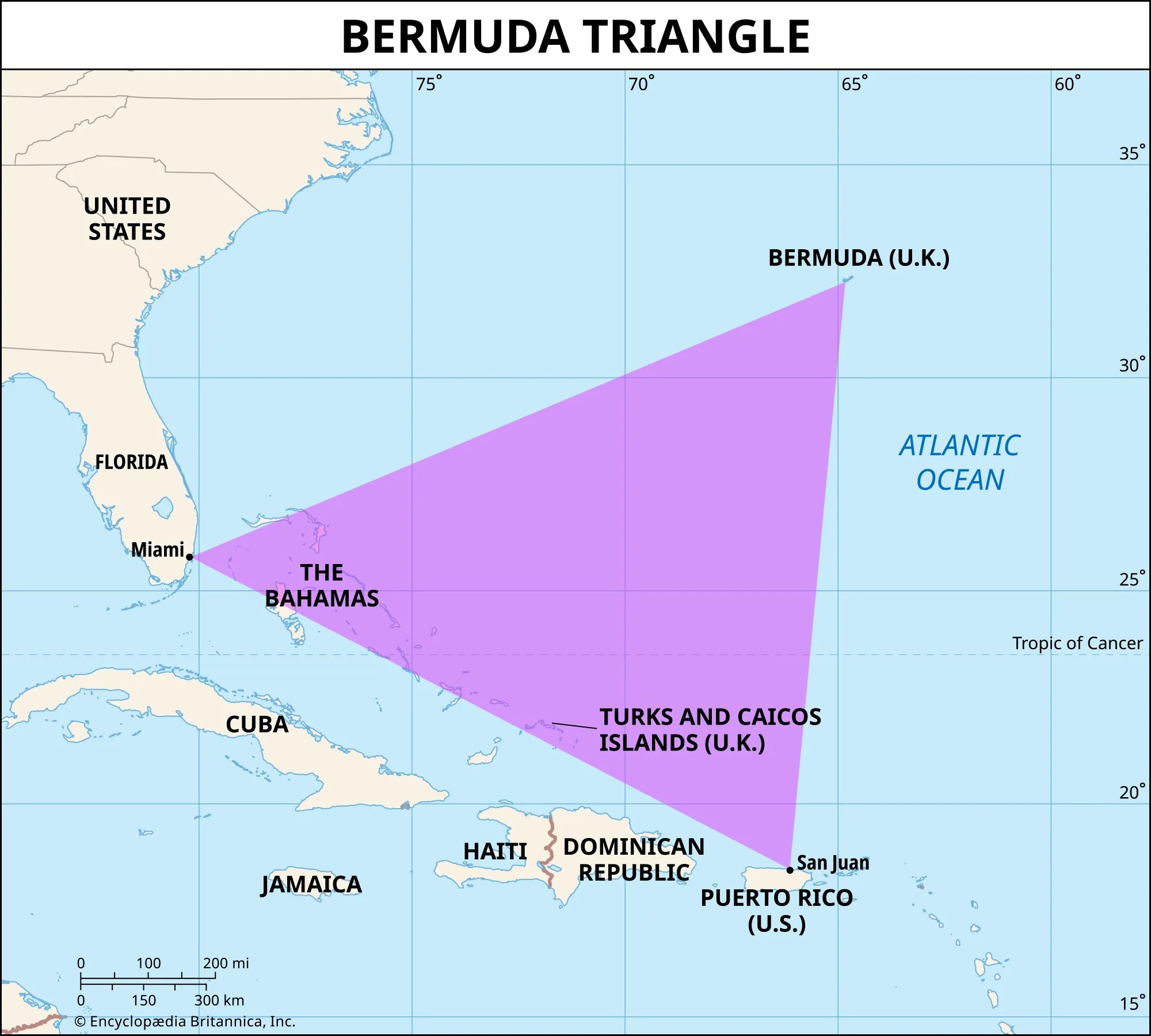
So where are we today? The article The Mystery of the Bermuda Triangle Finally Unveiled, shares that a shipwreck occurred in December 2020, when the vessel and its 20 crew members all disappeared. No trace of the ship, debris, or persons on board has been found. An average of 20 boats and four planes disappear in the Bermuda Triangle each year without explanation.

No firm explanation has ever been made, probably because there are no distress signals, no survivors, and no wreckage to determine a cause. Various factors may contribute to the disappearances, including the Gulf Stream crossing the Bermuda Triangle, which can cause sudden weather changes. The Milwaukee Depth (27,493 feet, 5.26 inches), the deepest point in the Atlantic Ocean, is located within the Bermuda Triangle. Methane gas production below the water’s surface is massive. Due to these natural circumstances, scientists believe that the ocean depth and methane gas production may cause underwater crevices to open, releasing giant bubbles of methane. This could lead to massive blowouts of gas that could suck boats below the surface and cause engines and aircraft probes to malfunction.

Why don’t we hear about it anymore? Most likely because, as science evolves, the mystery of the Bermuda Triangle has been debunked. Compasses that read true north instead of magnetic north can cause a 20-degree difference in readings, leading to navigational errors and significantly deviating from course. The unpredictable weather patterns of the area can create sudden waterspouts and thunderstorms, putting ships and airplanes into danger, and the fast, turbulent Gulf Stream can quickly erase any wreckage.

One of the main factors contributing to its loss of media coverage is that conspiracy theorists and journalists built popularity and hype around a dangerous area, when in fact, there are other, more hazardous locations. The Bermuda Triangle didn’t even make the list for dangerous shipping incidents from 1999-2011:  British Isles, Bay of Biscay, North Sea; East Mediterranean Black Sea; Japan, Korea; West Mediterranean; Gulf; South China Sea, East Indies; West African Boast; Panama Canal; East African Coast; and Bay of Bengal.

The bottom line is that the mystery of the Bermuda Triangle remains a topic of debate to this day. Many minds still ponder its origins. However, scientists often attribute it to natural phenomena and weather. The Bermuda Triangle is considered safe and is heavily traveled.

Leave a comment

Filed under assumptions, Discoveries, environmental, exploration, Life Changing, Life is a Melting Pot, Mystery, nature, reality, travel, Weather

What Is Our Future?

When I look at what is happening within the United States over the past few years, combined with the conduct and verbiage of political figures and citizens, I believe it won’t be long before this country finds itself in the midst of a civil war.

Civil war includes conflicts over government control and may involve military coups, insurgents from within the government, and challengers from outside the established government. Civil wars also include ethnic conflict and aspirations for social transformation.

Why do I believe we are headed into a full-blown war within our country? Look around you; there is hostility and violence everywhere. People within the government no longer believe in the very foundation this country was built on. Thomas Jefferson wrote in the Declaration of Independence, “Governments are instituted among Men, deriving their Powers from the Consent of the Governed.”

Part of allowing the governed to determine rights was placing control of elections on the states. It also prevented many citizens from being able to exercise that right. Initially, only white men who owned property could vote. Over the years, amendments expanded rights to blacks and other minorities, including women and non-property owners.

Leading up to and following the presidential election of 2020, we saw many things this country’s citizens fought hard to overcome come back to fruition. A desire to overturn the government and eliminate our freedoms began when the President of the United States began putting into his followers’ minds the belief that the election process is unfair. That the election was stolen.

How can an election be fair only if you win but not if you lose? That was his way of thinking, and people believed him. Now other republican candidates are following his example and have said they will only agree with election results if they are the winner.

Has anyone given consideration to what Trump’s claims of a false election cost the taxpayers?

When Trump refused to accept his loss and filed 62 lawsuits in federal and state courts attempting to overturn the election of Biden to the presidency. Trump was defeated in 61 cases. The only “win” was in Pennsylvania, where a Judge ruled that voters cannot go back and “cure” their ballot after failing to provide proper identification within three days of the election. This ruling didn’t change the outcome of the election.

As of February 2021, Trump’s election fraud lawsuits cost taxpayers more than $519 million. That is money out of your pocket to subsidize his refusal to recognize the will of the people.

Trump’s refusal to accept election results caused violence at the Capitol on January 6t. The main goal was to prevent the reading of the electoral votes to officially declare Joe Biden the winner of the presidential election. That was a direct attack on our government. Trump’s goal was to remain in office, thereby destroying the very basis on which this country was founded in 1776. Had they been successful, the freedoms you know today would no longer exist.

Trump’s rhetoric about a false election still rings out today, with other republican candidates saying they will only believe the election results if they win but not if they lose. You can’t have it both ways. Either we have a good election system, or we don’t. It can’t be fair “only when I win.”

That isn’t to say a candidate cannot question election results. It has been done many times in the past by both parties. The difference is whether the losing candidate accepts the findings or whether they refuse to accept defeat and continues fighting.

Social media hostility has become a very real problem in this country.

Studies and interviews with policy experts, activities, and social media industry professionals show that platforms such as YouTube, Twitter, and Facebook do not cause political polarization, but they do exacerbate it. When people view political content on social media, it makes them more upset and angry, causing them to develop stronger support for their own position.

In 2018 there was a major overhaul of Facebook’s recommendation algorithm. As a result, Facebook became an angrier place. The new algorithm prioritizes controversial content, resulting in otherwise peaceful people becoming trolls because of social media interactions.  

In addition to making people angrier than normal, those angry people are more likely to believe false information on social media. Hostile people in political discussions share misinformation. This doesn’t mean they believe what they share, but rather they refuse to admit their original belief was wrong. This behavior contributes to a disproportionate amount of misinformation, toxicity, and violent content because it is easier to inspire anger than positive emotions.

Studies in the United States and Denmark reveal that people who behave like jerks online are also jerks in person. People obsessed with politics are often frustrated, offensive, and angry, ranting about politics in person and online. The majority of these political posters are status seekers who crave a higher social status. Their main goal is to intimidate others into recognizing them, which serves their own personal agenda.

Discrimination Still Exists

The country has come a long way from the days of slavery, but discrimination still exists against people because of race, gender, religion, and for being LBGTQ. Violence against Jews in the U.S. has been the highest since the 1970s, with 2,107 incidents of harassment, vandalism, and violence against Jews in 2019.

The negative attitude about people who are not white dates back to the original days of voting, when only white male property owners could cast their votes. Some of this hatred has been invoked by our former POTUS blasting discriminatory comments about Mexican immigrants being criminals and rapists, proposing a ban on Muslims trying to enter the U.S., suggesting a Judge recuse themselves because of their Mexican heritage, joking about the Trail of Tears, pandering white supremacists at a Virginia rally, and claiming Kamala Harris doesn’t meet V.P. requirements because of her black heritage.

This kind of behavior should never be tolerated by anyone in this country. Trump claims he is “the least racist person” in the country, but his behavior says otherwise. The real danger is when he makes racially discriminatory remarks, his words impact those who follow him and negatively impact their behavior. Even though he no longer leads this country, his base follows his every command, which is dangerous.

This country was built on free-thinking people. If people do not think for themselves and follow one person’s commands, freedom will cease to exist, and the United States will become a dictatorship.

The Border Crisis is Real

There is no denying the high number of undocumented people crossing into our country. However, one must consider the failures of the prior administration regarding our border.

Before his 2016 election, Trump claimed he would build a border wall, securing our borders at less cost. That was a false claim and ended up costing taxpayers more money than ever before. Trump stifled competition among would-be builders, resulting in the wall costing five times more during the Trump administration than during the 16 years of the Bush and Obama administrations.

The reason for such as substantial cost increase? No bid contracts were awarded to a small group of pre-selected construction firms owned by donators to either Trump or other republican campaigns. Had contracts been submitted for competitive bids, costs to taxpayers would have been substantially less.

  • 2007 to 2015 (Obama Administration)—the government spent $2.4 billion to build 653 miles of the border fence, including gates, roads, lighting, and other infrastructure
  • By October 2020, the Trump administration spent $15 billion in contracts to build 738 miles of the border fence—$20 million per mile. This is contracts paid, not fence built
  • As of October 2020, the Trump administration completed repairs to 360 miles of fence in California and Arizona—no new fence was built

The biggest immigration problem is in Texas, where drugs and immigrants cross the 1,200-mile border along the Rio Grande.

When Trump was unsuccessful in using proper channels through congress to fund his wall, he declared a state of emergency, shifted billions of dollars from the Department of Defense and Treasury Department, then waived 10 federal contracting laws when attempting to fulfill his campaign promise. Oh, and Mexico hasn’t spent so much as a penny on it.

Destruction of Public Lands and Depletion of Water

The majority of the Arizona-Mexico border is on public lands the government set aside for special protection because of ecological value. This includes the San Bernadino National Wildlife Refuge, Cabeza Prieta National Wildlife Refuge, San Pedro National Riparian Conservation Area, and the Organ Pipe Cactus National Monument.

Construction crews for Trump’s border wall spent months dynamiting, drilling, pumping, clear-cutting, and excavating public lands in numerous spots, including Guadalupe Canyon in Arizona. This was only to build roads for construction equipment. The beautiful Saguaros of the Sonoran Desert, protected by law, were lying in heaps next to construction areas. The damage is permanent. Natural migration of javelina, deer, bobcat, mountain lion, and bighorn sheep, and access to their natural water supply is impacted by steel beams installed along main migration corridors.

Natural water supplies are depleted because of border wall construction. This includes the Quitobaquito, a rare desert spring in Organ Pipe Cactus National Monument. Between February 2020 and February 2021, 45 million gallons of water were withdrawn. Artesian-fed wetlands and springs in the San Bernadino National Wildlife Refuge were losing about 700,000 gallons per day as of February 2021 due to construction pumping.

This is only just a touch of how much damage to our water supply and natural wildlife this wall has caused. If you haven’t seen the beautiful national parks along our southern border, it’s too late. Trump destroyed them.

The Bottom Line

The problems above and other issues, including abortion, changes in voting requirements, intimidation at voting polls, police brutality, and more, are inciting the citizens of this country. The anger that Trump incited, leading to the January 6th attack on the capitol, continues and will likely lead us into a civil war.

Look back 10-20 years and the events taking place in this country compared to now. Did you feel safer in 2010 than you do now? If so, that is an indication that the country is floundering.

I’m not going to tell you whether to vote republican or democratic. That is your choice. The proper choice is to look at each individual candidate. What do they stand for, and what are their beliefs and goals? Do they align with your desires for this country?

If the answer is yes, they are the candidate to vote for. Ignore their political alliance, and vote for the best person, not the party. That is how to maintain a politically sound, safe, and free country. That is how we prevent another civil war.

Leave a comment

Filed under border wall, Election, Life is a Melting Pot, nature, reality, Trump, Voting

35 Unique Things About Michigan

Although I now travel and spend more time outside of my birth state than I do in it, Michigan still holds a place in my heart for its many unique qualities.

Michigan is the only state that consists of two peninsulas. The “mitten” is the lower peninsula and is where I grew up, in the “only Eaton Rapids on earth.” The mitten is surrounded by Lake Huron on the East, Lake Erie on the South, and Lake Michigan on the west. To access the upper peninsula (the U.P.) you need to cross the Straits of Mackinac, a 5-mile channel connecting Lake Huron to Lake Michigan. The north shore of the U.P. is on Lake Superior.

If that isn’t enough, here are 35 more things that make Michigan a very special place.

  1. Detroit is the Car Capital of the World. Home to the “big three,” Ford Motor Company, General Motors Corporation, and Chrysler LLC, the state handles 24% of all automotive manufacturing in the U.S.
  2. Michigan is the largest manufacturer of lithium-ion batteries in North America. The American Battery Solutions Inc. manufacturing facility is located in Lake Orion and employs more than 100 workers. In support of this the Governor is working to develop the nation’s first wireless charging infrastructure on public roads.
  3. Alpena is the home of the world’s largest cement plant. Lafarge Alpena has been in existence since 1907 and employs more than 200 workers.
  4. St. Clair is the home of Diamond Salt Company, established in 1886 when a new process for making salt was patented. It is the world’s largest marketer of salt, supplying salts for culinary use, manufacturing, agriculture, grinder, pool use, water softening, and ice control.
  5. Southwestern Michigan is home to the largest Dutch settlement in the United States, with almost 300,000 residents of Dutch heritage. Dutch residents are most prominent in the five counties of Allegan, Kalamazoo, Kent, Muskegon, and Ottawa.
  6. Rogers City boasts the world’s largest limestone quarry. The site is 7,000 acres, of which 3,000 acres are actively mined. The quarry has an anticipated lifespan of an additional 100 years.
  7. Elsie is the home of the world’s largest registered Holstein dairy herd. Green Meadow Farms is a family operation established in 1922. With 80 employees, they raise all livestock and do all field and crop work on their 8,000 acres. The farm has a milking herd of about 3,900 registered Holsteins.
  8. Enjoy the longest freshwater boardwalk in the world in St. Clair. The boardwalk is along the St. Clair River, an international border with Canada. The St. Clair River is one of the busiest waterways in the world with more than 5,000 ships traveling the water every year. With more freighter traffic than the Suez Canal and Panama Canal combined, it’s an excellent spot for freighter watching.
  9. Colon is the magic capitol of the world and home to Abbott’s Magic Company, the world’s largest manufacturer of magic supplies. The city has more than 30 magicians laid to rest in its cemetery, more than any other cemetery in the world.
  10. Michigan Sugar Company is the largest sugar factory east of the Mississippi river, the largest sugar refinery in Michigan, and the fourth largest sugar refinery in the United States.
  11. Michigan ranks #1 in state boat registrations. St. Clair County ranks #1 in the U.S. for the number of boat registrations per capita.  
  12. Port Huron is home to largest freshwater sailing event in the world. The annual Port Huron to Mackinac race began in 1919 and more than 200 boats enter the race each year.  
  13.  The state has about 54,800 farms covering 10 million acres and producing $6.5 billion in products yearly. Michigan is the largest producing region in the world for Montmorency tart cherries and Traverse City hosts the annual National Cherry Festival every July. The state is one of the top producers in the U.S. of grapes, apples, peaches, and blueberries.
  14. Livestock population is significant, with about one million cattle, 78,000 sheep, 3 million chickens, and one million hogs. Livestock products account for about 38% of all agricultural output.
  15. Sault Ste. Marie was founded in 1668 by Father Jacques Marquette, and it remains the third oldest remaining settlement in the United States
  16. In 1817 the University of Michigan was the first university established in any of the states. It was originally named Catholepistemiad and was located in Detroit. The name was changed in 1821 and the university moved to Ann Arbor in 1841.
  17. Michigan State University was founded in 1855 as the nation’s first land-grant university and served as the prototype for 69 land-grant institutions established under the Morrill Act of 1862. It was the first institution of higher learning in the nation to teach scientific agriculture.
  18. The Mackinac Bridge is one of the longest suspension bridges in the world. It spans 5 miles over the Straits of Mackinac and took 3 years to complete. It was opened to traffic in 1957
  19. Kellogg Company made Battle Creek the Cereal Capital of the World. The Kellogg brothers discovery of producing flaked cereal was an accident that sparked the beginning of the dry cereal industry.
  20. Vernors ginger ale was created in Detroit and is the first soda pop made in the United States. It was an accident. In 1862 pharmacist, James Vernor, was trying to create a new beverage. He was called away to serve in the civil war, leaving his “experiment” behind. When he returned four years later the drink in the oak case had developed a delicious ginger flavor and Vernors was born.
  21. The Detroit Zoo opened in 1928 and was the first zoo in America to feature cageless, open exhibits allowing animals to roam free. In 1968 the zoo’s Penguinarium was the world’s first zoo building designed exclusively for penguins. In 2001 it opened Wild Adventure Ride, the nation’s first zoo simulator, and the Arctic Ring of Life, the largest polar bear habitat in North America.
  22. Michigan is only place in the world with a floating post office. The J.W. Westcott II is the only boat in the world that delivers mail to ships while still underway. It has been operating 140 years.
  23. The state boasts 3,224 miles of freshwater shoreline, the longest in the world. It also has the longest shoreline of the 48 continuous states. There are an additional 11,037 inland lakes and 36,000 miles of streams.
  24. The state has 124 lighthouses and navigational lights. The oldest is the Ft. Gratiot Lighthouse, constructed in 1829.
  25. It is the first state to provide in the constitution for the establishment of public libraries in each township and city, set forth in Article XI, Section 14 of the Michigan Constitution of 1908. It was also the first state to guarantee every child the right to a tax-paid high school education.
  26. Isle Royal National Park shelters one of the largest moose herds in the U.S. The park is 206.73 square miles and is the 4th largest lake island in the world. As of 2019 the island was home to 14 wolves and 2,060 moose. The moose herd was 2,400 at its highest point in 1995.
  27. Upper Michigan Copper Country is the largest commercial deposit of native copper in the world. By the 1860s the upper peninsula was supplying 90% of America’s copper.
  28. Michigan fared worse than the rest of the country during the depression between 1930 and 1933. The state’s unemployment rate was 34%, while it was only 26% in the rest of the country. This is because out of work automotive workers were starving to death by the early 1930s.
  29. Michigan has the first auto-traffic tunnel built between two nations, the mile-long Detroit Windsor tunnel under the Detroit River was completed in 1930. This was the third underwater auto tunnel built in the United States.
  30. The world’s first submarine railway tunnel opened between Port Huron and Sarnia, Ontario in 1891. It is both the first submarine tunnel and the first international tunnel.
  31. In 1879 Detroit telephone customers were first in nation to be assigned phone numbers to facilitate handling calls.
  32. In 1929 Michigan State Police established the first state police radio system in the world
  33. Grand Rapids is home to the 24-foot Leonardo da Vinci horse, II Gavallo, the largest equestrian bronze sculpture in the Western Hemisphere.
  34. Michigan is the great lakes state because its shores touch four of the five great lakes. We get our name from the Ojibwa (Chippewa) Indian word meaning “large lake”
  35. Detroit is the birthplace of Motown Records. Motown artists include Tina Turner, Otis Redding, Diana Ross, Four Tops, The Supremes, Al Green, Gladys Knight & the Pips, Ray Charles, Curtis Mayfield, Lionel Richie, Bill Withers, The Commodores, Aretha Franklin, Michael Jackson, The Jackson 5, The Drifters, Smokey Robinson, James Brown, Stevie Wonder, Fats Domino, The Temptations, Marvin Gaye, and more.

    The state has even more interesting facts setting it apart from the rest of the country and world, but I had to stop somewhere. I hope you’ve enjoyed this glimpse of my home state.

    Share where you are from and what makes your home state unique.

Leave a comment

Filed under Activities, Blue Water Area, Discoveries, education, events, exploration, farm, Festivals, home, impressions, Lake St. Clair, Life is a Melting Pot, Michigan, nature, reality, tourism, travel, Upper Penninsula

Nature’s Palette

As you drive to the north end you encounter drifts of sand on the road, then a small sign points to Beach Access #6.  This access is outside the city limits and not maintained, but people use it every day.  The sand is thick, so a 4-wheel drive is necessary.  You maneuver through sand piles that will make you think of maneuvering deep snow if you are from the north.  Once you break free you are on a beautiful beach that you can drive for about 3 miles south and 26 miles north on the Gulf of Mexico.

It is the north drive that has the most to offer.  Every day is the same but different.  Nature creates an ever changing palette intermixed with human elements.   We enjoy driving in the edge of the water, but there is always a possibility a larger wave will come in and leave you a bit wet.  That is what happened to us one day when we had top off the jeep.  A wave hit the side coming in the driver’s side window and splashed so high it came down through the roof opening.

A trail of shells leads you down the beach, not only on the water’s edge, but also up near the dunes.  This is because during high tide the water is considerably higher on the beach, and high winds bring it in even further.   If you are lucky enough to be there on a high winds day not only will the waves be higher, but there will also be sand swirling off the dunes and flowing across the surface of the beach until it meets incoming waves,  giving a soft, mystic feel to everything.   The pounding waves provide a rhythmic music of nature as you drive.

Fishermen line their poles up along the water, sitting in lawn chairs waiting for their catch. some with BBQ grills set up to cook up their meal fresh.  We stopped to watch one bring in his catch, but it was soon discovered he had hooked a sting ray, which he cut his line from so that it could work its way back into the water.  Herons, gulls, pipers and pelicans congregate along the water’s edge, satisfying their hunger with the offerings of the water.

Visitors walk along with a bag in hand, searching for the perfect shell.  On occasion you will see a group of horseback riders from a nearby stable.  We came upon a driver in a car who was stuck in the soft sand along the surf.  We pulled him out with the Jeep’s power wench.  You may sometimes encounter nude sunbathers or swimmers.  Everyone is friendly, everyone waves.   The beach is a relaxing, fun place to be.

This slideshow requires JavaScript.

Landmarks, both natural and human-enhanced, mark your way.  Mile marker signs are mounted on the edge of the dunes so you know how far you have gone.  Some of my favorites include a log decorated to look like an alligator, a log with an upside down boot on it, a buoy that washed ashore, a container anchor that has been covered in graffiti, a piece of driftwood shaped like a sea serpent, and even a water rescue pod that has been decorated.  These items are constantly changing, impacted by nature and man, so each day brings a new look.  Sands drift and cover parts while winds uncover new discoveries.  The sea serpent log that was open and clear on our first visit now has sand over parts of it.  The water rescue pod was moved further onto the beach by the US Fish and Wildlife workers as it was sitting on the edge of a wildlife preserve.  A buoy that had drifted ashore was complete one day and missing its top a few days later.

I have enjoyed the time spent on the beach of South Padre Island, Texas.  I will miss nature’s palette of beauty and change when I have gone.  It will be interesting to see what items remain the same, what has disappeared, and what has been added by the time I return next year.

1 Comment

Filed under Activities, Discoveries, environmental, exploration, impressions, Life is a Melting Pot, nature, time, tourism, travel, vacation, Weather

SEVEN WEEKS AND ROLLING

This slideshow requires JavaScript.

Hard to believe it has been seven weeks since I started my new lifestyle of living on the road full time in a motor home (a/k/a full-time RV).  In that amount of time I have visited Ontario, Quebec, New Brunswick, Prince Edward Island and Nova Scotia, Canada and Bar Harbor/Acadia National Park, Maine in the United States.

One thing you have to do when living this way is be conservative, be flexible, and enjoy life.  Sometimes things go well, and other times the best laid plans can be foiled.  Highlights of my travels and learning curve:

  1. The best laid plans can be foiled when you make a day trip three hours away only to discover that town’s power is out and all businesses (including museum you wanted to visit) are closed.
  2. Pulling off for a quick lunch break takes more planning in a 35-foot motor home towing a vehicle than it does in a car.
  3. Ottawa, Ontario is the capitol of Canada and is a very interesting city, but bring your walking shoes.  There is one parking lot in the entire city and a lot of area to cover.   If you take a double decker bus tour it is a great way to get around, but you may end up with a tour guide who has a strong French accent and is difficult to understand.
  4. Canadians are very pro recycling The question in grocery stores is “Do you have your own bag?” not “paper or plastic?”  Some stores charge you for use of their bags.
  5. You can not stock up when items are on sale.  There is no extra room beyond the refrigerator and pantry.
  6. There is a large percentage of people in Canada who hang their laundry outside to dry….many on pulley-style clotheslines.
  7. When living in an RV, laundry is a necessary evil that must be done in a laundromat (most campgrounds have them) every 2-3 weeks.
  8.   You can live in a house for years and never wave at your neighbors, but in a campground everyone waves at everyone else.
  9. The architecture and culture of Quebec City, with its fortification wall, Citadelle, and French influence is like taking a step into another country.
  10. When you travel full time you need down time.  This is not a vacation, it is a lifestyle.
  11. When you give up on the road signs being true and think you will never see a moose, one shows up on the side of the road and you do not have the camera ready.
  12. No matter how many times you see them, the difference between high tide and low tide at the Bay of Fundy is amazing.  This is where you see the world’s largest tides.
  13. Getting your mail an average of once every four to six weeks takes planning so it arrives in a city where you plan to be at the appropriate time.
  14. A GPS can be your best friend and your worst enemy.  Our Trucker GPS in the RV took us down a road that had been re-done two years ago and no longer goes through — it is now a dead end.  When towing you cannot back up because it damages the tow unit, so we had to disconnect the jeep, turn the RV around and then re-connect before we could continue.  Of course it would have helped if Ellsworth, Maine had put up a “Dead-End” sign, as a woman on the road said it happens all the time and they have been after the city to do something.
  15. In many spots what is promoted as a “scenic drive” is overgrown with nothing to see.
  16. Convection oven cooking is not difficult, just different.  The three burners on the stove-top is much harder to adjust to as it does not easily accommodate large pans.
  17. I have not adjusted to the feel of the motor home when driving in high winds or uneven pavement.  That one is going to take some time!
  18. This is an awesome way to live and I’m glad I took the plunge and jumped in with both feet.

As time goes on I look forward to sharing more of my travel adventures with everyone.


Leave a comment

Filed under Activities, assumptions, Canada, Coping, decisions, Discoveries, environmental, exploration, freindship, friends, friendship, Full-Time RV, habit, home, impressions, Kitchen, Life Changing, Life is a Melting Pot, Meals, memoir, nature, Photography, reality, spring, summer, time, tourism, travel, vacation, winter, Writing

My First Week as a Nomad

My first six days as a Nomad were interesting, fun, and sometimes frustrating.  In many ways it feels more like a vacation rather than a lifestyle change.  It is relaxing and interesting, and sometimes not at all what is planned.  If I can experience all this in six days, I can’t imagine what the future will bring.

On Monday we left Port Huron, Michigan and traveled to Sault Ste. Marie, Ontario, Canada.  Our original plan was to stay only two nights, but after reviewing travel information about the surrounding area decided to extend our stay to a total of four days.

On Tuesday we visited the Bush Pilot Heritage Centre in Sault Ste. Marie.  Paul was a bush pilot when he lived in Owen Sound, Ontario as a teen so this was on his “hit list.”  The museum was interesting, with several planes on display inside the hanger where the museum is located.  We viewed two movies, the first was an “on board” experience with a bush pilot, and of course took the rider through a series of mistakes and mishaps that can happen on a plane, including an unexpected storm, dozing off with the plan on autopilot, and more.  The second movie was in 3D and took you into the heart of fighting forest fires.  You experienced time in flight with the commander of the entire firefighting operation, in flight with a pilot doing water drops, and on land with a ground firefighting crew.  Both movies are well worth the time it takes to view them.

A small town about four hours northwest of Sault Ste. Marie is the home of Winnie-the-Pooh, and houses a statue of Winnie, as well as a Winnie-the-Pooh and Railroad Museum.  I wanted to go there so a day trip was planned.  Part of the trip goes along the shore of Lake Superior, and we figured we would find photo ops along the way.  A visitor guide worker had told us about an off-road trail on that stretch which Paul wanted to check out.  We didn’t locate the trail she used, but did access a logging trail, which about 20 minutes in we decided was not offering any photo ops so turned around and continued on our journey.

We did find a couple spots to stop and take photographs of Lake Superior, and a small rapids and river we walked in and photographed.  It was interesting that this entire route had very few towns, gas stations, or any other type of business or rest area to stop at.    So scarce they were practically non-existent.  We saw a rest area/visitor center which made a good stop for a few minutes.  They had a small gift shop where Paul decided to pick up a couple energy bars to tie us over until lunch, which we planned to eat in White River.  That purchase turned out to be a very good decision.

This slideshow requires JavaScript.

We munched on our energy bars, and decided to stop for gas as we rolled into White River, because we would need it to make the full journey back to Sault Ste. Marie.  There were barriers up across the gas pumps and an attendant walked over and informed us that the pumps were not working because the entire town of White River had lost power and nothing was open.  We drove through town and took pictures of the Winnie-the-Pooh statue.  The attendant was correct, absolutely everything, including the museum we had just driven four hours to visit, was closed so we started our journey back.

Not too far south of White River was a small gas station with full-service pumps.  The attendant there shared that the last time White River lost power they were out for a week.  He also let us know that there was a restaurant on Hwy 17 just south of Wasmus where we could get lunch/dinner.  By now it was after 2:00 pm and we were definitely getting hungry.

We drove the two hours south and located the restaurant.  Our luck had not yet changed; on the front door hung a sign that they were closed until 5:00 pm.  It was only 4:30 so we decided to drive on.  We were not far from our campground when we found The Voyageur Lodge, which included a small restaurant.  The menu was limited, but the food very good.  Paul had an open face hamburger, which had gravy to which he added mushrooms and onions.  It normally included fries and coleslaw, but he switched the fries for onion rings, which he said were very good.  I opted for a fish sandwich which also came with fries.  The sandwich was made with whitefish which was lightly breaded and very nicely done.    We shared a butter tart for dessert, also very tasty.

Our final day in Sault Ste. Marie we drove into town and visited the historical canal sight.  At the end of the island was a swing damn, one of only nine built and the last in existence.  It is used in emergency situations if there is a problem with the lock.  This is also where the lock is located for small boats, and we were lucky enough to see two of the Soo Locks Tour boats use the lock at the same time.  The difference in elevation between Lake Superior and Lake Huron is 21 feet, so quite interesting to observe the lock in operation.   A nice way to finish out our stay.

Friday morning we said goodbye to Sault Ste. Marie and drove east through Ontario, stopping at a small campground in Lavigne, Ontario.  We are here only for two nights.  One day of rest and computer work before continuing our journey to Ottawa, the capitol of Canada, where we plan to spend four days.

We did take some time from our paperwork to photograph some very decorative scarecrow displays around town.  These have been prepared as part of a plowing competition in September. I finished out our last night in Lavigne with a walk around the park, taking a few photographs of Lake Nippising, which the campground is located on.

So far my life as a nomad has been interesting and relaxing, even if Winnie-the-Pooh’s hometown did leave me a bit frustrated.  I guess in this lifestyle you simply have to go-with-the-flow when rocks appear in the river.

Leave a comment

Filed under Activities, Canada, decisions, Discoveries, education, exploration, impressions, kids, Life is a Melting Pot, memoir, Michigan, nature, summer, tourism, travel, Upper Penninsula, vacation

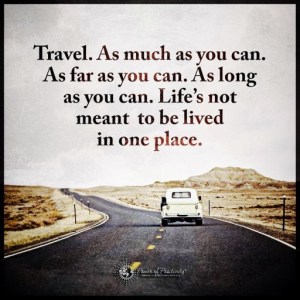
Life is not meant to be lived in one place

I have reached the point of excitement.  My new lifestyle will soon be moving from life in an RV in my local area to actual life on the road.    I am now on my last two weeks of work, with the 16th of August being my final day.  I am training someone to take my place at work, will soon have the closing date on my house, and once that is completed we will set off on our new lifestyle.

This past weekend Paul and I opened up the “basement” storage in the motor home and got the last boxes out of my car and into the RV.  Not everything is sorted and organized the way we want, but I am at least officially in the motor home totally and completely.  The next two weeks will be a whirlwind of finishing up things at work and training my replacement, a doctor’s appointment, turning in my lease vehicle, finishing up paperwork, listing the second home I own for sale, and closing on the home I was residing in.   In someways the day when I can “hit the road” seems so far away, and yet so close.  Time passes quickly when trying to get everything finished in the final moments.  Trave as far and as long as you can

We are now starting to plan the first leg of our travels, and it is exciting and a bit nerve wracking at the same time.  I am semi-retiring prior to retirement age, so will need to do remote or seasonal work while on the road to supplement  the spousal pension I receive.  Until I have a steady income from remote or seasonal work  I will be concerned about finances.  That is just me.

At the same time, if I didn’t jump at this opportunity now to travel full-time I know I would regret it for years to come.  You only live once, so might as well make the most of it.  What are that chances that I will ever again run across the opportunity to live full time in a motor home traveling Canada and the United States with a person with whom I am compatible who is also a fellow photographer?

I hope this is a life style we can enjoy for several years.  The opportunity to experience a variety of cultures and the diversity of nature as we travel cross country is something I am looking forward to.  As I travel I plan to keep a journal about my travels.  I enjoy freelance writing and hopefully you will see my writing and/or photographs not only in this blog, but also in published magazines and journals.

If you have any “must see” locations in Canada or the United States, please share.

Leave a comment

Filed under career, communication, decisions, Discoveries, education, exploration, hobbies, impressions, Life Changing, Life is a Melting Pot, nature, reality, spring, summer, time, tourism, travel, vacation, winter, work, Writing

Acorn Drop = Drunken Squirrel

One day I was flipping through Facebook posts when a friend commented “So I am sitting on my deck reading and enjoying a glass of vino when a frickin’ squirrel drops a frickin’ acorn directly into my glass! Really Mr. Squirrel! I could not do that if I tried!”

Now, I am not the type of person who can let this type of comment pass, it just gets the mind rolling on the possibilities on how this story could have progressed……

What if Carol had picked up the acorn after it was nicely wine soaked and thrown it back at the squirrel?  Would the squirrel have discarded it as “damaged” goods, not worthy of storage?  Would it have taken the acorn into its mouth and carried it back to store?  Would it have held the acorn, licking the wine off it?  index

If the squirrel carried the nut in its mouth or licked it clean, would the wine have inebriated the squirrel.  Would Carol have then been entertained by a drunk squirrel staggering about on her lawn?  What if the drunken squirrel climbed the tree for more acorns and in its drunken state staggered a cross a limb and fell out of the tree and into her class of wine?

What would the mental state of a drunken squirrel be, especially after falling from the tree and into the glass of wine?  Would it have been a friendly, happy drunk or an angry, hostile squirrel?

My thought is, the next time Carol is sitting under a tree drinking a glass of wine, she should keep on hand extra treats in case an angry, drunken squirrel lands in her wine glass.  Let’s face it, most wild animals turn happier when fed.  Maybe a bowl of wine for its drinking pleasure would be a good idea.

Leave a comment

Filed under backyard, decisions, Discoveries, food, Life is a Melting Pot, Meals, nature, nutrician, spring, summer

Loved by Wildlife

While I have only been living in an RV for a little over a month, Paul has been enjoying this life for a year now and has shared some wildlife dilemmas he has encountered.   Depending on where in the story you are, the experiences can be perceived as frustrating or funny, possible even fearful and confusing for the creatures involved.

The first incident was when Paul was staying in a campsite and continuously heard something running back and forth on the top of his motor home.  He could not figure out what any creature would find so entertaining as to scamper back and forth, but didn’t really give it much thought.

Then one day a fellow campground tenant asked Paul if he realized that a squirrel had built a nest on the top of his slide.  Now this is a sheltered location, as the slide has a built in canopy over it.  Paul got up on a ladder and looked at the top of the slide.  The nest was positioned in the middle of the slide, and he could tell it was about two feet wide and no idea how deep.  Now how to reach it?

Paul had a long-handled squeegee and decided that would do the trick.  Standing on the top of the ladder he reached the squeegee in as far as possible and pulled the nest toward him, letting it fall to the ground.  He repeated this process several times until as much of the nest as he could reach fell to the ground.  He then moved the latter to the other end of the slide and repeated the process.

After he had removed the nest one of the observers mentioned that when it fell to the ground baby squirrels had run away from it.  One of the campground workers when and got a shovel and scooped up all the nest debris and disposed of it elsewhere.    Now the question was, how had the squirrel gotten up onto the roof of the motor home, as there were no trees nearby.  Paul heard the sound on his roof again and went out to observe.

The squirrel was climbing up and down the ladder on the back of his RV.  He said the mother squirrel looked to be in a big of a panic, running back and forth, looking all over as if to say “where is my home?”  and “where are my babies?”   Despite the fact that the nest had to be removed for him to bring the slide in and move to the next location, I had to feel sorry for the poor mother squirrel who thought she had built a safe haven for her little family and it was now missing.

Now we move to fluttered friends.   A nest with eggs was found on one of the support arms for one of the slides and was removed, then on at least two other occasions birds built nests on the lower portion of the slides.   One bird was unintentionally suicidal.  As we were getting ready to leave after the jeep was parked less than 48 hours a bird had built a nest on the top of his front passenger side tire — and it was tightly muddied to the tire!   It was removed before we drove off.  Can you imagine the shock of all those birds who had found what they considered an ideal place to construct their homes, only to return and have them totally gone.

This makes me wonder, why is this RV and Jeep so loved by wildlife?   With trees nearby why select a man-made object over nature?    It will be interesting to see what other creatures may be attracted to our motor home as we traverse the U.S. and Canada.

Leave a comment

Filed under backyard, birds, decisions, Discoveries, environmental, exploration, Family, Life is a Melting Pot, nature, travel

Vacation Destination: Calgary, Alberta

Looking off into the distance, the peaks of the Canadian Rockies can be seen, drive a couple hours north east and visit Drumheller, a town sunken down into the earth that just happens to have the world’s largest finding of dinosaur skeletons and a huge museum displaying them,  but the main purpose of this destination was to attend the Calgary Stampede, the largest outdoor event on earth.

It is exhilarating to travel somewhere you have never been before.  To experience the beauty of nature and the excitement of a world-renown event.   To visit areas famous for their natural beauty.  That is what I did this past July when I flew from Detroit, Michigan to Calgary, Alberta, Canada for a 10-day vacation.    To me travel and vacations are an opportunity to partake in the areas surroundings, take photographs, and experience the culture of the area.

Calgary is surrounded by a vast array of attractions, and I was only able to experience a small amount.  I arrived at night and did not have the opportunity to view the Canadian Rockies from my plane, but when I awoke the next morning they could be seen in the distance from where I was staying.   About 1-1/2 hours drive west from Calgary is Banff National Park.  Canada’s First National Park comprises 2,564 square miles and is located in the Canadian Rockies.  Banff is the home of Lake Louise and Lake Moraine, glacier lakes with a beautiful, distinctive emerald/turquoise color water.  The breathtaking scenery makes this park makes it well worth the time to visit.

This slideshow requires JavaScript.

A day trip to Drumheller, northeast of Calgary, is a “must see”.  Located in the Canadian Badlands, this unique town is built in an area of land that at some point in time sunk down into the earth that now houses the badlands and an entire town.  This is where you will find the Royal Tyrrell Museum, which houses one of the world’s largest displays of dinosaur skeletons and fossils.   I spent several hours inside the museum, taking a break to lunch at the on-sight cafeteria.

The plan was to visit the Royal Tyyrell Museum in the morning and spend the afternoon driving the Canadian Badlands taking photos.  The Canadian Badlands covers a 35,000 square mile region where dinosaur bones were discovered in the late 1800s.  Nowhere on Earth has there ever been found the quantity and quality of dinosaur remains as have been discovered in the Canadian Badlands.   It is speculated that for some reason this area of land sank down into the earth, creating a drastic drop in elevation and that stampeding dinosaurs fell over the age and died.  The result is one of the world’s largest dinosaur fossil regions.  Since the late 1800’s more than 1,000 complete skeletons of dinosaurs have been found and digs continue to this day.  The Royal Tyrrell Museum contains over 130,000 skeletons and/or fossils from this area.

In addition to dinosaur finds, the Badlands is also where gangsters would run and hideout in the “wild west” era.  The terrain of the area was dangerous due to its sunken area, allowing for an easy ambush and law enforcement would not pursue gangsters once they entered the area.  The history of the badlands combined with the gorgeous rock formations makes the area a “must see” on a trip to the region.  Unfortunately a rainstorm prevented the planned exploration of the badlands from taking place.

The main purpose of my trip to Calgary was the Fantasy RV Tours 7-Day Calgary Stampede event.  The tour group arranged RV parking in a stadium parking lot and participants  took a short walk to the train stop for a ride into the town of Calgary and/or to the  Calgary Stampede Grounds.   In addition to the stampede, the tour included a visit to Heritage Park and Gasoline Alley, attending the Calgary Stampede Parade, breakfast in the rotating restaurant at Calgary Tower, and a visit to the Glenbow Museum in downtown Calgary.

Heritage Park Historical Village includes Gasoline Alley, a “must see” car museum.  I spent so much time in Gasoline Alley that my time was very limited on viewing the rest of this living history museum.  A train ride around the park gave me a nice overview, and because of the way stops are scheduled you circle the park twice before you can disembark at the location you boarded.  The majority of visitors get off and on to visit various attractions.

Our tour included breakfast at the revolving restaurant in the Calgary Tower.  The observation deck of the tower provides a 360° view of the city and surrounding area.  One area has a glass floor you can walk out on for a true view down.   I found the glass bottom very disconcerting, and had to use the rail to walk out onto it.   Across from the tower is the Glenbow Museum, which is a combination art and history museum.  I spent quite a bit of time viewing the historical exhibits and taking photographs.

The Calgary Parade is a kick-off to the Calgary Stampede.  This parade displays the heart and sole of Calgary and the Stampede, with horses, carriages, bands, and more.  Many follow the parade down to the stampede grounds for the opening of the event.  The Calgary Stampede grounds is a huge venue, including barns, a midway, an Indian Village, and the main highlight, the stampede grandstand.   You definitely want to take in both an afternoon rodeo show and an evening grandstand show, which features chuck wagon races, performances, and fireworks.  You will not be disappointed!

My trip to Calgary went way too fast and before I knew it my ten days had ended and I was at the airport and on my way home.  I hope that someday I will get back to the area and have a chance to visit more thoroughly some of the areas I only touched on lightly.


Leave a comment

Filed under Activities, Discoveries, events, Festivals, Life is a Melting Pot, nature, Photography, tourism, vacation

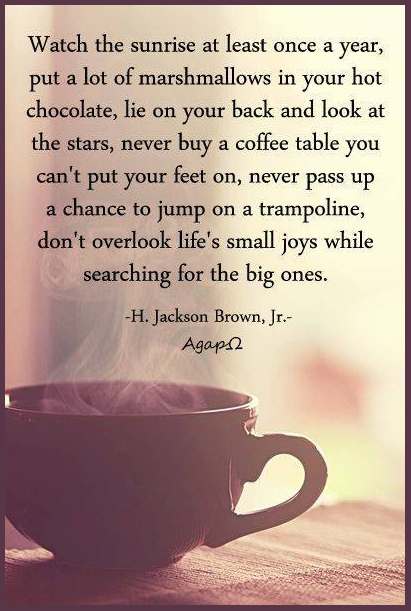
Don’t Overlook Life’s Small Joys

Quotes have a way of making you think, of getting you to take a step back and analyze things.  If you have been a reader of my blog for a while then you know that quotes frequently pop up as a topic for my blogs.  When life is especially stressful applying the thoughts in this simple quote I found can bring peace to an overly processed world.

Watch a sunrise once a year…..there is something absolutely beautiful about getting out of bed and watching the sun peak over the horizon in the morning.  This is especially true if you are near a body of water.  It is a refreshingly positive way to start the day.  Sunsets are beautiful as well, but if it has been a while since you’ve watched the sun rise, set the alarm and partake in the experience.   Refreshing!

Put marshmallows in your hot chocolate……this seems so ordinary.  So “take off the chill” normal happening in fall or winter.  Then it occurred to me that as I got older I would make a cup of instant hot chocolate, but somewhere along the line I stopped dropping in the marshmallows.  Forgo the whipped cream that has become commonplace, or worse the “naked” chocolate without any fattening additives, and go back to your youth.  Enjoy a few marshmallows melting in your hot chocolate.  Yummy!

Lie on your back and look at the stars…..remember being a child, laying on the ground and looking up at the stars, amazed at the pure beauty and wonder of them.  What a peaceful way to enjoy the nighttime sky.  So many of us live in the city hustle and bustle where there are always lights and we forget to look up at the beauty of the night sky.   As you are walking into your house after dark take the time to look up and enjoy glimmer of the moon and stars above you.  Heavenly!

Never buy a coffee table you can’t put your feet on…..being that I haven’t owned a coffee table in about thirty-seven years, I can’t say too much in this area.  I think this message has more to do with being comfortable your own home.   My parents always had a coffee table which held things like coasters, display pieces such as an antique photo viewer, or large coffee table books, but never a person’s feet!   As I prepare to downsize and move I am considering re-purposing my mother’s Lane cedar chest (the old fashioned hope chest) into a coffee table.  It would be convenient for storing afghans in the living room and could serve dual purpose as a coffee table.  Of course having owned reclining couches for several years, the idea of a coffee table may be defunct if I continue with that type of furniture.  At the same time the idea of a traditional couch with a table in front has its appeal.  Comfy!

Never pass up a chance to jump on a trampoline…..to me this says experience life, be adventurous.  While some of us may be able to climb onto and jump on a trampoline, others may not have the physical ability to do so.  Don’t let small limitations hold you back from what you can do.   Go forth and try new things, take risks.  Live life to the fullest and never pass up the opportunity to try something new.  Exhilarating!

Don’t overlook life’s small joys while searching for big ones…..this is something way too many of us do, especially when young and career oriented, which often overlaps with the time-filled days of raising children.  We get our mind set on not just keeping up with, but also exceeding “the Jones’s,” and in doing so miss out on a lot of life’s simple pleasures.   If you find yourself caught up in the rush-rush lifestyle a good way to rejuvenate is to take a walk with a child, or better yet spend an afternoon with one.  They will take you on an adventure of all the things you have forgotten to enjoy.  The pleasure of blowing bubbles, watching a butterfly, gathering stones from a beach, stomping in mud puddles, gathering fall leaves, the smell of flowers, the rustle of the wind in the trees, the joy of watching birds, or even playing with your shadow.  Relaxing!

I hope each of you reading this will take the time to do not only these things, but others that will bring you peace of mind and relaxation from the every day stresses of life.

Watch a Sunrise Once a Year

Leave a comment

Filed under Activities, assumptions, backyard, birds, children, Coping, Discoveries, environmental, exploration, Family, flowers, habit, impressions, Life is a Melting Pot, nature, spring, summer, winter

Dirt on My Shirt

Anyone who has raised a boy can relate to the Dirt on My Shirt poem that I stumbled across recently.  When I saw it memories of my son and my grandsons came to mind.  It is like they are immune to the idea of cleanliness.  If it looks like fun, dig right in.

Dirt on My ShirtI have very rarely seen my grandson, Corbin, with a clean face.  I think it is magnetic and attracts dirt, all he has to do is walk across a room and it zeros in on him.  Thinking back to when my son was growing up, there were all kinds of messes and things going on that bring to life the saying “boys will be boys.”


Here are some of my “boys will be boys” memories….

  • Walking into my backyard and Patrick and his friend had dug a huge hole in the ground.  Why?  Just for fun!
  • Patrick telling me about taking a boat down the canal using a battery-operated fan for a motor.  I thought he was kidding until I was at a meeting and a mother who lived on the canal commented on these boys running a boat down the canal using a fan for a motor…she thought it was pretty ingenious!
  • My grandson, Corbin, telling me he didn’t have to wash his hands as he flipped them back and forth saying “see they are clean” and “I’ll wash them on Thursday.”
  • Socks that are filthy because why bother putting on shoes, you’re only going into the yard.
  • Cleaning out pockets filled with stones, grass, dirt, and miscellaneous other items.
  • At 2-1/2 to 3 years Patrick had a 2-foot ramp he would use to jump his 2-wheeler.  My mother-in-law, who had raised three boys, didn’t give it a thought.  My parents, who had raised two girls almost had heart failure when they saw him do the jump at 2-1/2 years.
  • My grandson, Austin at 2-3 years old running onto a water park and standing in the running sprinklers fully clothed in shoes, turtle neck top and overalls.1933939_1214548853295_8053577_n
  • Creek findings in my garage:  craw-fish, baby muskrat, fish, snails, snakes, turtles (Patrick, now 30-years old, has a large turtle in a tank in my garage right now) all brought home and kept in fish tanks in my garage.
  • Having all the screws in my dining room chairs removed by Patrick’s bare hands.
  • My grandson, Austin sliding ice cubes from his Koolaid around on the table; when asked what he was doing he said “washing the table.”
  • Hearing a crash and discovering my 2 year old son on top of my refrigerator.
  • Greasy/dirty clothes from fixing things…snow blowers, lawn mowers, anything that doesn’t work.

The list could go on forever, and thinking back on those memories makes me smile.   After all, I can still look at Patrick, now 30 years old, and he will have dirt on his shirt, dirt on his hands, and dirt on his face due to something he has been working on.  Oh, and he still leaves dirt on the refrigerator handle when grabbing something to drink.

Share with me your
“Boys Will Be Boys” memories


2 Comments

Filed under Activities, backyard, children, Cleaning, Discoveries, Family, grandchildren, home, kids, Life is a Melting Pot, memoir, nature, reality, spring, summer

Do I like it or not?

We are having our first snowfall of the year…well not really.  We had a few flurries in the air a couple times earlier this year, but nothing that stuck and it has been unseasonably warm until now.  We are getting dumped on.

The first fall of snow is not only an event, it is a magical event. you go to bed in one kind of a world and wake up in another quite different, and if this is not enchantment then where is it to be found? J. B. Priestley

The First Fall of Snow

So with the snow falling and sticking to the roads and people nervous as they always are on the first bad roads of the season, we had to make a 40-mile round trip to pick up my daughter from work due to her car being in for service.  What are my thoughts?

  • People constantly refer to how bad the roads are
  • Some people are very nervous and drive extremely slow
  • Some people are idiots and drive a maniac speeds
  • My car appears to automatically turn of Max Defrost when it is turned off, so auto-start doesn’t give you the max benefit when used.
  • Heated car seats are the best
  • If you forgo using the brush for mittens because the snow is fluffy, you will regret it later when your mittens are wet and fingers feel cold.
  • Freshly fallen snow on bushes and trees with Christmas lights on them is pretty.
  • There is something about snow that puts you in the Christmas mood
  • Yikes!  Only 12 days until Christmas and I’m not decorated and have more shopping to do.
  • Who am I kidding, I wish I were somewhere on a beach, somewhere tropical, not in the midst of a snow storm.

So, I assembled my Christmas tree last night, and I should have put the lights on tonight but it still remains naked.  I’ll tackle that project tomorrow night.  For tonight, I’m going to crash.

If you are in the midst of a snowstorm, stay warm.
If you are somewhere tropical, I wish we could trade places.


Leave a comment

Filed under celebration, Discoveries, events, exploration, habit, home, kids, Life is a Melting Pot, memoir, nature, reality, Weather, winter

Scampering Squirrel

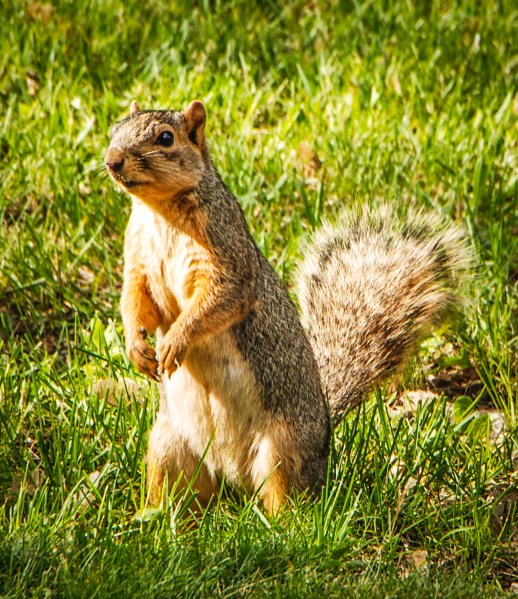
The other day I had an encounter with a squirrel, well not actually an encounter, more somewhat of an invasion.  I happened to look out the window onto my front porch and spotted a squirrel up on the porch with a huge nut in its mouth.  It seemed to be confused on where it wanted to go.  It came across the porch, then walked toward the steps leading off the porch, then turned around so it was facing the door into the house, then sideways again and disappeared off the side of the porch.

What was the squirrel thinking as he ran back and forth?  Why did he choose to get up onto my porch?  Was he trying to escape the rain?  Where did the nut come from?  This last question is relevant because I don’t have any nut trees on or by my house that I am aware of.  How far did he carry that nut?

Standing Squirrel

Photo by Grace Grogan   Copyright 2014.

One question was answered by this, as I assume that this could be the same squirrel who left the shell from a nut on my sidewalk about a week ago.  I saw the pieces and wondered where they had come from.   Still I wonder where the squirrel was coming from, how far he is traveling to accumulate his nuts, and why he chose to walk up and across my porch rather than through the front lawn.

This is not the first animal encounter I have had.  Past encounters include bunny rabbits, deer on the front lawn, skunks strolling on my driveway and sidewalk, a rooster walking across the front lawn, birds on my porch eating insects out of spider webs, and a woodpecker pecking at my house.

Whatever possesses these animals to pass my way I will never know.  What is going through their minds as they travel across my yard I sometimes wonder.  Why that woodpecker feels the need to peck away at my house rather than one of the trees I cannot explain.  Wildlife in action.  I’m still pondering over the thought process of that squirrel on my front porch.

Leave a comment

Filed under assumptions, backyard, exploration, Life is a Melting Pot, mind, nature

Does nature know when school starts?

Summer has been rolling along nicely here in Michigan.  The temperatures have been a bit up and down, but for this state that is normal.  For the most part though it was summer weather, summer wear — flip flops, shorts, tank tops, and sunblock.

Then it became the last week of August.  The temperature turned cooler, people were in a variety of clothing styles, an indication they weren’t quite sure what the weather was going to dole out and were making their best guess.  You would see someone in shorts, then someone in pants, a tank top then a sweatshirt, sandals then boots.  Why?  Because even though it wasn’t “cold” it felt that way to some.

Does nature know kids are going back to school and that temperatures must drop to get children in the mood for school?  Is this a system of reminding parents that if they haven’t purchased that exhaustive list of school supplies they need to handle it now?  How did the school schedule get established in the September to June rotation so that children are attending during the coldest months of the season?

I have learned that our traditional September to June school schedule was established at a time when the United States was a farm-based society and children had to help with spring planting and fall harvesting of crops.  The September to June schedule with three months off in the summer best suited the needs of children being able to help in the fields during the main production period with as little interference as possible in their education.

Even though we are no longer a farm-based society and industrialization has ended the time of children needing to be taken out of school to help with farm duties, the schedule has held pretty close to the traditional rotation for decades.  My statement thank teachers

A number of states have tried to increase the hours of a school day, lengthen the period of time that students attend, and some have attempted a year-round school schedule.  What many places have found is that increasing the number of hours a student attends also increases operating costs for the school district and many can not afford the increase.

The level of learning, length of time a student spends in school, methods for teaching, and every other aspect of education in this country is constantly being evaluated and changes made.   The length of the school year is normally determined by a specific number of days or hours of instruction. One hundred eighty days (180) is the minimum required by many states, five states require more than 180 days, and five states require less than 175 days.  Here in Michigan students are required to attend a minimum 180 days.

So what this all means is that it is now September and for the next 9-10 months there are certain times of day when we may be delayed by a school bus.  We will see children carrying backpacks loaded down with books, lunches, and a number of other necessities for school.   The rotation of school sports, PTO meetings, parent-teacher conferences, homework, report cards, and school breaks is now in session.  Whether nature knows it or not, the school year has begun.


Leave a comment

Filed under Activities, children, education, exploration, Family, farm, kids, Life is a Melting Pot, Michigan, nature, parents, school, summer, time, Weather

LIFE IS FUN

          Life is fun — the things you take in stride, the things that flip you out.  Sometimes neither make sense which is what keeps life hopping with laughs — the weird idiosyncrasies of each an every personality that make it unique.
         I am like most females, I like cute little things like kittens and bunny rabbits.  I have learned to tolerate spiders on my front porch, but anywhere else I want them demolished.  I don’t freak out over most rodents, but I am reasonably cautious and don’t want them invading territory they shouldn’t.
          That leads me to my Sunday encounters.  I went outside to mow the lawn.  I was putting gas in the rider, which is backed up to my house.  Suddenly there is this flash of movement from the area behind the mower.  Something jumps out and naturally I jump with it.
Life is Fun
          Now you have to admit, when you are not expecting it those cotton-tailed bunny rabbits can be pretty ferocious looking when they are scampering out from a hidden spot and making a mad-dash across your lawn.  Once I realized what it was I decided it was safe to proceed with my plan of mowing the lawn.  I am here to tell about it, no further attacks.
          I was riding the mower along a fence line where the ground angles, so you have to stay close and battle any tree or bush limbs hanging over.  As I am traversing the path I apparently disturbed a black hornet or wasp (I can’t tell the difference) and he was flying around and at me.  I do not like those creatures, they are not nice!  To keep him away I automatically swatted at him, which I had to do twice before he finally left.  Then the mind does weird things…what if he goes to get his friends and gangs up on me?  What can I say, I grew up when all the “killer bee” movies were out.  Luckily I didn’t have to relive any movies, he stayed away.
          So I turn the corner in the front yard and bump!  I drive through a weird depression or hole that hasn’t been there before.  I have no idea what it was, and I did not get off to inspect, but of course I wondered…was it from a snake, a gofer, a mole?  Who knows.  I’m not going to ponder the possibility.  Hmmmm, could that be the reason I decided not to rake this week?
          So now that I’ve been blasted by bunnies, hassled by hornets and bungled by bumps the rest of the week should be a breeze.  What other creatures could possibly invade my personal space?  A spider.
           I was driving my car down the road and get a glimpse of something.  It was a very tiny, microscopic spider strolling along the inside of my windshield.   Now I must say that compared to the ones that typically live on my front porch, this one was so tiny it almost isn’t worth mentioning.  However I feel the need to point out that not only did I not flip out, but I just shrugged my shoulders and went “oh well” and let him enjoy his stroll.  Attempting to kill a spider when driving down the road is probably not recommended.  As I am writing this I do have one thought though.  I let him remain inside my car….what if he grows?  That is a thought I do not want.  Hopefully it gets hot and he dies of heat exhaustion before that happens.
     So as you are going through your day and encountering the various creatures of the wild, laugh at your own goofy, stupid, exuberant reactions to things and let the good times roll.

Leave a comment

Filed under backyard, bugs, Coping, Discoveries, environmental, exploration, habit, insects, Life is a Melting Pot, nature, spiders, summer

Matthaei Botanical Gardens

This past weekend I had the opportunity to visit Matthaei Botanical Gardens in Ann Arbor, Michigan.  If like me you enjoy taking photographs of flowers and/or nature, this is a wonderful place to visit.

Matthaei has several options to fit everyone’s needs or desires.  There are several trails that are open sunrise to sunset seven days a week, plus the conservatory, garden store, lobby and display gardens are open from 10:00 am to 8:00 pm.  Admission is free; they do have a donation box inside the conservatory, and there is a reasonable parking fee of only $1.50 per hour or a maximum of $5.00 per day.  With the size of the venue I opted to pay the daily rate immediately._DSC6631

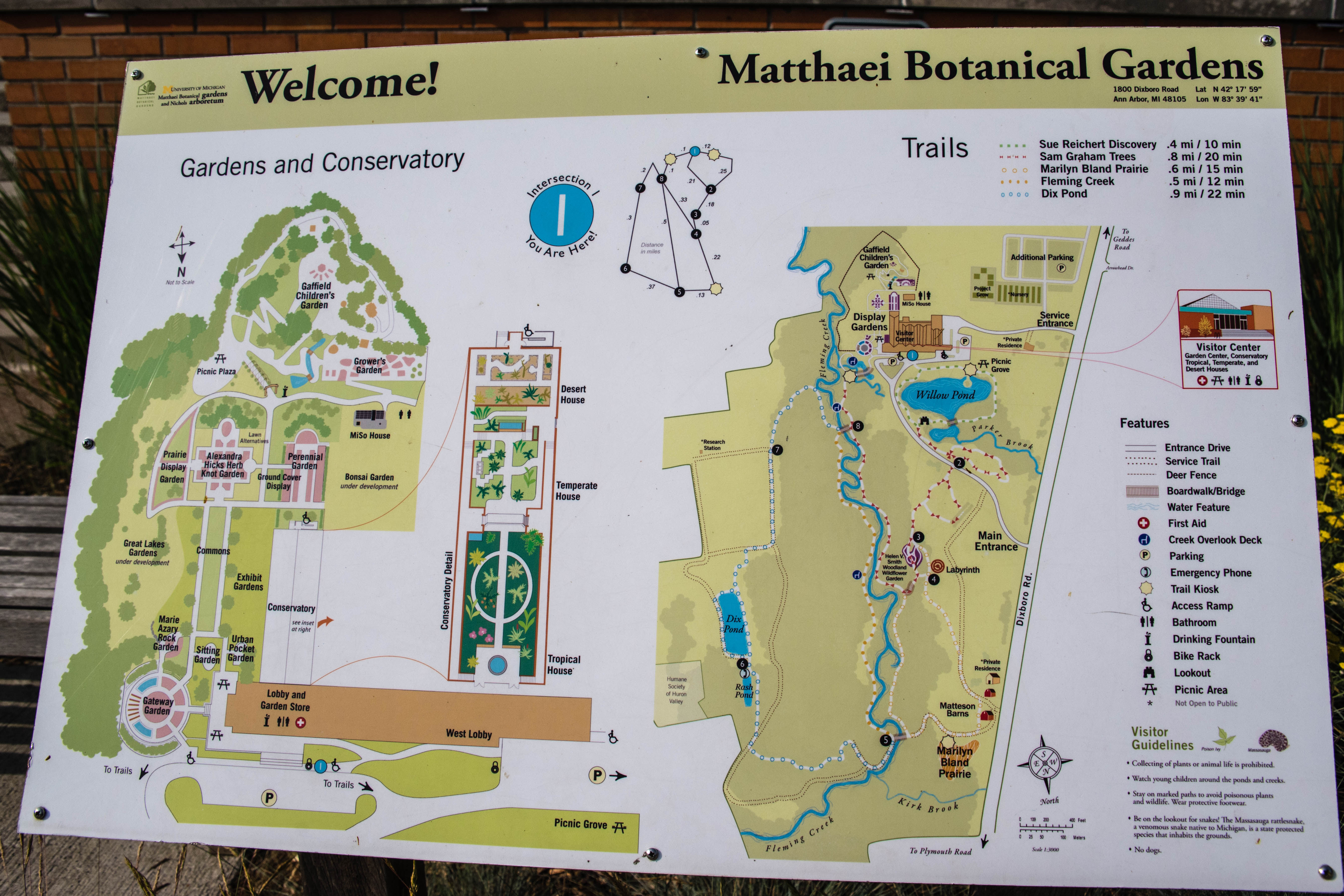
I arrived at 8:30 am.  It was quiet, with only a few people quietly walking out onto some of the trails.  I grabbed my camera and tripod and decided to walk the Sue Reichert Discovery Trail, which circles Willow Pond.   This trail is only 4/10 of a mile, which they estimate to be a ten minute walk.  I meandered slowly, taking pictures and stretched it into almost an hour, taking time to sit down a couple times on benches that were available.

The difference in time is whether you walk like the average person or walk like a nature photographer, skimming the area for possible subjects to photograph.  Doing so can make a fast walk take quite a while and is why I prefer to partake in such places either alone or with other photographers who understand the time frame needed to fully enjoy the area.

I decided to do the outside gardens first, and in looking over the map not only did I not go up into the Children’s Garden, but I also missed the Perenial Garden, Grower’s Garden, MiSo House and Bonsai and Penjing Garden.  I started in the Gateway Garden, a relaxing spot with benches, rocking chairs and fountains.  I took photographs of flowers there, in the Marie Azary Bock Garden and in the Sitting Gardens before meandering down the Commons, which are bordered by two other gardens on the east and bench seating on the west.

The commons leads you into the Alexandra Hicks Herb Knot Garden.  Here you will find chipmunks scampering back and forth amongst the plants and sometimes climbing up on them as well, but trying to capture them in a photo is difficult.  They are quick little guys!  Once I completed my photo rounds of the herb garden I strolled between that and the perennial garden and went through a vine/plant covered tunnel which led to the opening of the children’s garden.  I had the option of going up into the children’s garden or taking a nature trail around the children’s garden.  What I opted to do was take a short trail not shown on the map into the Oak Openings Garden.

There was nothing to attract my photographer’s eye in the Oak Openings Garden with the exception of wild strawberry plants that had begun bearing fruit.  It was the bright red of the fruit that grabbed my eye as I looked down to scan the ground for photo subjects.  I followed the trail through the Upland Woodland Garden and across into the Wet Woodland Garden.  Unfortunately the hot weather we had been having left nothing  wet, it was, on that day, better termed a dry woodland.  Nothing caught my eye for photographs, so I proceeded into the Great Lakes Garden, which led me into one end of the Prairie Gardens, then the Coastal Gardens and back up where I started in the Gateway Garden.   Unfortunately a group was there partaking in the rocking chairs or I would have grabbed one for a nice relaxing break.

This slideshow requires JavaScript.

By now I had been wandering for a few hours and decided to take a snack break before visiting the Conservatory.  One thing to keep in mind, the conservatory does not sell meals, only a limited selection of snack food, candy and beverages.  If you plan to be at Matthaei Botanical Gardens for several hours you may want to consider packing a cooler with beverages and lunch or snack food.   I had not planned that far in advance, so I purchased a small trail mix and flavored water.  There are one or two small tables where you can sit inside to consume your snack, and there are also tables available outside on the deck.  Food and beverages are not allowed inside the conservatory.

The Conservatory has three main areas, the Tropical House, the Temperate House and the Desert House.  Here you will find many plants and blooms to view and/or photograph.  On this day there was a water Lilly in full bloom, Cocoa trees, pineapples growing, sausage trees with their “fruit” hanging in abundance, and numerous other flowers and plants.  The Desert House has the majority of their cactus growing in raised display beds, making it easy to enjoy and photograph the wide variety.  I’m sure this was also done to preserve the fingers of little ones who may be touring with their parents.  Some of those cactus spines are pretty long and wicked looking!

I spent about five hours touring the trail, gardens and conservatory, and I didn’t see it all.  Keep in mind I was walking slow, took several rest breaks on the numerous benches that are available throughout the property, and was taking photographs.  The average person might tour it at a much faster pace.

I would like to go back and walk some of the trails I chose to skip, plus with anything growing outside the gardens and trails are a constantly changing canvas with growing seasons and weather.  If going they do recommend appropriate footwear for walking the natural areas and that you stay on paths due to poisonous plants such as poison sumac and poison ivy growing in natural areas.  The Massauga rattlesnake also inhabits the area.  I did not encounter any slithering reptiles, but did enjoy the “music” of unseen frogs as I walked around the pond.

If you are in the Ann Arbor area I highly recommend a visit to University of Michigan’s Mattaei Botanical Gardens.


Leave a comment

Filed under Activities, birds, Botanical Gardens, bugs, Discoveries, education, environmental, exploration, flowers, insects, Life is a Melting Pot, Michigan, nature, nature center, Photography, spring, summer, tourism, travel, vacation

What is a Vacation?

You may consider my title a strange question, but I think it is worth exploring.  I was recently reading a posting from my Facebook memories feed about the planning of my itinerary for a trip my husband and I were planning to go on.  One of the comments on the post was that I needed to relax, it was a vacation.  That got me thinking, what is a vacation?Vacation - go someplace you have never been

According to the Merriam Webster Dictionary a vacation is a period of time that a person spends away from home, school, or business usually in order to relax or travel.  That sounds simple enough, but is it?    People vacation in a wide range of ways, and the trick is to find people who like to travel and relax in the same manner you do.  It also may mean you need to make adjustments to the way you travel in order to accommodate everyone’s desires and interests.

My husband, Ron, and I always traveled with an itinerary.  I read tourist books and mapped out our trips.  I knew what we were doing each and every day, and quite frequently we were up with an alarm clock to make sure we arrived at places when they opened to get a jump on the day.  That is how our kids grew up.    There were many people that thought we were nuts, but then those same people would say “wow, you saw/did a lot on your trip.”  Well yes, that is the result of planning and being on the go.

We would hear people talk about their vacations, traveling somewhere and then spending a good portion of their time sitting around a pool, or on the beach, sleeping in late and doing a lot of nothing.  People would go camping and spend the majority of their time sitting around the campground, chatting with other campers, sitting around bonfires, etc.  When Ron and I heard vacations such as those being described we would think “how boring.”

Vacation - Life is a TripSo which is the proper vacation?  They both are.  A vacation should be whatever you want it to be.  Do what makes the days fun-filled and relaxing for you and your travel companions.   People are unique and everyone has their own set of needs.  What is good for you may drive me bonkers; what is right for me may leave you feeling stressed and exhausted.
Then I started wondering how my vacation plans may be affected by the fact that my husband has passed and I am now alone.  Ron was always a morning person — his feet hit the floor and he was off and running.  I like to get up and see and do a lot, but I frequently start my day at a slower pace than he liked.    I think I will find a balance for myself that is similar to what I have always done, but maybe a bit more relaxed.  Whatever I end up doing, it will be the same.  It will be different.  It will be me.  That is what a vacation should be.


5 Comments

Filed under Cleaning, exploration, habit, Life is a Melting Pot, nature, play, summer, travel, vacation

Trigger Indicators

The same feeling can be triggered by different stimuli in different people.  It can be a memory, likes, holidays, smells, or just a date on a calendar.  What is your trigger indicator for spring?

Michigan is known for temperamental weather.  It can be 70 degrees today and 40 tomorrow, so is temperature a good indication of spring?  Here in Michigan you may be hunting Easter eggs under snow.  Is it spring when the weather is consistently above 60 degrees?  Is it spring when the tulips have bloomed but are then covered in snow?  Can we rely on the weather to tell us it is spring?

2769 trillium portrait format (1 of 1)

Trilium – Photo by Grace Grogan, copyright 2015

Maybe your trigger that spring has arrived is when the daffodils or tulips bloom.  Could it be newborn birds chirping in a nest, or a tiny bunny hopping across the front lawn?  Spring is a time of rebirth.  What about the smell of lilacs blooming on a tree?  The smell of a fresh cut lawn?   Scent is a very real trigger for memories.  Has what indicated spring to you as a child changed now that you have become an adult?

What about Easter?  It arrives with easter egg hunts, bunnies, spring dresses and special worship services.  Does the arrival of Easter mean spring has arrived?  The problem with Easter is it arrives anywhere from late March to sometime in April.  Easter is a mental trigger for many that spring has arrived, but should it be?  The weather doesn’t adjust itself to Easter’s arrival, so not a true indicator of spring.

Has spring arrived when a trip through the store includes displays of seed packets, seedlings, soil, mulch, rakes, shovels, and other items needed for gardening.  What about the season opening of the local farmer’s market selling flowers and plants?  Do these items trigger the feeling that spring has arrived?

DSC_7184

Ship on Lake Huron, photo by Grace Grogan, copyright 2016

The trigger indicators that spring has arrived are different for every person.  They are brought on by things we have experienced in our lifetime that instills in us that degree of freshness,  newness, that spring evokes in all of us.  For me, one of the number one triggers that spring has arrived is when the shipping resumes on the St. Clair River.  The vibration of ships as they go up and down the river, the sight of their lights at night as they pass by, the sound of fog horns in the morning.  For me, shipping season means spring has arrived.  What triggers the arrival of spring for you?

Leave a comment

Filed under Blue Water Area, Discoveries, environmental, events, habit, impressions, Life is a Melting Pot, nature, spring, Weather

Where is Spring?

Here in Michigan we had a very mild fall and early winter.  Temperatures in the mid 40’s and a very small amount of snow.  It was wonderful.  People did have trouble getting into the Christmas spirit.  It was hard to get into the shopping mode with green grass and wearing spring jackets when under normal conditions it would have been cold and normally some light snow.

Now the holidays are over and we are ready to break out the flip flops and head to the beach, but Mother Nature played a trick on us — well, actually tossed reality back at us.  It is now running 18 degrees, parts of the state are under heavy snow, and we have had to haul winter jackets and gloves out of the back of our closet.  winter - can I wake up and it be summer

Where is Spring?  It is hiding down the hill and around the corner.  It may peek at us now and then, just to remind us it does still exist, but is not going to spoil us and break out for at least another month or so.  April snow storms in Michigan are not unusual.

Michigan takes a beating on its weather.  A popular saying in our state is “If you don’t like the weather wait ten minutes, it will change.”  This is very true.  Michigan weather is unpredictable and because of that putting your faith in a weather report is suicidal.  However there is one thing to be said for Michigan.  We rarely have true natural disasters.

While Michigan is not completely immune, it does not normally have news breaking weather like so many states do.  Tornadoes, forest fires, hurricanes, mud slides, floods, earthquakes, and massive life-stopping snow storms are not the norm.  What temperamental weather we get can generally be dealt with and resolved within a day or two.  Some Beach Somewhere

So, as much as I would love the warm sunshine of a hot summer day, I know that is still in the distant future.  For now I will trudge through the skiff of snow, scrap the frost off my windshield, and drive with my car set to defrost more often than heat.  Yep, it all sounds good, but I do have one final question….Where is Spring?

1 Comment

Filed under Life is a Melting Pot, Michigan, nature, spring, time