Category Archives: time

I’m a Bookaholic

I’ll admit, I’m a bookaholic—a person with a deep love for reading and an insatiable desire to buy and collect books, or both. There are various other terms for people with this obsession, depending on how far they take it. For instance, a bibliophile loves physical books, viewing them as objects, while a lectiophile’s affection is for the act of reading in any form, be it books, magazines, blogs, etc. Tsundoku is a Japanese term for people who habitually buy books but never read them.

My book collection is not as extensive as it used to be, and that includes both read and unread volumes. When I lived in my house, I had tubs of read books I didn’t want to part with stored in my basement. In my bedroom there was a 7-foot bookshelf, double- and triple-stacked with unread books, and still I purchased more.

When I sold my house to live and travel full-time in a 35-foot motor home, I was forced to reduce my collection. It was a long, painful day of sorting and re-sorting until I reduced my collection down to fit into a plastic tub that would hold what I had room for. I laid out all the unread books on my bed and sorted them into two piles, the ones I could part with, the ones I wanted to keep. The “keep” pile didn’t fit into the plastic tub. I then took my “keep” pile and sorted it again into keep and part-with piles. I repeated this process about four times, each more painful than the prior one, before they finally fit into the plastic tub. Believe me, it was packed tight, filling every little space to get as many in as possible. 

Most of the books that didn’t make it into the plastic tub, went into my estate sale. Most of the tubs in my basement went into the estate, sale, but some books I gave to my kids. There were many good books, copies with author signatures, the complete works of Mark Twain, Poor Richard’s Almanacs, the original, hard cover set of The Chronicles of Narnia, all of the hardcover Children’s Book of the Month Club books from when my children were growing up, and more. I gave my son his favorite childhood book, Home for a Bunny, falling apart from continuous use.

 Now I own a park model, which is only 406 square feet of living space, so my storage options  are still tight. The RV Park where it is located has a free book exchange, and there are a lot of readers in the park. I regularly contribute books I’ve read and pick up books I haven’t read. My constant accumulation doesn’t stop there; I have a habit of buying books whenever I travel. My  newest obsession is visiting used bookstores, so I doubt I will ever run out of reading material.

Image shows the author's bookshelves inside their park model home. This provides a visual confirmation on the limited space they have for storage.
The bookshelves in my park model. The top right is almost empty because that is where I place the books as I finish reading them. When the shelf is full, I determine what to keep and put those into a tub in my shed, then donate the rest. The refilling of the shelf with read books begins again.

I recently stumbled across an article titled The Benefits of Buying Books You’ll Probably Never Read. I never purchase a book without the intent of reading it, but I know that I may not read it immediately, or a year from now, or five years from now. I sometimes own books that are 10+ years old before I read them.  Why? The topic is of interest to me, but I may not be in the mood to read it immediately. I like to “shop” my bookshelf to see what catches my eye as a read-now topic when selecting my next book. Remember that tub I brought from my home in 2019? Most of those books are still in it because I had an additional 15-20 books I brought and placed inside the RV for easy access, plus I purchase additional books every year during my summer travels. I periodically pull a few out of that plastic tub, but who knows when I’ll get through them all.

As I said above, I’m a bookaholic—a person with a deep love for reading and an insatiable desire to buy or collect books, or both. Because of my limited space, I no longer go to extremes —in my opinion — but others may dispute that. I consider myself a bookaholic who reads many but saves few. That said, the article about the benefits of buying books you’ll probably never read piqued my curiosity. This is especially true since I always thought it would be awesome to own a huge mansion with a designated library filled with books, along with a writing desk and comfy chairs near a fireplace for reading. I know —it’s a big dream for someone who has downsized into a small home.

I do love bookstores and museums, historical spots, and tourist attractions with book sections in their gift shops. Purchasing anywhere from 10 to 25 books while traveling is not unusual. Where do I fall mentally for this practice?

The Japanese Tsundoku practice has evolved to take on a positive connotation, with the act of surrounding yourself with books seen as a good thing. It indicates you have a fruitful relationship with knowledge and signals your need or desire for continuous discoveries and learning. Once I learned I’m mentally in good shape due to my book-buying habit, I decided to roam a bit further into this topic.

According to Psychology Today, the number and types of books you read can reveal insights into your intelligence, self-control, ambition, time management, and overall outlook on life. The article references a 2014 study published in Child Development that found that stronger early reading skills may predict higher verbal and nonverbal intelligence later.

A 2018 Pew Research Center study found that 67% of adults in the United States read an average of 12 books a year. Intelligent, highly successful adults are usually avid readers and far exceed the average. This is supported by the reading practice of well-known business people, such as Bill Gates, who reads about 50 books per year, and Elon Musk, who read the entire Encyclopedia Britannica by age nine and science fiction for over 10 hours a day as a child. Billionaire Warren Buffett spends an average of five to six hours per day reading. While the article only sighted successful men, I decided to delve into the female side of this.

Oprah Winfrey (mid-2025 ranked number one on Forbes list of America’s Richest Women Celebrities and number four on Forbes World’s Billionaires list) was reading by the time she was three and, like many top businesspeople, follows the 5-hour rule. This means reading at least one hour a day, or five hours a week.  Taylor Swift (ranked number nine on Forbes  World’s Celebrity Millionaires List 2025) is an avid reader and supporter of literacy and libraries. She was only 24-years old (she is now 35) when she partnered with Scholastic Books to make book donations to libraries in her hometown of Reading, Pennsylvania and current residence of Nashville, Tennessee.  Francoise Bettencourt Meyers is a French entrepreneur, philanthropist, writer, billionaire heiress, the second richest woman in the world. She is also an avid reader and the author of several books and is known for being a reclusive intellectual who spends her time at home reading and playing the piano.

While I haven’t yet achieved millionaire status (one can hope), my reading level usually meets the 5-hour rule. If things go according to plan, I have 1-1/2 to 2 hours of reading time every morning before Paul (my partner) gets up and turns on the TV, interrupting my quiet time. Depending on my schedule, I sometimes spend an hour or two outside reading in the afternoon, and a trip to the laundry mat gets me about two hours of reading time. If I’m alone for any meals throughout the day, I read while eating.

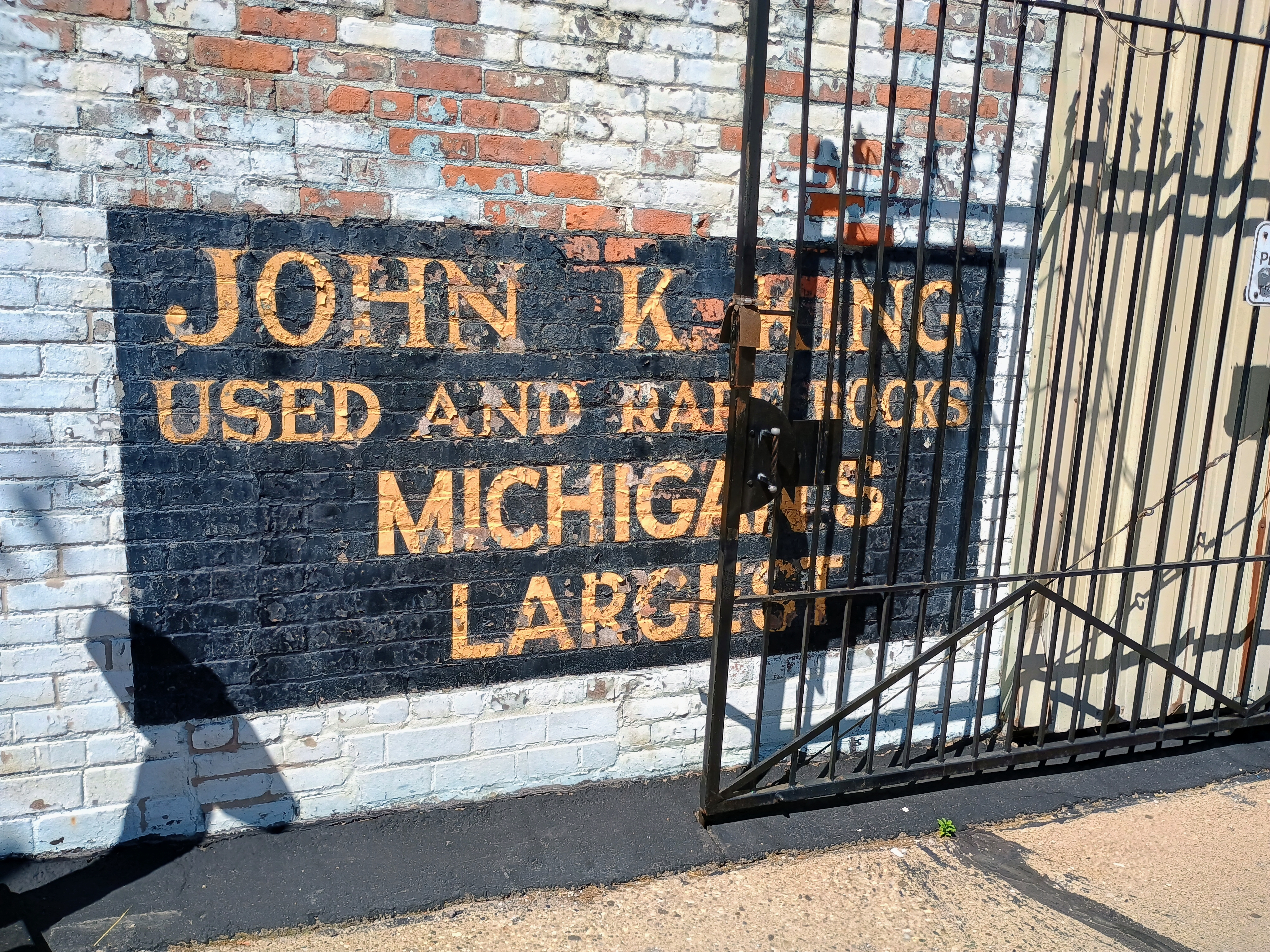
Painted on the brick of an old 4-story warehouse is the name John K. King Used and Rare Books Michigan's Largest.
Painted on the brick of an old 4-story warehouse building in Detroit, Michigan, is the name of the J. K. King Used and Rare Books, Michigan’s Largest. This is the largest used bookstore in the state, and well worth the visit.

For several years, I have kept a list of the books I read during the year. At the end of each year, I print the list and place it in the “All About Me” notebook I keep. The total number of books I read in a year range from 6 to 26. I’m going to beat that this year, as I’m already working on book 26 with two months of reading to go. Yippee! I love breaking my own record.

According to the Psychology Today article, I am an optimist. I don’t view my unread books as a burden or failure of self-control and time management. I see them as a future opportunity to engage with their content. I primarily read non-fiction, so most of my reading is a learning experience. I do blend a few pieces of fiction into the mix for fun. While I have more books than I could read in a year, collecting them is not compulsive hoarding, nor is it damaging to my social interactions.

With few exceptions, I now donate the majority of books I have read rather than keeping them, due to space limitations. I enjoy visiting used bookstores, where you can buy books at much lower prices. I maintain my membership with Barnes & Noble, though, because sometimes I have to purchase and read a new release. The Psychology Today article suggested slowing down the rate of acquisition and becoming more selective, not purchasing a new book until you’ve read one of a similar size. I don’t think that’s possible. I can’t wrap my head around such a ridiculous limitation.

Leave a comment

Filed under decisions, Discoveries, education, exploration, Full-Time RV, habit, hobbies, home, Life is a Melting Pot, memoir, Michigan, summer, time, travel

Why Didn’t the U.S. Adopt the Metric System? – Part 2 of a 3 Part Series

In Part 1, I explained how I became curious about the reasons the U.S. did not convert to the metric system at the same time Canada was making the change, leaving us as one of only three countries in the world that do not use the metric system of measurement. This section explains what Canada did to ensure it completed its commitment to switching from the Imperial to the Metric system during the late 1970s and early 1980s.

In January 1970, the “White Paper on Metric Conversion in Canada” established the Canadian government’s policy regarding its conversion to the metric system. The document specified that Canada would utilize a single, coherent measurement system based on metric units for all purposes. They then developed the “Weights and Measures Act” in 1971 to recognize the International System of Units (SI) for use in Canada. The “Consumer Packaging and Labeling Act” in 1971 required the use of the metric system on most consumer packaging labels.

The change from Imperial to Metric took time in Canada and began in the mid-1970s. I was a high school student in the United States and didn’t concern myself with what was going on in Canada. I do remember them telling us that we needed to learn the metric system because the country was changing to that form of measurement. I also recall that there were many objections to making the switch. We did incorporate some changes rather quickly, the main one being the switch to one- and two-liter bottles of soda. I don’t remember many other changes being made.

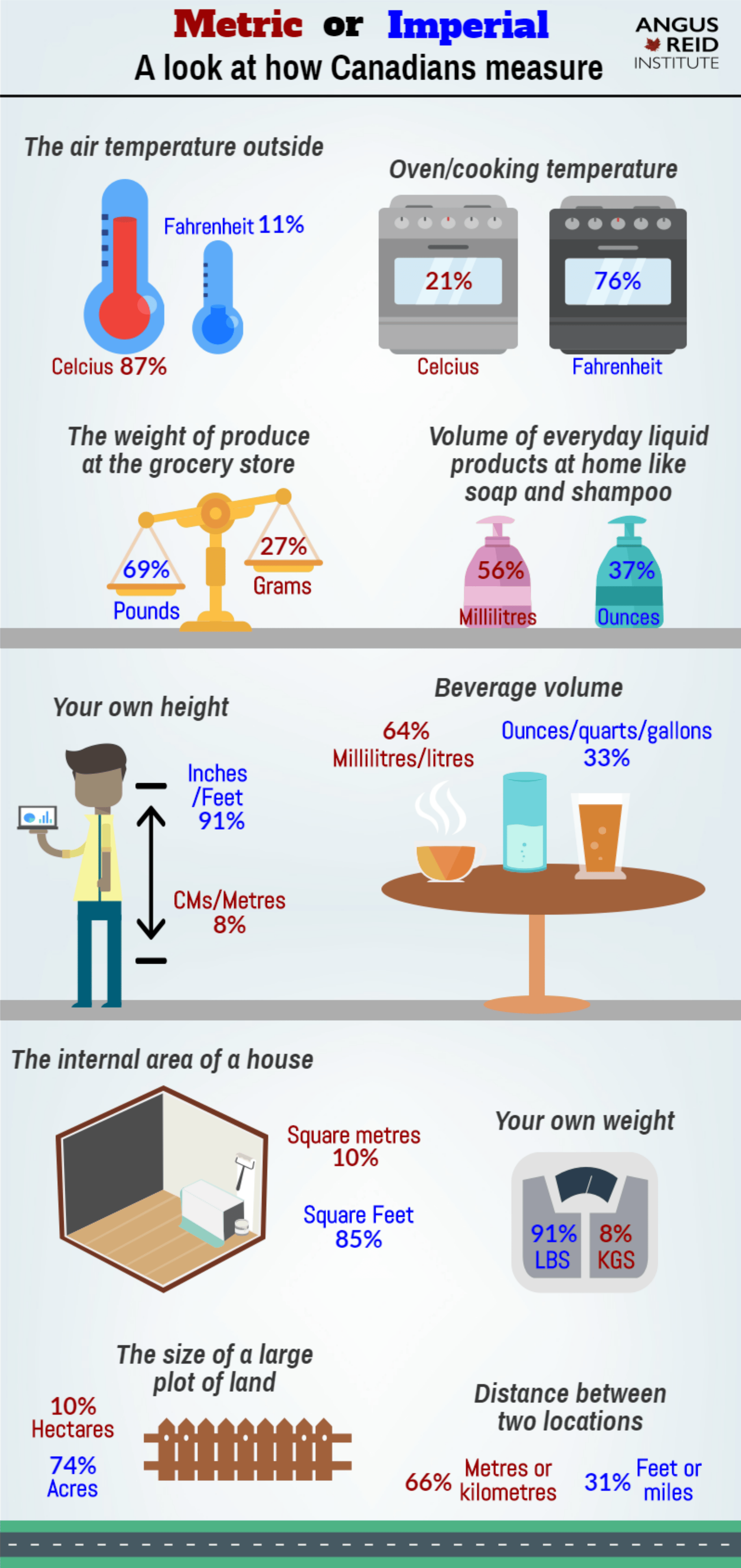
A look at how Canadians Measure

In Canada, things were rolling along at a gradual but steady pace:

  • Temperatures in Celsius beginning April 1, 1975
  • Rain and snowfall in millimeters and centimeters starting September 1975
  • Road signs showing speed limits in kilometers in September 1977
  • Speedometers and odometers in cars are manufactured in metric units beginning January 1979
  • Gas stations were pricing and dispensing gasoline and fuel in liters in 1979
  • Fabrics and home furnishings were required to be advertised and sold in meters and centimeters beginning in December 1980
  • Conversion of food weight measurements for advertising and pricing in metric units, starting December 1983.

We tend to assume Canada is solely metric, rather than the melting pot of systems that actually exist there. Canadians still use imperial units rather than metric in some areas. In 1985, Canada exempted some small businesses from the requirement of metric sales. Other requirements were also revoked, including the use of metric alone for measuring gasoline, diesel fuel, and home furnishings.

Even given these leniencies to a complete change, if you travel to Canada, be prepared for your speed limits and mileage signs to your next stop to be in kilometers, gasoline is sold in liters, and if grocery shopping, have a calculator/cell phone handy to make conversions from metric sizing to imperial sizing. This information is especially helpful when determining the size of ingredients for a recipe.

Being a lifelong resident of the United States, I didn’t delve as deeply into Canada’s history of its measuring system conversion as I did into my own country’s. Watch for Part III, where I’ll give the United States’ history and why it failed to complete the conversion.

Leave a comment

Filed under Canada, communication, decisions, education, employment, impressions, Life Changing, time

Cherishing Front Porches: Memories and Connections

When was the last time you sat on the front porch of your home, waving at your neighbors as they passed by, or inviting them up to chat and share a glass of lemonade? 

I have always loved front porches, the big kind that holds several chairs. When I lived in St Clair, Michigan, I rarely sat on my private patio in the back. I preferred the front porch, where I often sat reading a book until it got dark. I was not in a neighborhood, but on a state highway, so I only had cars buzzing by.

My love of sitting on the front porch is something I developed as a toddler. Back then, my grandmother was my babysitter. I remember sitting on the porch at various times of the day, watching the birds in the yard, migrant workers across the street playing, and watching the sun set. Red sky at morning, sailors take warning. Red sky at night, sailor’s delight. Hmm, wonder where I learned that?

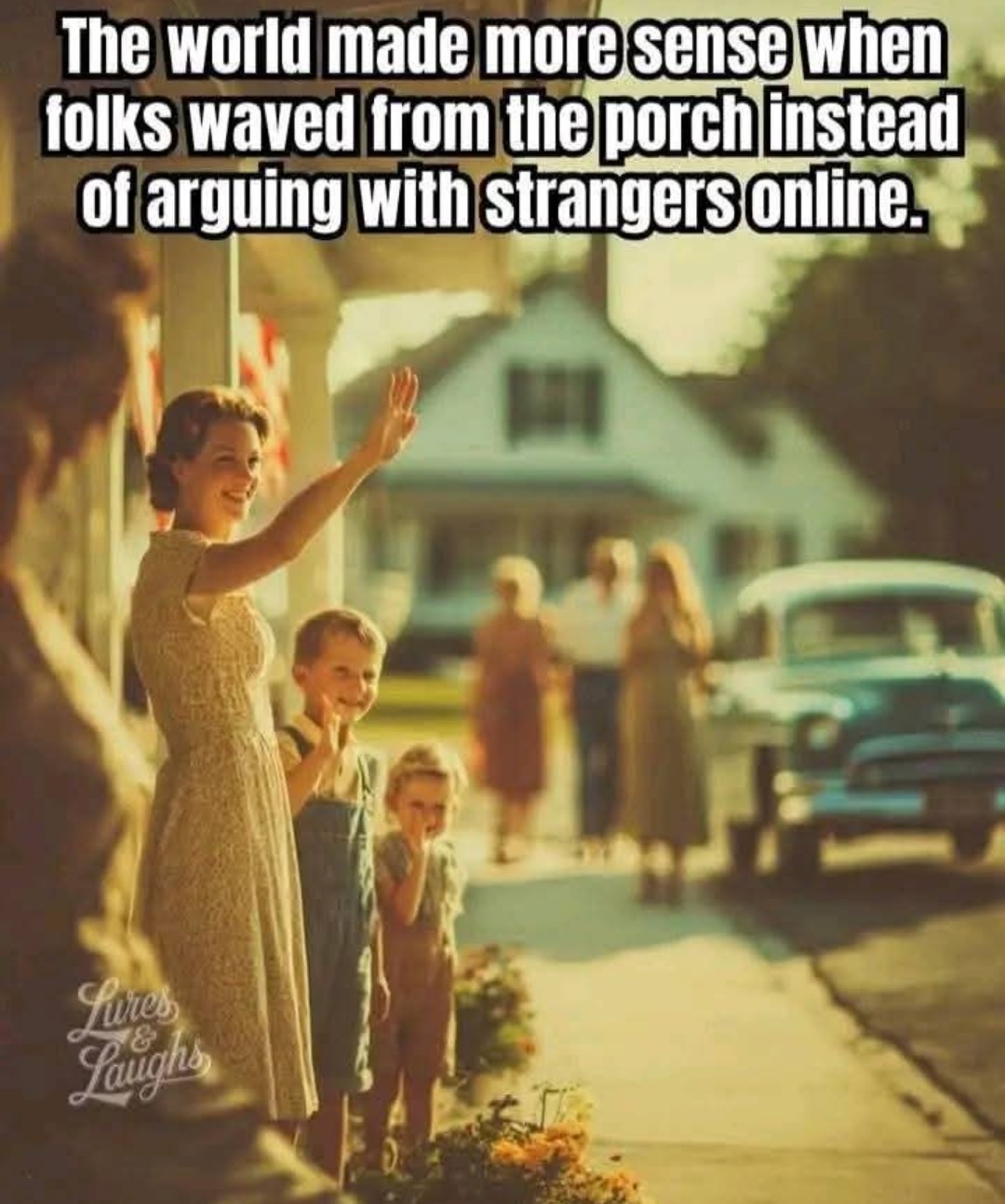
The world made more sense when folks waved from the porch instead of arguing with strangers online.

As a teenager, my best friend in high school lived in a large, older home with a large front porch. I loved that porch! We would sit on it talking with friends, shouting out to cute guys that drove by, and just enjoying life. The house I grew up in only had a small stoop. I envied April, living in a home with a large porch that looked out over the street.

I no longer have a front porch. I always intend to sit outside on my lawn chair, and those times when I make it out there, I enjoy sitting in the fresh air and reading a book. I don’t get out as often as I want; life gets in the way, even in retirement. I, like many others, spend a good deal of time on social media, sharing trivial quotes, travel, pictures, news articles, and day-to-day activities with distant friends and family. I participate in public forums, where political discussions can turn hostile. People have lost the etiquette exercised during face-to-face conversations. It is so much easier to be insulting and rude when done through an electronic device.

That image takes me back to another time, when life was more relaxed and friendly. Kids played outside; they rang their friends’ doorbells to see if they could come out, rather than having scheduled play dates arranged and monitored by their parents. There were neighborhood block parties, where everyone got together, brought a dish to pass, and adults enjoyed socializing while the kids played. You knew your neighbors, and your neighbors knew you, and everyone got along. In my opinion, it was a better time.

Leave a comment

Filed under backyard, communication, Family, friendship, home, kids, Life is a Melting Pot, memoir, Michigan, parents, play, summer, time

How Wedding Traditions Came to Exist

An average of 2.4 million weddings occur in the U.S. annually, or about 5,000 per day. When planning a wedding, most couples incorporate several traditions, including a wedding shower, an engagement party, the father giving away the bride, tossing the bouquet, going on a honeymoon, and more.

Have you ever wondered how these traditions came to be? I was surprised to learn that many derive from superstition, monetary transactions, and the transfer of female ownership. Once I started reading about these traditions, I wanted to know more. The list is long, so I’ve made it easy to skim down and find the practices you are curious about. I hope you end up like me, wanting to learn about them all.

Engagement Party— In ancient Greece, the engagement party was a financial contract between the bride’s father and the man she would be marrying. The bride was not present during the business agreement. An ordinary party was held by the bride-to-be’s father, during which the bride’s father would announce his daughter’s engagement to everyone in attendance. The bride was often just as surprised as the guests to learn she was to be married. Marriages were not based on love until the late 1700s, and even after that time, arranged marriages continued. In some cultures, they still exist today.

Dowry—The original purpose of a dowry was for the groom to compensate the bride’s family for losing her labor and reproductive potential. Sometime before the Ancient Roman period, the custom reversed, with the bride’s family giving a dowry to the new husband’s family to help support her and the expense of setting up a new household. It is believed that the modern tradition of the bride’s family paying for the bulk of the wedding is an evolved practice that replaces the dowry system.

Engagement Ring—This tradition goes back to ancient Rome, when women would wear a ring of bone, copper, flint, iron, or ivory to signify a business contract or that an affirmation of love and obedience had been made. This was derived from the ancient Egyptian practice of using a ring of hemp or reeds to signify eternity.

It was in 850 CE when the official purpose of an engagement ring was introduced by Pope Nicholas I. He declared the ring to represent a man’s intent to marry. Although rings adorned with diamonds were not popular until the 1940s, the first diamond appeared on an engagement ring in 1477. That is when the Archduke Maximilian of Austria proposed to Mary of Burgundy with a stone setting in the shape of the letter M.

In the 15th Century, gimmel rings served the purpose of engagement. This set of three rings was used, with the bride and groom each wearing one ring during the engagement. On the wedding day, the two bands were connected with the third, and all were worn by the bride as her wedding set.

Diamond engagement rings became popular and ornate during Victorian times because of Queen Victoria’s love of diamond jewelry. Although diamond engagement rings have been in the U.S. since 1840, they did not gain popularity until 1947. That is when the British company, De Beers, was mining diamonds in South Africa and launched an advertising campaign, “A diamond is forever.” This sales ploy skyrocketed diamond sales for wedding engagement rings.

Bachelor Party—The bachelor party dates to the 5th century B.C. when ancient Spartans devised a celebration of the groom’s last night as a single man. The term bachelor meant a young knight or student with a bachelor’s degree and first appeared in Canterbury Tales in the 14th century.

The term bachelor party was first used in 1922 in a Scottish publication, meaning a “jolly old party.” The modern parties were traditionally black-tie dinners hosted by the groom’s father to honor and toast the groom. They did not become the current parties of beer, strippers, and drugs until the 1980s.

Popular Saying—The traditional saying about what a bride must wear on her wedding day is based on a 19th-century Old English rhyme in Lancashire. There is a reason behind each item in the phrase:

Something old— traditionally a personal gift from the bride’s mother, usually symbolizing wisdom for married life.

Something new—symbolizes the establishment of a new family created by the marital union.

Something borrowed—by borrowing something from a happily married woman, the bride is borrowing marital bliss to carry into her new union.

Something blue—The robes of pagan Roman maidens had blue trim on their borders, symbolizing modesty, fidelity, and love. For Christians, blue symbolizes the purity of the Virgin Mary.

And a sixpence for your shoe—often left out of the rhyme, and the British coin is no longer in production. The purpose was to bring prosperity to the newlyweds. 

Bridal Gift Registry—This was started by a Marshall Field’s store in Chicago in 1924. It was a marketing pitch that allowed brides to select their fine china and silver for the big day. This successful advertising campaign soon gained popularity throughout the county, with many businesses expanding on the idea to include other items the newlyweds would need.

Bridal/Wedding Shower—Showers date back to 16th century Holland. The bridal shower is a dowry alternative that began when a bride’s father was too poor to provide a dowry. It was also held if the bride’s father opposed the union.

The tradition is based on a Dutch story about a high-society girl falling in love with a poor miller’s son. The girl’s family objected because of the miller’s low class, but she insisted on marrying him. The girl’s father said he would withhold her dowry as punishment for her refusal to marry the wealthy pig farmer he chose for her.

To help the couple in their misfortune, the bride’s friends showered her with gifts as a dowry substitute. Touched by the generosity of his daughter’s friends, the father finally agreed to the marriage. This began the tradition of a bride’s family and friends showering her with gifts before a wedding.

Bridal showers grew in popularity in the U.S. during the late Victorian era. Upper-class society ladies saw them as an opportunity to celebrate, gossip, and exchange gifts, thoughts, and food for the bride-to-be. Gifts were usually modest, simple, useful household goods the bride would need in her new home, including bed linens, kitchen items, China, and more. By the 1930s, the tradition had extended to middle and lower-class families.

A bridal shower is thrown for the bride and traditionally attended only by females. A wedding shower is a modern version of the shower. It is thrown for the couple and includes the groom in the party and opening of gifts. Guests may also be mixed gender.

Rehearsal Dinner—The dinner may be an evolution of an event that occurred hundreds of years ago when attending a wedding meant days of travel. The night before the wedding, the manor house, castle, hut, or tent would be packed with friends, relatives, and emissaries needing to be fed. Out of necessity, a meal would be held the night before the wedding. This was also wrapped in superstition. The belief was that if those attending the dinner were loud and rambunctious, they would scare away evil spirits trying to destroy the couple’s chance of having a happy life.

Today the rehearsal dinner follows the wedding rehearsal. I couldn’t find anything about when wedding rehearsals began, which appears to be strictly an American tradition. Rehearsals may have begun as wedding parties grew, allowing everyone to become familiar with exactly what would occur during the ceremony to hopefully prevent any glitches.

Not Seeing the Bride Before the Wedding—Before the 18th century, pre-arranged marriages were common. It was considered unlucky for a bride and groom to see each other before the wedding because the groom might back out of the arrangement if he saw the bride-to-be and didn’t like her appearance. This is also one reason for the veil.  

Bridal Veil—The veil establishes that a woman is spoken for and disguises the bride so evil spirits wishing to harm the couple will not recognize the bride. It also was a way of securing the marriage contract. Many brides and grooms met for the first time on their wedding day at the altar. The veil was only lifted after the ceremony, so the groom could not back out of the wedding if he didn’t like his wife’s appearance.  

Giving Away the Bride—This practice dates back to when women were the property of men.  Women were unable to live independently of men, could not own property, have a job, or inherit money. They belonged first to their fathers, then their husbands, and if their husband died, their sons.

By walking his daughter down the aisle and giving her in marriage, the father transferred ownership of his daughter to her new husband. This dates back to when an engagement was a business transaction, not an act of love between two people. By being at the wedding ceremony and presenting his daughter in marriage, the father ensured the wedding would take place, fulfilling his part of the agreement.

Wedding Ceremony and Vows— God established marriage in the garden with Adam and Eve based on a covenant promise in Genesis 2:24, which defines marriage as joining two into one. The traditional wedding vows we are familiar with are not in the bible but are based on biblical principles.

The first recorded evidence of a marriage ceremony uniting a man and woman is around 2350 B.C. in Mesopotamia. Over several hundreds of years, marriage evolved into an accepted union by Romans, Greeks, and Hebrews. The primary purpose was to bind women to men, guaranteeing that a man’s children were his biological heirs. The father would hand over his daughter and say, “I pledge my daughter for the purpose of producing legitimate offspring.” If a wife failed to produce offspring, her husband could give her back and marry someone else.

The first mention of marriage vows was in a prayer book from the Medieval Church in England, written in 1549. The book has marriage vow examples that modern vows have incorporated. If you would like to learn more about the different areas of traditional wedding vows and where in the bible they stem from, check out this article on Wedding Wire.

Wedding Rings—Ancient Egyptians were the first to exchange rings made of braided reeds and hemp. They placed them on the fourth finger of the left hand because of their belief that a ‘vein of love’ ran from that finger to the heart. The circle of the ring also was symbolic of an endless circle of eternal love with no end, the promise of bonding forever.

Ancient Romans and Greeks wore rings of ivory, bone, or leather. Wealthy people began creating rings of gold and silver for their marriage commitments. Romans believed the left hand to be unholy and untrustworthy, so they placed their wedding rings on the right hand. The right hand serves as a symbol of loyalty, honor, and trust. Today there are about 20 countries where married couples place their rings on the right hand.

The first diamond wedding ring was recorded in the will of a widow who died in 1417. The oldest surviving diamond ring is from the late 100s CE in Rome when diamonds were valued for their harness rather than brilliance.

Men’s Wedding Rings—Wedding rings for men didn’t become popular until WWII. It was then soldiers wore them as a way to remember their wives back home. Many of the weddings in 1942 were quick, taking place within a week of the announcement because of a soldier being deployed.

The tradition of soldiers wearing wedding rings continued through the Korean War. The practice eventually caught on for non-soldiers as well.

Bridal Party—While the purpose of the bride and groom is clear, why do we have all the other members of the bridal party? What was their original purpose?

BridesmaidsIn ancient Rome, bridesmaids protected the bride. They would all wear the same dress as the bride to confuse evil spirits and prevent them from finding the bride. This prevented the couple from being cursed on their wedding day. Roman law also required ten witnesses to every wedding, so there would be five bridesmaids and five groomsmen.

GroomsmenDerived from an ancient tradition of kidnapping a bride, a man would employ his friends to help him fight other warriors and prevent the bride’s family from finding the couple. Because weddings were a business transaction rather than a union of love, the groom needed an excellent swordsman to retrieve a runaway bride or fend off a bride’s angry family not approving the marriage. The term Best Man referred to the quality of a man’s swordsmanship, and the groom’s main warrior companion was the equivalent of today’s best man. 

Flower GirlIn ancient Rome, a young virgin would carry sheaths of wheat, believed to bring well-being and good fortune to a newly married couple. Over time the sheaths of wheat were replaced by flowers scattered along the bride’s path to the altar.

Ring BearerIn Victorian times, a pageboy would carry the bride’s train down the aisle, along with a prayer book. During this time, Victorians began displaying the ring on a small pillow to show their wealth. Pillows were expensive, luxury items that only the elite members of society could afford. Over time, the pageboy carried the ring pillow down the aisle. That tradition evolved into today’s ring bearer.

Witnesses to the Wedding—Ancient Roman law required ten witnesses to be present at a wedding. At that time, the legal witnesses were all men, but the bride was also escorted by female attendants. Not only did witnesses watch the marriage ceremony, but they also witnessed the consummation of the couple on their wedding night.

Yes, the newlyweds had sex in the presence of witnesses. This was usually done with the bed curtains closed and the observers on the room’s outer edges. If the marriage was not consummated, it could be declared null and void, and the couple granted an annulment. The witnesses were present to confirm the couple had sex, forming an unbreakable union. In modern times, witnesses only have to sign a marriage license as confirmation that a couple has legally married.

Unity Candle – The unity candle became popular in the second half of the 20th century in American Christian weddings. This is attributed to a 1981 General Hospital episode where a couple used a unity candle. The candle symbolizes the merging of two individuals, creating a blended family.

Sealed With a Kiss—This tradition began in Ancient Rome when marriage was a contract. Instead of signing your name, you confirmed your commitment to the agreement with a kiss. It was believed that by binding the marriage with a kiss, the couple exchanged spirits, sending part of themselves into their spouse, binding them as one. 

Bridal Bouquet—Ancient Greeks and Romans carried aromatic herbs, garlic, and grains to drive away evil spirits and bad luck during the wedding. Floral garlands the bride and groom wore symbolized a new beginning and hopes of fertility, fidelity, and happiness. Some bouquets included rosemary for loyalty, wheat for fertility, ivy for an unbreakable bond, heather, thistle, thyme, or basil for protection, and dill as an aphrodisiac. Carrying aromatic flowers was also a way for brides to mask their body odor before frequent bathing was practiced.

Bouquet Toss—Tossing of the bridal bouquet dates back to 14th century England when unmarried women tried to rip off pieces of a bride’s dress or flowers to gain some of her good luck, hoping to become the next one married. The bride would toss her bouquet into the crowd and run for safety to prevent being mobbed. 

By the 1800s tossing the bouquet became a wedding tradition, with single women wanting to catch the bouquet as a sign of good luck for their future marriage. At that time, marriage was the only way a woman could bring her family out of poverty.

Garter Toss—Garters were originally a necessity, holding up the stockings of both men and women. The toss dates back to the same safety problem in England and France when guests would try to rip off a piece of the bride’s clothing for luck. To protect his bride, the groom would take his new wife’s garter and throw it out into the crowd, and the couple would escape.

Receiving Line—I couldn’t find any information on when this practice began and assume it was a tradition before wedding receptions were a standard part of weddings. The receiving line immediately after a wedding is the couple’s first opportunity to “receive” guests as a married couple. The line usually includes the bride and groom, their parents, and members of the wedding party. It provides each guest a moment with the newlyweds to offer congratulations. It also ensures that the couple can personally thank each of their guests for attending.

Reception—Wedding receptions were not frequently held until the early 1960s. Before that time, if a reception was held, it was usually a casual affair at the home of the bride’s parents with cake and punch.

Carry Bride Over Threshold— This tradition goes back to ancient Rome when the groom dragged a bride unwilling to leave her parent’s over the threshold of her new home.

In medieval Europe, it was believed that brides were vulnerable to the invasion of evil spirits through the soles of their feet. To protect his new wife, the groom would carry her through the front door.

Later, it was believed that if a bride tripped entering her new home, it would bring bad luck to the marriage. The groom carried his new wife across the threshold to prevent her from tripping.

Tying Cans to Car Bumper—This custom dates back to sixteenth-century France and early twentieth-century Appalachian customs. The idea is to harass newlyweds on their wedding night through a noisy celebration with friends and neighbors banging pots and pans, singing, and making noise outside the couple’s window.  Eventually, the newlyweds would invite everyone in for refreshments.  It is believed that tying cans to the back of a newly married couple’s vehicle is an adoption of the noisy shivaree.

Wedding Dances—Many wedding party dances are popular, and I wondered how they all came into existence.

The First Dance dates back to 17th-century Europe when formal balls were popular. It was customary for the guest of honor or person of the highest social status to lead the first dance. This led to the tradition of a married couple having their first dance at a wedding.

The dance is the couple’s first cooperative and joint endeavor, symbolizing the consummation of the wedding. Their manner of dance, expression, and steps reveal the harmony between the bride and groom.

The Father-Daughter Dance dates back to when marriages were arranged as a monetary contract rather than love. The father-daughter dance was a final demand of the bride’s father on his daughter before her husband became the most important man in her life. After the father-daughter dance, the bride could dance with her new husband, whom she had likely just met. 

In modern society, the father-daughter dance usually occurs after the bride and groom have first danced together. It now symbolizes the bride’s love and appreciation of her father.

The Mother-Son Dance is a modern addition to a wedding reception. It is comparable to the father-daughter dance and allows a groom to show his love and appreciation for his mother.

Bride Changing Last Name—The practice of a woman taking her husband’s last name dates back to the Middle Ages when societies were becoming organized. Under English common law, women were barely acknowledged and had no legal rights. The concept of coverture was the basis of a woman taking a man’s last name in marriage. Coverture was the legal status of a married woman. Because women had no legal identity, coverture placed them under their husband’s protection and identity.  

Women were under the control of their fathers and then their husbands. They had no legal ability to make contracts, own a business, or own property. They had no legal rights to their possessions, clothing, children, or their bodies, and marriage rape was legal. If their husbands sent them out to perform labor, the husband collected the wages.

Within the U.S., the first break in coverture took place under the Married Women’s Property Act of 1848. Over time that act underwent amendments so that women could eventually attend school, obtain driver’s licenses, work, and vote. It took a long time for women to gain rights. Women in the U.S. could not get a driver’s license, passport, or register to vote if they didn’t take their husband’s last name. Marital rape did not become illegal until the 1970s.

Though no longer legally bound to take their husband’s last name, about 70% of women follow the tradition. This makes it easy for a married couple and their offspring to show daily unity.

Wedding Cake—In ancient Rome, wheat cakes were broken over a bride’s head to promote fertility. It later became customary to stack the wheat cakes on top of each other, and the bride and groom were challenged to kiss over the tower without knocking it over. If successful, they would enjoy a life of good fortune.

In modern times, white cake symbolizes purity.  The joint task of the bride and groom cutting the cake represents their first joint task of married life, and feeding it to each other symbolizes the commitment they are making to each other.

Saving the top layer was originally for use at their future child’s christening. The bride was expected to be pregnant within the first year of marriage. The top layer is now used to celebrate the couple’s first marriage anniversary.

Tie The Knot—Handfasting dates back to ancient Celtic times and is a spiritual ritual of tying a bride’s and groom’s hands together during the wedding ceremony. The phrase “tying the knot” stems from binding the couple’s hands together during this ceremony with colored cords to symbolize their union of love.

For a three-cord handfasting, the colors of white for purity, blue for fidelity, and red for passion were braided together. Other colors include green for fertility and growth, purple for spiritual strength, and gold for wisdom.

The couple’s hands are not released until the marriage is complete. In modern times, a couple says their vows while bound together, then finish the ceremony with rings. Historically, the binding remained in place after the wedding ceremony, and the couple was escorted to the bedchamber to consummate their union. It was believed that if the couple survived the day bound together, they would survive their marriage together.

Throwing Rice—Marriage was traditionally seen as a way of building a family and increasing a person’s assets. Ancient Romans often threw wheat or oat seeds, which meant the birth of new life. The change to rice was likely because it was often available and low cost. Whichever grain was used, it symbolized fertility and prosperity. Tossing grain over newlyweds signified good luck and best wishes toward producing babies and good harvests.

Honeymoon—The term honeymoon dates back to the 5th century when the calendar was represented in moon cycles. After marriage, a couple would drink mead, an alcoholic beverage made from honey, during their first moon of marriage. Drinking the fermented honey liquor under the moon was believed to boost fertility and increase the odds of producing children early in the union.

The American honeymoon tradition dates back to 19th century Great Britain when relatives could not always attend the wedding. The newly married couple would travel by train and carriage to visit those unable to attend. This was called a bridal tour and often lasted for weeks or months.

Not Married? Be glad it isn’t 1860 to 1880 when the term Spinster was used to describe women who never married. During that time period, eleven percent of the American female population didn’t marry. This was probably because of the Civil War, which killed 600,000 men.  It was during this period that women began obtaining a college education. The male opinion was that a female college graduate would be a poor homemaker.

Were you surprised at how many traditions deal with monetary transactions, ownership of women, and superstition? Let me know what you think in the comments below.

Leave a comment

Filed under celebration, events, Family, habit, impressions, Life is a Melting Pot, marriage, time

Not Smart Enough

Imagine back to when you were in the 8th grade, about 14 years old. You must make a decision that impacts the balance of your time in school. You can take a vocational program, which you attend to grade 12, or a university prep program, which you attend to grade 13.

Once you make your decision, you cannot change to the other program. Now, consider being that 8th grade boy and before you make that decision your school principal informs you that you aren’t “smart enough” for college, so you better go vocational.

That is the way school in Owen Sound, Ontario, Canada was in the mid-late 1950s when Paul Cannon attended. He followed the advice of his principal. The question is, after hearing the principal’s assessment of his abilities, what did Paul do with his life?

The Teen Years

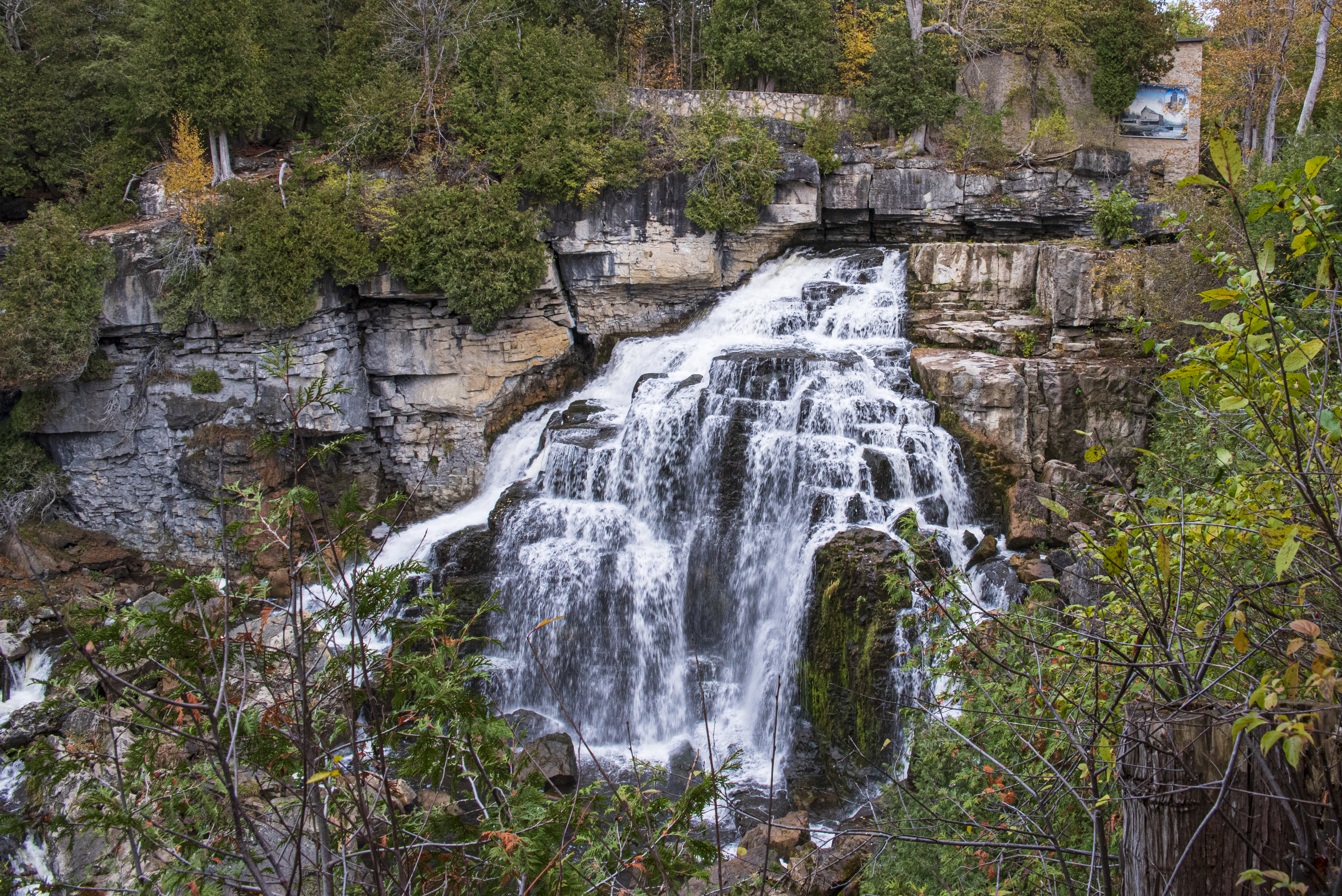
Paul was not afraid of water, and unbeknownst to his mother he and his friends would climb Inglis Falls in the summer. This was the largest of the four waterfalls in town and has a 59-foot cascade. I’ve seen in the fall with a slow flow of water. It is huge! 

Inglis Falls in Owens Sound, Ontario, Canada
Inglis Falls in Owens Sound, Ontario
Photo by Grace Grogan

When Paul was about 14-15 years old he became certified as both a swim instructor and a lifeguard. He worked as a lifeguard at the community pool and taught swimming to adults and children both there and at the YMCA.

Paul was interested in science and technology, and around age 16 he and three friends learned about an Army surplus store in Toronto selling non-working ham radios for parts. The store had ten radios, and they purchased them all. The intent was to build two or three operating ham radios from the parts, and they did!

Paul and his friends had fun communicating on the radios for about a year. None of the teens had taken the required test to become licensed ham radio operators so were broadcasting illegally. An officer tracked them down and removed the tubes, rendering the radios inoperable.  Years later as an adult Paul took the test and became a licensed ham operator.

Paul always had an interest in aviation and was a cadet in the Civil Air Patrol (CAP) in Canada growing up. The group’s intent was to introduce 12-19 year old students to flight. As a CAP cadet, Paul received education regarding citizenship, leadership, physical fitness and general aviation. In Canada today one out of every five pilots is an ex-air cadet and 67% of commercial airline pilots began as air cadets.

Bush Pilot

When Paul was 16-17 years old he got a summer job working for a bush pilot in a nearby town. That first summer Paul performed miscellaneous jobs and ran errands. When the summer ended the owner told Paul if he returned the following year the owner would teach Paul to fly.

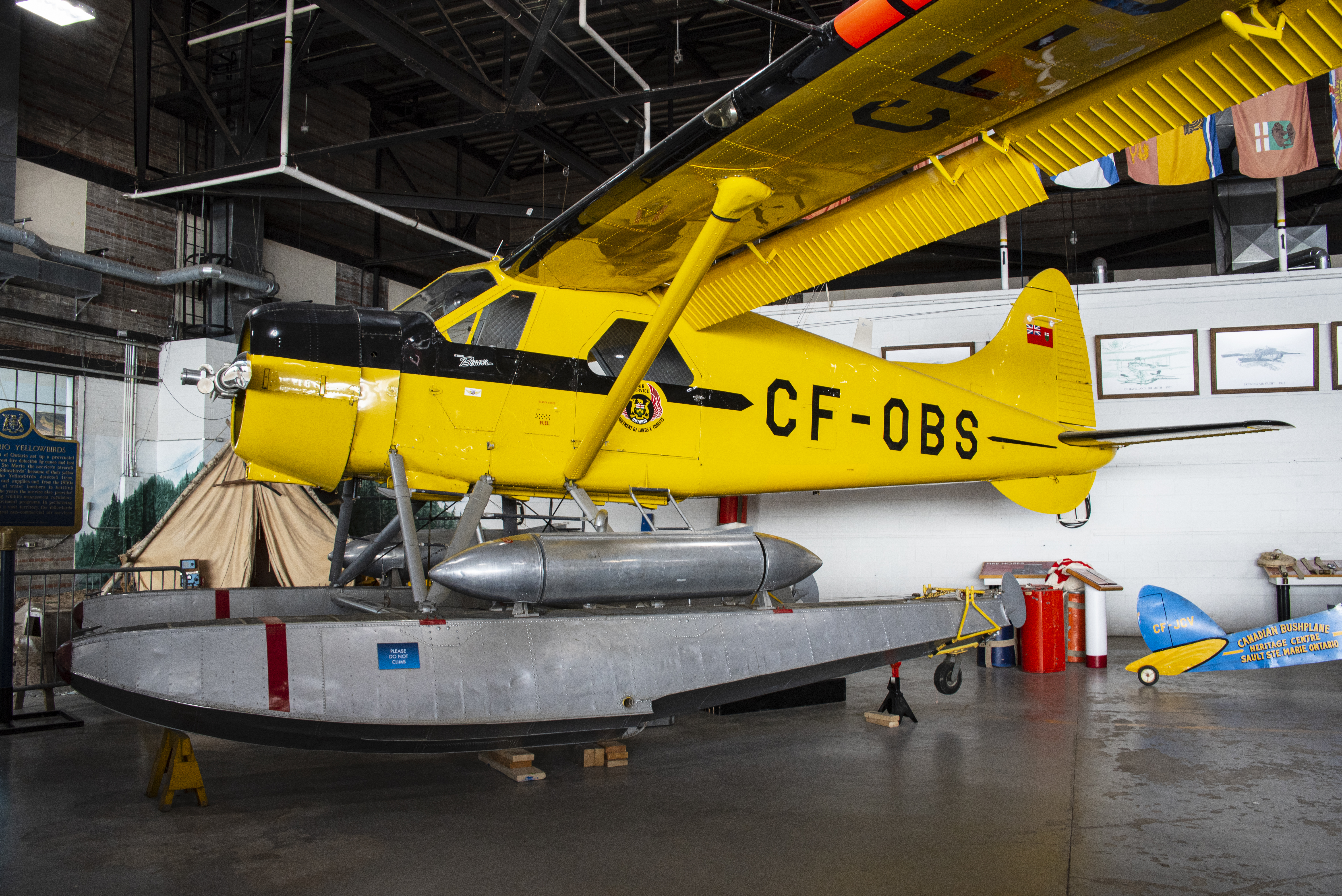
Paul returned and became a bush pilot, flying a Beaver pontoon plane. Bush pilots fly in remote areas, and Paul’s job was to deliver supplies to cabins in the wilderness. You have probably seen this in movies where a plane lands on a body of water, docking near a cabin to leave supplies.

All pilots must learn how to read the weather, and because pontoon pilots land on water, they must also evaluate the water’s surface before touching down. Accommodations must be made for wind direction, the direction and speed of the current, and any obstacles that may affect their landing. Once on the water the pilot must follow all marine rules.

On one flight Paul was landing to leave supplies at a not-yet occupied cabin when the engine on his plane blew. Oil splattered the windshield and the plane stopped before he was near shore. Pontoon planes must carry a paddle for this type of situation. Paul shut down all systems on the plane, then climbed out to sit on one of the pontoons, straddling it like a horse. Paul then paddled his way to shore. If you think rowing a boat is difficult, try an airplane! 

There was no radio communication, so Paul unloaded the supplies into the cabin and hunkered down for the night. His boss had expected him back before dark, so when Paul didn’t return the owner went out the next morning, flying Paul’s route. When he spotted Paul’s plane, he touched down so see what was going on. Paul already had the cowling off the plane, but neither Paul nor his boss had the tools or knowledge to repair the engine.   

Beaver Pontoon Airplane
Photo by Grace Grogan

The owner said he would be back, and when he landed the second time he was accompanied by a mechanic and tools. The owner left Paul and the mechanic to work on the engine. The two spent another night at the cabin before repairs were complete. The plane Paul flew only had one seat, the pilot’s. Once the repairs were complete, the mechanic strapped himself onto the top of a cargo box in the plane and rode back with Paul.

Bush pilots are required to carry a bush pilot’s rifle because situations such as the one above or an unanticipated stop in the wilderness can put you in danger. If Paul was flying his route and saw severe weather ahead, he would land the plane and beach it. Using ropes he would tie the plane to trees to secure it during the storm. When performing these tasks, he always had to be on the lookout for bear.

Paul continued working as a bush pilot for a year after graduating high school, then left for Toronto to attend college.

Radio College           

Radio College of Toronto, Ontario trained students in electronic engineering technology and had a focus on tubes and digital electronics. Electronics technology was the wave of the future in the early 1960s.

While Paul was attending college, he lived in a boarding house with 17 other men. They were housed two to a room, with no locks on the room doors. The home was run by a single woman who ran a tight ship. She made all beds every day and washed the sheets once a week.

Board included breakfast and dinner Monday thru Friday. Paul quickly learned that when sharing a table with a large group of men there were no second helpings. You better get a sufficient amount the first time a dish went around the table. Lunch and weekends boarders were on their own for meals, but could use the kitchen and food she had as long as they cleaned up afterwards. This was a very different type of living than Paul had growing up as an only child.

One evening Paul and his roommate heard a knock on their door, which immediately flew open and in rushed the landlady. She didn’t say anything but hurried over and threw open the window, reached into her pocket to grab a pair of scissors and reached out. The next thing Paul heard was glass breaking on the sidewalk below. Apparently one of the borders owed the landlady money, and she suspected he might try to slip out. By cutting the string to the bundle of belongings the border was lowering from his third-story window, the landlady made it clear she knew what he was up to. No one knows if she collected the money owed her or just enjoyed a bit of revenge.

Paul rode the streetcar to and from college, and sometimes hitch hiked his way back to Owen Sound on weekends to visit his parents. If living in a boarding house and using public transportation bus wasn’t enough of a challenge, Paul was doing this on crutches. Paul played B-Team Hockey and did competition ski jumping. Unfortunately, he landed a jump wrong, breaking his ankle.

Paul quickly learned that in a time of need, crutches make a great weapon. One day Paul got off the streetcar and some guy, thinking he had one-up on Paul, knocked Paul’s books out of his hands. Paul may have been a bit disabled, but not unarmed. He swung one of his crutches around and clobbered the guy. A police officer saw the exchange, came over to pick up Paul’s books and make sure he was okay. When Paul left the scene his attacker was in the back of a police vehicle.

Using city transportation when dating was something Paul learned could be difficult. On one date Paul took a girl out, then escorted her home, staying to visit until about midnight. Big mistake!  When he got to the bus stop he had missed the last bus in that area, so he walked down to the next line, just in time to miss the last subway of the night. He ended up walking all night to get back to the boarding house. Thank goodness it happened on a Friday night, and he was able to sleep when he arrived there the next morning.

Work and Electronics

After graduating from Radio College, Paul took a position installing and repairing x-ray machines throughout Canada. This took him into every Canadian province, a position that nurtured his love of travel and photography. His goal was to emigrate into the United States, work his way west and eventually end up in Australia. He didn’t make it past Michigan.

Immigration into the United States took about a year. Paul needed to find a job that would hold the position for six months while he completed the immigration process. He was about 23 when he got his first job in Michigan doing the same thing as in Canada. Paul was living the bachelor’s life, driving a convertible and working in hospitals throughout the tri-state area of Michigan, Ohio, and Indiana, where there was plenty of female staff to date.

Many people do not realize that immigrants must register for the draft six months after they become permanent U.S. residents. Paul registered during the Vietnam era and knew how to fly the same type of plane being used in the war. Each year he was obligated to check in at the military office, and each time he met new criteria for a waiver so was never drafted.

Career Change

Paul was talking with an electrician and learned they made more money than Paul  was in the electronics field. Paul purchased code books and studied to become an electrician. Though not licensed, he got a job working for Morgan Electric. When a client requested a special electrical job, Paul volunteered for the assignment. The client was impressed with Paul’s work and offered him a job working for their company.

Paul made the job change. Always looking to advance, Paul later applied and got a job in skilled trades as an electrician at the Ford River Rouge plant. Unfortunately the plant did layoffs before Paul had 90 days in.

Needing work and the economy being bad, Paul took a job working on an ambulance. It was on-the-job training, they were not paramedics. The crew would perform basic first aid and transport patients to hospitals. This was during the 1967 Detroit riots and runs were often into dangerous areas. It wasn’t all bad though.

One run was to Governor Romney’s home. The governor’s wife had fallen and injured herself, requiring an ambulance transport. Paul also delivered two babies during his time on the ambulance. One laboring woman looked at him and said, “it’s my first” and he responded, “mine too.” 

When Paul’s father notified him Pittsburgh Glass Works was opening a plant in Owen Sound and needed skilled trades workers, Paul applied and was the first electrician hired. He moved back to Owen Sound and lived there for two years. The glass plant job gave him experience in trouble shooting factory machinery, which would pay off later.

When the economy improved Paul moved back to Michigan and took a position at Allied Chemical in Mount Clemens. An electrical inspector saw his work and volunteered to sponsor Paul for taking his journeyman’s test. You cannot take this test until you have verification of 10 years of experience working as an electrician and a sponsor. Paul passed the test and immediately began studying for his master’s license.

You must work as a journeyman for a minimum of two years before taking your master’s exam. When Paul reached the qualification period he took the test and became a master electrician. Paul then started his own electrical contracting business, Trojan Electric. This electrical contract work was in addition to his full-time employment. His business was lucrative enough to necessitate employing a work crew.

While working at Allied Chemical in Mt. Clemens, Paul saw an ad for skilled trades at the Ford Motor Company Paint Plant. Paul applied and went into Ford as a re-hire. He remained at Ford as an electrician in skilled trades for the balance of his working life, retiring out of the Ford Utica Trim plant.

Back to Flying

After Paul immigrated into the United States, he checked into getting his pilot’s license. The bush pilot Paul worked for never had him keep a pilot’s logbook, so there was no record of his time in the air. Paul had to start over. Lessons were easy because he knew how to fly, he just had to master landing on solid ground.

Pilots must learn navigation and weather patterns, plus cloud types and cloud levels for flight. Paul can look down the road when driving and recognize rain that is coming down but not reaching the ground. He can also see it ahead and predict the time the vehicle will drive into it. Navigational training allows him to know the direction he is driving based on the sun.

Paul purchased his own plane, a Cessna 177 RG (RG means retractable gear) and served as an adult member on the Civil Air Patrol (CAP). The Civil Air Patrol is an Auxiliary of the U.S. Air Force that was founded in 1941 to mobilize civilian aviation resources for the national defense.

Cessna 177 RC
Cessna 177 RG
Photo obtained off Internet

Paul underwent training in CAP to fly both counter drug operations and search and rescue. He enjoyed his time working on missions, which often ran one to two weeks at a time. He also volunteered his time working with CAP cadets, taking them up in his plane for a ride or assisting at special cadet outings. The CAP has the same officer ranks as the Air Force, and by the time Paul retired from service he had achieved the rank of Major.

Paul’s love of aeronautics led him to volunteer his time at the air show held each year in Oshkosh, Wisconsin. He worked in the sound center manning the sound control for the music and announcers during the air show. This required balancing the voice and music, plus timing the music for the air acrobatics of the plane.

Paul learned to be prepared for the unexpected. A woman was narrating her husband’s performance when his plane crashed. Her reaction was a blood-curdling scream into the microphone. Paul immediately cut the sound.

Paul enjoyed his time at the air show, meeting celebrities and working with pilots to time their music to their performance. It was a week of both work and fun, affording him full access to the air show grounds.

In His Free Time

When Paul was ready to move out of the city, he purchased five acres of property in St. Clair, Michigan and built a home. Paul was the contractor for the job. He ran all electrical wiring in the home and finished the interior. This included building the staircase leading to the second floor and installing all kitchen cabinets and countertops. He did this while working full-time at Ford Motor Company and running Trojan Electric.

In addition to volunteering his time with CAP, Paul participated in a computer club and remains a member of the Blue Water Shutterbugs Camera Club. Paul served as treasurer in both clubs. His photographs are sold on Alamy and Fine Art America, and for several years he sold them in fine art shows. Paul spent several years teaching photography, originally in a classroom setting, then one-on-one. He customized lessons to fit his student’s needs, including how to operate a camera, how to take better photographs, and how to process photos in Photoshop.

Paul Cannon now lives and travels throughout the United States and Canada in a 35-foot motorhome, towing a Jeep Rubicon. I am lucky to be living and traveling with him on his latest adventures. We enjoy visiting new places and navigating off-road trails. We produce videos of our adventures and share them on our YouTube Channel, Rolling Thru North America, Travel With US!

Not Smart Enough?

Can you imagine if Paul had only been “smart enough” for college what he might have done with his life? Maybe it is a good thing he did not attend a 4-year college. Paul may have not been ‘smart enough” in his principal’s eyes, but what he has accomplished in his 78 years of life has been diverse and interesting.

Writer’s Note:  This was originally written entirely from memory based on information I garnered from Paul over the past six years. After publication Paul read the above and advised me of some minor corrections needing to be made. Those changes have been made and the writing is now accurate.

Leave a comment

Filed under assumptions, Canada, career, children, decisions, Discoveries, education, employment, exploration, Full-Time RV, hobbies, home, impressions, Life Changing, Life is a Melting Pot, Michigan, Photography, time, travel

Hindsight is 2020

While the age-old saying about hindsight being 20/20 is often used, the roll-over of the new year gives it an entirely new meaning. Regardless of what you personally think of the past year, there are likely some choices you would have made differently. This is true for any year, but especially given the horrific one we had.

Are there thing I would have changed?  Not many. I would not have remained in Yuma throughout the summer; day after day of 115 degree heat is too much! The choices we made kept us healthy, except for a couple rounds of illness I had in the middle of the summer so it was not a bad choice either.

I regret not getting back to Michigan to see my kids and grandchildren. Michigan was a roller coaster ride of what the Governor was going to keep open or shut down from week to week, so we decided not to risk it. We are looking forward to our upcoming travel plans.

While death, disruption, loss of income, and depression are what many will likely recall when they think back on the past year, there are also some positives that should come to the forefront:

  • More time together with your spouse/partner/significant-other or any other name you call the person you reside with
  • More time to do gardening, crafts, hobbies
  • Homemade food, especially baked goods became a normal day of life for many
  • Kids enjoyed being home with their parents and having more family time
  • Truly learning what your kids are studying in school if they were doing remote learning
  • Less air pollution from traffic meant cleaner air to breathe
  • Many people learned how easy and convenient it is to work from home
  • Companies may now decide to lower their overhead by having more people work from home on a regular basis
  • Everyone has become more tech savvy thanks to Zoom, Jitsi Meet, and Google Meet
  • Those who reside too far away to attend club meetings were brought “into the loop” through online meetings
  • Vacation doesn’t mean you have to travel far

As for me, I’ve spent my time writing, processing photos and videos, and have taken a real liking to adult coloring books.

Whatever the things are that stay-at-home orders and Covid-19 brought to you, remember hindsight is 2020 and you can now envision a bright future in 2021.

HAPPY NEW YEAR!

Leave a comment

Filed under Activities, career, celebration, children, communication, Coping, decisions, Discoveries, employment, Family, freindship, friends, friendship, grandchildren, hobbies, home, Illness, kids, Life Changing, Life is a Melting Pot, memoir, parents, play, reality, school, time, travel

Celebrating Traverse City’s Centennial 1947

I have always liked this photograph of my paternal grandparents, Louise Elizabeth (Lautner) King and Dominick King. They are wearing period dress for the celebration of Traverse City’s Centennial celebration in 1947. The photo made me wonder what the celebration and Traverse City were like in 1947. 

My grandmother was 35 years old, and my grandfather 44. They were the parents of three boys; my father was the youngest and would have been 5 years old that summer. Did they dress the boys in period outfits too?  I’ve never seen any photos to indicate they did.

Traverse City did not hold its annual Cherry Festival in 1947 because of the Centennial festivities. The majority of men in the area grew a beard in honor of the celebration. This photo is the only one I have ever seen of my grandfather with a beard.

Instead of having young “glamour girls” honored with the title of parade queen, the Traverse City Historical Society was assigned the task of finding an honorary Queen of the Centennial. The queen was to be someone who had lived in the area a lengthy amount of time and could portray the pioneering spirit of the celebration. I did not find anything to indicate who was awarded this honor. The only link I could find indicating information on the celebration required payment of a newspaper subscription and I chose not to.

For the Centennial at least three parades were planned. A children’s parade and pet parade on July 2nd, followed by the big parade on July 3rd. The big parade was planned as a purely historical parade. It was to be divided into sections with each segment portraying an episode or period in the history of the Traverse City community. It was to include floral floats, marching groups, old vehicles, Indians, lumberjacks and other items relative to the pioneer history.

Unable to locate information on the actual celebration, I decided to see what I could find out about the “period” clothing my grandparents are dressed in. The clothing my grandfather is wearing appears to be a tailcoat, which was squared off at the waste in front and cut into long tails at the back. Tail jackets were in style in the 1840’s, and it was fashionable to wear the jacket with lighter colored trousers, so it would have been fitting for their period costume.

The dress my grandmother is wearing is of a style I could not locate. I did find that synthetic dies had led to bright wild colors in clothing, though I don’t believe prints were generally used. Low sloping shoulders and bell-shaped skirts were in fashion, moving into a Gothic Revival style. Another article stated that a long-wasted bodice, narrow sleeves, and a full dome-shaped skirt that skimmed the floor were in style.

Because I could find nothing that resembled the dress my grandmother is wearing, I wonder if it were perhaps something she obtained from an older family member or friend, or whether she obtained a pattern and sewed the outfit on her own.

A Bit of History

In 1847 Traverse City was a small community which originated because a Reverend was looking for a place to settle with his family. The Reverend settled on the banks of the Boardman River. Traverse City remained an outpost until 1864, when the first road was built through the forest to the settlement.

In 1851 one of the owners of the Hannah, Lay & Co. Mill went to Washington DC and requested the new settlement have a post office called the Grand Traverse City. Because at that time Old Mission had a Grand Traverse Post Office, they shortened the name to Traverse City. In 1872 the railroad connected Traverse City to Grand Rapids.

Traverse City has been listed as the second best small town for travelers to visit in the United States. Each July during Cherry Festival, more than 500,000 people visit the town.  The festival was first held in 1926 and now features about 150 events and activities, 85% of which are free.

Between the festival, tourism and having some of the best wine in the Midwest, resident population in Traverse City is now around 15,785.

I have a lot of family history in Traverse City, and my grandmother’s ancestors were some of the original settlers to the area. I am glad she and my grandfather were able to participate in Traverse City’s Centennial Celebration held 73 years ago.

Leave a comment

Filed under anniversary, celebration, Family, Festivals, Life is a Melting Pot, memoir, Michigan, summer, time, tourism

Looking Ahead Seven Years

It is often said, plan for your future. Everyone is supposed to have a 5-year plan and a 10-year plan. I recently read something that asked where you anticipate your life being in seven years.  

Strange number, but what the heck. What will your life be like in 2027? What do I anticipate for mine?

I know things can change on a moment’s notice. The best laid plans change and before you know it you are doing things you did not anticipate, living in a manner you did not anticipate. Where will the next seven years take me?

LOOKING BACK

I started by thinking back seven years, to 2013.  At that time, I was married, working full time as a paralegal, and my husband, Ron, and I had applied to adopt our granddaughters that had been taken by CPS. 

Between then and now CPS fought the adoption and won, the children were adopted by strangers. My husband developed cancer and lost the battle in December 2015. At that point I thought I would need to remain working full-time until retirement age. My plans included downsizing into a condo or smaller home.

I had begun putting that into motion when in 2019 I had the opportunity to come on board with Paul. I retired out of my full-time job as a paralegal and hit the road.

I now live full-time in a motor home traveling throughout the United States and Canada with Paul. I work part-time ghost-writing blogs and selling my photography online through Fine At America. Paul and I have a YouTube Channel, Rolling Thru North America Travel With US! about our adventures.

So, where will I be seven years from now? 

LOOKING FORWARD

Seven years from now I hope we still be traveling, but it is possible we may decide to settle somewhere. I hope to travel as long as possible. There is a long list of places I have never been and would love to see. By 2027 hopefully most have been crossed off the list.

If we are still rolling on four wheels, great. If the majority of my time is not spent on travel I may be living somewhere in a park model. Why a park model? Because RV parks are active, people come and go, and there are lots of activities. They do not have the seclusion of a house or condo.

I assume I will still be ghost-writing blogs as a part-time income. It is fun, interesting, and a good source of remote income. Seven years from now I will not only be doing that, I will also be doing regular freelance work writing articles for magazines and doing copy-writing for businesses.

I began a book a few years back then stopped working on it when life got chaotic. Seven years from now I will be a published author of that book, and possibly others. I am hoping it brings knowledge to the country about the way CPS destroys families. It is a sad reality of this country.

Seven years from now I will still be shooting photographs and selling them on Fine Art America, just like I do now. I will be processing thousands of photographs taken during my travels that I never found time to work with. My online gallery will have grown from 1,000+ to 7,000+ photos. The YouTube Channel, Rolling Thru North America Travel With US! that Paul and I started in 2020 will have several thousand subscribers and we will still be uploading videos of our travels onto it.

The big clincher, seven years from now I will reach my full retirement age. Will I have already taken my social security, will I apply then, or will I decide to wait and take it at age 70? Time will tell. That is something that will be determined based on my circumstances as time goes by.

So where will I be seven years into the future? Pretty much where I am now. Traveling, writing, and taking photographs. I am enjoying life, why change it? 

Leave a comment

Filed under assumptions, decisions, employment, exploration, Life is a Melting Pot, reality, time

DOCUMENT YOUR PART IN HISTORY

I look around, the place has more people than normal for this time of year, but it is still pretty well emptied out. Why wouldn’t it be? Who wants to stay where the summer temperatures go as high as 120° Fahrenheit?

Yet, here I am. Our original plan was to leave here at the beginning of April and visit several national parks and scenic areas through several states before heading to Michigan to visit family. Then head south and west again, hitting Sault Lake City and Colorado Springs for photography and RV conferences before going for a three-month stay on South Padre Island, Texas, followed by winter back here in Yuma, Arizona.

Those plans have been crushed by the Coronavirus shutdowns. We have extended our stay here in Yuma until at least August 3rd. We are trying to secure reservations in Michigan for somewhere between mid-August to early October, but so far have not had any luck. The state is still locked down and the few campgrounds that are open do not have long-term spots available.

Time will tell if we travel, where we will be, and when we will get there. When you live full-time in an RV, campgrounds are an essential part of life.

We are living through an event that will be written about in history books. Have you recorded your stay-at-home location and changes in lifestyle? Have you noted the schools closing, people doing work-at-home because businesses closed, hospitals overrun with patients, people wearing face masks and gloves to protect those around them?

If you have young children, have you recorded their thoughts on what is going on around them? These are memories that may be forgotten over time but will be important to future generations.

This slideshow requires JavaScript.

Paul and I are hanging tight in Yuma, Arizona. I walked around the park and took snapshots of the camp, documenting the place that was full when we arrived in February and is now almost empty. A lot of the people here in the winter are Canadian snowbirds who were ordered to return to Canada in March or lose medical insurance due to the pandemic.

So where are you? Have you documented the event? Leave me your comments below.

Stay Safe!

Leave a comment

Filed under Activities, assumptions, backyard, Canada, communication, Coping, decisions, Discoveries, environmental, exploration, flowers, Full-Time RV, home, impressions, Life Changing, Life is a Melting Pot, memoir, Michigan, reality, spring, summer, time, tourism, travel, winter

Stay-at-Home Orders: 10 Positive Points

We have all been watching the fear of the unknown unfold before us with the Coronavirus spread throughout the world, but more closely to home here in the United States.

We all need a break from the chaos, and below I am going to give you 10 positive Points to the stay-home orders.

I am in a unique class of citizens. We do not have a “sticks and bricks” home, we live full-time in an RV. Stay-at-home orders affect us a bit differently. We elected to stay put in the RV park here in Yuma, Arizona until things calm down. Being in an area where temps average 107 in the summer is not our choice, but we feel it is the best alternative if things do not calm down before then.

When I think back to one year ago in April 2019 I was winding down on the sorting out of my house in the anticipation of moving into an RV full time. I was prepping for an estate sale, selling my home, leaving my full-time job, and hitting the road. By mid-August, those things had been accomplished.THINK POSITIVE IMAGE

I enjoyed a wonderful fall traveling in eastern Canada, and warm winter in southern Texas and Arizona. Our plans for this summer to hit some national parks before heading back to Michigan to visit family have been pitched. We don’t know when or if we will be able to travel to Michigan this year.

The Port Huron Township RV Park we stayed in last summer is closed indefinitely due to the coronavirus. The Port Huron Lapeer Road KOA is price gouging, charging $75 per night if you want to make a reservation. Under the circumstances, our plans are in limbo.

The coronavirus has been the main focus of news for the past couple of months and will likely be for the next few months ahead. We all need is a positive brain break during our stay-at-home time.  Here are some positives of the stay-at-home orders:

  1. You no longer need to set an alarm clock. Sleep in or get up early, your choice.
  2. You can dress however you want – casual, pajamas, the scroungy never-wear-in-public old clothes – whatever suits your fancy. You aren’t going anywhere, no one is visiting, so it’s all good.
  3. No need to wear makeup – who is going to see you?
  4. You can now read those books you purchased but never had time to read. Clean off that shelf and prepare for a literary shopping spree when the stay-home orders lift.
  5. There is plenty of time to do spring cleaning. Does anyone really do that anymore?
  6. Do the spring yard cleanup, plant flowers, ready the vegetable garden.
  7. Clean the junk drawer, the closet, or the basement. Think how neat and organized things will be once this pandemic is over.
  8. Lower gasoline expense – if you aren’t going anywhere you aren’t using any gas
  9. Skim through recipe books and try some new recipes. Think of all the money you save by not eating out, shopping, going to events and concerts.
  10. More time with your spouse, kids, significant other. Make art projects and play board games. Did out your old hobbies – woodworking, sewing, ceramics, stained glass – anything you used to do and normally don’t have time for.
  11. Sit on your porch or deck and enjoy the sun, listen to the birds, drink a glass of wine.

Use this stay-home time to enjoy life. Someday you will be able to look back and remember the brain break you were awarded in the midst of a pandemic.

1 Comment

Filed under communication, Coping, decisions, Discoveries, employment, Family, freindship, friends, friendship, Full-Time RV, hobbies, home, Illness, Life Changing, Life is a Melting Pot, mind, play, reality, spring, summer, time, tourism, travel, winter

Nature’s Palette

As you drive to the north end you encounter drifts of sand on the road, then a small sign points to Beach Access #6.  This access is outside the city limits and not maintained, but people use it every day.  The sand is thick, so a 4-wheel drive is necessary.  You maneuver through sand piles that will make you think of maneuvering deep snow if you are from the north.  Once you break free you are on a beautiful beach that you can drive for about 3 miles south and 26 miles north on the Gulf of Mexico.

It is the north drive that has the most to offer.  Every day is the same but different.  Nature creates an ever changing palette intermixed with human elements.   We enjoy driving in the edge of the water, but there is always a possibility a larger wave will come in and leave you a bit wet.  That is what happened to us one day when we had top off the jeep.  A wave hit the side coming in the driver’s side window and splashed so high it came down through the roof opening.

A trail of shells leads you down the beach, not only on the water’s edge, but also up near the dunes.  This is because during high tide the water is considerably higher on the beach, and high winds bring it in even further.   If you are lucky enough to be there on a high winds day not only will the waves be higher, but there will also be sand swirling off the dunes and flowing across the surface of the beach until it meets incoming waves,  giving a soft, mystic feel to everything.   The pounding waves provide a rhythmic music of nature as you drive.

Fishermen line their poles up along the water, sitting in lawn chairs waiting for their catch. some with BBQ grills set up to cook up their meal fresh.  We stopped to watch one bring in his catch, but it was soon discovered he had hooked a sting ray, which he cut his line from so that it could work its way back into the water.  Herons, gulls, pipers and pelicans congregate along the water’s edge, satisfying their hunger with the offerings of the water.

Visitors walk along with a bag in hand, searching for the perfect shell.  On occasion you will see a group of horseback riders from a nearby stable.  We came upon a driver in a car who was stuck in the soft sand along the surf.  We pulled him out with the Jeep’s power wench.  You may sometimes encounter nude sunbathers or swimmers.  Everyone is friendly, everyone waves.   The beach is a relaxing, fun place to be.

This slideshow requires JavaScript.

Landmarks, both natural and human-enhanced, mark your way.  Mile marker signs are mounted on the edge of the dunes so you know how far you have gone.  Some of my favorites include a log decorated to look like an alligator, a log with an upside down boot on it, a buoy that washed ashore, a container anchor that has been covered in graffiti, a piece of driftwood shaped like a sea serpent, and even a water rescue pod that has been decorated.  These items are constantly changing, impacted by nature and man, so each day brings a new look.  Sands drift and cover parts while winds uncover new discoveries.  The sea serpent log that was open and clear on our first visit now has sand over parts of it.  The water rescue pod was moved further onto the beach by the US Fish and Wildlife workers as it was sitting on the edge of a wildlife preserve.  A buoy that had drifted ashore was complete one day and missing its top a few days later.

I have enjoyed the time spent on the beach of South Padre Island, Texas.  I will miss nature’s palette of beauty and change when I have gone.  It will be interesting to see what items remain the same, what has disappeared, and what has been added by the time I return next year.

1 Comment

Filed under Activities, Discoveries, environmental, exploration, impressions, Life is a Melting Pot, nature, time, tourism, travel, vacation, Weather

SEVEN WEEKS AND ROLLING

This slideshow requires JavaScript.

Hard to believe it has been seven weeks since I started my new lifestyle of living on the road full time in a motor home (a/k/a full-time RV).  In that amount of time I have visited Ontario, Quebec, New Brunswick, Prince Edward Island and Nova Scotia, Canada and Bar Harbor/Acadia National Park, Maine in the United States.

One thing you have to do when living this way is be conservative, be flexible, and enjoy life.  Sometimes things go well, and other times the best laid plans can be foiled.  Highlights of my travels and learning curve:

  1. The best laid plans can be foiled when you make a day trip three hours away only to discover that town’s power is out and all businesses (including museum you wanted to visit) are closed.
  2. Pulling off for a quick lunch break takes more planning in a 35-foot motor home towing a vehicle than it does in a car.
  3. Ottawa, Ontario is the capitol of Canada and is a very interesting city, but bring your walking shoes.  There is one parking lot in the entire city and a lot of area to cover.   If you take a double decker bus tour it is a great way to get around, but you may end up with a tour guide who has a strong French accent and is difficult to understand.
  4. Canadians are very pro recycling The question in grocery stores is “Do you have your own bag?” not “paper or plastic?”  Some stores charge you for use of their bags.
  5. You can not stock up when items are on sale.  There is no extra room beyond the refrigerator and pantry.
  6. There is a large percentage of people in Canada who hang their laundry outside to dry….many on pulley-style clotheslines.
  7. When living in an RV, laundry is a necessary evil that must be done in a laundromat (most campgrounds have them) every 2-3 weeks.
  8.   You can live in a house for years and never wave at your neighbors, but in a campground everyone waves at everyone else.
  9. The architecture and culture of Quebec City, with its fortification wall, Citadelle, and French influence is like taking a step into another country.
  10. When you travel full time you need down time.  This is not a vacation, it is a lifestyle.
  11. When you give up on the road signs being true and think you will never see a moose, one shows up on the side of the road and you do not have the camera ready.
  12. No matter how many times you see them, the difference between high tide and low tide at the Bay of Fundy is amazing.  This is where you see the world’s largest tides.
  13. Getting your mail an average of once every four to six weeks takes planning so it arrives in a city where you plan to be at the appropriate time.
  14. A GPS can be your best friend and your worst enemy.  Our Trucker GPS in the RV took us down a road that had been re-done two years ago and no longer goes through — it is now a dead end.  When towing you cannot back up because it damages the tow unit, so we had to disconnect the jeep, turn the RV around and then re-connect before we could continue.  Of course it would have helped if Ellsworth, Maine had put up a “Dead-End” sign, as a woman on the road said it happens all the time and they have been after the city to do something.
  15. In many spots what is promoted as a “scenic drive” is overgrown with nothing to see.
  16. Convection oven cooking is not difficult, just different.  The three burners on the stove-top is much harder to adjust to as it does not easily accommodate large pans.
  17. I have not adjusted to the feel of the motor home when driving in high winds or uneven pavement.  That one is going to take some time!
  18. This is an awesome way to live and I’m glad I took the plunge and jumped in with both feet.

As time goes on I look forward to sharing more of my travel adventures with everyone.


Leave a comment

Filed under Activities, assumptions, Canada, Coping, decisions, Discoveries, environmental, exploration, freindship, friends, friendship, Full-Time RV, habit, home, impressions, Kitchen, Life Changing, Life is a Melting Pot, Meals, memoir, nature, Photography, reality, spring, summer, time, tourism, travel, vacation, winter, Writing

Finally at Peace

When you live with constant turmoil you become accustomed to living as if on a constant roller coaster ride.  The twists and turns of upheaval in your life create emotional stress, and yet you constantly adjust, cope, and keep on moving forward.  This becomes so normal you do not even realize how much stress you are constantly under.

That has been my life for the past few years.  The loss of my grandchildren to foster care and then a battle with CPS when we tried to adopt which resulted in them being lost to adoption by strangers.  My son serving six years in prison for home invasion, dealing with the constant dangers that environments holds.  My mother, father, father-in-law, and then my husband battling cancer and passing away, all within a three year period.  My son being released from prison and paroled to my home; something I had originally looked forward to but which became a very stressful situation.  Peace of Mind

Following my husband’s death I made a determination that I needed to downsize out of my home and into something smaller.  In the midst of planning for that made a decision to  instead downsize into an RV and travel full-time.  During this process I informed both of my adult children that I was no longer going to be able to subsidize them financially, something my husband had always done while he was alive.  This resulted in more stress, but over time success was achieved.  They are both now living financially on their own.

I am finally at a point where success is on the horizon.  My new lifestyle begins on Monday.  I closed on my house today.    Friday is my last day of work.  My daughter moved her family north and is now residing near her fiance’s parents, a situation that is serving well.  Both Caroline and Rob are working at new jobs and my three grandchildren are enjoying life in a more country setting close to their other grandparents.

My son, now out of prison for 1-1/2 years, has obtained his CDL and is working in a position driving semi.  He and his ex-wife have reconciled and are residing in a home they rent near his workplace.   I am at peace that I do not have to worry about him being cold, undernourished, injured or killed in prison.  I wish him success.

For the first time in years my mind is at peace.  My children are both living on their own without my financial assistance, and I am going into semi-retirement.  I will be residing full-time in a motor home, traveling the United States and Canada and doing part-time remote or seasonal work.

For the first time in years I can sleep without my mind churning over the problems, worries, and stress that plagued me for so long.  I hope nothing happens to upset the apple cart.  A mind at peace is a wonderful thing.

2 Comments

Filed under Adoption, assumptions, cancer, Coping, CPS, death, decisions, employment, events, exploration, Family, Foster Care, grandchildren, home, kids, Life Changing, Life is a Melting Pot, memoir, parents, reality, time, travel, work

Life is not meant to be lived in one place

I have reached the point of excitement.  My new lifestyle will soon be moving from life in an RV in my local area to actual life on the road.    I am now on my last two weeks of work, with the 16th of August being my final day.  I am training someone to take my place at work, will soon have the closing date on my house, and once that is completed we will set off on our new lifestyle.

This past weekend Paul and I opened up the “basement” storage in the motor home and got the last boxes out of my car and into the RV.  Not everything is sorted and organized the way we want, but I am at least officially in the motor home totally and completely.  The next two weeks will be a whirlwind of finishing up things at work and training my replacement, a doctor’s appointment, turning in my lease vehicle, finishing up paperwork, listing the second home I own for sale, and closing on the home I was residing in.   In someways the day when I can “hit the road” seems so far away, and yet so close.  Time passes quickly when trying to get everything finished in the final moments.  Trave as far and as long as you can

We are now starting to plan the first leg of our travels, and it is exciting and a bit nerve wracking at the same time.  I am semi-retiring prior to retirement age, so will need to do remote or seasonal work while on the road to supplement  the spousal pension I receive.  Until I have a steady income from remote or seasonal work  I will be concerned about finances.  That is just me.

At the same time, if I didn’t jump at this opportunity now to travel full-time I know I would regret it for years to come.  You only live once, so might as well make the most of it.  What are that chances that I will ever again run across the opportunity to live full time in a motor home traveling Canada and the United States with a person with whom I am compatible who is also a fellow photographer?

I hope this is a life style we can enjoy for several years.  The opportunity to experience a variety of cultures and the diversity of nature as we travel cross country is something I am looking forward to.  As I travel I plan to keep a journal about my travels.  I enjoy freelance writing and hopefully you will see my writing and/or photographs not only in this blog, but also in published magazines and journals.

If you have any “must see” locations in Canada or the United States, please share.

Leave a comment

Filed under career, communication, decisions, Discoveries, education, exploration, hobbies, impressions, Life Changing, Life is a Melting Pot, nature, reality, spring, summer, time, tourism, travel, vacation, winter, work, Writing

Writing to Relax

I have been, and continue to be, in the whirl-wind of trying to sort through 36+ years of belongings accumulated in my house and reduce the “keep” items down to what I can take with me in a 35-foot motor home, in which I will live and travel the United States and Canada.  Needless to say, this is a monumental task.  I am on the downside now, with only a few things left to complete, and the estate sale is scheduled May 2-6, 2019.

I have been sorting through old items, boxes never unpacked from when we moved here in February 2004, and family heirlooms, mementos and photographs.  Those special items I have painstakingly gone through and divided between my two adult children.  In the midst of all this my son has been moving out.  Between working long hours and moving about 45 minutes away, he has taken a long time in the process with a couple trailer loads of items still left to move.  This has made for a very stressful situation.   We are now down to “crunch time” as the estate seller will need to come into the home and get things priced.  My son made a comment about me pushing my sale back, but I refuse to do that.  I need to get my house emptied, ready for sale, and sold quickly.

closet cleaningI have spent weekend after weekend at home, sorting through all my current items and those in boxes, preparing for my estate sale.  Today I took some “me” time and attended the #RochesterWriters Spring Conference.  I enjoyed a day of informative keynote speakers and instructors, plus socializing with other writers.  It was time well spent, combining instruction in self-publishing with networking.   There is something about spending a day with other writers that inspires one to write.  Even though you haven’t seen me here in quite a while due to everything going on in my personal life, I find myself here tonight writing a quick blog, just to say hi and let you know I am still alive and kicking.
Once the sorting and packing is complete and I have moved into the RV, which will happen on or about April 23, 2019, you will begin to hear from me more often.  As I move into fall and begin to travel the country I plan to post travel blogs of my adventures, and hopefully expand into writing some travel articles for magazines as well.  What the future holds for me one can not be certain, but it will definitely be an adventure and a change in lifestyle.

1 Comment

Filed under Activities, assumptions, career, Cleaning, communication, decisions, Discoveries, events, Festivals, freindship, friends, friendship, habit, impressions, Life Changing, Life is a Melting Pot, reality, time, tourism, travel, Writing

When was the last time…

…..you did something for the first time?

That is a line in a song I enjoy by Darius Rucker, just click here to hear it.  I was listening to the song and it got me to thinking about how we all develop set patterns of life.  We get up, go through the same routine during the day, go to bed, get up and repeat.

The song goes on to say “Yeah, let yourself go, follow that feeling, Maybe something new is what you’re needing, Like a real life, let your hair down, feel alive, When was the last time, you did something for the first time?”

Those are thoughts we should all put into action when our life is feeling a bit ho-hum.  It can be something major or something minor.  Just spice it up a bit to re-build your energy and enthusiasm for life.

In July I took a 10-day vacation when I flew to Alberta, Canada for the Calgary Stampede.  While it is not the first vacation I have ever taken, nor the first international flight (I flew to Mexico with a school group in 1978), it was my first time in Alberta, Canada and my first time attending the Calgary Stampede.   It was also the first true vacation I have taken since 2014.when-was-the-last-time-you-did-something-for-the-first-time-quote-1

I am currently in an active sort-of first time events project.  I have started doing some preliminary scouting of homes.  I am planning to downsize and packing and moving an entire home, not to mention selecting and purchasing a home entirely on my own will be a first.   When you have always done things with others, doing them on your own the first time is a different experience.

So, when you hear the question, When was the last time, you did something for the first time?  What is your answer?  What is on your bucket list?  Throw out some ideas….I may want to incorporate your ideas into my list.


Leave a comment

Filed under Activities, assumptions, decisions, Discoveries, exploration, habit, impressions, Life Changing, Life is a Melting Pot, mind, reality, time, tourism, vacation

Babies Don’t Keep

I recently stumbled across a poem I have loved since the first time I saw it…Cleaning and scrubbing can wait till tomorrow, for babies grow old we’ve learned to our sorrow, so quiet down cobwebs, dust go to sleep, I’m rocking my baby and babies don’t keep.

There is nothing quite so relaxing as a baby snuggled up against your shoulder, their head tucked against your neck, as you rock them to sleep.   I rocked my kids to sleep all the time, to the extent that training them to go to bed without being rocked to sleep first was difficult.  However I would not forgo all those hours I spent in a rocking chair with them cuddled against me for anything.

In today’s rush-rush society rocking babies to sleep is something that has fallen out of practice.  You hear of people putting babies into a crib with a bottle to fall asleep.  Mothers who nurse feed the baby and then immediately lay them down.  There isn’t that extended cuddle time when you are holding and rocking the baby without a reason other than just to cuddle.  It is sad to think there are two generations missing out on this special time….the generation of parents and the generation of babies.  Cleaning and Scrubbing 2

Modern lifestyles are lived in the fast lane.  We have babies, then rush them into preschool as early as age three.  By the time they reach kindergarten children have been attending day care or preschool for 2-3 years, maybe more.  Many children are enrolled at the elementary age into sports or other activities.  By the time the child reaches high school they have a schedule of school, homework, sports, and other extracurricular activities, then comes graduation and college.

Time goes fast.  If you are a mother of young children, cherish those moments.  Take the time to sit in a rocking chair with your baby on your shoulder or your toddler on your lap.  Read them a story, let them fall asleep, enjoy that quite cuddle time, then carry them to bed.   Before long they won’t want to sit and cuddle and you will miss those times.  Enjoy them.  Cherish them.  Because as every mother soon learns, babies don’t keep.


Leave a comment

Filed under children, Cleaning, decisions, Discoveries, Family, home, kids, Life is a Melting Pot, parents, time

Places I Have Been to For the Last Time

It is a bizarre thought, something that hadn’t really dawned on me.  Then someone considerably younger then me made a comment that he was wondering how many places he has already been for the last time.  He is only 30 years old!   I was baffled that such a thing had entered his mind.

When you go somewhere rarely do you think “this may be the last time I am ever here.”  The older you get, the more likely you are to consider such a possibility, but for the most part we humans have a tendency to expect things to always continue as they are, not realizing how precious that visit may be.

Think about places you remember with fondness, or maybe even with some sadness.  When you were there did it occur to you that it was the last time you would be there?  Maybe it did, maybe it didn’t.  When you start rolling that thought around in your head you realize how important it is to cherish every single moment of everything you do, because it may be the last time.

My grandparents house – my great-grandfather had built it when my grandmother was only six years old.  I grew up going to that house for visits with my grandparents and other family members.  After my grandfather passed, my grandmother continued to reside there until she was well into her 80’s.   I eventually got married, had children and took them to visit their great-grandmother in that house.  The last time I was inside the house the family was preparing for an estate sale following my grandmother’s death.  I can’t remember the last time I visited my grandmother in her house because one day she became ill, went to the hospital and then into assisted living, where she remained until she passed at age 94.  While the property was still in the family I would from time-to-time stop and walk around the outside of house and around the yard and barns, taking a few photos.  I knew it was for sale and had been for some time, but even then it never occurred to me that I might be walking on that property for the last time.  Eventually the house sold and my impromptu visits ended.

Cedar Point — a very popular amusement park in Sandusky, Ohio.  I used to love attending amusement parks, and we always went to one as part of our family vacations when our kids lived at home.  We sometimes attended them even without kids.  Then I was in a bad accident and ended up with severe vertigo.  I won’t go on amusement park rides ever again as I am fearful that the rapid movement of the rides might bring back the vertigo.  My favorite rides were always the fast spinning ones like the spider, swings, Himalaya, and other similar rides.  The last time I visited an amusement park or rode a ride it never occurred to me it would be the last time.

Scrapbook Memories in Chelsea, Michigan –  This was a huge scrapbook store that held 3-day crops several times a year.  My best friend, and I would meet there and attend the 3-day crops.  It was a wonderful time and something we did year after year.  Then one day we received notice that the owner had decided to leave the business and move out of state.  No one purchased the store and it closed.  Lots of memories of fun times in that store.

There are other places as well, my parent’s home where I was raised from the time I was in 1st grade until I got married and moved away.  My in-laws home that holds lots of fun memories.  The house my husband and I built in 1983 and then sold in 2004.  I’m sure if I sat and thought there are many others.  Will I ever go back to Disney World?  Will I someday get back to Hawaii?  When I was there years ago I assumed I would someday return, but in reality, will I ever?

Cherish the time you have at each place you visit, be it on a regular basis or only on  occasion.  You never know when circumstances will make it the last time.

What are the places you have been for the last time?

5 Comments

Filed under Activities, assumptions, decisions, Discoveries, exploration, impressions, Life Changing, Life is a Melting Pot, memoir, reality, time

Bulleted Reunion

IMG_20180720_185225304I had the pleasure of attending my 40th High School Class Reunion in Eaton Rapids, Michigan this weekend.  The coordinators did a fabulous job of pulling the weekend together with a variety of activities to keep people on the move.  This was especially nice for those of us traveling in from out of town, especially those traveling from out-of-state.
This is my bulleted list of memories of the weekend.

  • Meet-and-Greet at Eaton Rapids Medical Center Conference Room.
  • Great desserts!
  • Friendly conversation with classmates.
  • Tammy (Ball) Albright’s face sign
  • Olive burgers and beer at Abies Bar
  • Woman’s bathroom is small with two toilets, no stalls.
  • Breakfast at Darb’s Patio, always yummy!
  • Glitch in planned tour of high school – Honor Society students are prepared to do tour, school is locked and they don’t have keys.
  • Classmate makes a couple calls and resolution is on the way.
  • Dave Johnson, teacher when we attended, later principal, now retired, has master key to school and comes to rescue, conducts the tour, and does an awesome job of sharing the way it was when we attended, and what changes have been done over the years.IMG_20180721_130944998_LL
  • Touring the high school after 40 years brings back memories, including these mentioned during tour:
    • The Cold Tongue
    • The smoking bathroom
    • Pep Rallies
    • After home game dances
    • Band/band camp
    • Typing class
    • 1-2-3 Roll’em Ferndock
    • World History class lectures in auditorium
    • Theater performances in auditorium
    • Mr. Phillips math classes
    • Mrs. Lohrke, English teacher
    • Mrs. Shimnoski and Mrs. Tuthill, Business/Secretarial Block teachers
    • Various athletes, coaches
    • Teachers and counselors now gone but long remembered
    • Library no longer has a comfy seating area of bean bag chairs, chairs, etc.
    • Senior Bench (now gone)
    • The former layout of the school compared to what it is now
  • Non-Reunion Activity:  Quick stop-over to visit with my sister for a couple hours
  • Walking a block to the Red Ribbon Hall for the reunion because I thought all  parking in front was taken; there were still open spots.
  • Some classmates’ appearance has hardly changed, very recognizable.
  • Some classmates have changed a lot — thank goodness for name tags!
  • Being surprised at how many people recognized me immediately.
  • Good food, good desserts.
  • Good conversation with old friends and classmates.
  • 1978 Graduate photo frame for shooting pics
    IMG_20180721_212645159
  • Fun slide show of “then and now” pictures of classmates.
  • Party Favors:  Eaton Rapids glass and notepad
  • The Red Ribbon Hall has very good acoustics = loud atmosphere.
  • A lot of us still drink, but not like we used to!
  • Many of us no longer “close down the bar” and left before the party was over.
  • Cell phones are great for event pics…I didn’t see a single “real” camera all weekend.
  • Facebook sharing of activities and photos on the ERHS Class of 1978 Page
  • Sad realization that we have lost 11 classmates, a nice memorial table was set up.
  • A quiz of things about our last year of school – presented by Mrs. Wheeler, former teacher.
  • Each classmate was to stand and give their name (maiden) now and where living…which grew as it went around the room to name, where living, married/years, occupation, children/grandchildren.
  • Amazing how many people have stayed in Eaton Rapids and/or the Greater Lansing area.
  • Surprised at how many have moved out of state, or resided in several states.

FB_IMG_1532145667519Time passes so quickly.  How is it we have already been out of school forty years?  Many thanks to classmates Julie and Jane Brenke, and their sister Jill, for organizing the reunion as well as several others who stepped in and assisted them.
 

2 Comments

Filed under Activities, anniversary, celebration, communication, education, events, freindship, friends, friendship, Life is a Melting Pot, memoir, Michigan, school, time

Killing Myself Preparing for Vacation


Am I the only one who feels like they have to go into overdrive in order to prepare for a vacation?  I recently planned for a 10-day trip to Calgary, Alberta, Canada.  In order to prepare I had to complete several things.travel-checklist-suitcase-world-map-260nw-449655331

  • Book Airline Flight
  • Reserve parking for my vehicle near airport
  • Passport due to expire five months before my flight, six months is the minimum,  passport renewed
  • Go to bank to get US money exchanged for Canadian funds to take on trip — but my bank doesn’t have them plus charges a $12 fee; go to second bank that does not charge a fee and lets me obtain funds, which they have on hand, because I have a credit card issued by their bank.
  • Go back to bank closer to trip to withdraw US funds to travel with.
  • Check for good photo ops where I will be traveling to
  • Order meals for the two flights (coming and going) that are in excess of four hours.
  • Check the airline baggage requirements for international travel; order a suitcase that meets airline specifications for checked luggage
  • Measure my carry-on bag to make sure it meets airline requirements.
  • Check the list of airline regulations to make sure I am not doing anything to raise the hackles of TSA.
  • Make last-minute checklist so I don’t forget anything
  • Make sure all camera batteries are charged, SD cards clear, all camera gear needed is ready to go.
  • Continuously analyze whether I want to pack my laptop, just an external drive to download photos onto using my friend’s computer, or if just the SD cards will be enough and I can download after returning home.
  • Get haircut.
  • Work extra hours to get everything organized for when I am away.
  • Wash clothes on an “off day” so they are clean to pack and/or ready for return to work after vacation.
  • Pack suitcase and carry-on bags
  • Print boarding passes
  • Leave for trip — See ya when I return!

How many of you go through similar rituals when preparing for a trip?  Do you have any tips to make travel prep easier?

Leave a comment

Filed under Coping, decisions, exploration, habit, Life is a Melting Pot, Photography, summer, time, tourism, travel