Category Archives: Festivals

The History of Christmas Trees and Gift-Giving

As we approach Christmas, I had a photo from 2014 pop up on my Facebook Memories feed: the tabletop tree at my house in Michigan, with presents stacked around it for the grandchildren, is a sharp contrast to my skinny pencil tree in my park model in Arizona. I love having this tall skinny tree after six years living in a 35-foot motor home with no room for a tree.

My tree this year is not laden with gifts. I miss the fun of wrapping all those gifts, stuffing the stockings, and watching the kids unwrap them. There is nothing as beautiful as a dark room with a lit tree and gifts below it, and nothing as fun as watching kids open those gifts on Christmas.
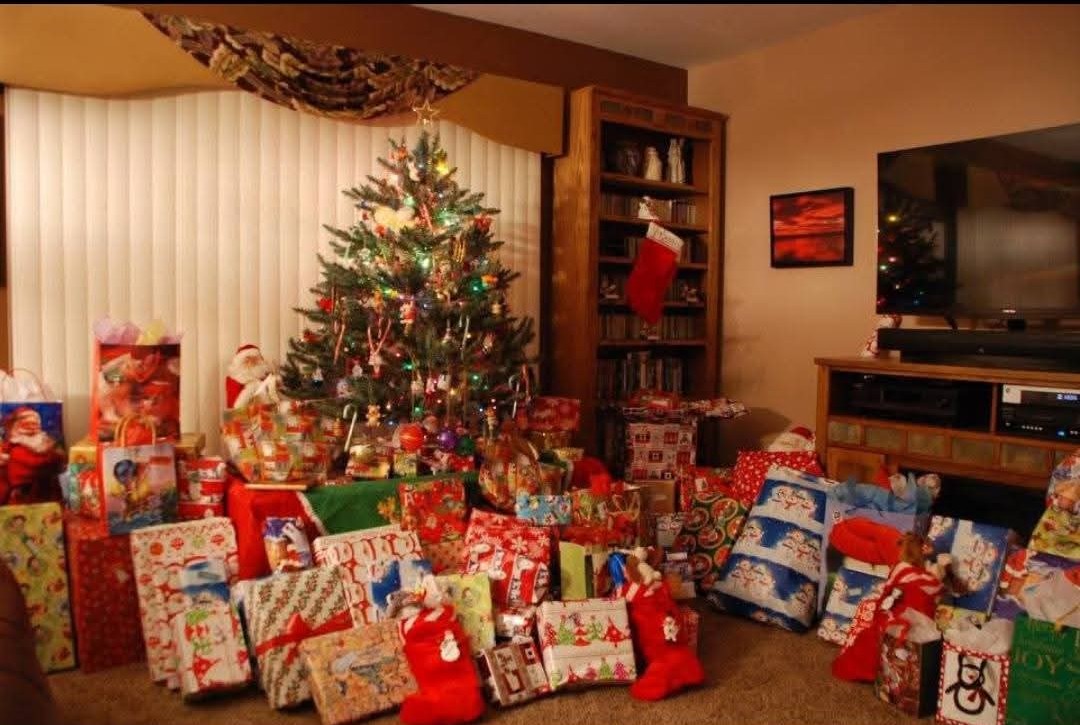
Shows writer's table-top Christmas trees and presents sitting around on the floor.
My Christmas Tree in 2014 — gifts for my grandchildren and adult children

That made me wonder about the traditions of Christmas trees and gift-giving. The act of exchanging gifts began long before Christmas and was done during the winter solstice in ancient Rome, celebrated from December 17 to 23rd. The gifts were usually small figurines called Sigillaria, made of wax or pottery and designed to resemble gods or demigods. Then, during the new year celebrations, the Romans gave gifts of laurel twigs, gilded coins, and nuts in honor of the goddess of health and well-being.

It was in the early 4th century AD (January 1, 301 to December 31, 400) that the gift-giving custom was linked to the biblical Magi delivering presents of gold, frankincense, and myrrh to the baby Jesus.  This was co-mingled with the gift-giving tradition of the 4th-century bishop, Saint Nicholas. Saint Nicholas had a habit of secretly giving gifts, and he was the inspiration for Father Christmas and Santa Claus.

In the 16th century (1501-1600), the custom of giving gifts to children developed in Europe as a way of reducing rowdiness on the streets around this time of year. Parents used it to keep children away from the streets and from becoming corrupted. These actions resulted in Christmas becoming a private, domestic holiday rather than a public holiday of carousing.

Saint Nicholas was the inspiration for the Dutch Sinterklaas, with a festival that arose during the Middle Ages. The feast was to aid people experiencing poverty, especially by putting money in their shoes. This tradition developed, and by the 19th century, it had become secularized into him delivering presents. By this time, the Santa Claus of North America had developed.
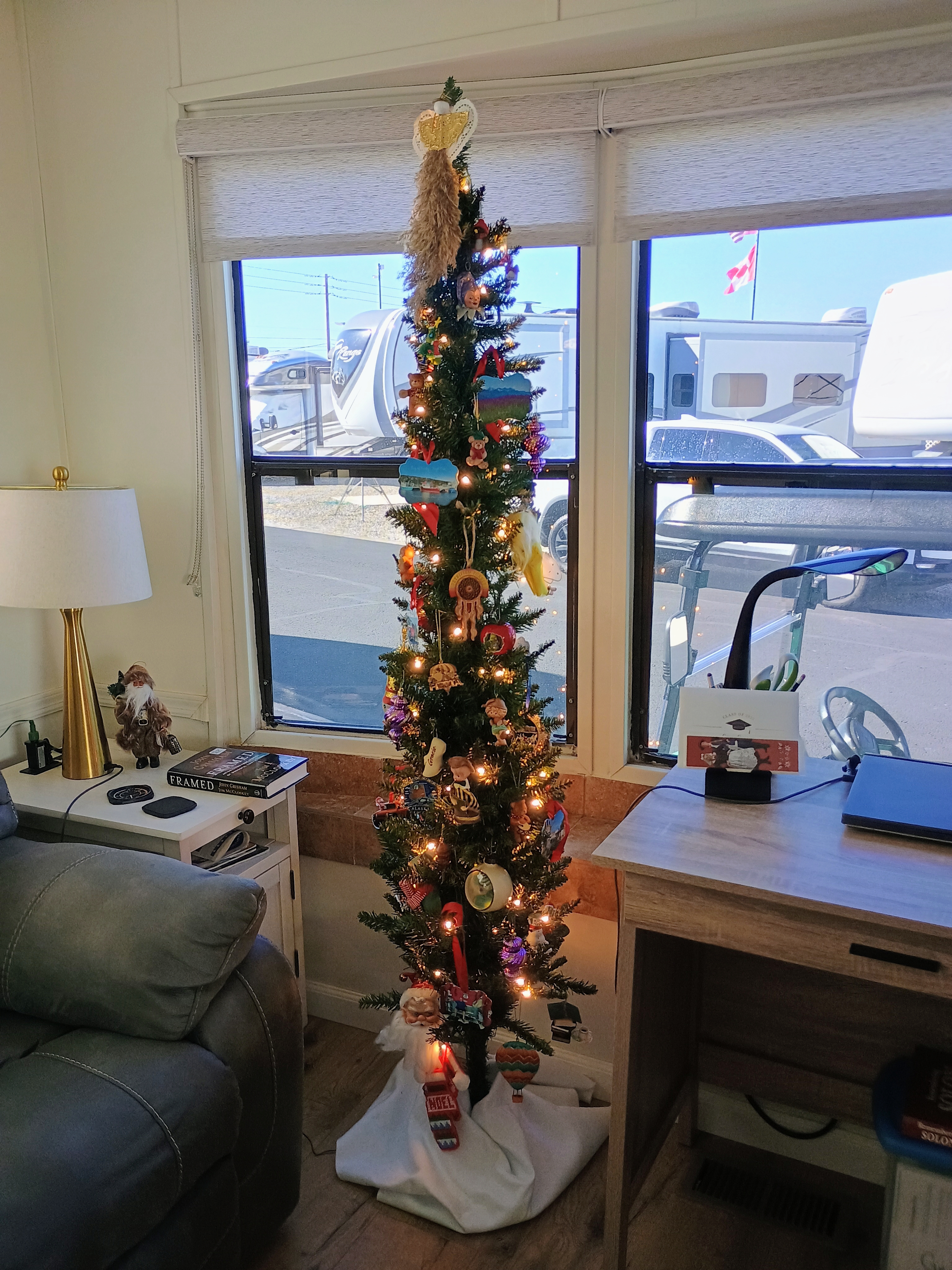
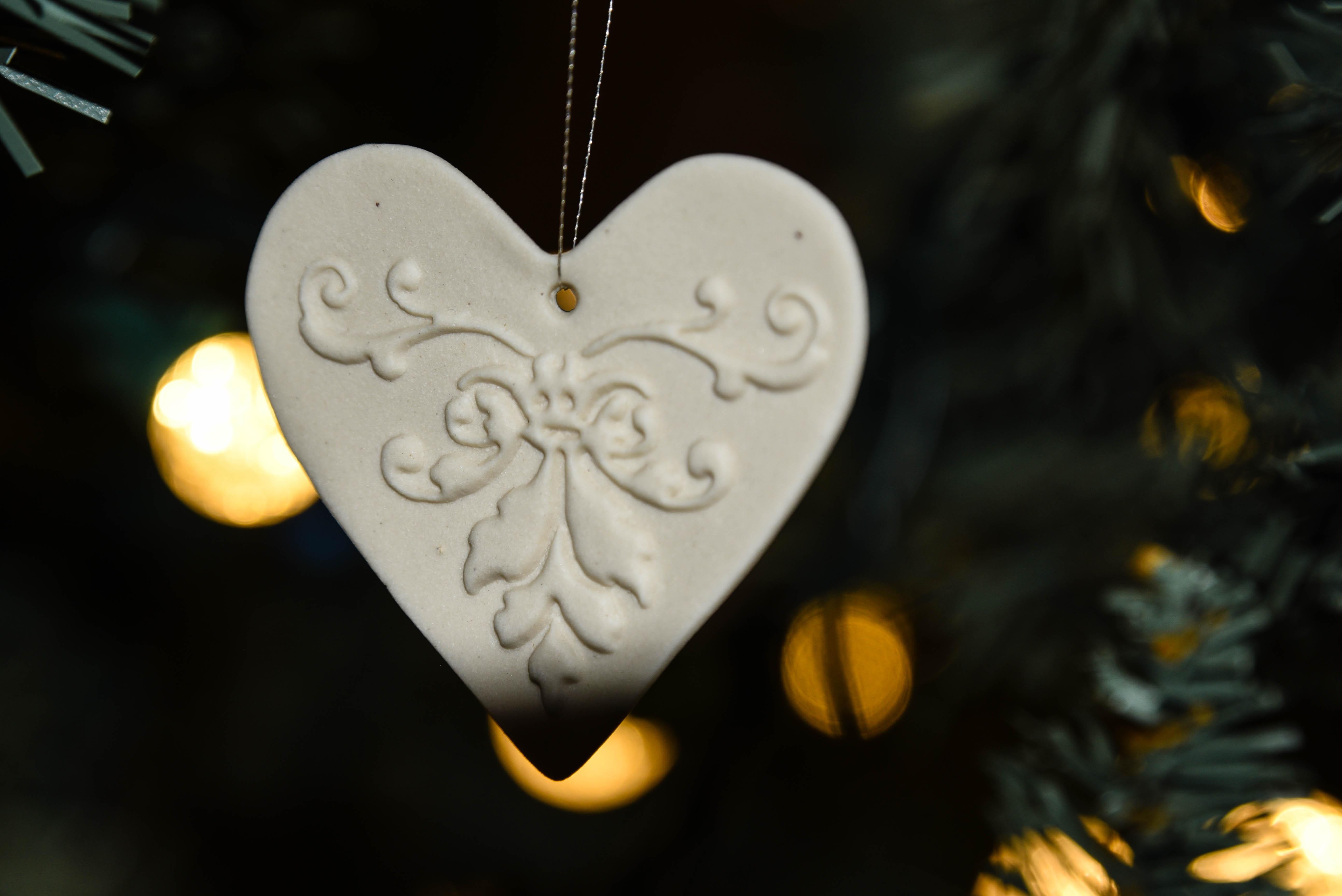
My 2025 slim pencil Christmas Tree

Now, the next question is, why do we place our gifts under a decorated tree? In ancient Rome, homes and temples were decorated with evergreen boughs for the winter solstice feast of Saturnalia. Celtics associated evergreens with everlasting life, and the Hebrews linked them with life and growth. In Han Dynasty China, evergreens symbolized resiliency, and the Norse people associated them with their sun god.

The Christmas tree tradition began in Germany in the 1500s. Evergreens were placed beside the medieval home’s entry, which grew into indoor trees covered with apples for the feast of Adam and Eve on December 24. The trees were also decorated with cookies and lit candles. Another tradition was the Christmas Pyramid, which was formed by wooden shelves that held Christian candles, figurines, evergreen branches, and a star.

The two traditions merged as the first decorated indoor Christmas tree. German immigrants brought the Christmas tree to the U.S. in the 1600s, but it did not become popular until the 19th century. What boosted its popularity was Prince Albert, Queen Victoria’s husband, who introduced Christmas trees to England in 1846. By the early 1900s, electricity made electric lights for trees possible, and they began decorating town squares.

Tree decorations began with simple, handmade items, and food was a popular decoration, with strings of berries, popcorn, and nuts along with cookies, marzipan, and apples. Mass production of ornaments, tinsel, beads, and “snow” batting in the 1900s developed into the intricate ornaments we see today.

The gifts under the Christmas tree began as small presents on the branches, but as the gifts grew larger and too heavy, people placed them under the tree instead.  

When giving or receiving a gift, remember the spirit in which the tradition developed: a representation of the Three Kings presenting gifts to baby Jesus. That tradition has become very commercialized, with U.S. consumers expected to spend $242 billion on holiday gifts in 2025.

Leave a comment

Filed under celebration, Festivals, Holidays, Life is a Melting Pot, winter

35 Unique Things About Michigan

Although I now travel and spend more time outside of my birth state than I do in it, Michigan still holds a place in my heart for its many unique qualities.

Michigan is the only state that consists of two peninsulas. The “mitten” is the lower peninsula and is where I grew up, in the “only Eaton Rapids on earth.” The mitten is surrounded by Lake Huron on the East, Lake Erie on the South, and Lake Michigan on the west. To access the upper peninsula (the U.P.) you need to cross the Straits of Mackinac, a 5-mile channel connecting Lake Huron to Lake Michigan. The north shore of the U.P. is on Lake Superior.

If that isn’t enough, here are 35 more things that make Michigan a very special place.

  1. Detroit is the Car Capital of the World. Home to the “big three,” Ford Motor Company, General Motors Corporation, and Chrysler LLC, the state handles 24% of all automotive manufacturing in the U.S.
  2. Michigan is the largest manufacturer of lithium-ion batteries in North America. The American Battery Solutions Inc. manufacturing facility is located in Lake Orion and employs more than 100 workers. In support of this the Governor is working to develop the nation’s first wireless charging infrastructure on public roads.
  3. Alpena is the home of the world’s largest cement plant. Lafarge Alpena has been in existence since 1907 and employs more than 200 workers.
  4. St. Clair is the home of Diamond Salt Company, established in 1886 when a new process for making salt was patented. It is the world’s largest marketer of salt, supplying salts for culinary use, manufacturing, agriculture, grinder, pool use, water softening, and ice control.
  5. Southwestern Michigan is home to the largest Dutch settlement in the United States, with almost 300,000 residents of Dutch heritage. Dutch residents are most prominent in the five counties of Allegan, Kalamazoo, Kent, Muskegon, and Ottawa.
  6. Rogers City boasts the world’s largest limestone quarry. The site is 7,000 acres, of which 3,000 acres are actively mined. The quarry has an anticipated lifespan of an additional 100 years.
  7. Elsie is the home of the world’s largest registered Holstein dairy herd. Green Meadow Farms is a family operation established in 1922. With 80 employees, they raise all livestock and do all field and crop work on their 8,000 acres. The farm has a milking herd of about 3,900 registered Holsteins.
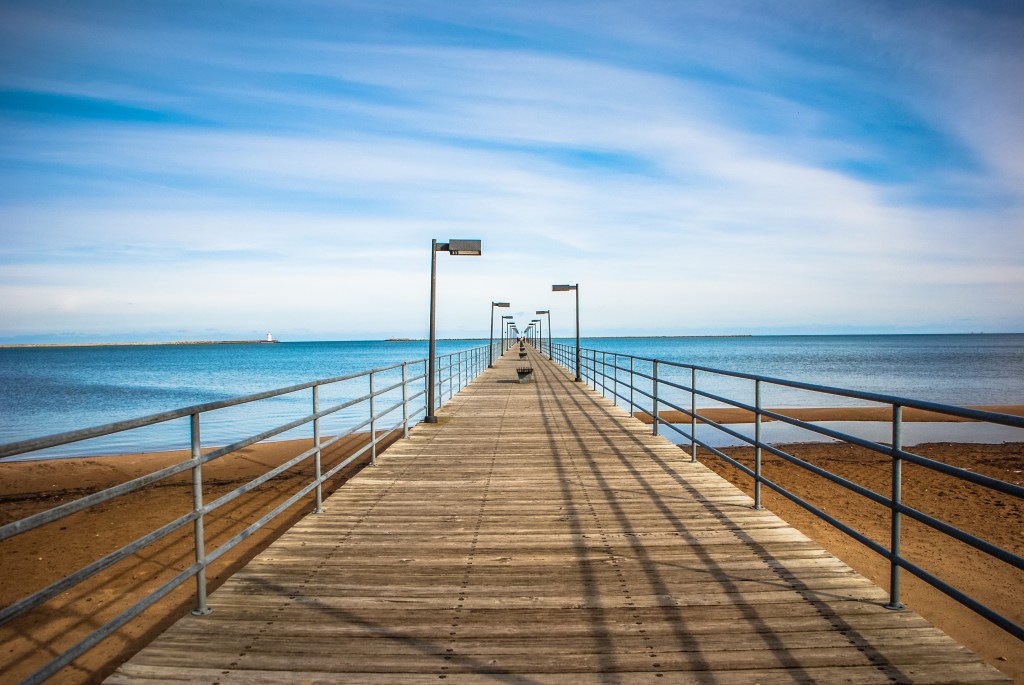
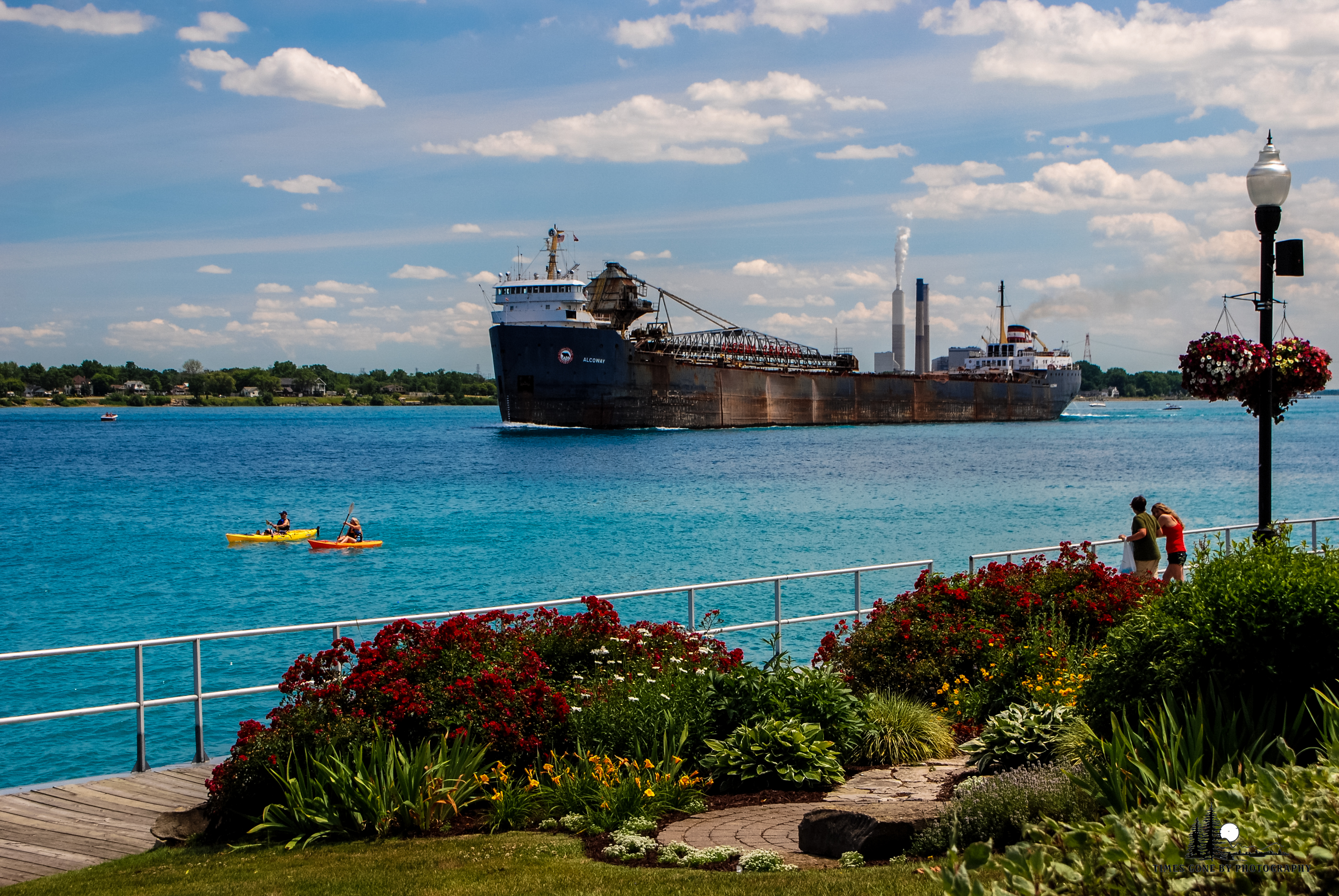
  8. Enjoy the longest freshwater boardwalk in the world in St. Clair. The boardwalk is along the St. Clair River, an international border with Canada. The St. Clair River is one of the busiest waterways in the world with more than 5,000 ships traveling the water every year. With more freighter traffic than the Suez Canal and Panama Canal combined, it’s an excellent spot for freighter watching.
  9. Colon is the magic capitol of the world and home to Abbott’s Magic Company, the world’s largest manufacturer of magic supplies. The city has more than 30 magicians laid to rest in its cemetery, more than any other cemetery in the world.
  10. Michigan Sugar Company is the largest sugar factory east of the Mississippi river, the largest sugar refinery in Michigan, and the fourth largest sugar refinery in the United States.
  11. Michigan ranks #1 in state boat registrations. St. Clair County ranks #1 in the U.S. for the number of boat registrations per capita.  
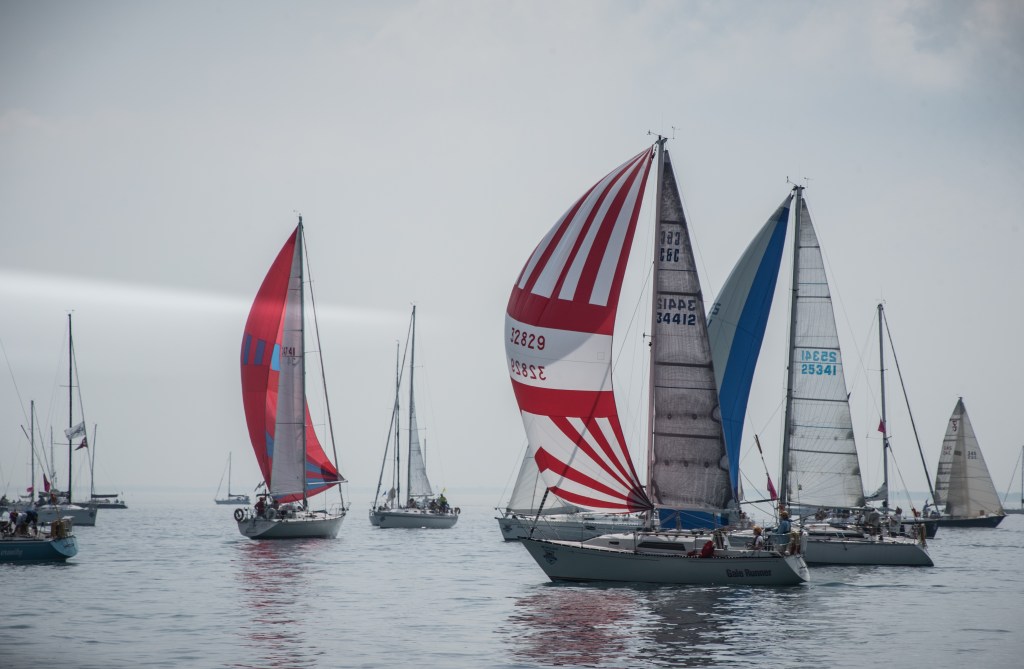
  12. Port Huron is home to largest freshwater sailing event in the world. The annual Port Huron to Mackinac race began in 1919 and more than 200 boats enter the race each year.  
  13.  The state has about 54,800 farms covering 10 million acres and producing $6.5 billion in products yearly. Michigan is the largest producing region in the world for Montmorency tart cherries and Traverse City hosts the annual National Cherry Festival every July. The state is one of the top producers in the U.S. of grapes, apples, peaches, and blueberries.
  14. Livestock population is significant, with about one million cattle, 78,000 sheep, 3 million chickens, and one million hogs. Livestock products account for about 38% of all agricultural output.
  15. Sault Ste. Marie was founded in 1668 by Father Jacques Marquette, and it remains the third oldest remaining settlement in the United States
  16. In 1817 the University of Michigan was the first university established in any of the states. It was originally named Catholepistemiad and was located in Detroit. The name was changed in 1821 and the university moved to Ann Arbor in 1841.
  17. Michigan State University was founded in 1855 as the nation’s first land-grant university and served as the prototype for 69 land-grant institutions established under the Morrill Act of 1862. It was the first institution of higher learning in the nation to teach scientific agriculture.
  18. The Mackinac Bridge is one of the longest suspension bridges in the world. It spans 5 miles over the Straits of Mackinac and took 3 years to complete. It was opened to traffic in 1957
  19. Kellogg Company made Battle Creek the Cereal Capital of the World. The Kellogg brothers discovery of producing flaked cereal was an accident that sparked the beginning of the dry cereal industry.
  20. Vernors ginger ale was created in Detroit and is the first soda pop made in the United States. It was an accident. In 1862 pharmacist, James Vernor, was trying to create a new beverage. He was called away to serve in the civil war, leaving his “experiment” behind. When he returned four years later the drink in the oak case had developed a delicious ginger flavor and Vernors was born.
  21. The Detroit Zoo opened in 1928 and was the first zoo in America to feature cageless, open exhibits allowing animals to roam free. In 1968 the zoo’s Penguinarium was the world’s first zoo building designed exclusively for penguins. In 2001 it opened Wild Adventure Ride, the nation’s first zoo simulator, and the Arctic Ring of Life, the largest polar bear habitat in North America.
  22. Michigan is only place in the world with a floating post office. The J.W. Westcott II is the only boat in the world that delivers mail to ships while still underway. It has been operating 140 years.
  23. The state boasts 3,224 miles of freshwater shoreline, the longest in the world. It also has the longest shoreline of the 48 continuous states. There are an additional 11,037 inland lakes and 36,000 miles of streams.
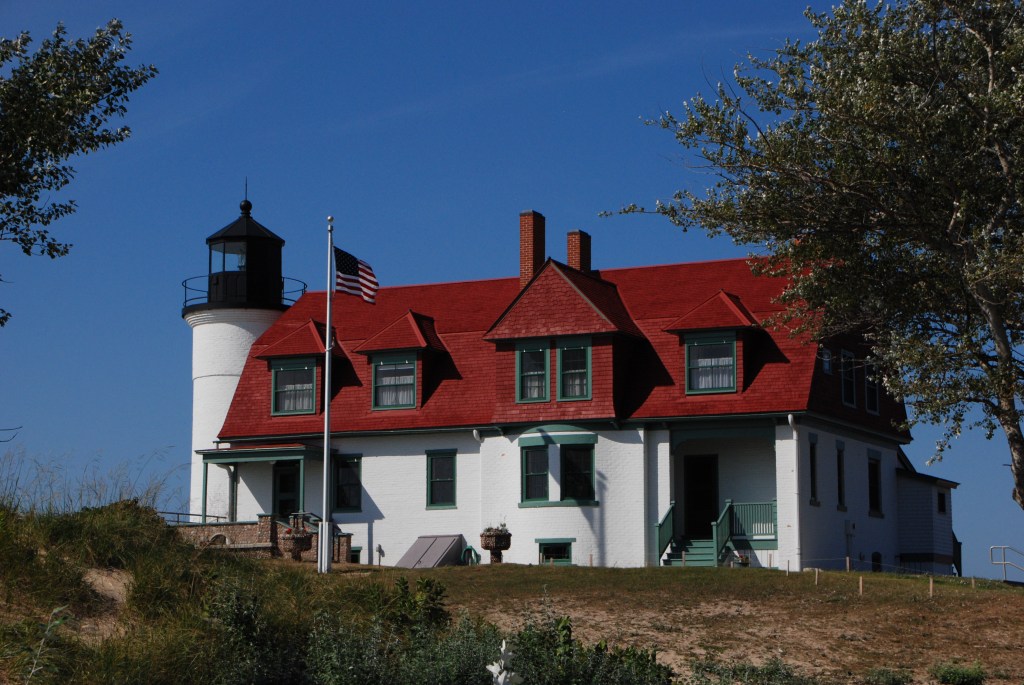
  24. The state has 124 lighthouses and navigational lights. The oldest is the Ft. Gratiot Lighthouse, constructed in 1829.
  25. It is the first state to provide in the constitution for the establishment of public libraries in each township and city, set forth in Article XI, Section 14 of the Michigan Constitution of 1908. It was also the first state to guarantee every child the right to a tax-paid high school education.
  26. Isle Royal National Park shelters one of the largest moose herds in the U.S. The park is 206.73 square miles and is the 4th largest lake island in the world. As of 2019 the island was home to 14 wolves and 2,060 moose. The moose herd was 2,400 at its highest point in 1995.
  27. Upper Michigan Copper Country is the largest commercial deposit of native copper in the world. By the 1860s the upper peninsula was supplying 90% of America’s copper.
  28. Michigan fared worse than the rest of the country during the depression between 1930 and 1933. The state’s unemployment rate was 34%, while it was only 26% in the rest of the country. This is because out of work automotive workers were starving to death by the early 1930s.
  29. Michigan has the first auto-traffic tunnel built between two nations, the mile-long Detroit Windsor tunnel under the Detroit River was completed in 1930. This was the third underwater auto tunnel built in the United States.
  30. The world’s first submarine railway tunnel opened between Port Huron and Sarnia, Ontario in 1891. It is both the first submarine tunnel and the first international tunnel.
  31. In 1879 Detroit telephone customers were first in nation to be assigned phone numbers to facilitate handling calls.
  32. In 1929 Michigan State Police established the first state police radio system in the world
  33. Grand Rapids is home to the 24-foot Leonardo da Vinci horse, II Gavallo, the largest equestrian bronze sculpture in the Western Hemisphere.
  34. Michigan is the great lakes state because its shores touch four of the five great lakes. We get our name from the Ojibwa (Chippewa) Indian word meaning “large lake”
  35. Detroit is the birthplace of Motown Records. Motown artists include Tina Turner, Otis Redding, Diana Ross, Four Tops, The Supremes, Al Green, Gladys Knight & the Pips, Ray Charles, Curtis Mayfield, Lionel Richie, Bill Withers, The Commodores, Aretha Franklin, Michael Jackson, The Jackson 5, The Drifters, Smokey Robinson, James Brown, Stevie Wonder, Fats Domino, The Temptations, Marvin Gaye, and more.

    The state has even more interesting facts setting it apart from the rest of the country and world, but I had to stop somewhere. I hope you’ve enjoyed this glimpse of my home state.

    Share where you are from and what makes your home state unique.

Leave a comment

Filed under Activities, Blue Water Area, Discoveries, education, events, exploration, farm, Festivals, home, impressions, Lake St. Clair, Life is a Melting Pot, Michigan, nature, reality, tourism, travel, Upper Penninsula

Celebrating Traverse City’s Centennial 1947

I have always liked this photograph of my paternal grandparents, Louise Elizabeth (Lautner) King and Dominick King. They are wearing period dress for the celebration of Traverse City’s Centennial celebration in 1947. The photo made me wonder what the celebration and Traverse City were like in 1947. 

My grandmother was 35 years old, and my grandfather 44. They were the parents of three boys; my father was the youngest and would have been 5 years old that summer. Did they dress the boys in period outfits too?  I’ve never seen any photos to indicate they did.

Traverse City did not hold its annual Cherry Festival in 1947 because of the Centennial festivities. The majority of men in the area grew a beard in honor of the celebration. This photo is the only one I have ever seen of my grandfather with a beard.

Instead of having young “glamour girls” honored with the title of parade queen, the Traverse City Historical Society was assigned the task of finding an honorary Queen of the Centennial. The queen was to be someone who had lived in the area a lengthy amount of time and could portray the pioneering spirit of the celebration. I did not find anything to indicate who was awarded this honor. The only link I could find indicating information on the celebration required payment of a newspaper subscription and I chose not to.

For the Centennial at least three parades were planned. A children’s parade and pet parade on July 2nd, followed by the big parade on July 3rd. The big parade was planned as a purely historical parade. It was to be divided into sections with each segment portraying an episode or period in the history of the Traverse City community. It was to include floral floats, marching groups, old vehicles, Indians, lumberjacks and other items relative to the pioneer history.

Unable to locate information on the actual celebration, I decided to see what I could find out about the “period” clothing my grandparents are dressed in. The clothing my grandfather is wearing appears to be a tailcoat, which was squared off at the waste in front and cut into long tails at the back. Tail jackets were in style in the 1840’s, and it was fashionable to wear the jacket with lighter colored trousers, so it would have been fitting for their period costume.

The dress my grandmother is wearing is of a style I could not locate. I did find that synthetic dies had led to bright wild colors in clothing, though I don’t believe prints were generally used. Low sloping shoulders and bell-shaped skirts were in fashion, moving into a Gothic Revival style. Another article stated that a long-wasted bodice, narrow sleeves, and a full dome-shaped skirt that skimmed the floor were in style.

Because I could find nothing that resembled the dress my grandmother is wearing, I wonder if it were perhaps something she obtained from an older family member or friend, or whether she obtained a pattern and sewed the outfit on her own.

A Bit of History

In 1847 Traverse City was a small community which originated because a Reverend was looking for a place to settle with his family. The Reverend settled on the banks of the Boardman River. Traverse City remained an outpost until 1864, when the first road was built through the forest to the settlement.

In 1851 one of the owners of the Hannah, Lay & Co. Mill went to Washington DC and requested the new settlement have a post office called the Grand Traverse City. Because at that time Old Mission had a Grand Traverse Post Office, they shortened the name to Traverse City. In 1872 the railroad connected Traverse City to Grand Rapids.

Traverse City has been listed as the second best small town for travelers to visit in the United States. Each July during Cherry Festival, more than 500,000 people visit the town.  The festival was first held in 1926 and now features about 150 events and activities, 85% of which are free.

Between the festival, tourism and having some of the best wine in the Midwest, resident population in Traverse City is now around 15,785.

I have a lot of family history in Traverse City, and my grandmother’s ancestors were some of the original settlers to the area. I am glad she and my grandfather were able to participate in Traverse City’s Centennial Celebration held 73 years ago.

Leave a comment

Filed under anniversary, celebration, Family, Festivals, Life is a Melting Pot, memoir, Michigan, summer, time, tourism

Writing to Relax

I have been, and continue to be, in the whirl-wind of trying to sort through 36+ years of belongings accumulated in my house and reduce the “keep” items down to what I can take with me in a 35-foot motor home, in which I will live and travel the United States and Canada.  Needless to say, this is a monumental task.  I am on the downside now, with only a few things left to complete, and the estate sale is scheduled May 2-6, 2019.

I have been sorting through old items, boxes never unpacked from when we moved here in February 2004, and family heirlooms, mementos and photographs.  Those special items I have painstakingly gone through and divided between my two adult children.  In the midst of all this my son has been moving out.  Between working long hours and moving about 45 minutes away, he has taken a long time in the process with a couple trailer loads of items still left to move.  This has made for a very stressful situation.   We are now down to “crunch time” as the estate seller will need to come into the home and get things priced.  My son made a comment about me pushing my sale back, but I refuse to do that.  I need to get my house emptied, ready for sale, and sold quickly.

closet cleaningI have spent weekend after weekend at home, sorting through all my current items and those in boxes, preparing for my estate sale.  Today I took some “me” time and attended the #RochesterWriters Spring Conference.  I enjoyed a day of informative keynote speakers and instructors, plus socializing with other writers.  It was time well spent, combining instruction in self-publishing with networking.   There is something about spending a day with other writers that inspires one to write.  Even though you haven’t seen me here in quite a while due to everything going on in my personal life, I find myself here tonight writing a quick blog, just to say hi and let you know I am still alive and kicking.
Once the sorting and packing is complete and I have moved into the RV, which will happen on or about April 23, 2019, you will begin to hear from me more often.  As I move into fall and begin to travel the country I plan to post travel blogs of my adventures, and hopefully expand into writing some travel articles for magazines as well.  What the future holds for me one can not be certain, but it will definitely be an adventure and a change in lifestyle.

1 Comment

Filed under Activities, assumptions, career, Cleaning, communication, decisions, Discoveries, events, Festivals, freindship, friends, friendship, habit, impressions, Life Changing, Life is a Melting Pot, reality, time, tourism, travel, Writing

Christmas is Magic

A few weeks ago I decorated my Christmas tree with an assortment of carefully selected ornaments, those that had special significance or appeal.  This will be my last “real” Christmas tree, at least for a few years.  Most of my ornaments will be given away or sold.  My snowman collection, which I have been accumulating for years, and many other things that say “holiday tradition” to me will be forsaken for a new adventure.

I have made the decision to downsize out of my house and into a motor home.  When one goes from a house to an RV, most of your possessions must go, and that includes the majority of my holiday decorations, including my Christmas tree.  Some will be given to my adult children, others will go into an estate sale for others to enjoy.  popcorn and paper garland

When you decorate your tree each year, do you have ornaments that hold special meaning?  Are there traditions you have carried on from your childhood?  Long before Elf-On-A-Shelf became a fad, my mother always had an elf on her Christmas tree for good luck.  When I got married I had to have an elf, and when my daughter found out I was downsizing she said “are you taking your elf?”  This is the way that family traditions are handed down.

American Christmas traditions began around 1830 when an image from England of Queen Victoria and Prince Albert celebrating the holiday around a table-top tree was re-printed in American publications.   The photo was widely published and by 1900 one in five  Americans had a Christmas tree.  The first trees were decorated with things such as nuts, popcorn strings, homemade trinkets, oranges and lemons.  Newspapers and magazines encouraged Americans to purchase more elaborate decorations, and by 1870 ornaments were being imported from Germany.

German immigrants brought to America the tradition of putting lights, sweets, and toys on the branches of the tree.    My tree has some glass-blown ornaments, Hallmark dated ornaments, birds, elves, glass balls, and ornaments from my youth.   There are ornaments that were purchased as souvenirs, such as the Hot Air Balloon Fiesta, Washington DC, and the Calgary Stampede.  There are memorial ornaments for my father, nephew, and husband.  One year I was given an ornament that depicts two favorite things of mine…books and coffee.  There is a special, sentimental feeling each year as these are brought back out and placed on the tree.

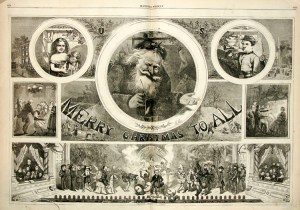
Minolta DSCAlong with tree decorating traditions, most of us grew up with the magic of Santa Clause.  Saint Nicholas was a Christian holy person believed to have lived in the third century, who became known as a protector of children.  The bearded, jolly Santa dressed in red that first appeared in Clement Moore’s A Visit from Saint Nicholas in 1820.   Thomas Nast was an artist who’s first major depiction of Santa Claus in Harper’s Weekly in 1886 created the image we envision today.  Nast contributed 33 Christmas drawings to Harper’s Weekly between 1863 to 1886, and Santa is seen or referenced in all but one.   It is Nast who was instrumental in standardizing a national image of a jolly, kind and portly Santa dressed in a red, fur-trimmed suit delivering toys from his North Pole workshop.
Santa lives on today because he exemplifies dreams, hope, wishes and beliefs.  In a world filled with stress, violence, poverty, and hunger, Christmas brings out the good in everyone.  The thought that if you just believe, good things will happen.  Christmas is magic, and if you don’t believe that, watch a child’s eyes on Christmas morning.


Leave a comment

Filed under assumptions, celebration, children, Discoveries, exploration, Family, Festivals, Holidays, kids, Life is a Melting Pot, winter

Holiday Greetings

vicchristmastradToday I participated in two holiday traditions, a Christmas gathering for the Blue Water Shutterbugs Camera Club and the writing of my annual Christmas letter, which I do in lieu of a card.  The writing of Christmas greetings and handling out of Christmas gifts are two areas where I recently learned the history of the tradition.


In the early 1850’s the first American made Christmas card was distributed by H. Pease, a printer and variety store owner in Albany, New York.  Louis Prang, a German immigrant and printer perfected color printing and introduced a new colorful Christmas card in 1874.  Within five years the sales were over 5 million.  Popularity grew and Americans began sending cards instead of writing Christmas letters or making personal visits.  Cards held their popularity until the 21st Century.  The increased use of the internet led to a 60% decrease in the sale of Christmas cards in the past decade.  In 1958 the average U.S. family mailed 100 Christmas cards.  In 2001 that figure was down to an average of 28 cards per family sent and received.    I know I have dropped my card sending down from about 75 to 30, and the number I receive has also substantially declined.

About eight years ago I went back to what I recently learned was the original tradition.  Instead of purchasing and mailing Christmas Cards, I created a Christmas Newsletter that gave all the information on my family newspaper style.  I use articles and columns to lay out my newsletter for easy reading.  The first year I did this I received many positive responses.  Friends and family enjoyed getting this newsworthy mailing rather than a purchased card with just a signature inside.  Today I wrote and have printed my 2018 Christmas newsletter.

The Christmas party I attended today included a white elephant gift exchange, which is a bit different since it involves the giving of a used item from your home that is no longer of use to you but may be of use to someone else.  They are given wrapped, but do not have the giver’s name attached.  This provides a festive yet inexpensive way to enjoy the act of giving and receiving gifts.

Gift giving was not always part of Christmas tradition.  The act of giving gifts increased from the 1820’s through the 1850’s, when shopkeepers re-shaped the holiday tradition.  Prior to that time people gave unwrapped gifts.  Then Americans began wrapping the gifts they gave, as a gift hidden in paper heightened the excitement and designated it as a gift.  As this grew in popularity gifts from stores, factories and homes of laborers were wrapped in paper that advertised the material status of the giver.  The more grand stores used distinctive colored paper and adorned them with tinsel cords and bright ribbon.

Gift giving became a symbol of materialism, as it signified family ties and the importance of the recipient to the giver.  In 1856 Harper’s Magazine attached the security of a relationship to gift giving when it stated “Love is the moral of Christmas…What are gifts but proof of Love.”  Gifts were given on a declining scale based on a person’s relationship.  The best gifts were given to family and close social circles, lesser gifts in descending order of value to relatives and acquaintances.  The deserving poor received the least valuable and least personal gifts.

The act of giving gifts was controversial, as some perceived it to be a materialistic perversion of a holy day.  Affluence was viewed as a reward from God and charitable gifting as a Christian duty.  A rich man could escape condemnation by acting in a generous fashion to help those in poverty.   Best and Company had an advertisement in 1894 that suggested while purchasing items for Christmas the shopper should think of Children less fortunate and for them the store suggested “a gift of serviceable clothing” be chosen from a group of marked down goods that “would be more than welcome.”

In today’s society the act of giving to those less fortunate is seen in all aspects of our life, including toy donation boxes in stores, mitten trees, and the annual Salvation Army Red Kettle Drive to gather money for providing meals, toys, and other items to those in need.   Over the years I have participated in various forms of charitable giving, including shopping for a needy child and/or family, donating to mitten trees, working as a server at a soup kitchen, donating a stuffed Christmas sock for a designated sex/age child.

As you go through your holiday preparations think about where the traditions came from, jot a personal note in that Christmas card and if you are able, help out a child or family in need.  After all, it is an American tradition.


Leave a comment

Filed under assumptions, celebration, decisions, Discoveries, events, Festivals, friends, friendship, habit, Holidays, Life is a Melting Pot, winter

Vacation Destination: Calgary, Alberta

Looking off into the distance, the peaks of the Canadian Rockies can be seen, drive a couple hours north east and visit Drumheller, a town sunken down into the earth that just happens to have the world’s largest finding of dinosaur skeletons and a huge museum displaying them,  but the main purpose of this destination was to attend the Calgary Stampede, the largest outdoor event on earth.

It is exhilarating to travel somewhere you have never been before.  To experience the beauty of nature and the excitement of a world-renown event.   To visit areas famous for their natural beauty.  That is what I did this past July when I flew from Detroit, Michigan to Calgary, Alberta, Canada for a 10-day vacation.    To me travel and vacations are an opportunity to partake in the areas surroundings, take photographs, and experience the culture of the area.

Calgary is surrounded by a vast array of attractions, and I was only able to experience a small amount.  I arrived at night and did not have the opportunity to view the Canadian Rockies from my plane, but when I awoke the next morning they could be seen in the distance from where I was staying.   About 1-1/2 hours drive west from Calgary is Banff National Park.  Canada’s First National Park comprises 2,564 square miles and is located in the Canadian Rockies.  Banff is the home of Lake Louise and Lake Moraine, glacier lakes with a beautiful, distinctive emerald/turquoise color water.  The breathtaking scenery makes this park makes it well worth the time to visit.

This slideshow requires JavaScript.

A day trip to Drumheller, northeast of Calgary, is a “must see”.  Located in the Canadian Badlands, this unique town is built in an area of land that at some point in time sunk down into the earth that now houses the badlands and an entire town.  This is where you will find the Royal Tyrrell Museum, which houses one of the world’s largest displays of dinosaur skeletons and fossils.   I spent several hours inside the museum, taking a break to lunch at the on-sight cafeteria.

The plan was to visit the Royal Tyyrell Museum in the morning and spend the afternoon driving the Canadian Badlands taking photos.  The Canadian Badlands covers a 35,000 square mile region where dinosaur bones were discovered in the late 1800s.  Nowhere on Earth has there ever been found the quantity and quality of dinosaur remains as have been discovered in the Canadian Badlands.   It is speculated that for some reason this area of land sank down into the earth, creating a drastic drop in elevation and that stampeding dinosaurs fell over the age and died.  The result is one of the world’s largest dinosaur fossil regions.  Since the late 1800’s more than 1,000 complete skeletons of dinosaurs have been found and digs continue to this day.  The Royal Tyrrell Museum contains over 130,000 skeletons and/or fossils from this area.

In addition to dinosaur finds, the Badlands is also where gangsters would run and hideout in the “wild west” era.  The terrain of the area was dangerous due to its sunken area, allowing for an easy ambush and law enforcement would not pursue gangsters once they entered the area.  The history of the badlands combined with the gorgeous rock formations makes the area a “must see” on a trip to the region.  Unfortunately a rainstorm prevented the planned exploration of the badlands from taking place.

The main purpose of my trip to Calgary was the Fantasy RV Tours 7-Day Calgary Stampede event.  The tour group arranged RV parking in a stadium parking lot and participants  took a short walk to the train stop for a ride into the town of Calgary and/or to the  Calgary Stampede Grounds.   In addition to the stampede, the tour included a visit to Heritage Park and Gasoline Alley, attending the Calgary Stampede Parade, breakfast in the rotating restaurant at Calgary Tower, and a visit to the Glenbow Museum in downtown Calgary.

Heritage Park Historical Village includes Gasoline Alley, a “must see” car museum.  I spent so much time in Gasoline Alley that my time was very limited on viewing the rest of this living history museum.  A train ride around the park gave me a nice overview, and because of the way stops are scheduled you circle the park twice before you can disembark at the location you boarded.  The majority of visitors get off and on to visit various attractions.

Our tour included breakfast at the revolving restaurant in the Calgary Tower.  The observation deck of the tower provides a 360° view of the city and surrounding area.  One area has a glass floor you can walk out on for a true view down.   I found the glass bottom very disconcerting, and had to use the rail to walk out onto it.   Across from the tower is the Glenbow Museum, which is a combination art and history museum.  I spent quite a bit of time viewing the historical exhibits and taking photographs.

The Calgary Parade is a kick-off to the Calgary Stampede.  This parade displays the heart and sole of Calgary and the Stampede, with horses, carriages, bands, and more.  Many follow the parade down to the stampede grounds for the opening of the event.  The Calgary Stampede grounds is a huge venue, including barns, a midway, an Indian Village, and the main highlight, the stampede grandstand.   You definitely want to take in both an afternoon rodeo show and an evening grandstand show, which features chuck wagon races, performances, and fireworks.  You will not be disappointed!

My trip to Calgary went way too fast and before I knew it my ten days had ended and I was at the airport and on my way home.  I hope that someday I will get back to the area and have a chance to visit more thoroughly some of the areas I only touched on lightly.


Leave a comment

Filed under Activities, Discoveries, events, Festivals, Life is a Melting Pot, nature, Photography, tourism, vacation

It’s Just Another Day

As I write this only a few hours before the ringing in of 2018 it occurs to me that millions of people are getting together with friends, going to parties, visiting bars, or participating in numerous other activities to ring in the new year.  Year after year I have spent New Year’s Eve the same way — home doing my normal activities until around 11:30 pm when I switch to Dick Clark’s Rockin’ New Years Eve to watch the ball drop in Times Square.  Some years I go to bed immediately after, other years I continue to watch the celebration for an hour or two.

New Year’s Day arrives.  I might flip on the parades to watch a bit.  I change over my calendar to the new year, and empty out my “Good Things” jar.  Overall the day is treated like pretty much any other stay-at-home day, doing whatever activities I choose or need to handle.

best-quote-for-new-year-2018Do I set goals for the new year?  Usually.  Do I achieve them?  Sometimes.  Even though for the most part New Year’s Eve and New Year’s Day are just another day, they still contain a bit of tradition that is repeated year-after-year.

As I was writing this I looked up and saw my handwritten list of 2017 goals I had set.  Lets just say I had good intentions and leave it at that.  That list just got folded in half and tossed in the wastepaper basket.

I’m thinking instead of setting goals maybe as I go through the year I should make a list of things I accomplish.  In fact, now that I think of it, that would end the year on a much more positive note.  No depressing list of goals I did not achieve to toss into a wastepaper basket.  Instead I will be able to review the year with a list of things I completed — assuming of course I do something productive in the next twelve months.

Here’s Wishing Everyone A Productive and Happy New Year!


Leave a comment

Filed under anniversary, celebration, decisions, Discoveries, events, Festivals, habit, Holidays, impressions, Life Changing, Life is a Melting Pot, reality, time

Celebrating Independence Day

I want to wish everyone a Happy 4th of July — the celebration of the birth of the United States of America.  Many people today do not understand the significance of the holiday, nor how it came to be celebrated in the manner it is.

I write a column for The Lakeshore Guardian and for the July 2017 I wrote about the history of our celebration and the changes that have taken place since the very first time festivities took place in the year of our independence, 1776.  You can read the column by clicking on Celebrating Independence Day, which will take you directly to my column.  While there feel free to click on Articles by Grace Grogan which will take you to a 4-page listing of the columns I have done for that paper.  There is no subscription fee for the paper so feel free to view at your leisure.

If for any reason you have difficulty using the links above, I have scanned and attached the Celebrating Independence Day column below, which you should be able to click on and enlarge for easier reading.

Wishing you all a wonderful, happy, 4th of July Celebration.

Celebrating Independence Day001


Celebrating Independence Day002

Leave a comment

Filed under celebration, events, Festivals, genealogy, Holidays, Life is a Melting Pot

Reflections at Christmas Time

This year will be different.  Christmas will be eighteen days after my husband, Ron, passed away.  I am still adjusting but overall have my head wrapped around it and am gradually moving forward with what will now be my “new normal” life.

I’m not having a problem, at least not now, with the idea that Ron will not be with us on Christmas day.  That day will play out almost like normal.   Time will tell, and the times when people aren’t here may be more difficult than when I have people here as a distraction.   In the meantime preparations have kept my mind distracted, decorating, wrapping gifts, and planning meals.

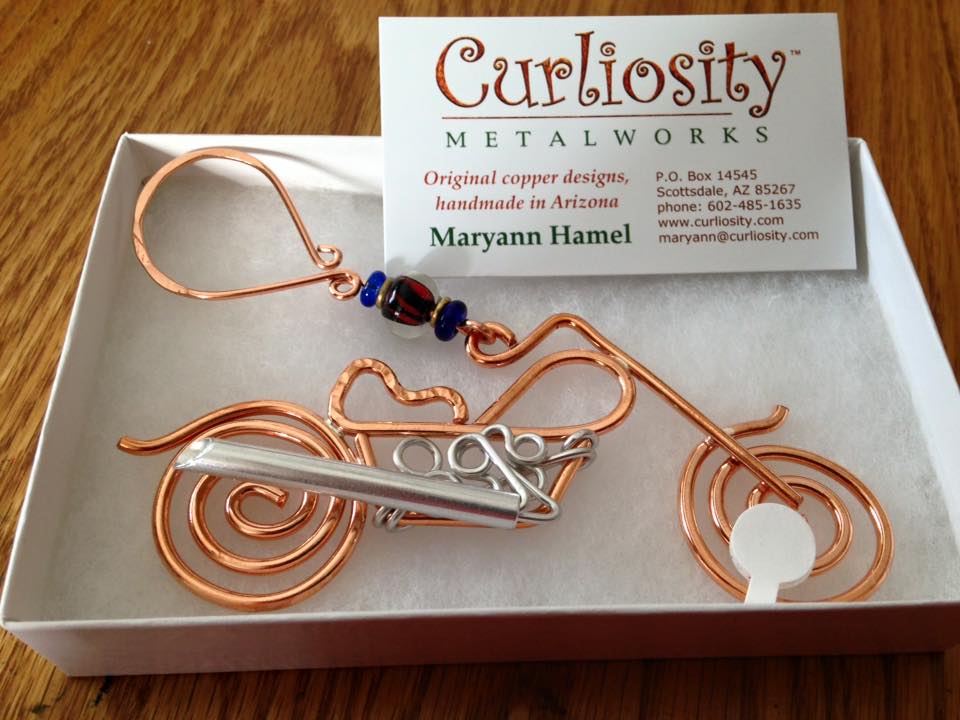
What I am finding is it is the little things you hear, or find, that can really hit the emotions.  Two or Three weeks before Ron passed two boxes arrived that said Precious Moments, I am a collector.  Ron told me not to open them, they were for Christmas.  He put them up in our bedroom closet and that is where they sat.  I went to get them and place them under the tree.  I will open them on Christmas Day and see what is in them.  I knew they were there so it was not an emotional situation, at least not until I saw a green plastic bag containing a box on top of them.  I looked inside and Ron had purchased a Christmas ornament while out west that he probably planned to give me at Christmas.  It was hand crafted metal works in the design of a motorcycle.  Ron knew that even now, five years after my accident, I still miss riding.  Discovery of the ornament and the emotional connection of his understanding that I still feel the loss of an activity I enjoyed came through that one Christmas ornament and hit me.

12366281_10208326531230337_2786697327350827018_n

A motorcycle ornament Ron purchased out west and had hidden with Christmas gifts. 

Little things impact you, and make you wonder why.  I put both pair of Ron’s eyeglasses into their case.  Then I stood there holding the case and had a hard time walking it over and tucking it onto the desk.  Why boxing up his glasses had such an emotional impact one can only wonder, but it did.

Small connections with people or comments they make can take you by surprise.  A a dental appointment last week a couple of the dental hygienists asked how Ron was doing.  One of them,. Patty, got teary eyed when I told her Ron had died.  Patty has been cleaning Ron’s teeth since around 1974 when he got out of the service and his mother told him to schedule a dental appointment because there was a cute new hygienist there.

There are other people I have talked to who when told of Ron’s passing said he used to talk about me all the time, that he was proud of me, that he was always talking about what I did, if I outscored him on photo competitions, and more.  I never knew he did that all the time.  People he had no need to share that with.    Then my mind questions whether I did equally as well for him.  Did I support him as well as he supported me?  I hope so, but the mind still ponders over it.

I am learning to do things I’ve never done, or rarely done in 34 years because Ron always handled them.  I have done the banking, paid bills, called the CPA for advise, and will be meeting the financial adviser for the first time ever.  I have done minor things such as take the trash out, bring in the mail, change a light bulb, and clean out the frig.

DSC_4495

Ornament given to me by Blue Water Hospice after Ron passed.

I know in the future I will encounter additional challenges, things I have never done.  If something breaks down I will have to call a repairman, when the cars need oil changes I will have to schedule appointments and get it taken care of.   I know furnaces need to have their filters changed, but when and how?   I don’t even know how to change the gas tank on our grill.  My “new normal” is a learning experience.  I hope I live up to the challenge.

So as we approach Christmas Day I reflect on the past.  Christmases of the past, New Year’s of the past, trips we have taken, traditions we held.   I will continue to hold those things dear as I forge ahead into building a new, different, life for myself.


Leave a comment

Filed under celebration, children, Coping, decisions, Discoveries, Family, Festivals, habit, Holidays, Life is a Melting Pot, marriage, reality

Prepping for Vacation is Work

My husband and I are taking a long weekend to attend the Hot Air Balloon Festival in Albuquerque, New Mexico. I’ve come to the conclusion that preparing to take a trip is exhausting.  I want to get my desk caught up at work because I will be off Friday and Monday, so I’ve been getting up and going into work an hour earlier than normal each day this week, and then staying 30-45 minutes longer than normal.

Then once I get home I have other prep to do.  We are doing strictly carry-on luggage, so had to pare down our camera gear considerably to make sure we could get that in.  Of course packing for 3-4 days in an airline regulation size bag is tricky, but I think I’ve got it workable.  Then of course the bag to go under my seat with a book, travel vouchers, camera, camera gear, etc.  Could it get any more complicated?

Yes it can, our flight time is so early in the morning that I realized we are going to have to get up and on the road around the time I normally go to bed.  I’m excited, but I have a feeling it is going to be an exhausting trip.  Being photographers we don’t want to miss any photo ops so will be up and on the field bright and early when it opens, and then be shooting all the way through the event.  I’ve discovered I can’t fit my tripod into my carry on luggage, so I’m bummed about that as there will be fireworks each night, but I’ll manage somehow.

So, is travel worth it if you have to wear yourself out in the preparation?  Yes, It always is, and it will be this time as well,  However as I sit here typing this post and realizing how tired I am from this screwed up week I truly do believe that Prepping for Vacation is Work!

Leave a comment

Filed under Festivals, Life is a Melting Pot, travel, vacation

Blue Water Summer

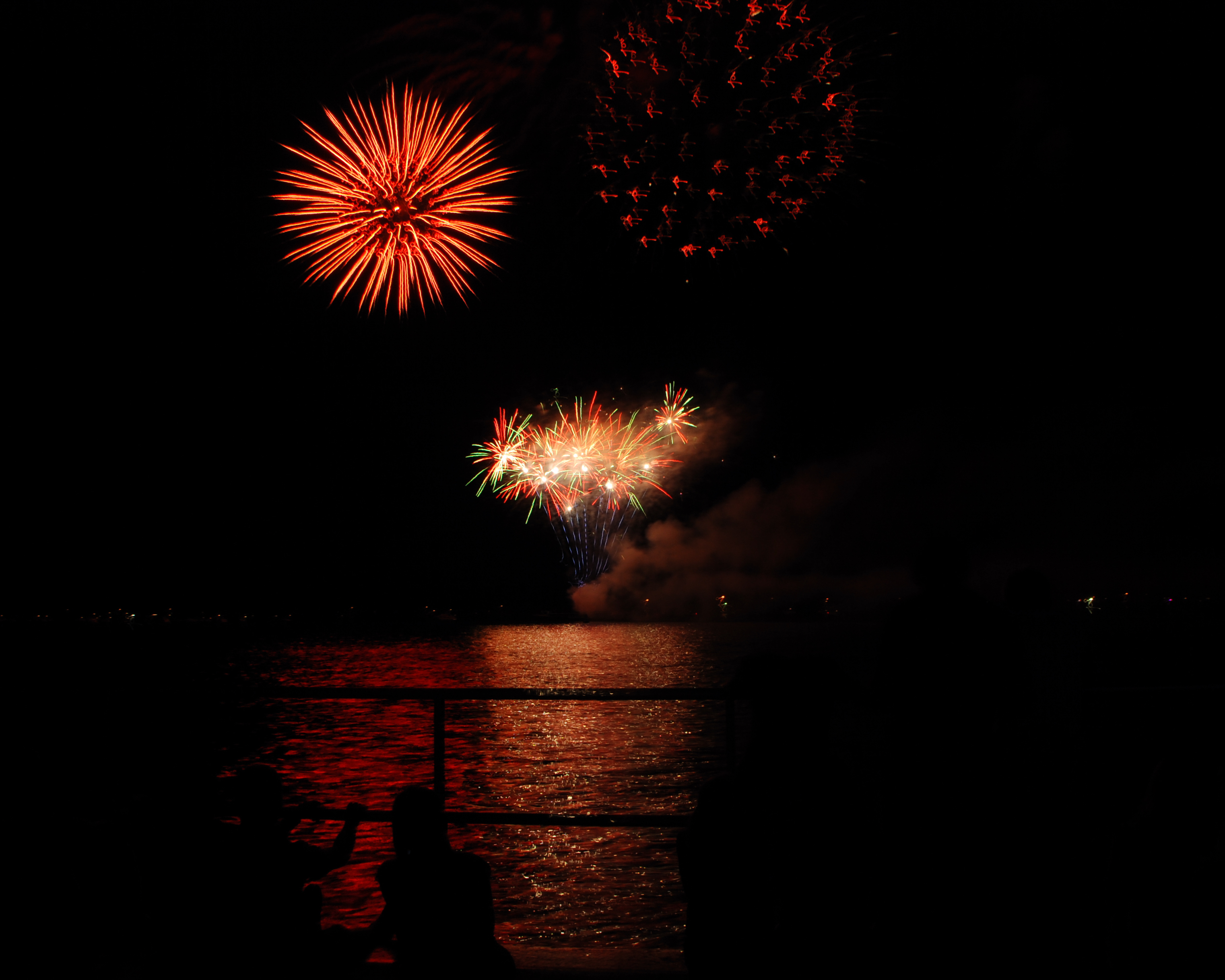
Fireworks as viewed from Palmer Park in St. Clair.  Photo by Grace Grogan

Fireworks as viewed from Palmer Park in St. Clair. Photo by Grace Grogan

As we approach the 4th of July weekend many towns across the United States will be having fireworks, festivals, parades, and other ways of celebrating our Nation’s freedom. The Blue Water Area is no exception. What I find a bit disappointing is that so many cities hold their fireworks on days other than the 4th of July, and I am pleased that where I live, St. Clair, Michigan, fireworks are still held on the 4th of July over the St. Clair River each and every year. What is even more wonderful about this area is that all summer the Blue Water Area is filled with a variety of things to do all summer.

Soldiers take a break during the Feast of the St. Clair in Port Huron.  Photo by Grace Grogan

Soldiers take a break during the Feast of the St. Clair in Port Huron. Photo by Grace Grogan

The summer kick-off is the Feast of the St. Clair, held every Memorial Weekend in Port Huron. This festival has been held for thirty-four years and is a living re-enactment of 18th century life.  During the event Pine Grove Park is home over 100 colonial star camps and has more than 600 re-enactors who participate.   Attendees can visit four different periods of Blue Water history, Native Americans, French explorers, British traders and American Revolutionaries.  Battles are re-enacted and period life is demonstrated, including cooking, crafts, and children’s games.   The re-enactors actually camp in the park during the event, cooking their own food over an open campfire, sleeping in authentically styled tents and dressing in period costume.

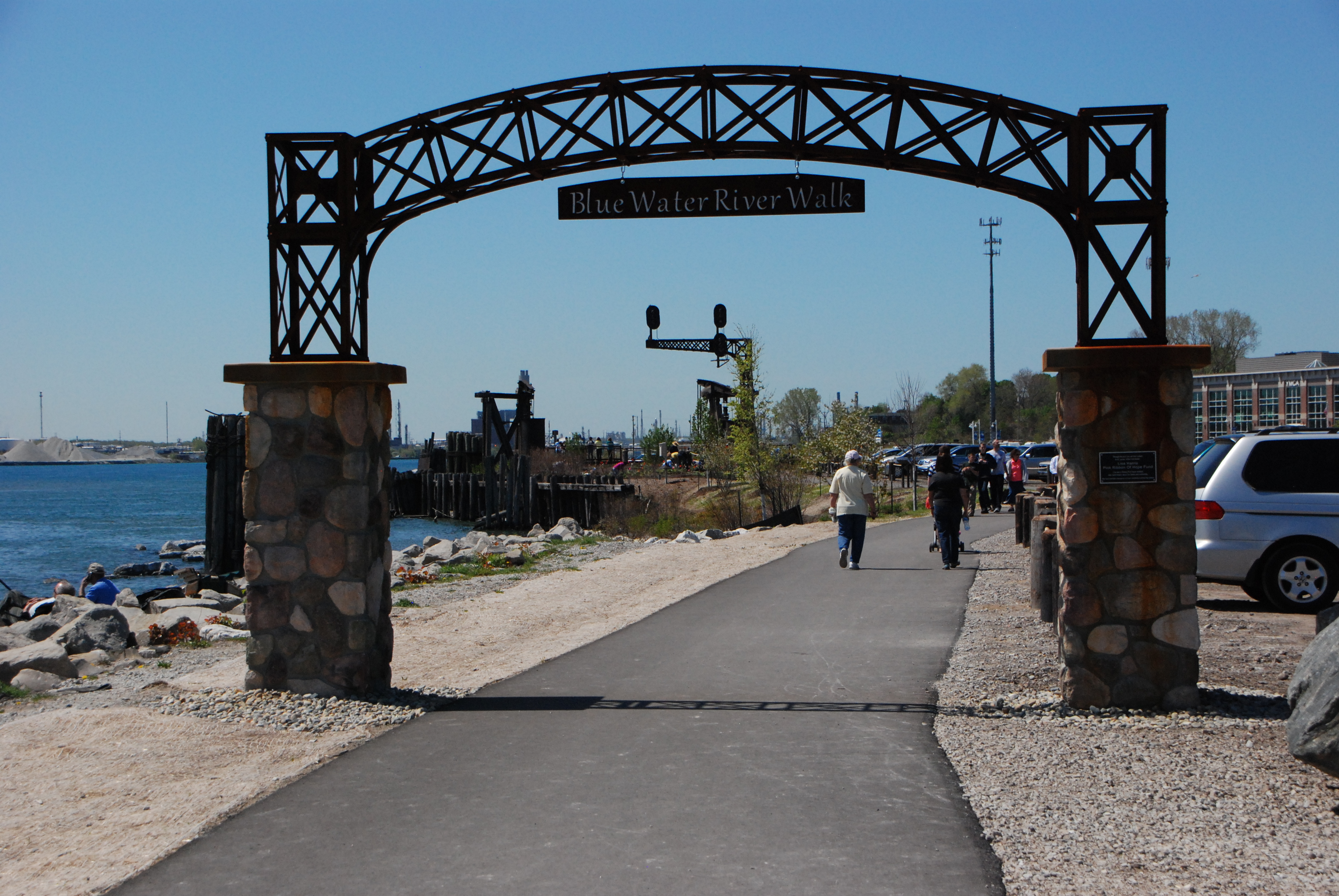
The new River Walk in Port Huron located on Desmond Landing.  Photo by Grace Grogan

The new River Walk in Port Huron located on Desmond Landing. Photo by Grace Grogan

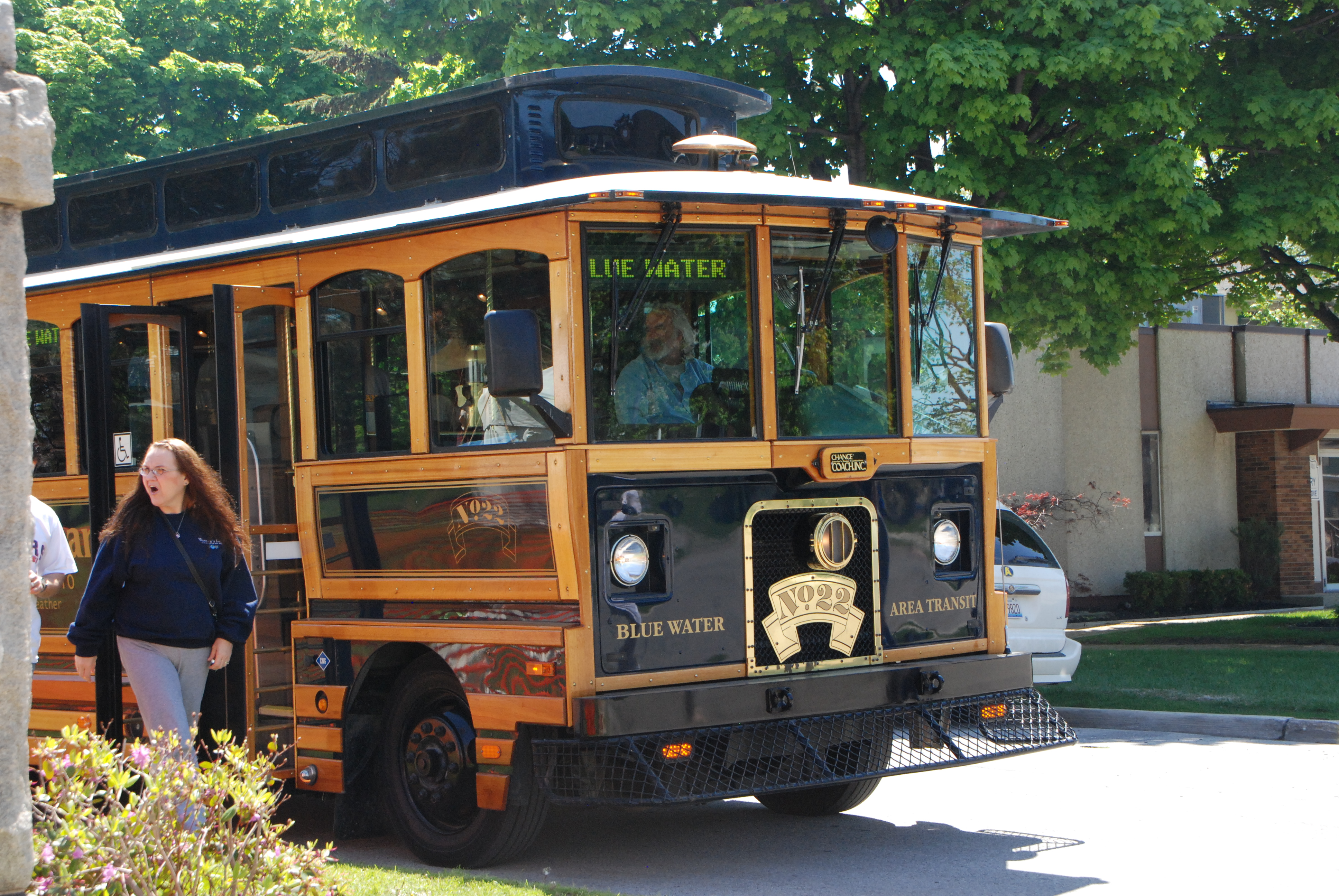
After the Feast of the St. Clair, you are never without something to do in the Blue Water Area.  Be a Tourist in Your Own Town lets both locals and tourists visit a wide variety of museums, the lighthouse, take a cruise on the Huron Lady II, and participate in numerous other activities, with transportation between locations provided by the Blue Water Trolley.  Whether riding during the event or at any other time, you can sit back and for your ten cent fare enjoy a one-hour tour of various attractions and historic sites in Port Huron.  Well worth the investment!

The BW Sandfest is a professional sand sculpture event conducted by The Sand Lovers and is held on the grounds of the Fort Gratiot Lighthouse in Port Huron.  Photo by Grace Grogan.

The BW Sandfest is a professional sand sculpture event conducted by The Sand Lovers and is held on the grounds of the Fort Gratiot Lighthouse in Port Huron. Photo by Grace Grogan.

It doesn’t matter when in the summer you visit, there will always be something to do.  Art Fairs are held a various times in Lexington, Port Huron, Marysville, St. Clair, New Baltimore and Algonac.  Fishing is a popular sport and you will find things such as the Salmon Steaks in St. Clair or the Pickerel Tournament and Festival in Algonac.

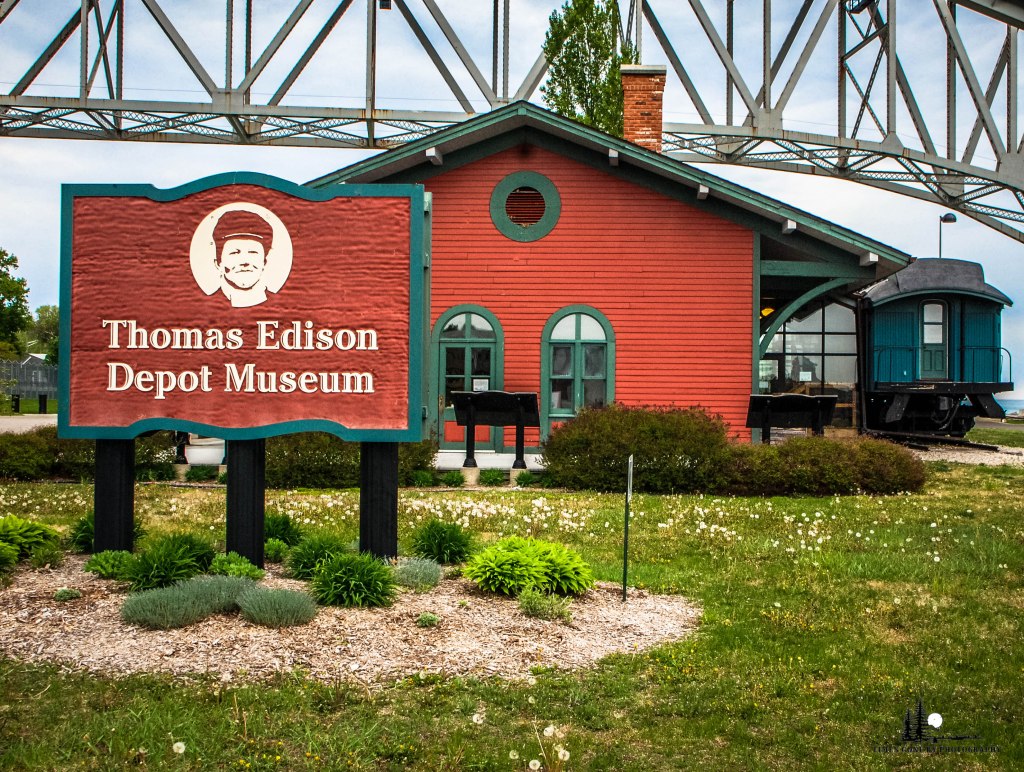
If you are into cars or antique boats you will not be disappointed.  Many car shows and cruise nights are held including the Port Huron Cruise Night and Car Show, The St. Clair Classic Car Show, Antique Boat Show in St. Clair, and the Antique Boat Parade in Algonac.  Marysville hosts two car shows back-to-back with Rumble in the Park featuring hot rods, custom and muscle cars followed by The Past and its Wheels featuring cars built before 1959, including the Wills Sainte Claire cars that were built between 1921 to 1926 in the Marysville Factory.  The Wills Sainte Claire Museum is open the second and fourth Sundays of the month August through September and is one of many area museums.   Other local museums include the Carnegie Center, Thomas Edison Depot, Huron Light Ship, Bramble, and many small local museums in the various towns along the waterfront including New Baltimore and St. Clair.

Port Huron Float Down and Bramble Museum.  Photo by Grace Grogan

Port Huron Float Down and Bramble Museum. Photo by Grace Grogan

Don’t leave yet because we have more fun activities for you to attend.  The Bay Rama Fish Fly Festival is held every year in New Baltimore is now in its 50th year and is the only Fishfly Festival in the world.  It includes a carnival midway, live music, and various family activities such as pie eating contests and various games.  Maritime Days in Marine City is an annual three-day event that includes music, food, fun and a parade.  A new event, now in its second year is the Blue Water Sand Fest, voted by USA Today as one of the top 10 in 2013, its first year here in the Blue Water area.  The event is held on the grounds of the Fort Gratiot Lighthouse and features professional, advanced amateur and amateur sand sculptures.

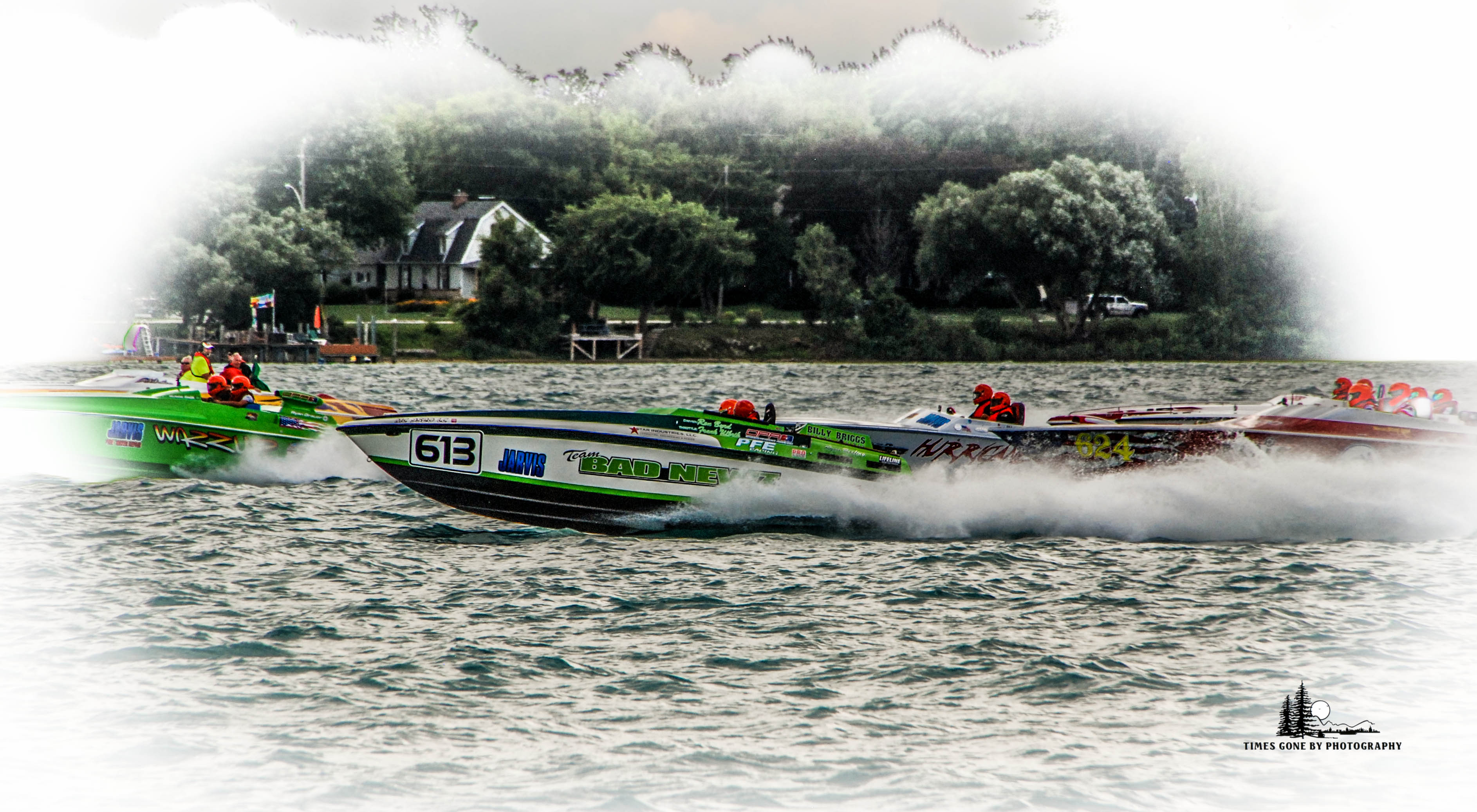
Offshore Racing on the St. Clair River between Michigan and Canada.  Photo by Grace Grogan

Offshore Racing on the St. Clair River between Michigan and Canada. Photo by Grace Grogan

Events surrounding the water abound.  In St. Clair you won’t want to mist River Fest and Offshore Classic Racing.  The event features a carnival, spectators can visit dry docks, wet docks, and of course watch the offshore powerboat races on the beautiful St. Clair River.

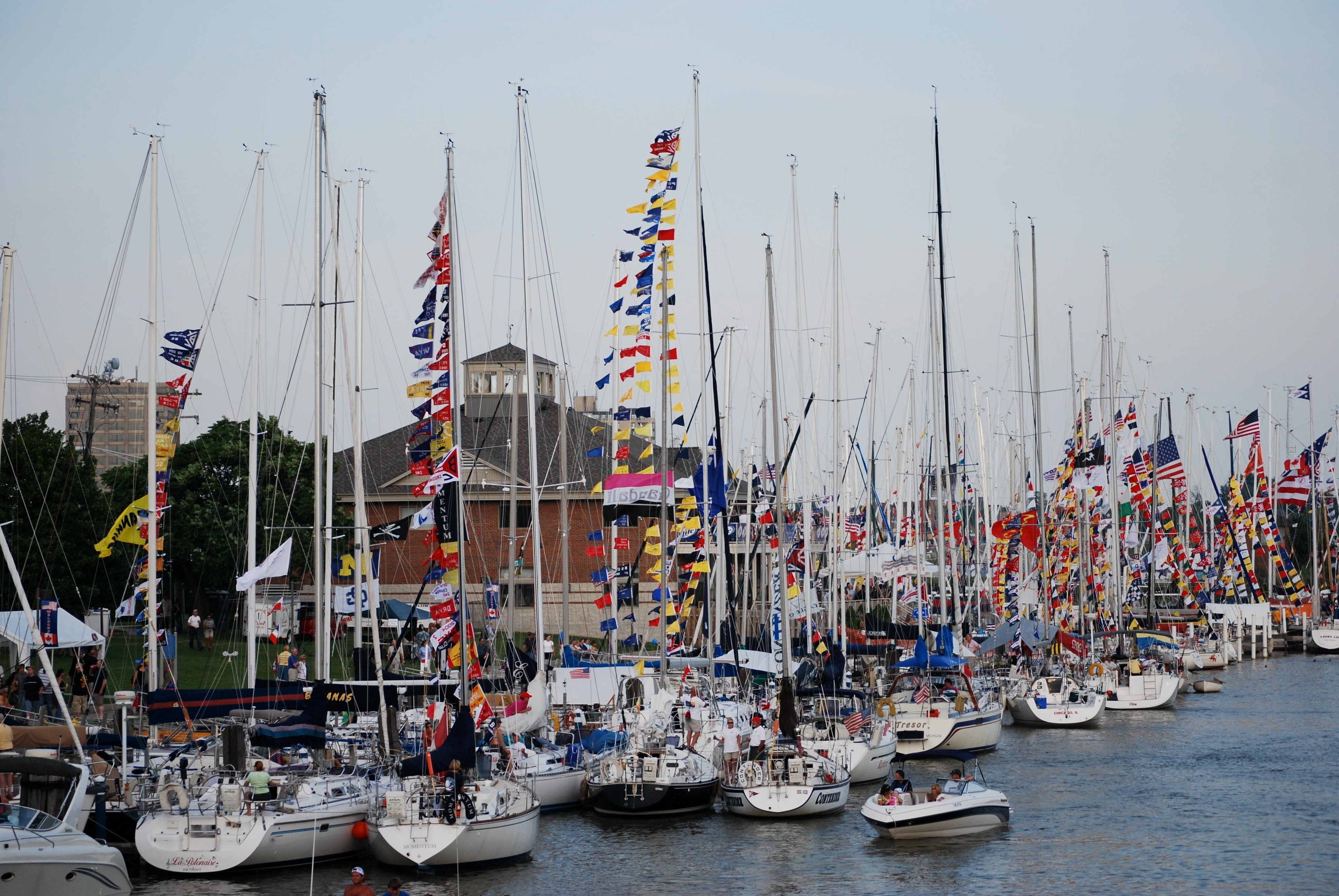
Port Huron also hosts an Offshore Powerboat Race event and the famous Bayview Port Huron to Mackinac Sailboat Race.  This sailboat race is a popular event in Port Huron, featuring a carnival midway and various activities downtown and along the waterfront.  Walk along the Black River to view the boats that have arrived to participate in the race, live manikins,  food and fun abound.  Thursday is family night, and Friday is boat night, a huge celebration the night before the race.  Saturday morning line up along the Black River to view the boats as they parade out of the river and onto Lake Huron to begin the race.  An annual event on the water that draws thousands of participants and spectators is a free event, the Port Huron Float Down.  Participants climb into inner tubes, rafts and any other type of floating device at Lighthouse Beach just north of the Blue Water Bridges and then float down to Chrysler Beach in Marysville.  A fun event for all whether floating or watching.

Boat Night in Port Huron takes place the Friday before the Bayview Port Huron to Mackinac Race.  Photo by Grace Grogan

Boat Night in Port Huron takes place the Friday before the Bayview Port Huron to Mackinac Race. Photo by Grace Grogan

As the summer winds down into fall, an event you won’t want to miss is Whistles on the Water in St. Clair.  This event features antique steam whistles from lake freighters and passenger ships and is one of the largest gatherings of large steam whistles in the world.   The whistles are attached to one of the largest portable steam boilers on earth specifically designed to blow whistles using a fire-tube boiler that generates steam pressure to blow the whistles.  Free ear plugs are provided to visitors as when the whistles blow it is really loud!  A fun activity for children is a set-up on the waterfront of smaller whistles where the children can pull the cord to sound off one of several whistles.    The event is combined with “Chalk the Walk” which allows both adults and children the opportunity to color the walks of the St. Clair Mall with drawings using sidewalk chalk.

Whistles on the Water is held in St. Clair, Michigan.  Photo by Grace Grogan

Whistles on the Water is held in St. Clair, Michigan. Photo by Grace Grogan

This is just a brief overview of various activities in the area and you may want to check Discover the Blue  travel guide to get a more complete lineup of everything there is to do in the beautiful Blue Water area.    You won’t want to miss taking a walk along the boardwalk in St. Clair, the longest freshwater boardwalk in the world.  Stop by Desmond Landing in Port Huron to visit the Boat Nerd and stroll the new River Walk you will find there, walk the pier in Lexington, stroll under the Blue Water Bridge along the Thomas Edison Parkway in Port Huron, or walk the boardwalks in Marine City, New Baltimore and Algonac.

I love living in the Blue Water area, which to me is small town living with all the advantages of a tourist town.   It is a Melting Pot of things to do, with something for everyone.  If you’ve never visited the Blue Water area, put it on your next vacation itinerary, you won’t be disappointed!

Blue Water Trolley - It only costs a dime to ride!  Photo by Grace Grogan

Blue Water Trolley – It only costs a dime to ride! Photo by Grace Grogan

The beautiful St. Clair River as viewed from Palmer Park in St. Clair, Michigan

The beautiful St. Clair River as viewed from Palmer Park in St. Clair, Michigan


The Thomas Edison Depot Museum sits under the Blue Water Bridges on the Thomas Edison Parkway in Port Huron.  Photo by Grace Grogan

The Thomas Edison Depot Museum sits under the Blue Water Bridges on the Thomas Edison Parkway in Port Huron. Photo by Grace Grogan


4 Comments

Filed under Activities, Art Shows, Blue Water Area, events, Family, Festivals, Lake St. Clair, Life is a Melting Pot, Michigan, spring, travel, vacation