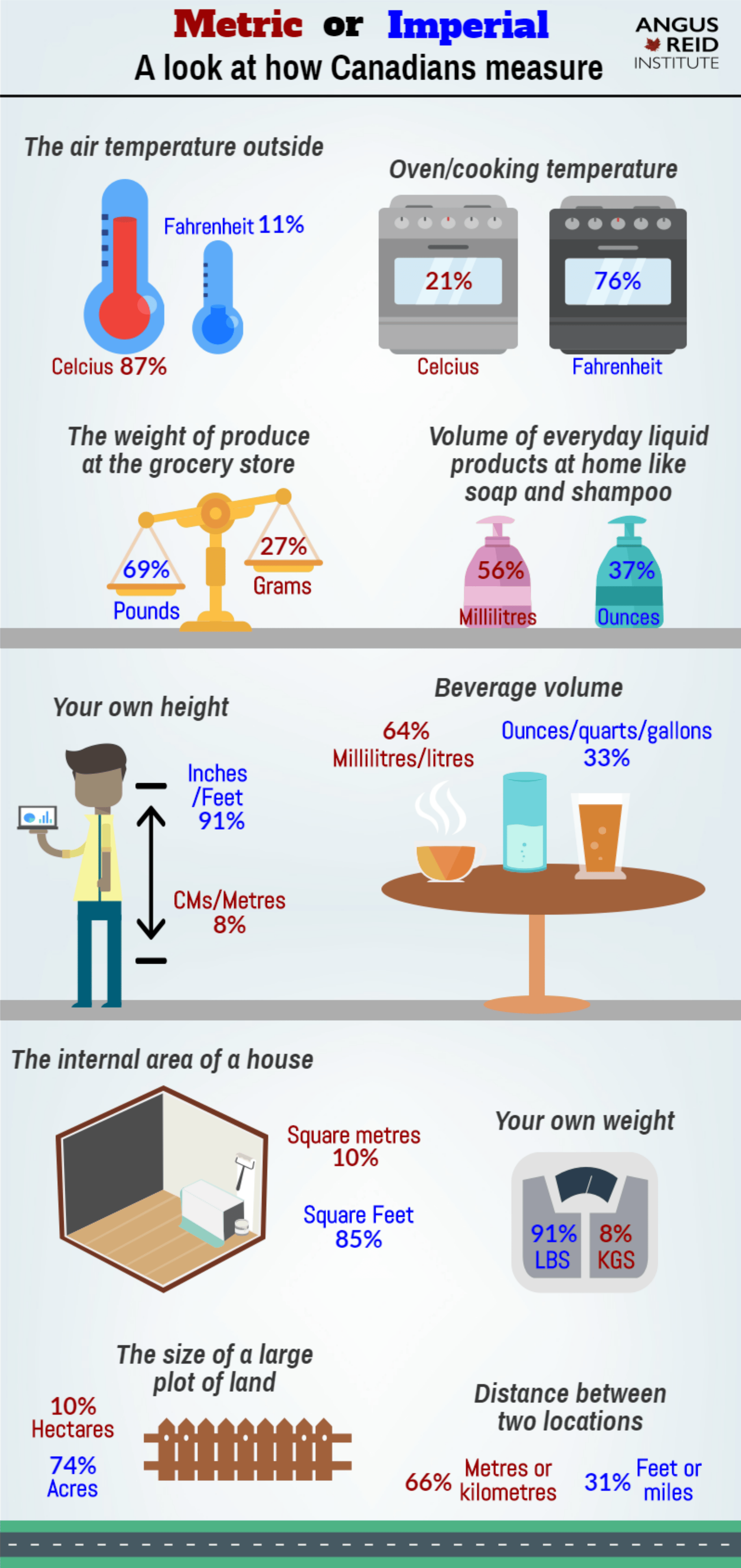
In Part 1, I explained how I became curious about the reasons the U.S. did not convert to the metric system at the same time Canada was making the change, leaving us as one of only three countries in the world that do not use the metric system of measurement. This section explains what Canada did to ensure it completed its commitment to switching from the Imperial to the Metric system during the late 1970s and early 1980s.
In January 1970, the “White Paper on Metric Conversion in Canada” established the Canadian government’s policy regarding its conversion to the metric system. The document specified that Canada would utilize a single, coherent measurement system based on metric units for all purposes. They then developed the “Weights and Measures Act” in 1971 to recognize the International System of Units (SI) for use in Canada. The “Consumer Packaging and Labeling Act” in 1971 required the use of the metric system on most consumer packaging labels.
The change from Imperial to Metric took time in Canada and began in the mid-1970s. I was a high school student in the United States and didn’t concern myself with what was going on in Canada. I do remember them telling us that we needed to learn the metric system because the country was changing to that form of measurement. I also recall that there were many objections to making the switch. We did incorporate some changes rather quickly, the main one being the switch to one- and two-liter bottles of soda. I don’t remember many other changes being made.
In Canada, things were rolling along at a gradual but steady pace:
Temperatures in Celsius beginning April 1, 1975
Rain and snowfall in millimeters and centimeters starting September 1975
Road signs showing speed limits in kilometers in September 1977
Speedometers and odometers in cars are manufactured in metric units beginning January 1979
Gas stations were pricing and dispensing gasoline and fuel in liters in 1979
Fabrics and home furnishings were required to be advertised and sold in meters and centimeters beginning in December 1980
Conversion of food weight measurements for advertising and pricing in metric units, starting December 1983.
We tend to assume Canada is solely metric, rather than the melting pot of systems that actually exist there. Canadians still use imperial units rather than metric in some areas. In 1985, Canada exempted some small businesses from the requirement of metric sales. Other requirements were also revoked, including the use of metric alone for measuring gasoline, diesel fuel, and home furnishings.
Even given these leniencies to a complete change, if you travel to Canada, be prepared for your speed limits and mileage signs to your next stop to be in kilometers, gasoline is sold in liters, and if grocery shopping, have a calculator/cell phone handy to make conversions from metric sizing to imperial sizing. This information is especially helpful when determining the size of ingredients for a recipe.
Being a lifelong resident of the United States, I didn’t delve as deeply into Canada’s history of its measuring system conversion as I did into my own country’s. Watch for Part III, where I’ll give the United States’ history and why it failed to complete the conversion.
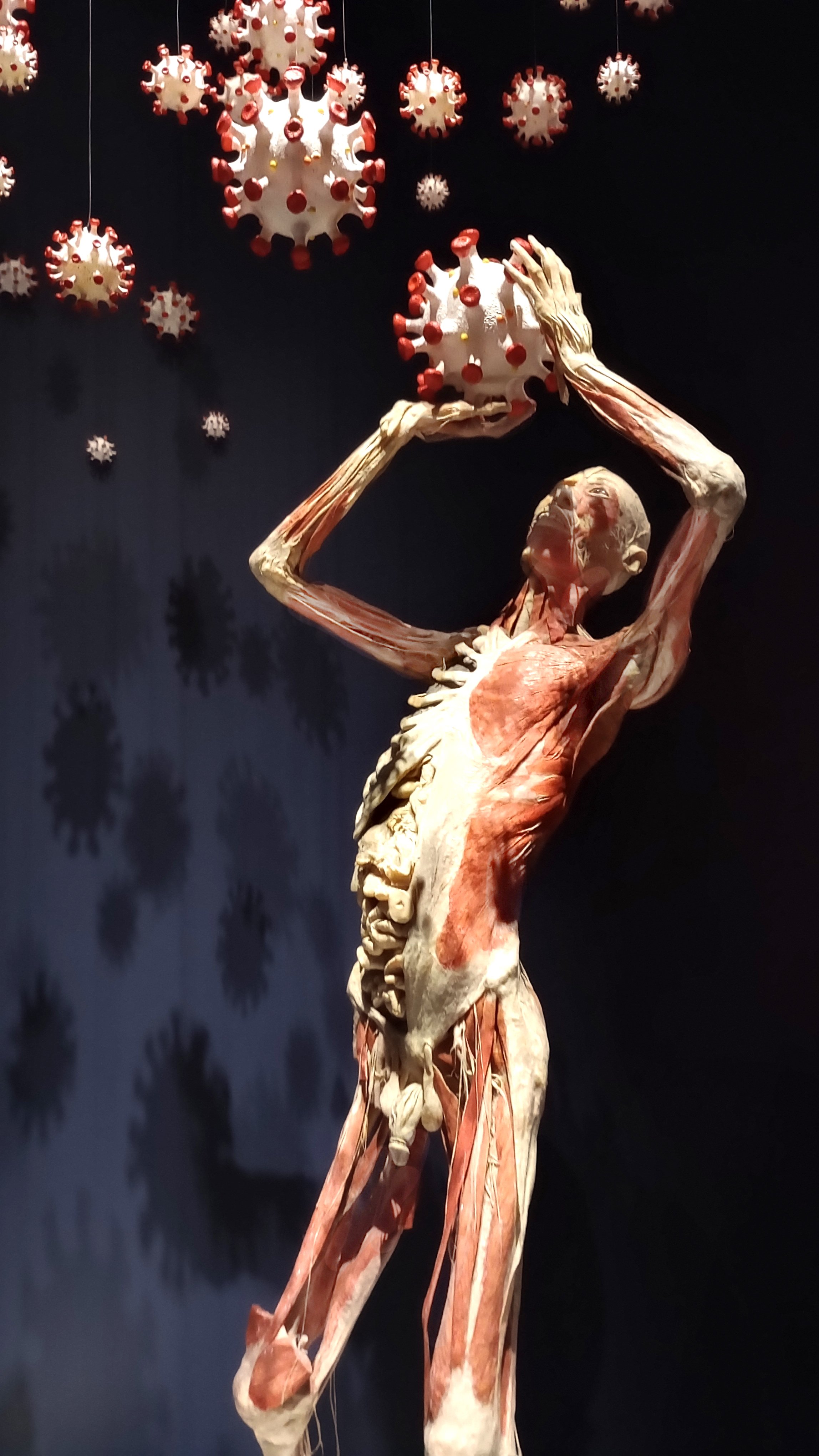
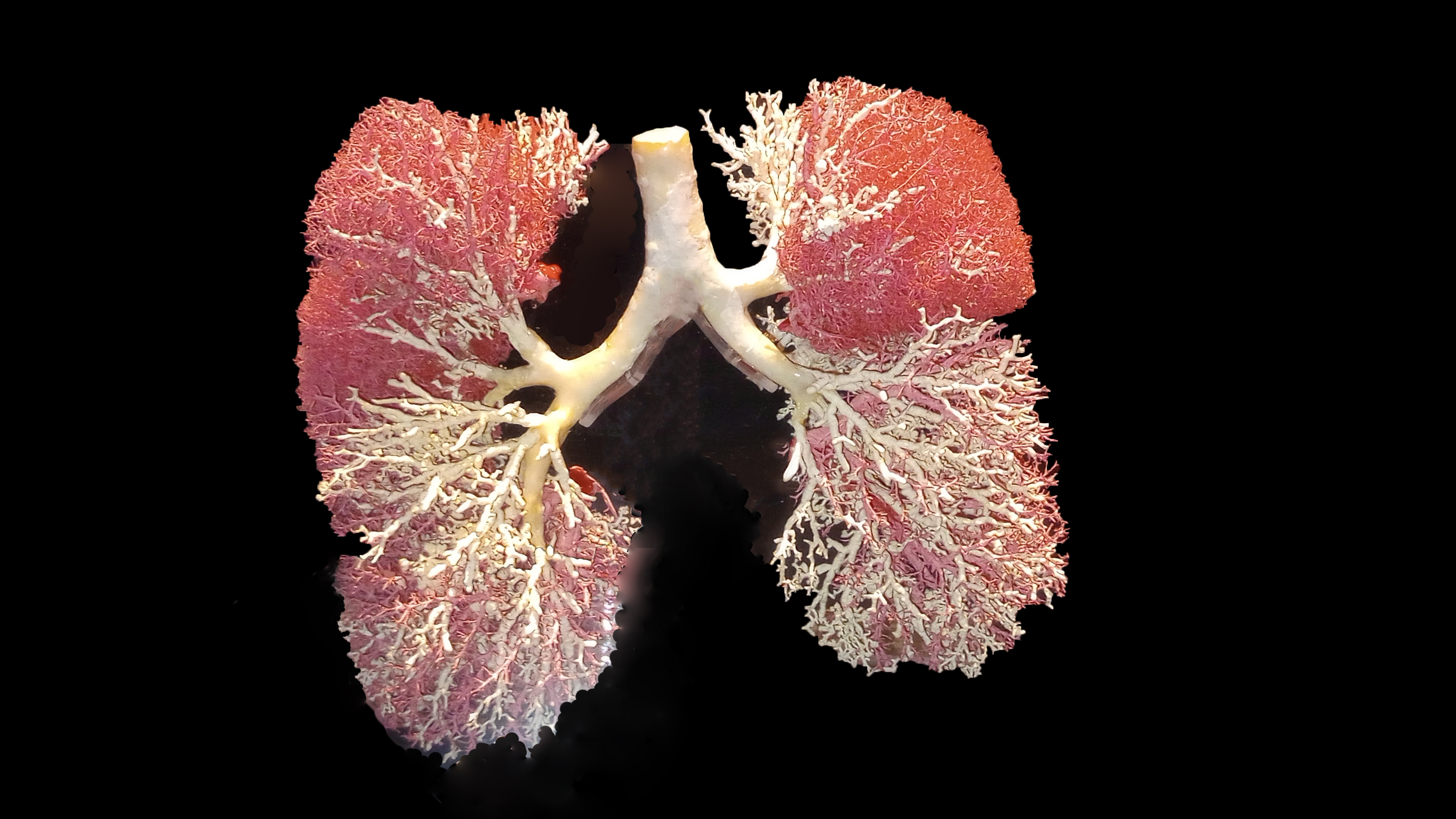
I recently visited the Real Bodies special exhibit by Hurley Medical Center at the Sloan Museum in Flint, Michigan. The sign said no professional photography, which means personal use only. I started through the exhibit, and after taking a few pictures, a worker told me no professional photos. I responded no problem, personal use only. She then said I couldn’t use my DSLR camera, only my cell phone. Their position was that my Nikon D750 camera designated the photos as professional, and I couldn’t use it. When I told them that is discriminatory because I use that camera for personal photography, I was told that is their policy.
What is wrong with this? The photographer’s knowledge of photography combined with the way the photographs are being used designates them as professional images. The type of camera is, to a certain degree, irrelevant.
To achieve professional quality, you must understand the basics of composition, depth of field, clarity, and lighting. You can achieve professional-quality images by utilizing all your cell phone camera features. You can also produce low-quality photos with a high-end DSLR if you don’t understand how to use your camera and the rules of photography.
The photo on the left is a before shot taken with my cell phone using the standard default camera settings inside the Real Bodies exhibit at Sloan Museum. The photo on the right is after editing in Photoshop to lighten the heavy shadows caused by exhibit lighting.
The problem I ran into at the Sloan Museum is one I have encountered elsewhere, as have other DSLR camera users. I planned to tour the Van Hoosen Farm Museum in Rochester, Michigan. The sign said admission was $5.00, but the clerk told me it would be $50 to enter. When I pointed out the $5.00 entry fee, she told me I had to pay a $50 professional fee because I was carrying a professional camera—I had my DSLR. I have used SLR cameras since the early 1980s and did no professional shooting at that time. The girl told me to pay $50, or I wouldn’t get in. I walked out the door.
There is one place in Michigan that got it right. There was no camera discrimination when attending the Blue Water Sandfest in Port Huron. This organization understands professional photography; they posted notices that if you plan to use any photographs professionally, you must have written permission and follow their publication guidelines. This company understands the photographer, and their usage of the images makes it professional photography, not the camera style.
So how do you determine who is a professional photographer? Having a good camera is not the determining factor. Most professional photographers use a DSLR around clients because people think the camera makes a person a professional. However, in a recent survey by Suite48Analytics, 13% of professional photographers say they take at least 50% of their work-related photographs using a smartphone, 24% use it to take less than half of all professional pictures, and 31% use their cell phones more for professional photography than in prior years. The only limitation a modern cell phone has is resolution. If printing the photographs in a large format, a cell phone isn’t going to meet quality standards. Cell phone quality is sufficient if images are only for online or small format use.
The before photo on the left was taken with my cell phone using standard default camera settings inside the Real Bodies exhibit in the Sloan Museum. To achieve the photo on the right, I edited the picture in Photoshop to lighten the shaded areas created by the exhibit lighting.
So what determines whether a person is a professional photographer? It depends on what standards you use. The most common determining factor is whether the person earns between 50% to 100% of their income from photography. In other words, to be a professional, photography is your full-time career. By that definition, I am not a professional photographer.
Another manner of determining whether or not a person is a professional is whether or not they have accomplished at least one of the following:
Has given a photography presentation
Has received recognition in a national photography contest
Has sold their photographs in an art show or art studio
I qualify as a professional if you use this second group of criteria. You may wonder why, if I qualify as a professional, the policy against using a DSLR camera bothers me. The reason is the policy discriminates against anyone using a good camera. The policy should be based on how the photo is used after creation.
The worker at the Real Bodies exhibit told me I can use my cell phone photographs in any manner I choose. I said, “So I can use them on Facebook, blogs, or other writings?” She said yes because they aren’t professional photographs.
Now a legal question comes to mind. Since I took “unprofessional” photos with my cell phone, can I use them to accompany a magazine or newspaper article? According to the worker, I can. I don’t think that is what Hurley Medical Center’s intent is, but that is the message being given because of inappropriate wording on their signage and poorly informed workers.
The problem is that Sloan Museum and Hurley Medical Center assume a professional photographer cannot get a quality image from a cell phone. A professional-quality photograph from a phone is easy when you adjust the camera settings. Sloan Museum/Hurley Medical Center, Van Hoosen Museum, and other places that want to prevent the professional use of photographs should display signage that photography is for personal use only and not for professional purposes. They could also state that for professional use, written permission is necessary.
The above before and after photos were taken in the Real Bodies exhibit at Sloan Museum. The image on the left shows a distracting acrylic display case and reflections that detract from the subject of the photo. The image on the right is after editing in Photoshop to remove the reflection and case, allowing the subject of the photo to stand out.
What is a professional photograph? It is an image being used for business, marketing, available for sale, or used to accompany articles written for magazines, newspapers, etc. In other words, the photographer aims to generate profit with the photo.
The bottom line is that businesses must understand the difference between camera style and professional usage. A lack of understanding may lead to people using images in an unintended manner.
Those hiring a professional photographer need to understand the difference between a person with an expensive-looking camera shooting in automatic/jpeg format and a professional. Professionals know how to produce an image that stands out and process it using Lightroom, Photoshop, or another pro-level image editing system to tweak it into the best photograph possible.
If you want to take good photographs, learn the basics of composition, lighting, depth of field, and exposure, plus how to use your camera to achieve the desired results. Purchasing an expensive camera will not help you take better pictures. If you buy a DSLR and leave it in the “auto” setting, you might as well use an inexpensive point-and-shoot or cell phone. If you invest in a DSLR, learn to shoot manually, preferably in raw, and edit in Photoshop for the best quality image.
Imagine back to when you were in the 8th grade, about 14 years old. You must make a decision that impacts the balance of your time in school. You can take a vocational program, which you attend to grade 12, or a university prep program, which you attend to grade 13.
Once you make your decision, you cannot change to the other program. Now, consider being that 8th grade boy and before you make that decision your school principal informs you that you aren’t “smart enough” for college, so you better go vocational.
That is the way school in Owen Sound, Ontario, Canada was in the mid-late 1950s when Paul Cannon attended. He followed the advice of his principal. The question is, after hearing the principal’s assessment of his abilities, what did Paul do with his life?
The Teen Years
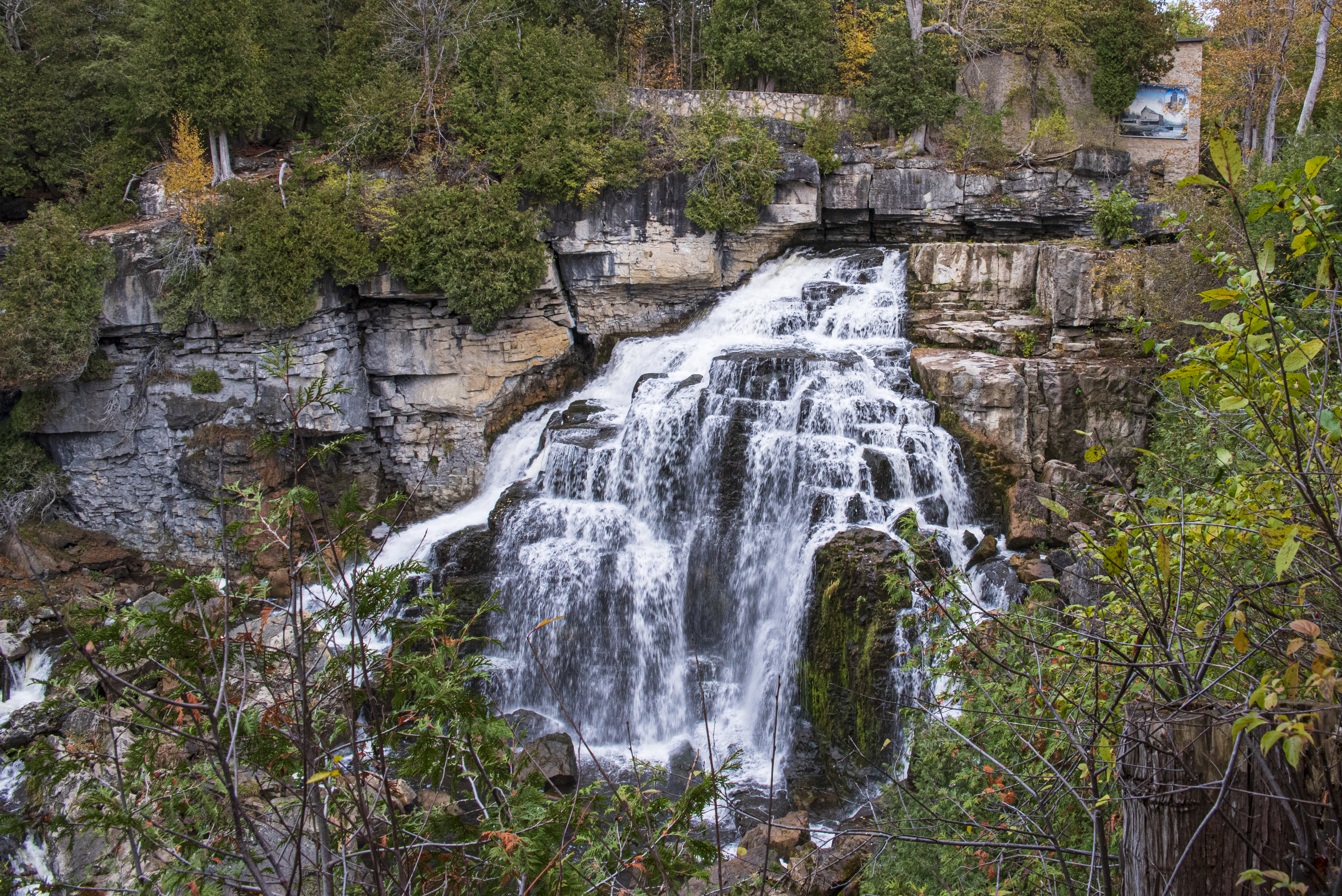
Paul was not afraid of water, and unbeknownst to his mother he and his friends would climb Inglis Falls in the summer. This was the largest of the four waterfalls in town and has a 59-foot cascade. I’ve seen in the fall with a slow flow of water. It is huge!
Inglis Falls in Owens Sound, Ontario Photo by Grace Grogan
When Paul was about 14-15 years old he became certified as both a swim instructor and a lifeguard. He worked as a lifeguard at the community pool and taught swimming to adults and children both there and at the YMCA.
Paul was interested in science and technology, and around age 16 he and three friends learned about an Army surplus store in Toronto selling non-working ham radios for parts. The store had ten radios, and they purchased them all. The intent was to build two or three operating ham radios from the parts, and they did!
Paul and his friends had fun communicating on the radios for about a year. None of the teens had taken the required test to become licensed ham radio operators so were broadcasting illegally. An officer tracked them down and removed the tubes, rendering the radios inoperable. Years later as an adult Paul took the test and became a licensed ham operator.
Paul always had an interest in aviation and was a cadet in the Civil Air Patrol (CAP) in Canada growing up. The group’s intent was to introduce 12-19 year old students to flight. As a CAP cadet, Paul received education regarding citizenship, leadership, physical fitness and general aviation. In Canada today one out of every five pilots is an ex-air cadet and 67% of commercial airline pilots began as air cadets.
Bush Pilot
When Paul was 16-17 years old he got a summer job working for a bush pilot in a nearby town. That first summer Paul performed miscellaneous jobs and ran errands. When the summer ended the owner told Paul if he returned the following year the owner would teach Paul to fly.
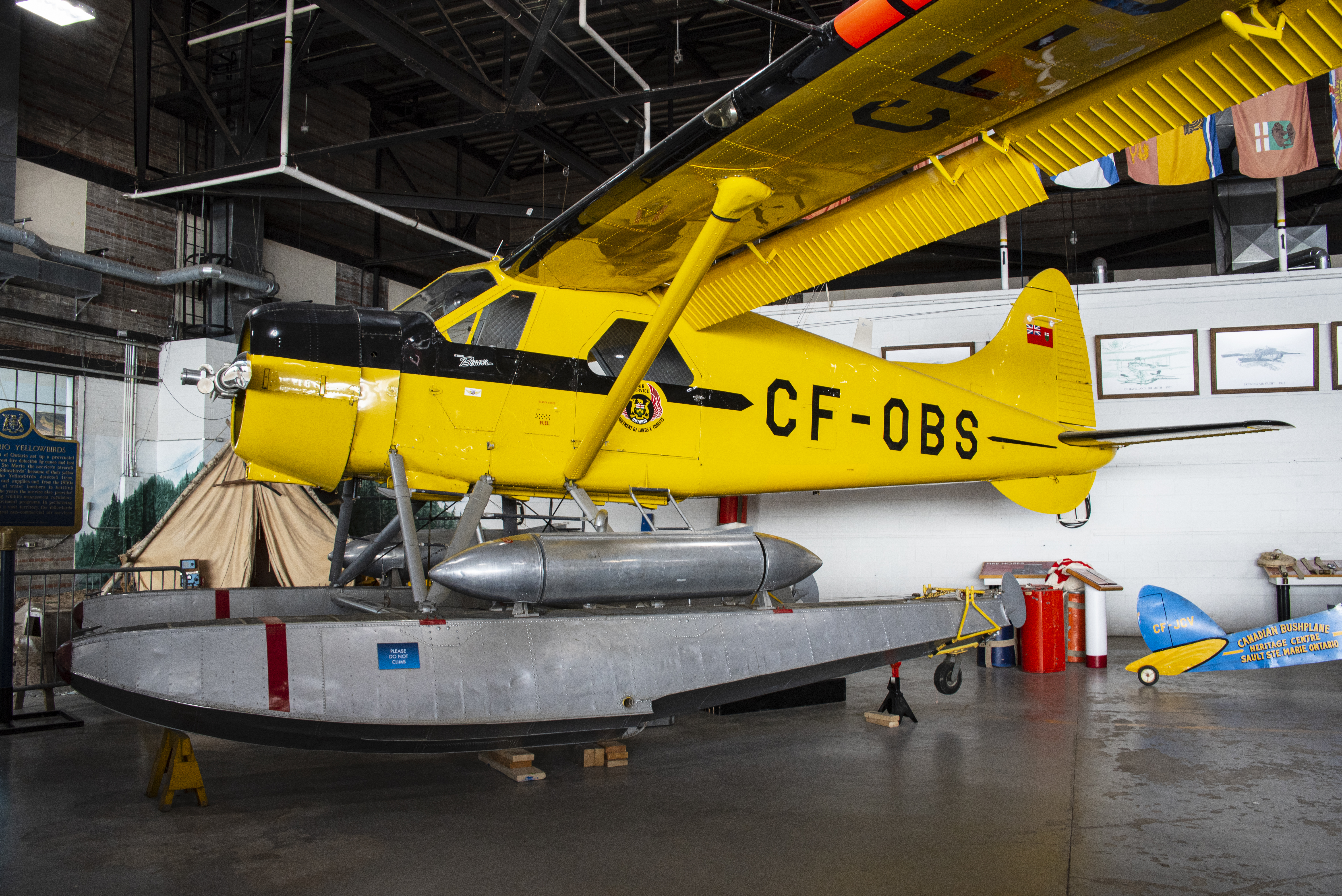
Paul returned and became a bush pilot, flying a Beaver pontoon plane. Bush pilots fly in remote areas, and Paul’s job was to deliver supplies to cabins in the wilderness. You have probably seen this in movies where a plane lands on a body of water, docking near a cabin to leave supplies.
All pilots must learn how to read the weather, and because pontoon pilots land on water, they must also evaluate the water’s surface before touching down. Accommodations must be made for wind direction, the direction and speed of the current, and any obstacles that may affect their landing. Once on the water the pilot must follow all marine rules.
On one flight Paul was landing to leave supplies at a not-yet occupied cabin when the engine on his plane blew. Oil splattered the windshield and the plane stopped before he was near shore. Pontoon planes must carry a paddle for this type of situation. Paul shut down all systems on the plane, then climbed out to sit on one of the pontoons, straddling it like a horse. Paul then paddled his way to shore. If you think rowing a boat is difficult, try an airplane!
There was no radio communication, so Paul unloaded the supplies into the cabin and hunkered down for the night. His boss had expected him back before dark, so when Paul didn’t return the owner went out the next morning, flying Paul’s route. When he spotted Paul’s plane, he touched down so see what was going on. Paul already had the cowling off the plane, but neither Paul nor his boss had the tools or knowledge to repair the engine.
Beaver Pontoon Airplane Photo by Grace Grogan
The owner said he would be back, and when he landed the second time he was accompanied by a mechanic and tools. The owner left Paul and the mechanic to work on the engine. The two spent another night at the cabin before repairs were complete. The plane Paul flew only had one seat, the pilot’s. Once the repairs were complete, the mechanic strapped himself onto the top of a cargo box in the plane and rode back with Paul.
Bush pilots are required to carry a bush pilot’s rifle because situations such as the one above or an unanticipated stop in the wilderness can put you in danger. If Paul was flying his route and saw severe weather ahead, he would land the plane and beach it. Using ropes he would tie the plane to trees to secure it during the storm. When performing these tasks, he always had to be on the lookout for bear.
Paul continued working as a bush pilot for a year after graduating high school, then left for Toronto to attend college.
Radio College
Radio College of Toronto, Ontario trained students in electronic engineering technology and had a focus on tubes and digital electronics. Electronics technology was the wave of the future in the early 1960s.
While Paul was attending college, he lived in a boarding house with 17 other men. They were housed two to a room, with no locks on the room doors. The home was run by a single woman who ran a tight ship. She made all beds every day and washed the sheets once a week.
Board included breakfast and dinner Monday thru Friday. Paul quickly learned that when sharing a table with a large group of men there were no second helpings. You better get a sufficient amount the first time a dish went around the table. Lunch and weekends boarders were on their own for meals, but could use the kitchen and food she had as long as they cleaned up afterwards. This was a very different type of living than Paul had growing up as an only child.
One evening Paul and his roommate heard a knock on their door, which immediately flew open and in rushed the landlady. She didn’t say anything but hurried over and threw open the window, reached into her pocket to grab a pair of scissors and reached out. The next thing Paul heard was glass breaking on the sidewalk below. Apparently one of the borders owed the landlady money, and she suspected he might try to slip out. By cutting the string to the bundle of belongings the border was lowering from his third-story window, the landlady made it clear she knew what he was up to. No one knows if she collected the money owed her or just enjoyed a bit of revenge.
Paul rode the streetcar to and from college, and sometimes hitch hiked his way back to Owen Sound on weekends to visit his parents. If living in a boarding house and using public transportation bus wasn’t enough of a challenge, Paul was doing this on crutches. Paul played B-Team Hockey and did competition ski jumping. Unfortunately, he landed a jump wrong, breaking his ankle.
Paul quickly learned that in a time of need, crutches make a great weapon. One day Paul got off the streetcar and some guy, thinking he had one-up on Paul, knocked Paul’s books out of his hands. Paul may have been a bit disabled, but not unarmed. He swung one of his crutches around and clobbered the guy. A police officer saw the exchange, came over to pick up Paul’s books and make sure he was okay. When Paul left the scene his attacker was in the back of a police vehicle.
Using city transportation when dating was something Paul learned could be difficult. On one date Paul took a girl out, then escorted her home, staying to visit until about midnight. Big mistake! When he got to the bus stop he had missed the last bus in that area, so he walked down to the next line, just in time to miss the last subway of the night. He ended up walking all night to get back to the boarding house. Thank goodness it happened on a Friday night, and he was able to sleep when he arrived there the next morning.
Work and Electronics
After graduating from Radio College, Paul took a position installing and repairing x-ray machines throughout Canada. This took him into every Canadian province, a position that nurtured his love of travel and photography. His goal was to emigrate into the United States, work his way west and eventually end up in Australia. He didn’t make it past Michigan.
Immigration into the United States took about a year. Paul needed to find a job that would hold the position for six months while he completed the immigration process. He was about 23 when he got his first job in Michigan doing the same thing as in Canada. Paul was living the bachelor’s life, driving a convertible and working in hospitals throughout the tri-state area of Michigan, Ohio, and Indiana, where there was plenty of female staff to date.
Many people do not realize that immigrants must register for the draft six months after they become permanent U.S. residents. Paul registered during the Vietnam era and knew how to fly the same type of plane being used in the war. Each year he was obligated to check in at the military office, and each time he met new criteria for a waiver so was never drafted.
Career Change
Paul was talking with an electrician and learned they made more money than Paul was in the electronics field. Paul purchased code books and studied to become an electrician. Though not licensed, he got a job working for Morgan Electric. When a client requested a special electrical job, Paul volunteered for the assignment. The client was impressed with Paul’s work and offered him a job working for their company.
Paul made the job change. Always looking to advance, Paul later applied and got a job in skilled trades as an electrician at the Ford River Rouge plant. Unfortunately the plant did layoffs before Paul had 90 days in.
Needing work and the economy being bad, Paul took a job working on an ambulance. It was on-the-job training, they were not paramedics. The crew would perform basic first aid and transport patients to hospitals. This was during the 1967 Detroit riots and runs were often into dangerous areas. It wasn’t all bad though.
One run was to Governor Romney’s home. The governor’s wife had fallen and injured herself, requiring an ambulance transport. Paul also delivered two babies during his time on the ambulance. One laboring woman looked at him and said, “it’s my first” and he responded, “mine too.”
When Paul’s father notified him Pittsburgh Glass Works was opening a plant in Owen Sound and needed skilled trades workers, Paul applied and was the first electrician hired. He moved back to Owen Sound and lived there for two years. The glass plant job gave him experience in trouble shooting factory machinery, which would pay off later.
When the economy improved Paul moved back to Michigan and took a position at Allied Chemical in Mount Clemens. An electrical inspector saw his work and volunteered to sponsor Paul for taking his journeyman’s test. You cannot take this test until you have verification of 10 years of experience working as an electrician and a sponsor. Paul passed the test and immediately began studying for his master’s license.
You must work as a journeyman for a minimum of two years before taking your master’s exam. When Paul reached the qualification period he took the test and became a master electrician. Paul then started his own electrical contracting business, Trojan Electric. This electrical contract work was in addition to his full-time employment. His business was lucrative enough to necessitate employing a work crew.
While working at Allied Chemical in Mt. Clemens, Paul saw an ad for skilled trades at the Ford Motor Company Paint Plant. Paul applied and went into Ford as a re-hire. He remained at Ford as an electrician in skilled trades for the balance of his working life, retiring out of the Ford Utica Trim plant.
Back to Flying
After Paul immigrated into the United States, he checked into getting his pilot’s license. The bush pilot Paul worked for never had him keep a pilot’s logbook, so there was no record of his time in the air. Paul had to start over. Lessons were easy because he knew how to fly, he just had to master landing on solid ground.
Pilots must learn navigation and weather patterns, plus cloud types and cloud levels for flight. Paul can look down the road when driving and recognize rain that is coming down but not reaching the ground. He can also see it ahead and predict the time the vehicle will drive into it. Navigational training allows him to know the direction he is driving based on the sun.
Paul purchased his own plane, a Cessna 177 RG (RG means retractable gear) and served as an adult member on the Civil Air Patrol (CAP). The Civil Air Patrol is an Auxiliary of the U.S. Air Force that was founded in 1941 to mobilize civilian aviation resources for the national defense.
Cessna 177 RG Photo obtained off Internet
Paul underwent training in CAP to fly both counter drug operations and search and rescue. He enjoyed his time working on missions, which often ran one to two weeks at a time. He also volunteered his time working with CAP cadets, taking them up in his plane for a ride or assisting at special cadet outings. The CAP has the same officer ranks as the Air Force, and by the time Paul retired from service he had achieved the rank of Major.
Paul’s love of aeronautics led him to volunteer his time at the air show held each year in Oshkosh, Wisconsin. He worked in the sound center manning the sound control for the music and announcers during the air show. This required balancing the voice and music, plus timing the music for the air acrobatics of the plane.
Paul learned to be prepared for the unexpected. A woman was narrating her husband’s performance when his plane crashed. Her reaction was a blood-curdling scream into the microphone. Paul immediately cut the sound.
Paul enjoyed his time at the air show, meeting celebrities and working with pilots to time their music to their performance. It was a week of both work and fun, affording him full access to the air show grounds.
In His Free Time
When Paul was ready to move out of the city, he purchased five acres of property in St. Clair, Michigan and built a home. Paul was the contractor for the job. He ran all electrical wiring in the home and finished the interior. This included building the staircase leading to the second floor and installing all kitchen cabinets and countertops. He did this while working full-time at Ford Motor Company and running Trojan Electric.
In addition to volunteering his time with CAP, Paul participated in a computer club and remains a member of the Blue Water Shutterbugs Camera Club. Paul served as treasurer in both clubs. His photographs are sold on Alamy and Fine Art America, and for several years he sold them in fine art shows. Paul spent several years teaching photography, originally in a classroom setting, then one-on-one. He customized lessons to fit his student’s needs, including how to operate a camera, how to take better photographs, and how to process photos in Photoshop.
Paul Cannon now lives and travels throughout the United States and Canada in a 35-foot motorhome, towing a Jeep Rubicon. I am lucky to be living and traveling with him on his latest adventures. We enjoy visiting new places and navigating off-road trails. We produce videos of our adventures and share them on our YouTube Channel, Rolling Thru North America, Travel With US!
Not Smart Enough?
Can you imagine if Paul had only been “smart enough” for college what he might have done with his life? Maybe it is a good thing he did not attend a 4-year college. Paul may have not been ‘smart enough” in his principal’s eyes, but what he has accomplished in his 78 years of life has been diverse and interesting.
Writer’s Note: This was originally written entirely from memory based on information I garnered from Paul over the past six years. After publication Paul read the above and advised me of some minor corrections needing to be made. Those changes have been made and the writing is now accurate.
While the age-old saying about hindsight being 20/20 is often used, the roll-over of the new year gives it an entirely new meaning. Regardless of what you personally think of the past year, there are likely some choices you would have made differently. This is true for any year, but especially given the horrific one we had.
Are there thing I would have changed? Not many. I would not have remained in Yuma throughout the summer; day after day of 115 degree heat is too much! The choices we made kept us healthy, except for a couple rounds of illness I had in the middle of the summer so it was not a bad choice either.
I regret not getting back to Michigan to see my kids and grandchildren. Michigan was a roller coaster ride of what the Governor was going to keep open or shut down from week to week, so we decided not to risk it. We are looking forward to our upcoming travel plans.
While death, disruption, loss of income, and depression are what many will likely recall when they think back on the past year, there are also some positives that should come to the forefront:
More time together with your spouse/partner/significant-other or any other name you call the person you reside with
More time to do gardening, crafts, hobbies
Homemade food, especially baked goods became a normal day of life for many
Kids enjoyed being home with their parents and having more family time
Truly learning what your kids are studying in school if they were doing remote learning
Less air pollution from traffic meant cleaner air to breathe
Many people learned how easy and convenient it is to work from home
Companies may now decide to lower their overhead by having more people work from home on a regular basis
Everyone has become more tech savvy thanks to Zoom, Jitsi Meet, and Google Meet
Those who reside too far away to attend club meetings were brought “into the loop” through online meetings
Vacation doesn’t mean you have to travel far
As for me, I’ve spent my time writing, processing photos and videos, and have taken a real liking to adult coloring books.
Whatever the things are that stay-at-home orders and Covid-19 brought to you, remember hindsight is 2020 and you can now envision a bright future in 2021.
It is often said, plan for your future. Everyone is supposed to have a 5-year plan and a 10-year plan. I recently read something that asked where you anticipate your life being in seven years.
Strange number, but what the heck. What will your life be like in 2027? What do I anticipate for mine?
I know things can change on a moment’s notice. The best laid plans change and before you know it you are doing things you did not anticipate, living in a manner you did not anticipate. Where will the next seven years take me?
LOOKING BACK
I started by thinking back seven years, to 2013. At that time, I was married, working full time as a paralegal, and my husband, Ron, and I had applied to adopt our granddaughters that had been taken by CPS.
Between then and now CPS fought the adoption and won, the children were adopted by strangers. My husband developed cancer and lost the battle in December 2015. At that point I thought I would need to remain working full-time until retirement age. My plans included downsizing into a condo or smaller home.
I had begun putting that into motion when in 2019 I had the opportunity to come on board with Paul. I retired out of my full-time job as a paralegal and hit the road.
I now live full-time in a motor home traveling throughout the United States and Canada with Paul. I work part-time ghost-writing blogs and selling my photography online through Fine At America. Paul and I have a YouTube Channel, Rolling Thru North America Travel With US! about our adventures.
So, where will I be seven years from now?
LOOKING FORWARD
Seven years from now I hope we still be traveling, but it is possible we may decide to settle somewhere. I hope to travel as long as possible. There is a long list of places I have never been and would love to see. By 2027 hopefully most have been crossed off the list.
If we are still rolling on four wheels, great. If the majority of my time is not spent on travel I may be living somewhere in a park model. Why a park model? Because RV parks are active, people come and go, and there are lots of activities. They do not have the seclusion of a house or condo.
I assume I will still be ghost-writing blogs as a part-time income. It is fun, interesting, and a good source of remote income. Seven years from now I will not only be doing that, I will also be doing regular freelance work writing articles for magazines and doing copy-writing for businesses.
I began a book a few years back then stopped working on it when life got chaotic. Seven years from now I will be a published author of that book, and possibly others. I am hoping it brings knowledge to the country about the way CPS destroys families. It is a sad reality of this country.
Seven years from now I will still be shooting photographs and selling them on Fine Art America, just like I do now. I will be processing thousands of photographs taken during my travels that I never found time to work with. My online gallery will have grown from 1,000+ to 7,000+ photos. The YouTube Channel, Rolling Thru North America Travel With US! that Paul and I started in 2020 will have several thousand subscribers and we will still be uploading videos of our travels onto it.
The big clincher, seven years from now I will reach my full retirement age. Will I have already taken my social security, will I apply then, or will I decide to wait and take it at age 70? Time will tell. That is something that will be determined based on my circumstances as time goes by.
So where will I be seven years into the future? Pretty much where I am now. Traveling, writing, and taking photographs. I am enjoying life, why change it?
We have all been watching the fear of the unknown unfold before us with the Coronavirus spread throughout the world, but more closely to home here in the United States.
We all need a break from the chaos, and below I am going to give you 10 positive Points to the stay-home orders.
I am in a unique class of citizens. We do not have a “sticks and bricks” home, we live full-time in an RV. Stay-at-home orders affect us a bit differently. We elected to stay put in the RV park here in Yuma, Arizona until things calm down. Being in an area where temps average 107 in the summer is not our choice, but we feel it is the best alternative if things do not calm down before then.
When I think back to one year ago in April 2019 I was winding down on the sorting out of my house in the anticipation of moving into an RV full time. I was prepping for an estate sale, selling my home, leaving my full-time job, and hitting the road. By mid-August, those things had been accomplished.
I enjoyed a wonderful fall traveling in eastern Canada, and warm winter in southern Texas and Arizona. Our plans for this summer to hit some national parks before heading back to Michigan to visit family have been pitched. We don’t know when or if we will be able to travel to Michigan this year.
The Port Huron Township RV Park we stayed in last summer is closed indefinitely due to the coronavirus. The Port Huron Lapeer Road KOA is price gouging, charging $75 per night if you want to make a reservation. Under the circumstances, our plans are in limbo.
The coronavirus has been the main focus of news for the past couple of months and will likely be for the next few months ahead. We all need is a positive brain break during our stay-at-home time. Here are some positives of the stay-at-home orders:
You no longer need to set an alarm clock. Sleep in or get up early, your choice.
You can dress however you want – casual, pajamas, the scroungy never-wear-in-public old clothes – whatever suits your fancy. You aren’t going anywhere, no one is visiting, so it’s all good.
No need to wear makeup – who is going to see you?
You can now read those books you purchased but never had time to read. Clean off that shelf and prepare for a literary shopping spree when the stay-home orders lift.
There is plenty of time to do spring cleaning. Does anyone really do that anymore?
Do the spring yard cleanup, plant flowers, ready the vegetable garden.
Clean the junk drawer, the closet, or the basement. Think how neat and organized things will be once this pandemic is over.
Lower gasoline expense – if you aren’t going anywhere you aren’t using any gas
Skim through recipe books and try some new recipes. Think of all the money you save by not eating out, shopping, going to events and concerts.
More time with your spouse, kids, significant other. Make art projects and play board games. Did out your old hobbies – woodworking, sewing, ceramics, stained glass – anything you used to do and normally don’t have time for.
Sit on your porch or deck and enjoy the sun, listen to the birds, drink a glass of wine.
Use this stay-home time to enjoy life. Someday you will be able to look back and remember the brain break you were awarded in the midst of a pandemic.
We all experience them from time-to-time. The twists and turns of life created by things we aren’t expecting or choices we make. It is what we make of them that determines our destiny and happiness.
My life was a whirlwind of twists and turns for several years, with the culmination being my decision to sell my home and the bulk of my possessions, leave my job prior to being of retirement age, and live and travel on the road full time in a motor home.
When I made that decision I knew I would need to find some type of remote work. I’m one of the lucky ones. I have a spousal pension from my deceased husband and some savings/investments to help me float through the beginning of this, but not enough to sustain me long-term. I plan to live a long time and my investments need to support me in old age! Income on the road is a must.
I have always loved writing, and one of my goals when I set off on this was to expand my writing career. When you travel throughout the United States and Canada, travel articles for magazines is a good possibility. The income generated from that is not steady enough to support this new lifestyle, and so I continued looking for part-time remote work.
I applied for and was accepted on a contractual basis to be part of a pool that writes ad-scripts for radio advertising. This is giving me some good experience, but is more of a pocket-change job than a lucrative career, so I continued looking.
I joined The Barefoot Writer, then signed up for a course on becoming a copywriter with American Writers and Artists, Inc. I had not even started the course when two days later I received a response to another contractual job I had applied for and have now accepted to write marketing blogs for various companies.
As part of a pool of copywriters I am obligated to complete five assignments per week. This includes research and writing a marketing blog that meets the clients specifications and the company’s QC requirements. I look at this as a wonderful opportunity to make money while that is compatible with the instruction I am getting from my copywriting course.
I’m sure the time spent learning to juggle work, class, travel, and photography in a time-efficient manner will leave me twisting and turning. Now, if you are a long-time reader of this blog you know that I am a photographer and sell my work on Fine Art America. I am also looking to expand my sales avenues for my photography, so add another matter to my juggling act.
I am starting off 2020 with a juggling numerous things that are the culmination of the twists and turns of my life. Here’s to what should be a very interesting year!
Please comment: What are the twists and turns you are juggling? What are your plans for 2020?
When you live with constant turmoil you become accustomed to living as if on a constant roller coaster ride. The twists and turns of upheaval in your life create emotional stress, and yet you constantly adjust, cope, and keep on moving forward. This becomes so normal you do not even realize how much stress you are constantly under.
That has been my life for the past few years. The loss of my grandchildren to foster care and then a battle with CPS when we tried to adopt which resulted in them being lost to adoption by strangers. My son serving six years in prison for home invasion, dealing with the constant dangers that environments holds. My mother, father, father-in-law, and then my husband battling cancer and passing away, all within a three year period. My son being released from prison and paroled to my home; something I had originally looked forward to but which became a very stressful situation.
Following my husband’s death I made a determination that I needed to downsize out of my home and into something smaller. In the midst of planning for that made a decision to instead downsize into an RV and travel full-time. During this process I informed both of my adult children that I was no longer going to be able to subsidize them financially, something my husband had always done while he was alive. This resulted in more stress, but over time success was achieved. They are both now living financially on their own.
I am finally at a point where success is on the horizon. My new lifestyle begins on Monday. I closed on my house today. Friday is my last day of work. My daughter moved her family north and is now residing near her fiance’s parents, a situation that is serving well. Both Caroline and Rob are working at new jobs and my three grandchildren are enjoying life in a more country setting close to their other grandparents.
My son, now out of prison for 1-1/2 years, has obtained his CDL and is working in a position driving semi. He and his ex-wife have reconciled and are residing in a home they rent near his workplace. I am at peace that I do not have to worry about him being cold, undernourished, injured or killed in prison. I wish him success.
For the first time in years my mind is at peace. My children are both living on their own without my financial assistance, and I am going into semi-retirement. I will be residing full-time in a motor home, traveling the United States and Canada and doing part-time remote or seasonal work.
For the first time in years I can sleep without my mind churning over the problems, worries, and stress that plagued me for so long. I hope nothing happens to upset the apple cart. A mind at peace is a wonderful thing.
How often we have a dream of something…a place to travel, an advancement in career, weight loss, or a lifestyle change. Often whatever that dream may be seems so far off in the distance that we feel it is unachievable. The problem is that we fail to create a plan of action. Without a plan the dream is impossible, because without action the reality of the dream will never be achieved.
Some people formulate plans in their head. Other people, like me, make lists and cross things off as accomplished. Some are able to just dive in and start working without a plan of action. Whatever works for you is fine, as long as it works. Too often when a task seems overwhelming it is easy to let it slide; even if you have the list you never act on it. Other times set-backs can throw us off balance or cause a backwards slide. When that happens get your footing and push forward.
I am dealing with dreams in various aspects of my life, and the reality is I have been slow in taking action, but every small step I make gives me a feeling of accomplishment and the desire to push forward….I just need to start doing it at a faster pace!
Each of my dreams deals with a different part of my life. Each has a different game plan. Each will be worked on and accomplished at different speeds, and some may need to be put on hold while I push to accomplish others. That is okay. Even putting some on hold can be part of the overall plan of action. The important part is to act on the plan.
So, what are my Dreams + Action = Reality goals?
Asset Control: This sounds strange, but I have inheritance money and/or assets that have not yet been distributed to me and I need to take whatever steps necessary so that all items are under my control. I also have property and a motor home that I want to sell and need to push stronger to get those sales accomplished. Once I have achieved those things, my asset control goal will be accomplished and I will be able to better fund my investments for a higher yield, which has a direct effect on my retirement funds.
Downsizing: I decided some time ago that I need to downsize, and I have talked about it quite a bit, but the “action” part has been slow in coming. This is most likely because it will be a tremendous change. I will have to get rid of an overwhelming amount of items accumulated over a 34 year marriage, sell move from my 4-bedroom colonial with the plan to purchase a 2-3 bedroom ranch-style condominium. I am finding the action part is both time consuming and somewhat emotional as I will need to part with numerous possessions. However, after cleaning out my parent’s home following their demise and having listened to several friends also go through the same thing, I realize that the majority of this stuff is not anything my kids are going to want and is just taking up space. This is my number one priority and the first “dream” I have to make a “reality”.
Retirement: Being a widow retirement can be very close, within the next three years, or in the distant future. My full-retirement age of 67 is still ten years away. My goal is to land somewhere in the middle, around age 62-63. I know I cannot afford to stay in this house once I retire, and so the push to downsize is a necessity as much as a desire. The sooner I downsize the faster I can save more money toward my retirement dreams and/or another dream.
Travel: There are a lot of places I have not been to but want to see, both in this country and others. While working I want to start taking short trips and seeing a bit of the country. Once I retire I want to be able to travel much more extensively. I am even debating whether I want to go ahead and fulfill a prior dream my deceased husband and I had…full time RV. A friend of mine just started on his adventure, and in helping him get ready to head out I felt the desire come back to hit the road myself. I have learned that there are a lot of women driving Class A motor homes and towing vehicles, living the full-time life all by themselves If they can do it, why can’t I. Time will tell.
Writing and Photography: These are both things I do now, but my life has been rather hectic the past few years and I do not have as much time for either of these areas as I would like. I hope that once I have downsized, and most definitely once retired, that I can devote a considerable amount of time to both of these areas. I have a book started that I plan to finish and other ideas bouncing around in my head for additional books.
As you read this you may have realized that my dreams are related to each other. I need financial control of all my assets to achieve my other goals financially. I need to complete the downsizing prior to retirement. I need to retire to obtain more time for writing, photography, and travel. Dreams + Action = Reality. I better get busy!
I hope that while reading this you have started to formulate dreams and plans for action in your head. What are your dreams? I would love to hear about them in the comment section below.
It has been one of those weeks when you could take my life and drop it into an I Love Lucy sitcom and it would be perfect. For those of you who are too young to remember, Lucille Ball was a wonderful comedy actress who stared in several shows that carried her name…I Love Lucy, The Lucy-Desi Comedy Hour, The Lucille Ball Show, and Here’s Lucy.
The fun part of watching a Lucy show was that you just knew she was going to do something goofy, create a catastrophe out of something simple, and the audience would find themselves laughing hysterically at her antics. It was a type of “if anything can go wrong, it will” and everyone loved watching.
Lucille Ball- photo found on internet
Now we take my week. Sunday I was fixing dinner and blew a circuit breaker. I went downstairs, reset the circuit, continued fixing dinner and blew the same circuit again. Before I could make a bee-line for the door the Master Electrician currently residing in my house stopped me. I couldn’t reset that breaker, he had to analyze the situation. Never mind that dinner is in the oven and that oven is no longer heating because it is on the blown circuit, the analysis had to be done first. Once he had analyzed the situation and made his determination I was free to reset the breaker and continue with meal preparation. However there was a glitch. I had lost track of how much time the food had been in the oven, and while I was getting a detailed explanation on his process the fish became quite overcooked and hard. Lets just say that meal left a lot to be desired.
Monday comes and I walk into work. The bottom of my shoes must have been wet from the snow and when I hit the tile floor of the kitchen area my feet flew out from under me and I went down hard on the tile floor, hitting the back of my head on the refrigerator as I went down. My startled scream was loud enough it brought all three men who were in the building running. Why can’t clumsy things happen when there is no one around to see them? Then once I am again on my feet I open the upper cupboard door to fix myself a cup of coffee and in the process hit myself in the head with the cupboard door. How could I not have enough sense to move my head out of the way? I’m still recovering from the injuries incurred that morning.
Tuesday was hectic but I seemed to make it through the day unscathed. I fixed spaghetti for dinner and decided to have a bottle of wine with it. Only I could manage to get the cork stuck up inside the corkscrew…but with a bit of persistence I got it back out. Only a moment to recover on that one.
Wednesday, hump day, shouldn’t I be on a roll to recovery now? Oh heck no. I was planning to take a second car I have into the dealership for service. A friend of mine gets all the snow off it, I go to hit the unlock button and open the door. The battery was so dead the car doors would not unlock. We finally got the door unlocked by inserting the key, but it was frozen shut! There is only one door on the entire vehicle with a key hole, so only one door we could work with. I called the towing service I have, but after about 45 minutes on the phone they informed me that until I got the door unfrozen and open they would not be able to assist me. I called the dealership and they advised me to pour hot water on it. Four gallons of hot water later the door seamed to be devoid of ice, but it still would not budge an inch. I called the dealership again to explain my problem. The gentleman from service came out and by the time he arrived the hot water had seeped far enough in that the door opened. The battery was still completely dead and had to be jumped, but at least the vehicle is now at the dealership. Between a recall, service I scheduled and a warning light being on, it will be there a while.
If that wasn’t enough I had a meeting to attend Wednesday night, and without anything major happening I did manage to call a green frog orange and a woman named Donna I referred to as Phyllis. I think because she has such a funny personality I was thinking of Phyllis Diller…..that’s my story and I’m sticking to it!
So today is Thursday and I didn’t have any disasters, just fumbles. I was sitting at breakfast talking when my friend says “are you going in to late work today?” Crap! I made it…barely! Then when fixing dinner the potatoes were a bit under-cooked and the seasoning on the salmon wasn’t bad, just something we weren’t particularly fond of. The bagged salad turned out great! I think I need a vacation.
Wait! That is what I forgot about. I booked a vacation, a real 11-day vacation including airline flights. Then as I was reading the airline confirmation it said that you should check and make sure you don’t need a visa for the country you are traveling to. I knew I don’t need a visa, but I clicked on the button anyway and discovered that when traveling to Canada by air they require you to have a passport that does not expire for at least six months after your last flight. Mine expires five months after my last flight. I thought I was good, only to discover I have to renew my passport.
Now mind you I have plenty of time, but it did not do the mind and stress level any good. I found out I can renew by mail and located a local CVS that does passport photos. I went there after work to have it done, but the girl taking the photos was short and the first two didn’t turn out right, then the camera battery died, then my eyes were looking off to the side. It was the fourth or fifth photo before we got a good one. I didn’t think I was ever going to get out of there. So I now have the application completed and ready to take to the post office tomorrow. Lets hope that goes as planned.
Tomorrow is Friday and I hate to speculate on what could possibly go wrong. Hopefully nothing. With any luck it will be a no-excitement, ho-hum boring day. I wonder if Lucille Ball ever had an uneventful, boring day?
What is the desirable age? That is a matter of your perception of age, your life as it once was, your life as it currently is, and your life as you want it to be. The desirable age changes based on where you are in life and your personal life experiences.
When you were a child time moved slow. School started in September and it took forever for Halloween to arrive, even longer for Thanksgiving, and that stretch until Christmas was an eternity. As you got older and had a better understanding of time and more responsibilities time moved faster until suddenly one turn of events led to the next in the blink of an eye and you are constantly questioning where time has gone.
Have you ever found yourself wishing you could go back to the carefree days of your youth? Do you remember a time when you wished you were older? We all experience desires to be an age we are not for various reasons.
As a young child it was exciting to become older. We proudly announced out age, thrilled with the advancement another birthday had afforded us. “I’m Five,” “I’m the oldest,” “She’s too little to do this.”
Proud displays of advancing age and accomplishments. Age brought wonderful benefits. the ability to cross the street by yourself, ride a bike, walk downtown, earn money babysitting or getting a part-time job, driving a car, dating, and the list goes on. Who can forget that ever desired ability to reach the age where you can purchase alcohol? Everyone started their life and lived the first 21 years of their life with the ever present desire to be older.
Then you become and adult and suddenly life hits you smack in the face. You have to work, if in college you may have work and school work. You have bills, responsibilities. Maybe you’ve gotten married, had kids, or both. What happened to those wonderful days of high school that you once desired so much to be rid of? You hit the age of 25, you are now a quarter of a century old. Where has time gone? You’re on a downhill roll, approaching 30. Remember when 30 was old?
Those mid-range years of 30-50, you are working, raising kids, trying to have a life. Time flies by. They tell you to plan for retirement but seriously, when you are only 30 retirement is decades into the distance. Why worry? Spend and enjoy. By the time you reach 40 you are taking life more seriously. Retirement plans are in place and you may even dream of the distant future with ideas about how you will spend your leisurely days of retirement. Realistically you are counting the days with a mixture of excitement and dread until your children move from needing constant care to the teen years where less constant supervision is required but there is the potential for stepping onto the wrong path due to peer pressure and temptation. Then they graduate from high school, enter into college and/or the working world. Will they marry? When will they have children (your grandchildren)?
You have become an empty nester. Some feel lost without children at home. Some enjoy the freedom to once again not have the responsibilities that they have carried for the past 18-20 years when raising a family. You are still working, you still have responsibilities, but you have freedom like you haven’t had since young adulthood. You have reached an age in your life where you may just say “can I just stay here, like this, forever.”
It is a wonderful point in life. You are still young; retirement is a long way off. You can enjoy activities on a larger scale, whether it be travel, boating, fishing, extreme sports, hobbies, or any other thing that captures your attention. Life is a comfortable combination of relaxation and excitement. Some people may desire their youth, some may desire retirement, but overall it is a mid-range point in which time is flying by as you enjoy life.
Retirement age is a combination of state of mind and age from birth. Those born in 1960 or later like me do not reach full retirement age until 67, those born 1959 or earlier full retirement age is 65. Early retirement can be taken at 62. Those ages reflect when you can begin collecting social security benefits. For those who are widowed you can collect widows benefits at age 60, provided you have not remarried prior to reaching that age.
That desirable age depends on where you are in life and what has transpired in your lifetime. What you think is desirable or undesirable now may change depending on what happens in your life. In fact that is what inspired me to write this blog. I was recently talking to someone and told them I have a reached a point in my life when I wish I were a few years older. Why?
I was widowed at 55 but can not collect widows social security benefits until age 60. While I may or may not collect them at that point, it is frustrating to realize I cannot receive that benefit for several years. I have also come to realize that there are numerous discounts on travel, dining, and other perks that I am unable to take advantage of because I am just a few years too young.
Life experiences v. desirable age. At 54 I had no desire to reach retirement age, I liked being younger. I used to joke with my husband, who was nine years older, that getting the senior price for him and having to pay full price for me was what he got for being a “cradle robber.” Ron was already retired but I was employed full time. We purchased a motor home with the idea of me working a few years and then going full-time RV, traveling the country together. Then Ron developed cancer, lost the battle, and I became a widow at 55. I lost 100% of his social security income; I can’t collect widows benefits because I’m not old enough. Live experiences v. desirable age, I am now looking forward to reaching age 60. I may or may not collect at that point, but I know the option is there should I want or need to.
I can not say what someone who is in their 70’s or 80’s desires. I haven’t lived that yet. I know many people in those age groups are very active. Remember age is a matter of the mind. It is my belief that if you think and behave like someone who is younger, your active lifestyle will keep you young, and for that you will have a more fulfilling life.
So what is the desirable age? In reality every age is desirable. Every age has its benefits, its “perks.” The innocence and energy of children, the desires and dreams of youth and young adulthood, the freedom that comes when you become an empty nester, the time and ability to fulfill dreams after retirement. Enjoy your life. You are at a desirable age.
I have always loved writing. As a child I would make up stories and write them down. I can remember standing and reading them to my mother. I have no idea what happened to them, I wish I had them now. I remember thinking how wonderful it would be to be an author someday.
As a child I participated in an activity that all writers do…I was an avid reader. All writer’s read, and generally read in the genre in which they write. I read a wide variety, but the majority of my reading is non-fiction and memoir. Those are the categories in which I do the majority of my writing. I also love reading travel, novels, drama, history, romance and mystery. The only genres that I am not highly fond of are science fiction, fantasy and horror.
When I was in my teens I thought about becoming a newspaper reporter and writing on-sight action news. I wanted to be in the heart of whatever was going on, to put those stories into print. Unfortunately I allowed my mother to talk me out of it. She didn’t believe it was an appropriate career choice for a female. Regrets, some. But in a way my life is circling around to past dreams, just in a different direction.
As a young mother I took a correspondence class on writing magazine articles for children. It was fun, interesting, and I l learned techniques and about the publishing world that could be applied to both adult or children’s literature. Being married with a full-time job and two children, the writing got pushed to the back and was to a certain degree lost in the shuffle. However during the years my children were young I wrote a “newsletter” for friends and family. The “Grogan Gossip” was my reporting about the happenings of our life and activities of our children. Except for the first one, I have every newsletter in chronological order in a notebook. They are fun to go back and read. Things long forgotten but saved permanently in the written format. I still do the newsletter, but only once a year at Christmas in lieu of a Christmas card.
When you are born a lover of the written word it never goes away, it just transitions over time. Writing and literature go hand-in-hand. My high school classes were filled with literature…classes in modern short stories, mysteries, American literature, Advanced Grammar and Composition, and more. When I went back to college in 2010 one of my favorite classes was public speaking because I was writing whatever I chose to talk about. It was fun!
I have difficulty expressing myself verbally, but I can easily put thoughts and feelings into the written word. I have always been that way. You simply bleed onto paper. That is the way of a writer. Once I start writing the thoughts just flow. I can start out saying “I only have time for a quick note” and by the time I am finished I may have 3-4 typed pages. Writing is as easy as breathing.
While I have not yet worked my way into the world of published book author, I am writing a book about my family’s encounter with Child Protective Services that led to my husband and my attempt to become foster parents and apply to adopt our granddaughters. It is a story that should be told. Many of the injustices we encountered are a nationwide problem that most people are not aware of. That is why I am writing that memoir. It is with the hope that in reading our story others will be aware of the danger to family that Child Protective Services poses. I also hope that maybe someday my granddaughters will encounter the book and realize they were very much wanted and were taken in an unjust way from family who loved them.
I write in many formats. I titled this blog Life is a Melting Pot because my life is a jumble of various activities and I like to write about whatever strikes me at the moment. This blog is not the only regular writing I do. For the past eight years I have held the position of newsletter editor of Bluewater Family Backgrounds, a publication of the St. Clair County Family History Group. As the editor I gather content and put together the entire newsletter, writing some articles that go into it. I have been writing a column called “Who AM I?” for the past five and one-half years for The Lakeshore Guardian, and local free publication. The column is on genealogy. I am in my fourth year as an opinion columnist for our local newspaper, The Times Herald. I select my topics and how often I write a column, frequently selecting topics that can be a bit controversial. Finally, my daytime job is that of Paralegal in which I spend my days doing legal writing. All of the areas in which I write are slightly different and I enjoy each one.
I belong to a Freelance Writer’s Group and at the meetings I see a variety of people with a wide range of interests. The group includes people who write children’s stories, adult novels, travel columns, science fiction, non-fiction, memoir, and more. We all have one thing in common…we love to write! Writers are like any other type of artist, they are imaginative, creative, passionate about their art, well-read, self-promoters and self-starters. Writing is something you do solo; you have to be motivated to write or you will never succeed. Writers love words, language, and people watching. Everything is a potential story or scene. If you spend much time with a writer you may find yourself popping up in their stories, blogs, or columns. You may not be there in name, but you will likely recognize a scene in which you have lived.
So why do I write? Because it is something I love to do. Because it is something I have always enjoyed. I did it as a child and I can continue to do it throughout my life. Laura Ingalls Wilder is my motivation. She published her first book. Little House in the Big Woods in 1932 at age 65. She completed the last book in her Little House series in 1943 at age 76. Laura Ingalls Wilder died in 1957 at age 90, leaving behind incomplete manuscripts and her diary. Some of those posthumous works were edited and published by her daughter, Rose. Her legacy is my inspiration. That is why I write.
The passage of time can make one forget the history they have lived through or witnessed. We are so used to having women executives, doctors, police officers, professional athletes, newscasters, and more that we forget there was a time in the not so distance past when those type of careers were not possible for women.
I stumbled upon some newspaper articles from 1972, 1976 and 1980 regarding women and their changing role in society. It was interesting to read what people thought and accomplished back then. My teen years, the 1970’s, were spent during a time of great strides in equality and achievement for women. Not all believed those accomplishments were to the woman’s benefit.
Women that were 92 years old and 73 years old contributed to an article written in 1976. These women believed that in the past men treated women with much more respect. Women were treated like fine porcelain, something special that a man was lucky to get. These elderly women felt times were better when women were put on a pedestal and a “man was a man” and provider. Women were homemakers, did not vote, did not work outside the home, and were never subjected to profanity. Women were the protected sex.
But women did not want to be protected. They wanted to achieve equal rights, and the 1970’s helped them march toward that goal. An article I read from 1980 stated that the status of women has never been altered so suddenly or dramatically as in the 1970s. Until I read the article it never occurred to me, but in brought back memories. I do remember these things being achieved and making news. Here are a few 1970’s achievements:
Equal Rights Amendment
Introduction of the word chairperson and Ms.
Legal permission for women to keep their names after marriage
Title IX of the Education Amendments in 1972 prohibited discrimination in education.
Boom in women participating in collegiate sports
Class action lawsuits for sex discrimination
Forbid sex bias with creditors against women — prior to this a woman had to obtain her husband’s consent to obtain credit in her own name.
Unemployment benefits could not be withheld from pregnant women
Pregnancy Discrimination Act in 1978 prevented women from getting fired from their workplace for being pregnant.
Equal Employment Opportunity Commission in 1980 was the first time the court recognized sexual harassment in the workplace.
1972 – Ability to participate in the Boston Marathon.
Most states would recognize marital rape, but it did not become criminalized until 1993.
Roe v. Wade, 1973 protected woman’s right to have an abortion.
Girls obtained the right to play little league baseball.
Service academies were ordered to admit women
Women became more visible politically
Big gains in sports: women became jockies, professional players of basketball, tennis, golf and football;
Large gains in jobs: firefighters, police, construction, building trades, airline pilots.
Even with all those accomplishments there was still inequality. Equal pay for equal work was not achieved in 1980. Women still held was were termed “pink collar” jobs, meaning they still held the lesser level and lower paying jobs of secretary an clerk. Women earned 57% of men’s wages; women with four years of college earn less than a man with an 8th grade education.
When something stirs a memory, other memories come into play. I remember my parents discussing some of those achievements with disgust. They too felt that women were overstepping their boundaries and becoming unfeminine. Women today acknowledge their feminine side in dressing, but in the 1970’s the goal was to achieve a look similar to a mans. Pantsuits were high fashion. To accomplish your goals in a man’s world you must look and act like a man.
The Evolution of Women has taken place, and the female gender continues to evolve as we achieve greater standing in the eyes of the world. It will be interesting to see where this next decade takes us.
Often we hear comments about how technology challenges the older generations. Have you ever considered how challenging some basic, long ago established tasks that are not technology based can be to younger generations? A prime example I recently encountered was the basics of using an everyday standard checkbook.
A gentleman I know who is in his mid twenties recently started his own business and decided it was time to get a checking account. Sounds pretty simple doesn’t it?
Challenge No. 1: He approaches me with checks and checkbook cover in hand, he couldn’t figure out how to get the checks into the checkbook cover. I showed him how to slide the back of the checkbook pack into the plastic holder inside the checkbook cover, then advised him that the register goes into the other side.
His Response: Register? I wondered what that weird empty book was for. Thought it looked rather useless and threw it in the drawer.
Challenge No. 2: He approaches me with the register and checkbook cover. The register and the plastic slip on the other side of the checkbook cover is slightly different from that of the checks. How are you supposed to do this? I put the register in and advised him that as the register gets written into, to make access to your current page easy use a paperclip to block open the pages. Don’t you love the amazing technology involved in that step?
Challenge No. 3: Things now appear to be going well. Then his next question: Is there a way to get deposit slips pre-printed so I don’t have to write them out all the time?
My Response: Look at your pad of checks, all the way to the back. Imagine his Surprise! Deposit slips right there, pre-printed the entire time and he didn’t know it.
Realization: He had asked the bank to bring him deposit slips because he didn’t have any (or so he thought). They probably wondered why he wasn’t using the pre-printed ones.
Challenge No. 4: First check written gets returned for not being properly filled out. Why? He used regular numbers on the amount line and didn’t sign the check. Why didn’t he sign the check? He didn’t know what that line at the bottom was for, it wasn’t labeled. Why didn’t he write out the amount in word format? He didn’t know he was supposed to.
How to Write a Check image obtained onliine.
Lesson Time: How to properly fill out a check. Numbers on the number line. The amount written out in long form. Example: One Hundred Forty Dollars and 40/100’s. Why can’t you just write out the words for the cents? You could, but it may take too much space, and proper format is fraction form.
Now we are on a roll. Deposits going in, checks being written in their proper format. Check register being properly filled out. What else could there be?
Discovery Time: Grace! Do you know you can write a check to yourself and then deposit it into your other bank account? Umm, yes, but if it is at the same bank it is easier to just do an electronic transfer.
Transfer of information from check to register obtained online.
Realization: Sometimes it is the little discoveries in life that make you happy!
Final Tip: I asked him if he knows that once a month when the statement arrives you are supposed to balance the checkbook. What does that mean? You take the statement the bank sends and check off all deposits and checks that have cleared the bank. Then write the “balance” from the statement down, add any deposits that have not cleared the bank, subtract any checks that have not cleared the bank, and the bottom line should match the balance on the statement.
His Response: That sounds like too much work. I just watch the balance through the month to see if it seems right.
Conclusion: The old-fashioned way of doing banking by maintaining a physical checkbook, check register and handwritten checks lacks the technology required for students today to learn this basic life skill in high school, which is where I was taught. In this automatic, fast-paced world the way in which something so basic was and is done amazes today’s young adults in a unique way and challenges them with having to handle a task without a computer, iPad or cell phone.
LET ME HERE FROM YOU: Have you encountered challenges by not knowing how to do something the “old-fashioned” way? Have you met someone who was facing challenges trying to deal with a non-technology based task? I would love to hear what products or tasks have created a dilemma for the younger generation.
What defines who you are? Is it the job you hold, the hobbies you participate in? Does one define you more than others?
I work as a paralegal in a one-person law office. I am also a photographer and a writer. Which of those things defines me? While I enjoy my full-time position, I don’t think that necessarily defines me as a person, but it definitely opens my mind to various subjects and allows me to look at things with an objective viewpoint. When I see laws that have changed or situations that have a negative impact on people it inspires me to write and create public awareness of the situation, whether it be good or bad.
The two things that I feel best define who I am are my writing and photography. Am I a writer who does photography or a photographer who writes? This is a question that is difficult to answer. I do not like publishing a post in which there are not at least some photographs or other images. When I take photographs I often think of how I might be able to use them in my writing or what I may want to journal about in my scrapbooks. When I write something my mind is wondering what photographs I have that relate to the post, because I want to include a visual image for the reader. What I like about these two activities is that they both inspire people to think about something, what I am writing about, what I have photographed. It may trigger a memory, inspire them to take action, encourage them to travel and visit somewhere different. Writing and Photography are activities that draw in the reader and viewer so as to hopefully trigger some form of reaction.
One example is a favorite quote of mine which hangs on my wall here at home. In fact I wrote about this in my very first post for this blog titled Life Is Like A Camera. Inspiration for photographs does not have to come from things I write, it can also come from things I read, such as the saying at left.
At the same time, photographs inspire memories, thoughts, and desires in lots of people. Several people can look at the same photograph and have thoughts or memories that are very different. For instance look at the photo below. Does this make you think back to a time when something happened and you ended up in a ditch or in some other form of accident? Do you wonder why a photo was taken of this? After all, it is nothing spectacular, just a jeep in the ditch…or is there a hidden story to tell?
Jeep in Ditch. Photo by Grace Grogan, copyright 2010.
Did you notice, the jeep is backwards to the road and nose down, so now what are your thoughts? This is where the photo needs the words to tell the story.
I was recovering from an accident and lacked mobility, so my husband would drive the vehicle across the lawn and up to the front porch to park near the steps so it was easier for me to get into the house. Luckily I wasn’t with him when he left to go on an errand because the front lawn had iced up. When he made the circle through the front lawn to go back to the driveway he lost all traction on the ice covered grass. The jeep would not stop and would not turn. Into the ditch he went. The ditch is quite deep and was a wet, soupy mess and he was unable to back out. The tires were sunk half way in a suction-like muck. A tow truck had to be called to extract our vehicle from our own front yard ditch. We were so glad I hadn’t been in the car because I would not have been able to leave the jeep and climb up out of the ditch. I did take the photo. I grabbed my camera after Ron came in to call the tow service and worked my way to the front door so I could shoot this photograph. It was taken through the front door window which is why it is not a properly positioned photo. I was working around the posts on the front porch and a tree in the front yard. Now you may ask, why are their bales of hay sitting there? Because Ron was planning to spread the hay on the front grass to absorb moisture and help provide a little surface traction as the lawn thawed and froze. So much for great plans!
So who am I? Am I a photographer who writes, or am I a writer who takes photographs? I would love to hear your thoughts. I would also like to leave you with a few photos to inspire your memories and your thoughts — I hope you will share them with me.
When I was starting this blog I struggled with a theme. Most people stick to one particular topic in their blogs, but I like to write about a variety of things because I am involved in a wide range of things in my daily life. That is when it hit me, my life is a melting pot of activities and that would be the topic and theme of my blog. LIFE IS A MELTING POT covers anything and everything. My activities as a photographer, our families involvement with CPS/DHS, travel, genealogy, family events, work, or any other topic that I feel is worthy of comment. I hope you enjoy the blog, comment often, and become a follower/subscriber.













 I am dealing with dreams in various aspects of my life, and the reality is I have been slow in taking action, but every small step I make gives me a feeling of accomplishment and the desire to push forward….I just need to start doing it at a faster pace!
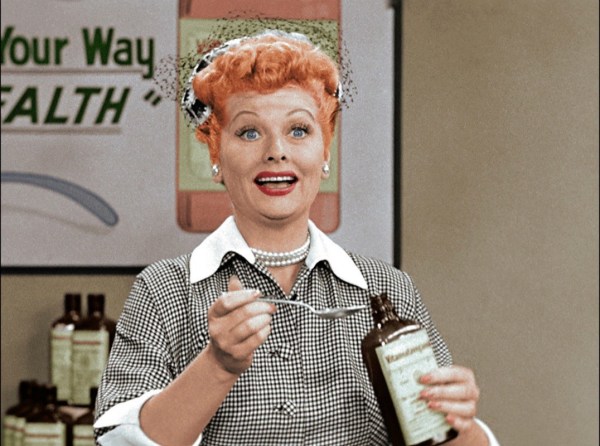

 Have you ever found yourself wishing you could go back to the carefree days of your youth? Do you remember a time when you wished you were older? We all experience desires to be an age we are not for various reasons.
 Those mid-range years of 30-50, you are working, raising kids, trying to have a life. Time flies by. They tell you to plan for retirement but seriously, when you are only 30 retirement is decades into the distance. Why worry? Spend and enjoy. By the time you reach 40 you are taking life more seriously. Retirement plans are in place and you may even dream of the distant future with ideas about how you will spend your leisurely days of retirement. Realistically you are counting the days with a mixture of excitement and dread until your children move from needing constant care to the teen years where less constant supervision is required but there is the potential for stepping onto the wrong path due to peer pressure and temptation. Then they graduate from high school, enter into college and/or the working world. Will they marry? When will they have children (your grandchildren)?
 It is a wonderful point in life. You are still young; retirement is a long way off. You can enjoy activities on a larger scale, whether it be travel, boating, fishing, extreme sports, hobbies, or any other thing that captures your attention. Life is a comfortable combination of relaxation and excitement. Some people may desire their youth, some may desire retirement, but overall it is a mid-range point in which time is flying by as you enjoy life.
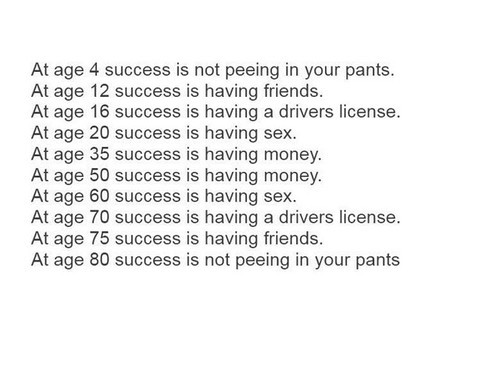

 When you are born a lover of the written word it never goes away, it just transitions over time. Writing and literature go hand-in-hand. My high school classes were filled with literature…classes in modern short stories, mysteries, American literature, Advanced Grammar and Composition, and more. When I went back to college in 2010 one of my favorite classes was public speaking because I was writing whatever I chose to talk about. It was fun!
 I write in many formats. I titled this blog Life is a Melting Pot because my life is a jumble of various activities and I like to write about whatever strikes me at the moment. This blog is not the only regular writing I do. For the past eight years I have held the position of newsletter editor of Bluewater Family Backgrounds, a publication of the St. Clair County Family History Group. As the editor I gather content and put together the entire newsletter, writing some articles that go into it. I have been writing a column called “Who AM I?” for the past five and one-half years for The Lakeshore Guardian, and local free publication. The column is on genealogy. I am in my fourth year as an opinion columnist for our local newspaper, The Times Herald. I select my topics and how often I write a column, frequently selecting topics that can be a bit controversial. Finally, my daytime job is that of Paralegal in which I spend my days doing legal writing. All of the areas in which I write are slightly different and I enjoy each one.
 I belong to a Freelance Writer’s Group and at the meetings I see a variety of people with a wide range of interests. The group includes people who write children’s stories, adult novels, travel columns, science fiction, non-fiction, memoir, and more. We all have one thing in common…we love to write! Writers are like any other type of artist, they are imaginative, creative, passionate about their art, well-read, self-promoters and self-starters. Writing is something you do solo; you have to be motivated to write or you will never succeed. Writers love words, language, and people watching. Everything is a potential story or scene. If you spend much time with a writer you may find yourself popping up in their stories, blogs, or columns. You may not be there in name, but you will likely recognize a scene in which you have lived.
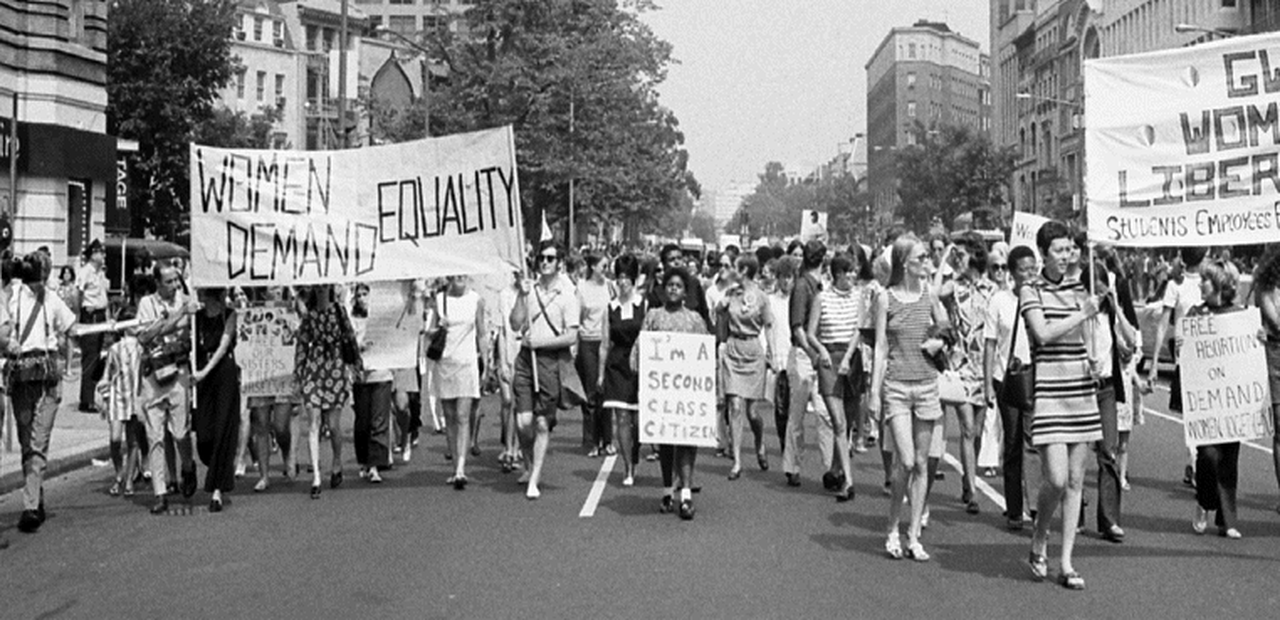
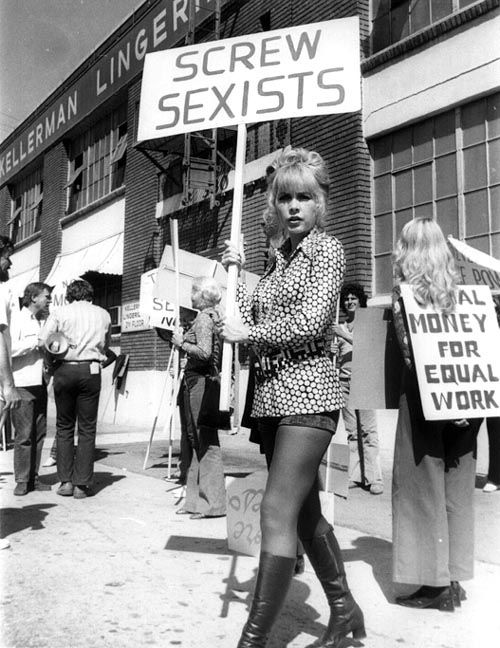
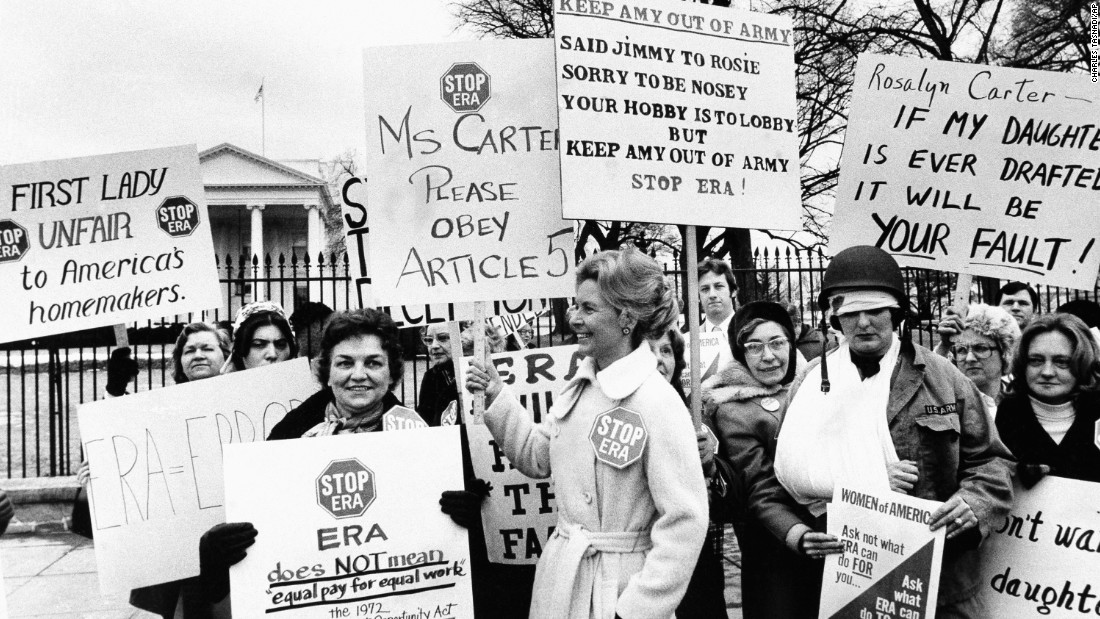 Even with all those accomplishments there was still inequality. Equal pay for equal work was not achieved in 1980. Women still held was were termed “pink collar” jobs, meaning they still held the lesser level and lower paying jobs of secretary an clerk. Women earned 57% of men’s wages; women with four years of college earn less than a man with an 8th grade education.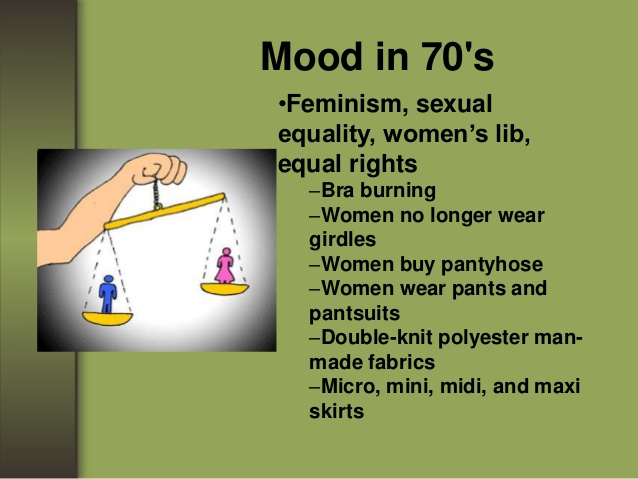


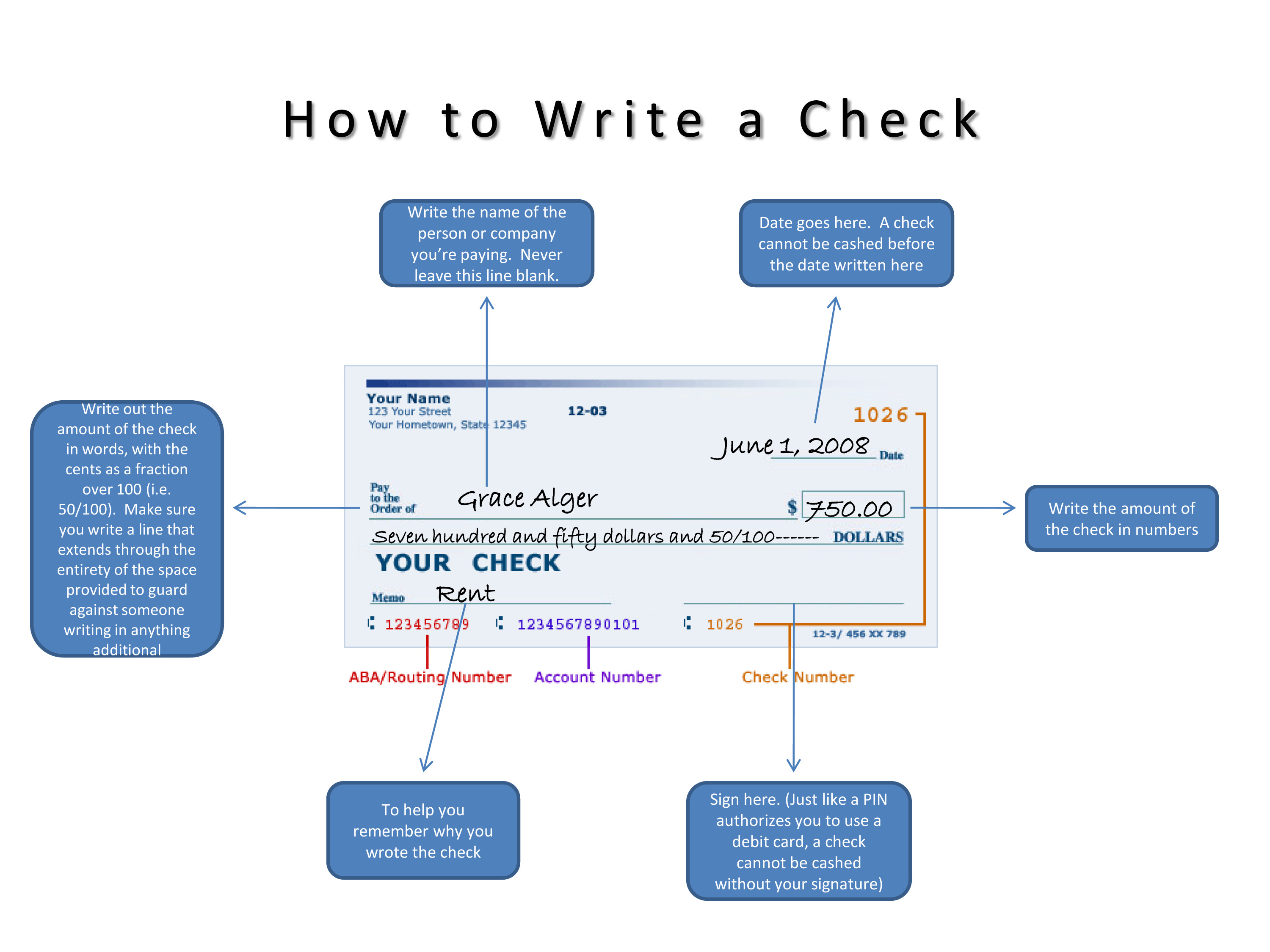







 --- LIFE IS A MELTING POT --- Grace Grogan...Writer, Photographer