Category Archives: celebration

The History of Christmas Trees and Gift-Giving

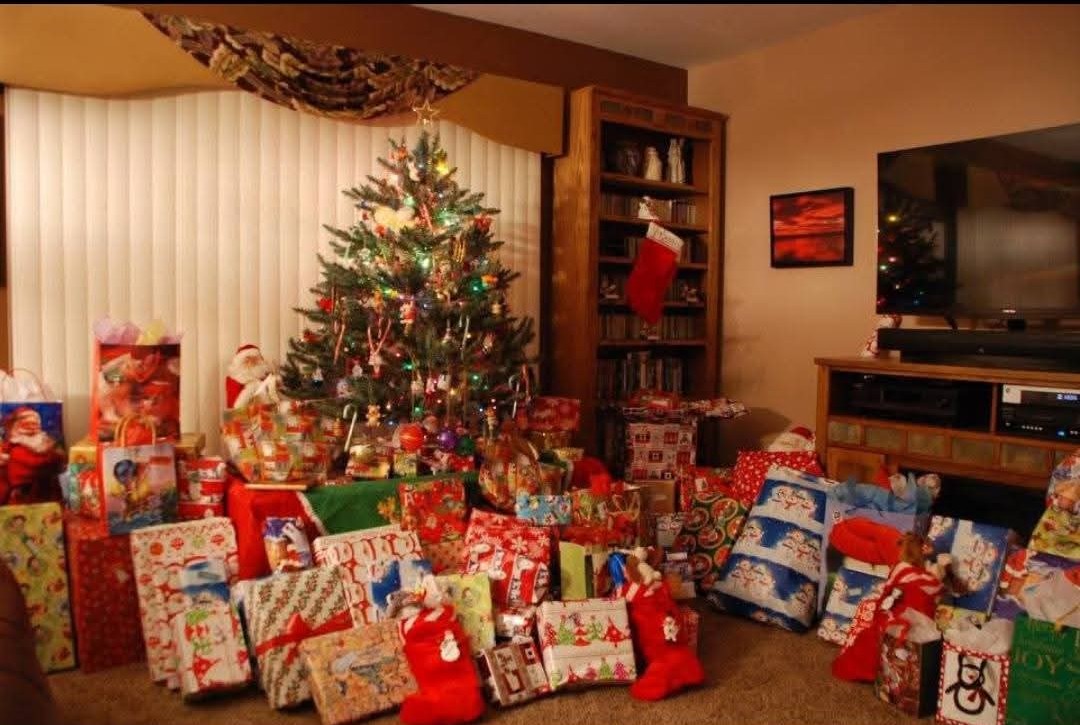
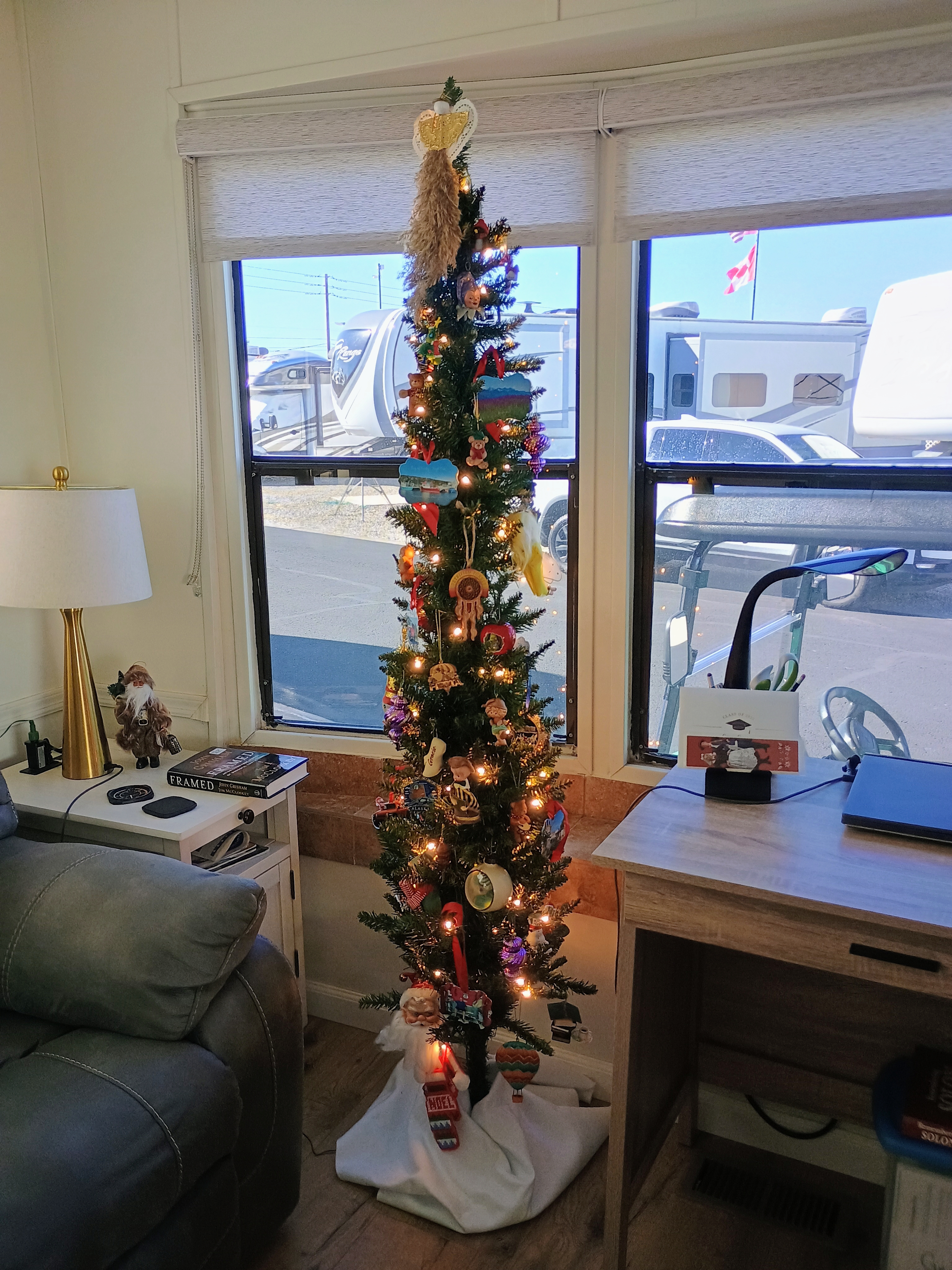
As we approach Christmas, I had a photo from 2014 pop up on my Facebook Memories feed: the tabletop tree at my house in Michigan, with presents stacked around it for the grandchildren, is a sharp contrast to my skinny pencil tree in my park model in Arizona. I love having this tall skinny tree after six years living in a 35-foot motor home with no room for a tree.

My tree this year is not laden with gifts. I miss the fun of wrapping all those gifts, stuffing the stockings, and watching the kids unwrap them. There is nothing as beautiful as a dark room with a lit tree and gifts below it, and nothing as fun as watching kids open those gifts on Christmas.

Shows writer's table-top Christmas trees and presents sitting around on the floor.
My Christmas Tree in 2014 — gifts for my grandchildren and adult children

That made me wonder about the traditions of Christmas trees and gift-giving. The act of exchanging gifts began long before Christmas and was done during the winter solstice in ancient Rome, celebrated from December 17 to 23rd. The gifts were usually small figurines called Sigillaria, made of wax or pottery and designed to resemble gods or demigods. Then, during the new year celebrations, the Romans gave gifts of laurel twigs, gilded coins, and nuts in honor of the goddess of health and well-being.

It was in the early 4th century AD (January 1, 301 to December 31, 400) that the gift-giving custom was linked to the biblical Magi delivering presents of gold, frankincense, and myrrh to the baby Jesus.  This was co-mingled with the gift-giving tradition of the 4th-century bishop, Saint Nicholas. Saint Nicholas had a habit of secretly giving gifts, and he was the inspiration for Father Christmas and Santa Claus.

In the 16th century (1501-1600), the custom of giving gifts to children developed in Europe as a way of reducing rowdiness on the streets around this time of year. Parents used it to keep children away from the streets and from becoming corrupted. These actions resulted in Christmas becoming a private, domestic holiday rather than a public holiday of carousing.

Saint Nicholas was the inspiration for the Dutch Sinterklaas, with a festival that arose during the Middle Ages. The feast was to aid people experiencing poverty, especially by putting money in their shoes. This tradition developed, and by the 19th century, it had become secularized into him delivering presents. By this time, the Santa Claus of North America had developed.

My 2025 slim pencil Christmas Tree

Now, the next question is, why do we place our gifts under a decorated tree? In ancient Rome, homes and temples were decorated with evergreen boughs for the winter solstice feast of Saturnalia. Celtics associated evergreens with everlasting life, and the Hebrews linked them with life and growth. In Han Dynasty China, evergreens symbolized resiliency, and the Norse people associated them with their sun god.

The Christmas tree tradition began in Germany in the 1500s. Evergreens were placed beside the medieval home’s entry, which grew into indoor trees covered with apples for the feast of Adam and Eve on December 24. The trees were also decorated with cookies and lit candles. Another tradition was the Christmas Pyramid, which was formed by wooden shelves that held Christian candles, figurines, evergreen branches, and a star.

The two traditions merged as the first decorated indoor Christmas tree. German immigrants brought the Christmas tree to the U.S. in the 1600s, but it did not become popular until the 19th century. What boosted its popularity was Prince Albert, Queen Victoria’s husband, who introduced Christmas trees to England in 1846. By the early 1900s, electricity made electric lights for trees possible, and they began decorating town squares.

Tree decorations began with simple, handmade items, and food was a popular decoration, with strings of berries, popcorn, and nuts along with cookies, marzipan, and apples. Mass production of ornaments, tinsel, beads, and “snow” batting in the 1900s developed into the intricate ornaments we see today.

The gifts under the Christmas tree began as small presents on the branches, but as the gifts grew larger and too heavy, people placed them under the tree instead.  

When giving or receiving a gift, remember the spirit in which the tradition developed: a representation of the Three Kings presenting gifts to baby Jesus. That tradition has become very commercialized, with U.S. consumers expected to spend $242 billion on holiday gifts in 2025.

Leave a comment

Filed under celebration, Festivals, Holidays, Life is a Melting Pot, winter

Christmas Memories

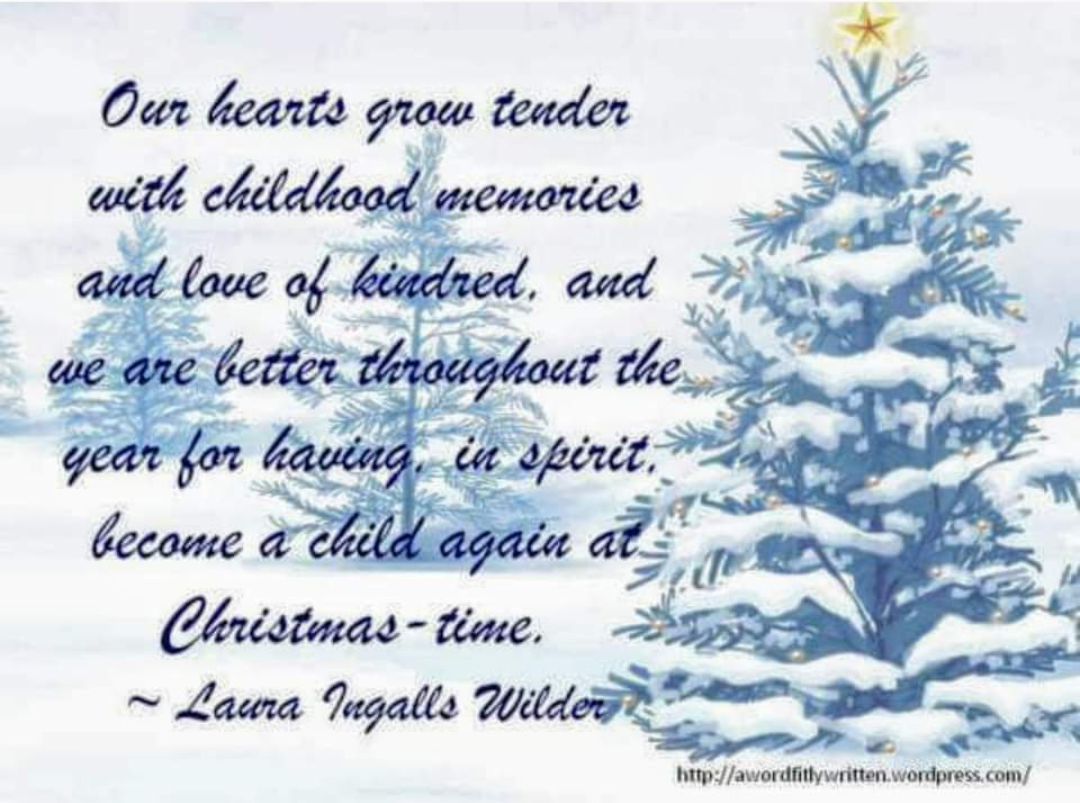
When I saw the quote from Laura Ingalls Wilder about childhood memories, it got me thinking about Christmas during my childhood. Every child should be able to experience the magic of the season—Santa Claus bringing gifts, Christmas programs at church and school, baking Christmas cookies—traditions that become so ingrained that they carry them into adulthood to pass on to their own children.

Our hearts grow tender with childhood memories and love of kindred, and we are better throughout the year for having, in spirit, become a child again at Christmas-time...Laura Ingalls Wilder
The quote that inspired this blog

Some say the holidays have changed over the years, and I know to a certain degree that is true, but some things remain the same. Let’s start with the most essential part of decorating: the Christmas tree. In my childhood, we went to the Christmas tree farm. After tromping through snow and checking out several trees, we finally selected one that met my mother’s approval. My dad would cut it down, haul it back to the car, tie it to the roof, and we drove home.

The debate over which tree to select always involved a discussion wherein my mother didn’t think it was tall enough or full enough, and my dad claimed it was too large and wouldn’t fit. We wouldn’t know for a while because we usually purchased it early in the month. The tree went into a bucket of water in the garage to keep it from drying out until a week before Christmas. That is when it was carried into the house and placed in the stand. Dad usually had to cut more off the base for it to clear the ceiling. One year, my mother kept thinking all the trees were too skinny. The one we brought home was so big around it took a massive chunk out of the living room.

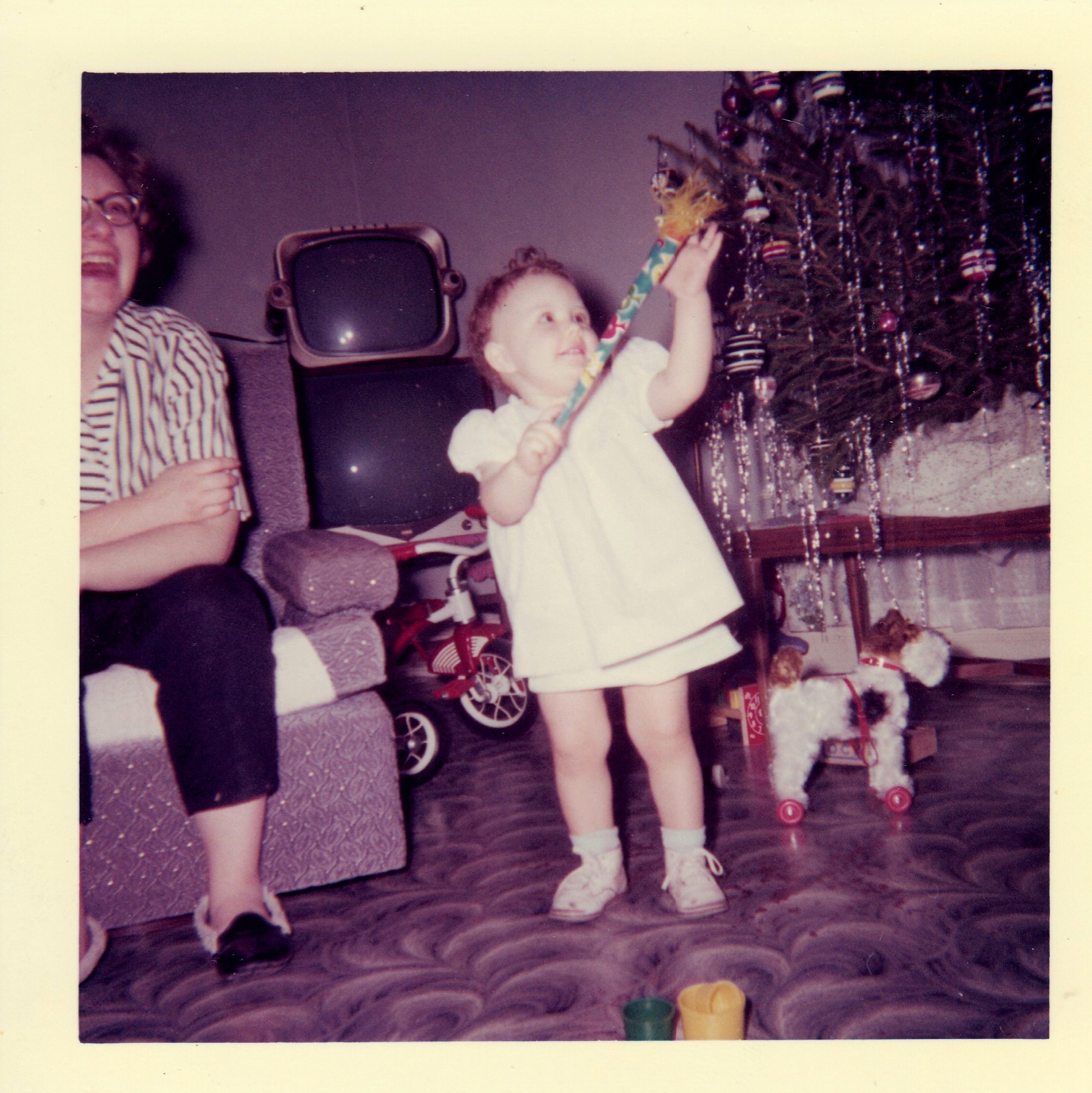
Author at Christmas, age one
The author and her mother at
Christmas, age one

My mother always insisted the tree sit in the living room for 24 hours to let the branches drop before we began decorating. The large, hot lights were strung on before we hung ornaments. Ornament placement was a procedure taught by my mother. Stand back from the tree and look for a spot needing an ornament. Once all the ornaments were on the tree, the garland and tinsel were applied. The trees of my childhood had a lot of sparkle, but the ornaments couldn’t be easily seen through all the add-ons.

Eventually, we went to an artificial tree, which allowed us to put it up earlier, and there wasn’t a rush to get it down after the holiday due to dry, dropping needles. That brought a switch to the small, cool bulbs, and we eliminated garland and tinsel. Now, our ornaments were easily seen, which, over time, I grew to prefer. Photos of trees with tinsel still make me smile with memories of days gone by.

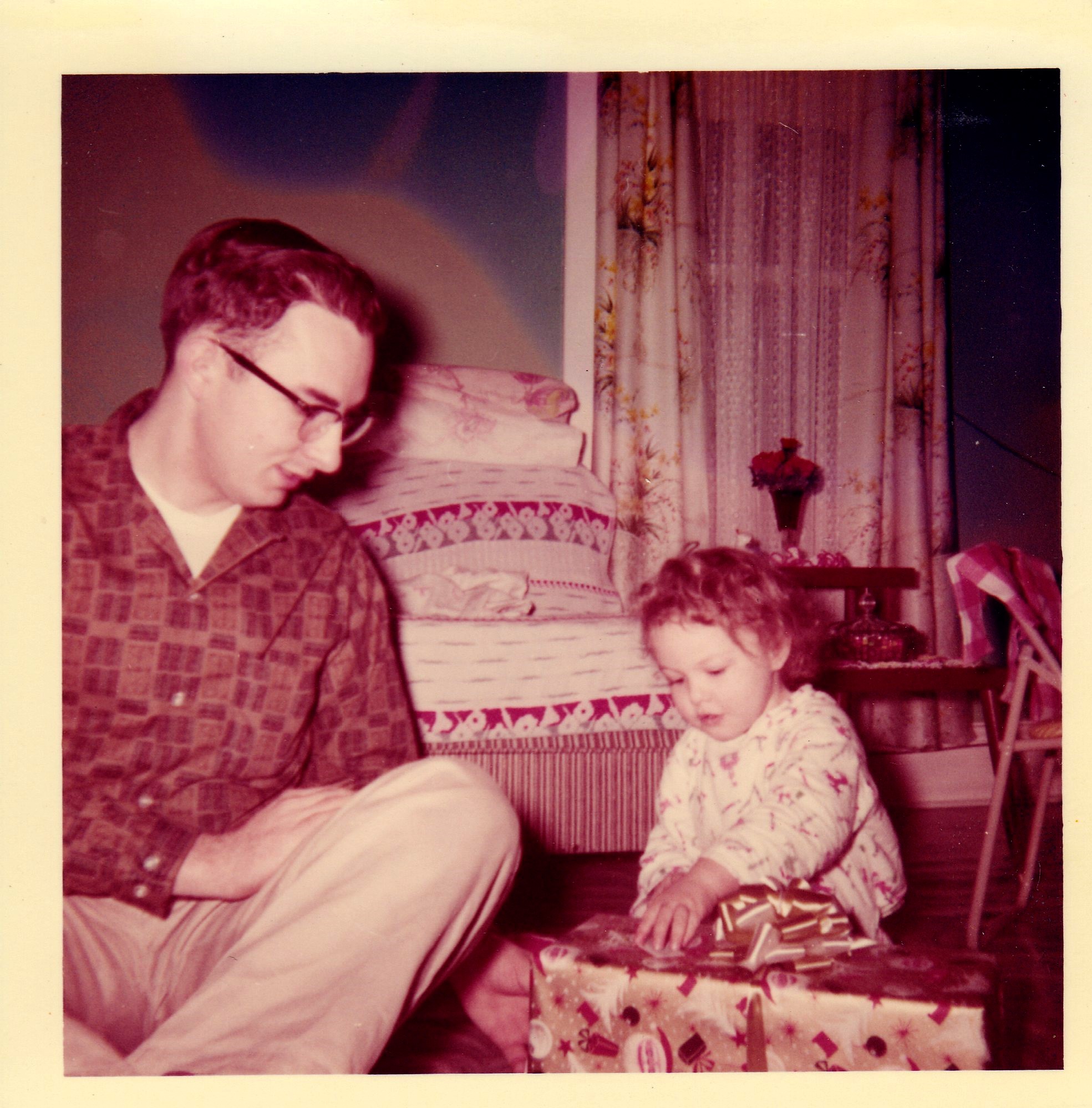
Author as a toddler with her father on Christmas

When Hallmark began their yearly dated ornaments, my mother started a tradition of purchasing a dated ornament each year for my sister and me. When I married, I had a wonderful collection of ornaments for my tree. I continued the tradition with my own children and now my grandchildren. Although I sold most of my ornaments in an estate sale when I left my home to live and travel full time in a motorhome, I have been buying some ornaments, plus making photo ornaments of places I visit. Someday, when I stop traveling, I will once again have a Christmas tree and decorate it with my travel memories.

My mother did not enjoy baking, but every year, she made sugar cookies cut into shapes for my sister and me to decorate. As a child, I loved the red cinnamon candies, so I used them for the bell clappers, reindeer noses, and plenty when decorating Christmas trees. When my kids were little, we also decorated sugar cookies, and they were also heavy-handed with red cinnamon dots. To this day, I love sugar cookies, especially at Christmas time.

Author at Christmas, five years old
Author on Christmas, age five.
Notice the tinsel on the Christmas tree

While I don’t have a lot of other Christmas tradition memories, we always went “up north,” meaning to Traverse City, Michigan, to visit both sets of grandparents during the holidays. We stayed with my maternal grandparents and would go to the tree lot to purchase and decorate a tree for their house. One year, my dad laid the tree we bought between the snowmobiles on the trailer. As he was driving, he suddenly realized the tree was missing! We never found it as we returned to the tree lot; the guy running the lot gave us our next tree for free. I remember my dad saying he hoped whoever picked it up couldn’t afford one.

When it comes to childhood memories, who can forget the splendor of seeing the tree on Christmas morning with all the gifts below it and stockings full of goodies. The beauty of the gifts sparkling under the lights, the anticipation of what is inside each wrapped package that Santa brought. That is the magic of Christmas, the memories of childhood.

As an adult, it is the anticipation of seeing your child’s face when they experience the season’s magic and the pleasure of knowing you made it possible. That is because Santa lives in every one of us; we create the magic.

Let me here about some of your magical Christmas memories in the comment box below.

Leave a comment

Filed under celebration, children, Family, Holidays, kids, Life is a Melting Pot, memoir, winter

How Wedding Traditions Came to Exist

An average of 2.4 million weddings occur in the U.S. annually, or about 5,000 per day. When planning a wedding, most couples incorporate several traditions, including a wedding shower, an engagement party, the father giving away the bride, tossing the bouquet, going on a honeymoon, and more.

Have you ever wondered how these traditions came to be? I was surprised to learn that many derive from superstition, monetary transactions, and the transfer of female ownership. Once I started reading about these traditions, I wanted to know more. The list is long, so I’ve made it easy to skim down and find the practices you are curious about. I hope you end up like me, wanting to learn about them all.

Engagement Party— In ancient Greece, the engagement party was a financial contract between the bride’s father and the man she would be marrying. The bride was not present during the business agreement. An ordinary party was held by the bride-to-be’s father, during which the bride’s father would announce his daughter’s engagement to everyone in attendance. The bride was often just as surprised as the guests to learn she was to be married. Marriages were not based on love until the late 1700s, and even after that time, arranged marriages continued. In some cultures, they still exist today.

Dowry—The original purpose of a dowry was for the groom to compensate the bride’s family for losing her labor and reproductive potential. Sometime before the Ancient Roman period, the custom reversed, with the bride’s family giving a dowry to the new husband’s family to help support her and the expense of setting up a new household. It is believed that the modern tradition of the bride’s family paying for the bulk of the wedding is an evolved practice that replaces the dowry system.

Engagement Ring—This tradition goes back to ancient Rome, when women would wear a ring of bone, copper, flint, iron, or ivory to signify a business contract or that an affirmation of love and obedience had been made. This was derived from the ancient Egyptian practice of using a ring of hemp or reeds to signify eternity.

It was in 850 CE when the official purpose of an engagement ring was introduced by Pope Nicholas I. He declared the ring to represent a man’s intent to marry. Although rings adorned with diamonds were not popular until the 1940s, the first diamond appeared on an engagement ring in 1477. That is when the Archduke Maximilian of Austria proposed to Mary of Burgundy with a stone setting in the shape of the letter M.

In the 15th Century, gimmel rings served the purpose of engagement. This set of three rings was used, with the bride and groom each wearing one ring during the engagement. On the wedding day, the two bands were connected with the third, and all were worn by the bride as her wedding set.

Diamond engagement rings became popular and ornate during Victorian times because of Queen Victoria’s love of diamond jewelry. Although diamond engagement rings have been in the U.S. since 1840, they did not gain popularity until 1947. That is when the British company, De Beers, was mining diamonds in South Africa and launched an advertising campaign, “A diamond is forever.” This sales ploy skyrocketed diamond sales for wedding engagement rings.

Bachelor Party—The bachelor party dates to the 5th century B.C. when ancient Spartans devised a celebration of the groom’s last night as a single man. The term bachelor meant a young knight or student with a bachelor’s degree and first appeared in Canterbury Tales in the 14th century.

The term bachelor party was first used in 1922 in a Scottish publication, meaning a “jolly old party.” The modern parties were traditionally black-tie dinners hosted by the groom’s father to honor and toast the groom. They did not become the current parties of beer, strippers, and drugs until the 1980s.

Popular Saying—The traditional saying about what a bride must wear on her wedding day is based on a 19th-century Old English rhyme in Lancashire. There is a reason behind each item in the phrase:

Something old— traditionally a personal gift from the bride’s mother, usually symbolizing wisdom for married life.

Something new—symbolizes the establishment of a new family created by the marital union.

Something borrowed—by borrowing something from a happily married woman, the bride is borrowing marital bliss to carry into her new union.

Something blue—The robes of pagan Roman maidens had blue trim on their borders, symbolizing modesty, fidelity, and love. For Christians, blue symbolizes the purity of the Virgin Mary.

And a sixpence for your shoe—often left out of the rhyme, and the British coin is no longer in production. The purpose was to bring prosperity to the newlyweds. 

Bridal Gift Registry—This was started by a Marshall Field’s store in Chicago in 1924. It was a marketing pitch that allowed brides to select their fine china and silver for the big day. This successful advertising campaign soon gained popularity throughout the county, with many businesses expanding on the idea to include other items the newlyweds would need.

Bridal/Wedding Shower—Showers date back to 16th century Holland. The bridal shower is a dowry alternative that began when a bride’s father was too poor to provide a dowry. It was also held if the bride’s father opposed the union.

The tradition is based on a Dutch story about a high-society girl falling in love with a poor miller’s son. The girl’s family objected because of the miller’s low class, but she insisted on marrying him. The girl’s father said he would withhold her dowry as punishment for her refusal to marry the wealthy pig farmer he chose for her.

To help the couple in their misfortune, the bride’s friends showered her with gifts as a dowry substitute. Touched by the generosity of his daughter’s friends, the father finally agreed to the marriage. This began the tradition of a bride’s family and friends showering her with gifts before a wedding.

Bridal showers grew in popularity in the U.S. during the late Victorian era. Upper-class society ladies saw them as an opportunity to celebrate, gossip, and exchange gifts, thoughts, and food for the bride-to-be. Gifts were usually modest, simple, useful household goods the bride would need in her new home, including bed linens, kitchen items, China, and more. By the 1930s, the tradition had extended to middle and lower-class families.

A bridal shower is thrown for the bride and traditionally attended only by females. A wedding shower is a modern version of the shower. It is thrown for the couple and includes the groom in the party and opening of gifts. Guests may also be mixed gender.

Rehearsal Dinner—The dinner may be an evolution of an event that occurred hundreds of years ago when attending a wedding meant days of travel. The night before the wedding, the manor house, castle, hut, or tent would be packed with friends, relatives, and emissaries needing to be fed. Out of necessity, a meal would be held the night before the wedding. This was also wrapped in superstition. The belief was that if those attending the dinner were loud and rambunctious, they would scare away evil spirits trying to destroy the couple’s chance of having a happy life.

Today the rehearsal dinner follows the wedding rehearsal. I couldn’t find anything about when wedding rehearsals began, which appears to be strictly an American tradition. Rehearsals may have begun as wedding parties grew, allowing everyone to become familiar with exactly what would occur during the ceremony to hopefully prevent any glitches.

Not Seeing the Bride Before the Wedding—Before the 18th century, pre-arranged marriages were common. It was considered unlucky for a bride and groom to see each other before the wedding because the groom might back out of the arrangement if he saw the bride-to-be and didn’t like her appearance. This is also one reason for the veil.  

Bridal Veil—The veil establishes that a woman is spoken for and disguises the bride so evil spirits wishing to harm the couple will not recognize the bride. It also was a way of securing the marriage contract. Many brides and grooms met for the first time on their wedding day at the altar. The veil was only lifted after the ceremony, so the groom could not back out of the wedding if he didn’t like his wife’s appearance.  

Giving Away the Bride—This practice dates back to when women were the property of men.  Women were unable to live independently of men, could not own property, have a job, or inherit money. They belonged first to their fathers, then their husbands, and if their husband died, their sons.

By walking his daughter down the aisle and giving her in marriage, the father transferred ownership of his daughter to her new husband. This dates back to when an engagement was a business transaction, not an act of love between two people. By being at the wedding ceremony and presenting his daughter in marriage, the father ensured the wedding would take place, fulfilling his part of the agreement.

Wedding Ceremony and Vows— God established marriage in the garden with Adam and Eve based on a covenant promise in Genesis 2:24, which defines marriage as joining two into one. The traditional wedding vows we are familiar with are not in the bible but are based on biblical principles.

The first recorded evidence of a marriage ceremony uniting a man and woman is around 2350 B.C. in Mesopotamia. Over several hundreds of years, marriage evolved into an accepted union by Romans, Greeks, and Hebrews. The primary purpose was to bind women to men, guaranteeing that a man’s children were his biological heirs. The father would hand over his daughter and say, “I pledge my daughter for the purpose of producing legitimate offspring.” If a wife failed to produce offspring, her husband could give her back and marry someone else.

The first mention of marriage vows was in a prayer book from the Medieval Church in England, written in 1549. The book has marriage vow examples that modern vows have incorporated. If you would like to learn more about the different areas of traditional wedding vows and where in the bible they stem from, check out this article on Wedding Wire.

Wedding Rings—Ancient Egyptians were the first to exchange rings made of braided reeds and hemp. They placed them on the fourth finger of the left hand because of their belief that a ‘vein of love’ ran from that finger to the heart. The circle of the ring also was symbolic of an endless circle of eternal love with no end, the promise of bonding forever.

Ancient Romans and Greeks wore rings of ivory, bone, or leather. Wealthy people began creating rings of gold and silver for their marriage commitments. Romans believed the left hand to be unholy and untrustworthy, so they placed their wedding rings on the right hand. The right hand serves as a symbol of loyalty, honor, and trust. Today there are about 20 countries where married couples place their rings on the right hand.

The first diamond wedding ring was recorded in the will of a widow who died in 1417. The oldest surviving diamond ring is from the late 100s CE in Rome when diamonds were valued for their harness rather than brilliance.

Men’s Wedding Rings—Wedding rings for men didn’t become popular until WWII. It was then soldiers wore them as a way to remember their wives back home. Many of the weddings in 1942 were quick, taking place within a week of the announcement because of a soldier being deployed.

The tradition of soldiers wearing wedding rings continued through the Korean War. The practice eventually caught on for non-soldiers as well.

Bridal Party—While the purpose of the bride and groom is clear, why do we have all the other members of the bridal party? What was their original purpose?

BridesmaidsIn ancient Rome, bridesmaids protected the bride. They would all wear the same dress as the bride to confuse evil spirits and prevent them from finding the bride. This prevented the couple from being cursed on their wedding day. Roman law also required ten witnesses to every wedding, so there would be five bridesmaids and five groomsmen.

GroomsmenDerived from an ancient tradition of kidnapping a bride, a man would employ his friends to help him fight other warriors and prevent the bride’s family from finding the couple. Because weddings were a business transaction rather than a union of love, the groom needed an excellent swordsman to retrieve a runaway bride or fend off a bride’s angry family not approving the marriage. The term Best Man referred to the quality of a man’s swordsmanship, and the groom’s main warrior companion was the equivalent of today’s best man. 

Flower GirlIn ancient Rome, a young virgin would carry sheaths of wheat, believed to bring well-being and good fortune to a newly married couple. Over time the sheaths of wheat were replaced by flowers scattered along the bride’s path to the altar.

Ring BearerIn Victorian times, a pageboy would carry the bride’s train down the aisle, along with a prayer book. During this time, Victorians began displaying the ring on a small pillow to show their wealth. Pillows were expensive, luxury items that only the elite members of society could afford. Over time, the pageboy carried the ring pillow down the aisle. That tradition evolved into today’s ring bearer.

Witnesses to the Wedding—Ancient Roman law required ten witnesses to be present at a wedding. At that time, the legal witnesses were all men, but the bride was also escorted by female attendants. Not only did witnesses watch the marriage ceremony, but they also witnessed the consummation of the couple on their wedding night.

Yes, the newlyweds had sex in the presence of witnesses. This was usually done with the bed curtains closed and the observers on the room’s outer edges. If the marriage was not consummated, it could be declared null and void, and the couple granted an annulment. The witnesses were present to confirm the couple had sex, forming an unbreakable union. In modern times, witnesses only have to sign a marriage license as confirmation that a couple has legally married.

Unity Candle – The unity candle became popular in the second half of the 20th century in American Christian weddings. This is attributed to a 1981 General Hospital episode where a couple used a unity candle. The candle symbolizes the merging of two individuals, creating a blended family.

Sealed With a Kiss—This tradition began in Ancient Rome when marriage was a contract. Instead of signing your name, you confirmed your commitment to the agreement with a kiss. It was believed that by binding the marriage with a kiss, the couple exchanged spirits, sending part of themselves into their spouse, binding them as one. 

Bridal Bouquet—Ancient Greeks and Romans carried aromatic herbs, garlic, and grains to drive away evil spirits and bad luck during the wedding. Floral garlands the bride and groom wore symbolized a new beginning and hopes of fertility, fidelity, and happiness. Some bouquets included rosemary for loyalty, wheat for fertility, ivy for an unbreakable bond, heather, thistle, thyme, or basil for protection, and dill as an aphrodisiac. Carrying aromatic flowers was also a way for brides to mask their body odor before frequent bathing was practiced.

Bouquet Toss—Tossing of the bridal bouquet dates back to 14th century England when unmarried women tried to rip off pieces of a bride’s dress or flowers to gain some of her good luck, hoping to become the next one married. The bride would toss her bouquet into the crowd and run for safety to prevent being mobbed. 

By the 1800s tossing the bouquet became a wedding tradition, with single women wanting to catch the bouquet as a sign of good luck for their future marriage. At that time, marriage was the only way a woman could bring her family out of poverty.

Garter Toss—Garters were originally a necessity, holding up the stockings of both men and women. The toss dates back to the same safety problem in England and France when guests would try to rip off a piece of the bride’s clothing for luck. To protect his bride, the groom would take his new wife’s garter and throw it out into the crowd, and the couple would escape.

Receiving Line—I couldn’t find any information on when this practice began and assume it was a tradition before wedding receptions were a standard part of weddings. The receiving line immediately after a wedding is the couple’s first opportunity to “receive” guests as a married couple. The line usually includes the bride and groom, their parents, and members of the wedding party. It provides each guest a moment with the newlyweds to offer congratulations. It also ensures that the couple can personally thank each of their guests for attending.

Reception—Wedding receptions were not frequently held until the early 1960s. Before that time, if a reception was held, it was usually a casual affair at the home of the bride’s parents with cake and punch.

Carry Bride Over Threshold— This tradition goes back to ancient Rome when the groom dragged a bride unwilling to leave her parent’s over the threshold of her new home.

In medieval Europe, it was believed that brides were vulnerable to the invasion of evil spirits through the soles of their feet. To protect his new wife, the groom would carry her through the front door.

Later, it was believed that if a bride tripped entering her new home, it would bring bad luck to the marriage. The groom carried his new wife across the threshold to prevent her from tripping.

Tying Cans to Car Bumper—This custom dates back to sixteenth-century France and early twentieth-century Appalachian customs. The idea is to harass newlyweds on their wedding night through a noisy celebration with friends and neighbors banging pots and pans, singing, and making noise outside the couple’s window.  Eventually, the newlyweds would invite everyone in for refreshments.  It is believed that tying cans to the back of a newly married couple’s vehicle is an adoption of the noisy shivaree.

Wedding Dances—Many wedding party dances are popular, and I wondered how they all came into existence.

The First Dance dates back to 17th-century Europe when formal balls were popular. It was customary for the guest of honor or person of the highest social status to lead the first dance. This led to the tradition of a married couple having their first dance at a wedding.

The dance is the couple’s first cooperative and joint endeavor, symbolizing the consummation of the wedding. Their manner of dance, expression, and steps reveal the harmony between the bride and groom.

The Father-Daughter Dance dates back to when marriages were arranged as a monetary contract rather than love. The father-daughter dance was a final demand of the bride’s father on his daughter before her husband became the most important man in her life. After the father-daughter dance, the bride could dance with her new husband, whom she had likely just met. 

In modern society, the father-daughter dance usually occurs after the bride and groom have first danced together. It now symbolizes the bride’s love and appreciation of her father.

The Mother-Son Dance is a modern addition to a wedding reception. It is comparable to the father-daughter dance and allows a groom to show his love and appreciation for his mother.

Bride Changing Last Name—The practice of a woman taking her husband’s last name dates back to the Middle Ages when societies were becoming organized. Under English common law, women were barely acknowledged and had no legal rights. The concept of coverture was the basis of a woman taking a man’s last name in marriage. Coverture was the legal status of a married woman. Because women had no legal identity, coverture placed them under their husband’s protection and identity.  

Women were under the control of their fathers and then their husbands. They had no legal ability to make contracts, own a business, or own property. They had no legal rights to their possessions, clothing, children, or their bodies, and marriage rape was legal. If their husbands sent them out to perform labor, the husband collected the wages.

Within the U.S., the first break in coverture took place under the Married Women’s Property Act of 1848. Over time that act underwent amendments so that women could eventually attend school, obtain driver’s licenses, work, and vote. It took a long time for women to gain rights. Women in the U.S. could not get a driver’s license, passport, or register to vote if they didn’t take their husband’s last name. Marital rape did not become illegal until the 1970s.

Though no longer legally bound to take their husband’s last name, about 70% of women follow the tradition. This makes it easy for a married couple and their offspring to show daily unity.

Wedding Cake—In ancient Rome, wheat cakes were broken over a bride’s head to promote fertility. It later became customary to stack the wheat cakes on top of each other, and the bride and groom were challenged to kiss over the tower without knocking it over. If successful, they would enjoy a life of good fortune.

In modern times, white cake symbolizes purity.  The joint task of the bride and groom cutting the cake represents their first joint task of married life, and feeding it to each other symbolizes the commitment they are making to each other.

Saving the top layer was originally for use at their future child’s christening. The bride was expected to be pregnant within the first year of marriage. The top layer is now used to celebrate the couple’s first marriage anniversary.

Tie The Knot—Handfasting dates back to ancient Celtic times and is a spiritual ritual of tying a bride’s and groom’s hands together during the wedding ceremony. The phrase “tying the knot” stems from binding the couple’s hands together during this ceremony with colored cords to symbolize their union of love.

For a three-cord handfasting, the colors of white for purity, blue for fidelity, and red for passion were braided together. Other colors include green for fertility and growth, purple for spiritual strength, and gold for wisdom.

The couple’s hands are not released until the marriage is complete. In modern times, a couple says their vows while bound together, then finish the ceremony with rings. Historically, the binding remained in place after the wedding ceremony, and the couple was escorted to the bedchamber to consummate their union. It was believed that if the couple survived the day bound together, they would survive their marriage together.

Throwing Rice—Marriage was traditionally seen as a way of building a family and increasing a person’s assets. Ancient Romans often threw wheat or oat seeds, which meant the birth of new life. The change to rice was likely because it was often available and low cost. Whichever grain was used, it symbolized fertility and prosperity. Tossing grain over newlyweds signified good luck and best wishes toward producing babies and good harvests.

Honeymoon—The term honeymoon dates back to the 5th century when the calendar was represented in moon cycles. After marriage, a couple would drink mead, an alcoholic beverage made from honey, during their first moon of marriage. Drinking the fermented honey liquor under the moon was believed to boost fertility and increase the odds of producing children early in the union.

The American honeymoon tradition dates back to 19th century Great Britain when relatives could not always attend the wedding. The newly married couple would travel by train and carriage to visit those unable to attend. This was called a bridal tour and often lasted for weeks or months.

Not Married? Be glad it isn’t 1860 to 1880 when the term Spinster was used to describe women who never married. During that time period, eleven percent of the American female population didn’t marry. This was probably because of the Civil War, which killed 600,000 men.  It was during this period that women began obtaining a college education. The male opinion was that a female college graduate would be a poor homemaker.

Were you surprised at how many traditions deal with monetary transactions, ownership of women, and superstition? Let me know what you think in the comments below.

Leave a comment

Filed under celebration, events, Family, habit, impressions, Life is a Melting Pot, marriage, time

Hindsight is 2020

While the age-old saying about hindsight being 20/20 is often used, the roll-over of the new year gives it an entirely new meaning. Regardless of what you personally think of the past year, there are likely some choices you would have made differently. This is true for any year, but especially given the horrific one we had.

Are there thing I would have changed?  Not many. I would not have remained in Yuma throughout the summer; day after day of 115 degree heat is too much! The choices we made kept us healthy, except for a couple rounds of illness I had in the middle of the summer so it was not a bad choice either.

I regret not getting back to Michigan to see my kids and grandchildren. Michigan was a roller coaster ride of what the Governor was going to keep open or shut down from week to week, so we decided not to risk it. We are looking forward to our upcoming travel plans.

While death, disruption, loss of income, and depression are what many will likely recall when they think back on the past year, there are also some positives that should come to the forefront:

  • More time together with your spouse/partner/significant-other or any other name you call the person you reside with
  • More time to do gardening, crafts, hobbies
  • Homemade food, especially baked goods became a normal day of life for many
  • Kids enjoyed being home with their parents and having more family time
  • Truly learning what your kids are studying in school if they were doing remote learning
  • Less air pollution from traffic meant cleaner air to breathe
  • Many people learned how easy and convenient it is to work from home
  • Companies may now decide to lower their overhead by having more people work from home on a regular basis
  • Everyone has become more tech savvy thanks to Zoom, Jitsi Meet, and Google Meet
  • Those who reside too far away to attend club meetings were brought “into the loop” through online meetings
  • Vacation doesn’t mean you have to travel far

As for me, I’ve spent my time writing, processing photos and videos, and have taken a real liking to adult coloring books.

Whatever the things are that stay-at-home orders and Covid-19 brought to you, remember hindsight is 2020 and you can now envision a bright future in 2021.

HAPPY NEW YEAR!

Leave a comment

Filed under Activities, career, celebration, children, communication, Coping, decisions, Discoveries, employment, Family, freindship, friends, friendship, grandchildren, hobbies, home, Illness, kids, Life Changing, Life is a Melting Pot, memoir, parents, play, reality, school, time, travel

Celebrating Traverse City’s Centennial 1947

I have always liked this photograph of my paternal grandparents, Louise Elizabeth (Lautner) King and Dominick King. They are wearing period dress for the celebration of Traverse City’s Centennial celebration in 1947. The photo made me wonder what the celebration and Traverse City were like in 1947. 

My grandmother was 35 years old, and my grandfather 44. They were the parents of three boys; my father was the youngest and would have been 5 years old that summer. Did they dress the boys in period outfits too?  I’ve never seen any photos to indicate they did.

Traverse City did not hold its annual Cherry Festival in 1947 because of the Centennial festivities. The majority of men in the area grew a beard in honor of the celebration. This photo is the only one I have ever seen of my grandfather with a beard.

Instead of having young “glamour girls” honored with the title of parade queen, the Traverse City Historical Society was assigned the task of finding an honorary Queen of the Centennial. The queen was to be someone who had lived in the area a lengthy amount of time and could portray the pioneering spirit of the celebration. I did not find anything to indicate who was awarded this honor. The only link I could find indicating information on the celebration required payment of a newspaper subscription and I chose not to.

For the Centennial at least three parades were planned. A children’s parade and pet parade on July 2nd, followed by the big parade on July 3rd. The big parade was planned as a purely historical parade. It was to be divided into sections with each segment portraying an episode or period in the history of the Traverse City community. It was to include floral floats, marching groups, old vehicles, Indians, lumberjacks and other items relative to the pioneer history.

Unable to locate information on the actual celebration, I decided to see what I could find out about the “period” clothing my grandparents are dressed in. The clothing my grandfather is wearing appears to be a tailcoat, which was squared off at the waste in front and cut into long tails at the back. Tail jackets were in style in the 1840’s, and it was fashionable to wear the jacket with lighter colored trousers, so it would have been fitting for their period costume.

The dress my grandmother is wearing is of a style I could not locate. I did find that synthetic dies had led to bright wild colors in clothing, though I don’t believe prints were generally used. Low sloping shoulders and bell-shaped skirts were in fashion, moving into a Gothic Revival style. Another article stated that a long-wasted bodice, narrow sleeves, and a full dome-shaped skirt that skimmed the floor were in style.

Because I could find nothing that resembled the dress my grandmother is wearing, I wonder if it were perhaps something she obtained from an older family member or friend, or whether she obtained a pattern and sewed the outfit on her own.

A Bit of History

In 1847 Traverse City was a small community which originated because a Reverend was looking for a place to settle with his family. The Reverend settled on the banks of the Boardman River. Traverse City remained an outpost until 1864, when the first road was built through the forest to the settlement.

In 1851 one of the owners of the Hannah, Lay & Co. Mill went to Washington DC and requested the new settlement have a post office called the Grand Traverse City. Because at that time Old Mission had a Grand Traverse Post Office, they shortened the name to Traverse City. In 1872 the railroad connected Traverse City to Grand Rapids.

Traverse City has been listed as the second best small town for travelers to visit in the United States. Each July during Cherry Festival, more than 500,000 people visit the town.  The festival was first held in 1926 and now features about 150 events and activities, 85% of which are free.

Between the festival, tourism and having some of the best wine in the Midwest, resident population in Traverse City is now around 15,785.

I have a lot of family history in Traverse City, and my grandmother’s ancestors were some of the original settlers to the area. I am glad she and my grandfather were able to participate in Traverse City’s Centennial Celebration held 73 years ago.

Leave a comment

Filed under anniversary, celebration, Family, Festivals, Life is a Melting Pot, memoir, Michigan, summer, time, tourism

MERRY CHRISTMAS

Well, we arrived seven days late, had to cancel a planned 5-day stop between South Padre Island and here, but have finally arrived in sunny Tucson, Arizona.  In a way it doesn’t feel like Christmas.  There is no snow on the ground, the average temperature is around 65 during the day and upper 30’s at night.  I have a meager supply of Christmas decorations which I was finally able to put out upon our arrival, but it just doesn’t have the Christmas feel I am used to.

One thing we will remember in the future, when traveling and doing a quick overnight in a Walmart parking lot, the lot is very busy and very full on the last Saturday before Christmas!  The one we stayed at in El Paso, Texas had a Texas Roadhouse restaurant within walking distance, so we did have a good, but very noisy dinner.  Shop-till-you-drop shoppers get hungry!

The positive side is the KOA campground we are in has citrus trees on every site and while staying here you are welcome to walk around and pick whatever fruit you can use.  Yesterday I went out and picked a couple grapefruit, four oranges and about five lemons (I’m going to make old-fashioned lemonade).  Boy is fruit fresh off the tree way better than store-bought!

Cactus with Christmas Hats

Photo found on internet

As Murphy’s Law would have it, we arrived Sunday in a city that has 360 days of sun per year.  Today, Christmas Eve, it rained a good portion of the day and is forecast to rain again this evening, and then again tomorrow.  Thursday should be partly sunny, and then rain is predicted for Friday and Saturday.  Go figure I would get four of the five days of yearly rain almost immediately upon arrival.  On a positive note, the remaining 98 days I will be in the this state should be bright and sunny.

My Christmas Eve has been quiet, as will Christmas Day tomorrow.  I will miss having my kids and grandchildren coming to the house to open gifts.  The noise, chaos, and mess as gifts are opened and paper strewn around are what makes the holiday.   The positive is that I do not have to deal with snow, ice, or bitter cold.  Everything has a negative and a positive.

Whether you are experiencing Christmas in a winter wonderland or a tropical paradise, I wish you and your loved ones a very Merry Christmas.


Leave a comment

Filed under celebration, children, Coping, events, Family, Full-Time RV, grandchildren, Holidays, Life is a Melting Pot, reality, travel, vacation, Weather, winter

Celebrate the Positive!

So here we are, ten days into the New Year.  What will it bring?  Has it been a good start?  What about resolutions?  Were they made?  Have they been broken?

My year started out in a variety of ways.  On New Year’s Eve my daughter and her family were driving north to visit family when she hit black ice and rolled her vehicle twice, ending up in the ditch.  The three children, ages 4, 8, and 12, were fine, as was her boyfriend.  My daughter slammed her elbow into the driver’s window and needed stitches, and she had a couple scratches on her face, but other than that no serious injuries.  Unfortunately the vehicle was totaled, and she only had PLPD insurance, so they are down to a single cab pickup with a family of five.  celebrate-small-success1

Here is where viewpoint is important.  Is it horrifying that they rolled….well, yes, the outcome could have been far worse.  Should everyone be upset that they are without a car and don’t have the ability to purchase another?  Of course that is a dilemma that must be dealt with.  However, the overall important thing is that no one suffered any severe, life-altering injuries, especially the children.   So, with that we can say that their New Year got off to a good start.  They came through a scary, dangerous accident without anyone being seriously hurt.   Celebrate the positive!

As for me, my New Year weekend was both work and relaxing.  I had a four-day weekend during which I never left the house.  I took down my tree, sorted and packed items to go to my kids, and also sorted and packed items for me to take when I downsize and others to go into my estate sale.  I came across things I had forgotten about, and spent some time looking at some old pictures of ancestors.   Some would consider a long weekend home alone and working on household tasks a lonely, sad existence.  I am on a time frame to get through all my belongings in preparation for downsizing and an estate sale this spring, so having a long weekend to work on my project was positive.  Celebrate the positive!

Every year I keep a list in my “notes” section on Facebook of the books I read that year.  My goal is always 52 (one per week), but I have never made that.  The best I have done is around 26.  Last year on the 14th of March I had only just finished my second book of the year.  This year I finished my first on the 4th of January and am more than halfway through my second.   I’m not holding my breath on making 52 for the year, but the odds are favorable so far.   Celebrate the positive!

So now ten days into the new year I sometimes look around me and wonder how I am ever going to get through everything I need to by the end of March.  I also worry about my son, who is trying to find a place to live as he is currently staying with me, being able to find a home and move out by the time needed.  On a positive note, he also has quite a few tubs packed with his belongings.  We can only hope that it all falls into place without a problem.  I’m not ready to celebrate yet, but I am trying to think positive.

How is your new year going so far?  Regardless of whether you have had downfalls or things to celebrate, remember to keep thinking positive.  A good attitude can get you through anything.

Leave a comment

Filed under celebration, communication, Family, grandchildren, Holidays, home, impressions, Life Changing, Life is a Melting Pot, reality, spring, vacation, winter, work

Christmas is Magic

A few weeks ago I decorated my Christmas tree with an assortment of carefully selected ornaments, those that had special significance or appeal.  This will be my last “real” Christmas tree, at least for a few years.  Most of my ornaments will be given away or sold.  My snowman collection, which I have been accumulating for years, and many other things that say “holiday tradition” to me will be forsaken for a new adventure.

I have made the decision to downsize out of my house and into a motor home.  When one goes from a house to an RV, most of your possessions must go, and that includes the majority of my holiday decorations, including my Christmas tree.  Some will be given to my adult children, others will go into an estate sale for others to enjoy.  popcorn and paper garland

When you decorate your tree each year, do you have ornaments that hold special meaning?  Are there traditions you have carried on from your childhood?  Long before Elf-On-A-Shelf became a fad, my mother always had an elf on her Christmas tree for good luck.  When I got married I had to have an elf, and when my daughter found out I was downsizing she said “are you taking your elf?”  This is the way that family traditions are handed down.

American Christmas traditions began around 1830 when an image from England of Queen Victoria and Prince Albert celebrating the holiday around a table-top tree was re-printed in American publications.   The photo was widely published and by 1900 one in five  Americans had a Christmas tree.  The first trees were decorated with things such as nuts, popcorn strings, homemade trinkets, oranges and lemons.  Newspapers and magazines encouraged Americans to purchase more elaborate decorations, and by 1870 ornaments were being imported from Germany.

German immigrants brought to America the tradition of putting lights, sweets, and toys on the branches of the tree.    My tree has some glass-blown ornaments, Hallmark dated ornaments, birds, elves, glass balls, and ornaments from my youth.   There are ornaments that were purchased as souvenirs, such as the Hot Air Balloon Fiesta, Washington DC, and the Calgary Stampede.  There are memorial ornaments for my father, nephew, and husband.  One year I was given an ornament that depicts two favorite things of mine…books and coffee.  There is a special, sentimental feeling each year as these are brought back out and placed on the tree.

Minolta DSCAlong with tree decorating traditions, most of us grew up with the magic of Santa Clause.  Saint Nicholas was a Christian holy person believed to have lived in the third century, who became known as a protector of children.  The bearded, jolly Santa dressed in red that first appeared in Clement Moore’s A Visit from Saint Nicholas in 1820.   Thomas Nast was an artist who’s first major depiction of Santa Claus in Harper’s Weekly in 1886 created the image we envision today.  Nast contributed 33 Christmas drawings to Harper’s Weekly between 1863 to 1886, and Santa is seen or referenced in all but one.   It is Nast who was instrumental in standardizing a national image of a jolly, kind and portly Santa dressed in a red, fur-trimmed suit delivering toys from his North Pole workshop.
Santa lives on today because he exemplifies dreams, hope, wishes and beliefs.  In a world filled with stress, violence, poverty, and hunger, Christmas brings out the good in everyone.  The thought that if you just believe, good things will happen.  Christmas is magic, and if you don’t believe that, watch a child’s eyes on Christmas morning.


Leave a comment

Filed under assumptions, celebration, children, Discoveries, exploration, Family, Festivals, Holidays, kids, Life is a Melting Pot, winter

Holiday Greetings

vicchristmastradToday I participated in two holiday traditions, a Christmas gathering for the Blue Water Shutterbugs Camera Club and the writing of my annual Christmas letter, which I do in lieu of a card.  The writing of Christmas greetings and handling out of Christmas gifts are two areas where I recently learned the history of the tradition.
In the early 1850’s the first American made Christmas card was distributed by H. Pease, a printer and variety store owner in Albany, New York.  Louis Prang, a German immigrant and printer perfected color printing and introduced a new colorful Christmas card in 1874.  Within five years the sales were over 5 million.  Popularity grew and Americans began sending cards instead of writing Christmas letters or making personal visits.  Cards held their popularity until the 21st Century.  The increased use of the internet led to a 60% decrease in the sale of Christmas cards in the past decade.  In 1958 the average U.S. family mailed 100 Christmas cards.  In 2001 that figure was down to an average of 28 cards per family sent and received.    I know I have dropped my card sending down from about 75 to 30, and the number I receive has also substantially declined.

About eight years ago I went back to what I recently learned was the original tradition.  Instead of purchasing and mailing Christmas Cards, I created a Christmas Newsletter that gave all the information on my family newspaper style.  I use articles and columns to lay out my newsletter for easy reading.  The first year I did this I received many positive responses.  Friends and family enjoyed getting this newsworthy mailing rather than a purchased card with just a signature inside.  Today I wrote and have printed my 2018 Christmas newsletter.

The Christmas party I attended today included a white elephant gift exchange, which is a bit different since it involves the giving of a used item from your home that is no longer of use to you but may be of use to someone else.  They are given wrapped, but do not have the giver’s name attached.  This provides a festive yet inexpensive way to enjoy the act of giving and receiving gifts.

Gift giving was not always part of Christmas tradition.  The act of giving gifts increased from the 1820’s through the 1850’s, when shopkeepers re-shaped the holiday tradition.  Prior to that time people gave unwrapped gifts.  Then Americans began wrapping the gifts they gave, as a gift hidden in paper heightened the excitement and designated it as a gift.  As this grew in popularity gifts from stores, factories and homes of laborers were wrapped in paper that advertised the material status of the giver.  The more grand stores used distinctive colored paper and adorned them with tinsel cords and bright ribbon.

Gift giving became a symbol of materialism, as it signified family ties and the importance of the recipient to the giver.  In 1856 Harper’s Magazine attached the security of a relationship to gift giving when it stated “Love is the moral of Christmas…What are gifts but proof of Love.”  Gifts were given on a declining scale based on a person’s relationship.  The best gifts were given to family and close social circles, lesser gifts in descending order of value to relatives and acquaintances.  The deserving poor received the least valuable and least personal gifts.

The act of giving gifts was controversial, as some perceived it to be a materialistic perversion of a holy day.  Affluence was viewed as a reward from God and charitable gifting as a Christian duty.  A rich man could escape condemnation by acting in a generous fashion to help those in poverty.   Best and Company had an advertisement in 1894 that suggested while purchasing items for Christmas the shopper should think of Children less fortunate and for them the store suggested “a gift of serviceable clothing” be chosen from a group of marked down goods that “would be more than welcome.”

In today’s society the act of giving to those less fortunate is seen in all aspects of our life, including toy donation boxes in stores, mitten trees, and the annual Salvation Army Red Kettle Drive to gather money for providing meals, toys, and other items to those in need.   Over the years I have participated in various forms of charitable giving, including shopping for a needy child and/or family, donating to mitten trees, working as a server at a soup kitchen, donating a stuffed Christmas sock for a designated sex/age child.

As you go through your holiday preparations think about where the traditions came from, jot a personal note in that Christmas card and if you are able, help out a child or family in need.  After all, it is an American tradition.


Leave a comment

Filed under assumptions, celebration, decisions, Discoveries, events, Festivals, friends, friendship, habit, Holidays, Life is a Melting Pot, winter

Bulleted Reunion

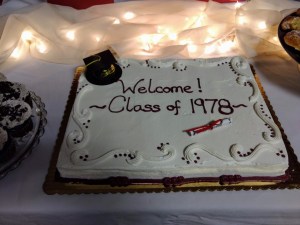
IMG_20180720_185225304I had the pleasure of attending my 40th High School Class Reunion in Eaton Rapids, Michigan this weekend.  The coordinators did a fabulous job of pulling the weekend together with a variety of activities to keep people on the move.  This was especially nice for those of us traveling in from out of town, especially those traveling from out-of-state.
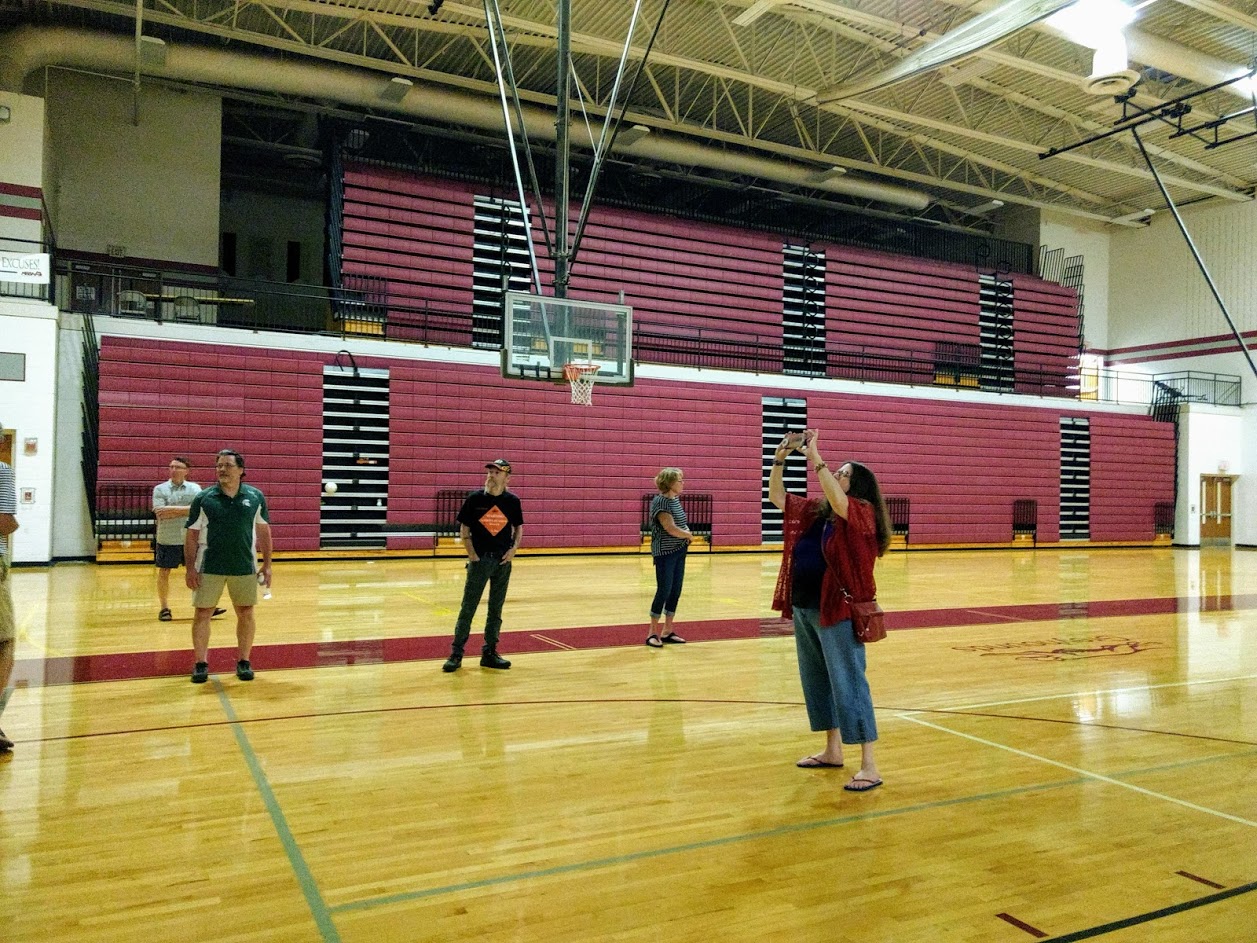
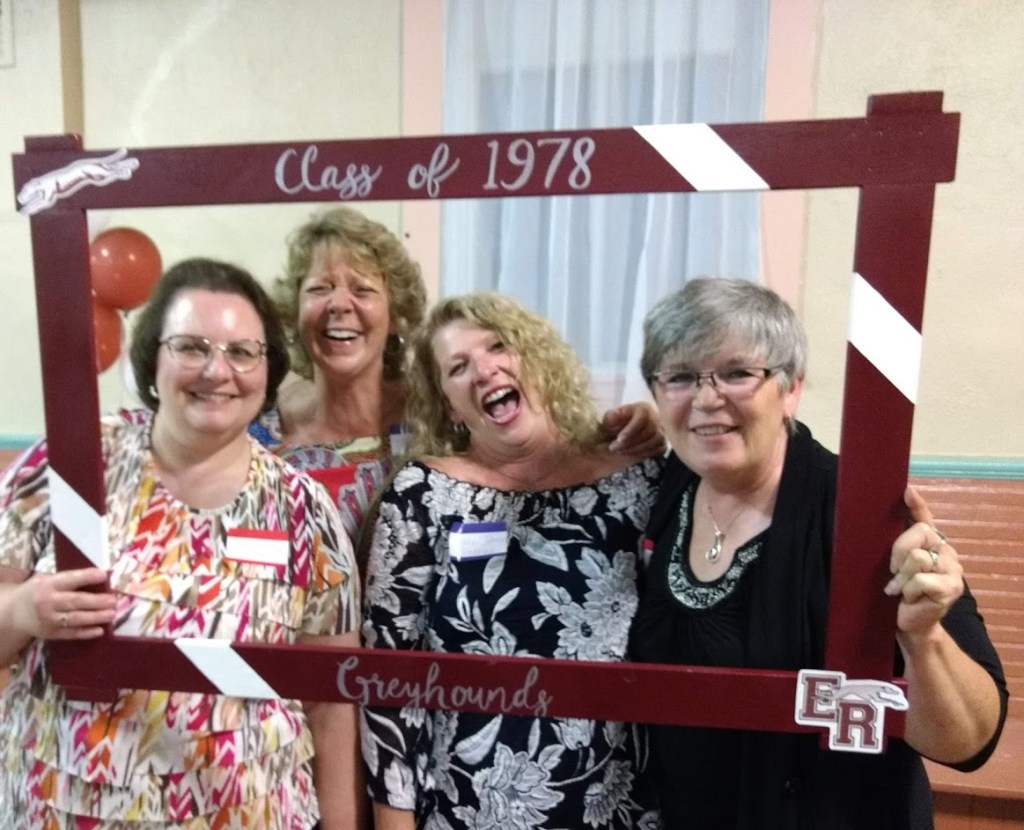
This is my bulleted list of memories of the weekend.

  • Meet-and-Greet at Eaton Rapids Medical Center Conference Room.
  • Great desserts!
  • Friendly conversation with classmates.
  • Tammy (Ball) Albright’s face sign
  • Olive burgers and beer at Abies Bar
  • Woman’s bathroom is small with two toilets, no stalls.
  • Breakfast at Darb’s Patio, always yummy!
  • Glitch in planned tour of high school – Honor Society students are prepared to do tour, school is locked and they don’t have keys.
  • Classmate makes a couple calls and resolution is on the way.
  • Dave Johnson, teacher when we attended, later principal, now retired, has master key to school and comes to rescue, conducts the tour, and does an awesome job of sharing the way it was when we attended, and what changes have been done over the years.IMG_20180721_130944998_LL
  • Touring the high school after 40 years brings back memories, including these mentioned during tour:
    • The Cold Tongue
    • The smoking bathroom
    • Pep Rallies
    • After home game dances
    • Band/band camp
    • Typing class
    • 1-2-3 Roll’em Ferndock
    • World History class lectures in auditorium
    • Theater performances in auditorium
    • Mr. Phillips math classes
    • Mrs. Lohrke, English teacher
    • Mrs. Shimnoski and Mrs. Tuthill, Business/Secretarial Block teachers
    • Various athletes, coaches
    • Teachers and counselors now gone but long remembered
    • Library no longer has a comfy seating area of bean bag chairs, chairs, etc.
    • Senior Bench (now gone)
    • The former layout of the school compared to what it is now
  • Non-Reunion Activity:  Quick stop-over to visit with my sister for a couple hours
  • Walking a block to the Red Ribbon Hall for the reunion because I thought all  parking in front was taken; there were still open spots.
  • Some classmates’ appearance has hardly changed, very recognizable.
  • Some classmates have changed a lot — thank goodness for name tags!
  • Being surprised at how many people recognized me immediately.
  • Good food, good desserts.
  • Good conversation with old friends and classmates.
  • 1978 Graduate photo frame for shooting pics
    IMG_20180721_212645159
  • Fun slide show of “then and now” pictures of classmates.
  • Party Favors:  Eaton Rapids glass and notepad
  • The Red Ribbon Hall has very good acoustics = loud atmosphere.
  • A lot of us still drink, but not like we used to!
  • Many of us no longer “close down the bar” and left before the party was over.
  • Cell phones are great for event pics…I didn’t see a single “real” camera all weekend.
  • Facebook sharing of activities and photos on the ERHS Class of 1978 Page
  • Sad realization that we have lost 11 classmates, a nice memorial table was set up.
  • A quiz of things about our last year of school – presented by Mrs. Wheeler, former teacher.
  • Each classmate was to stand and give their name (maiden) now and where living…which grew as it went around the room to name, where living, married/years, occupation, children/grandchildren.
  • Amazing how many people have stayed in Eaton Rapids and/or the Greater Lansing area.
  • Surprised at how many have moved out of state, or resided in several states.

FB_IMG_1532145667519Time passes so quickly.  How is it we have already been out of school forty years?  Many thanks to classmates Julie and Jane Brenke, and their sister Jill, for organizing the reunion as well as several others who stepped in and assisted them.


2 Comments

Filed under Activities, anniversary, celebration, communication, education, events, freindship, friends, friendship, Life is a Melting Pot, memoir, Michigan, school, time

First Day of Freedom

Imagine six years of life where your movements are controlled, where you have no privacy, where you can make phone calls out but no one can call you, your mail is read prior to you receiving it, where you can never go visit, but must wait for people to visit you.   That is the life my son led from the time he was 24 years old until he was 30.

When he received notice in December that he had received parole he began counting down the days.  March 20th seemed like it was in the distant future for him.  For me it went fast.  I was trying to get things done prior to his release, and of course I made the six hour drive to pick him up.

Patrick was released from Newberry Correctional Facility in Michigan’s upper peninsula at 8:00 am March 20, 2018.  Although he is on a tether for the first six months of his two year parole, and he must abide by curfews that in the beginning are tight, it is considerably better than the spot he was at.  So how did Patrick spend his first day of freedom?

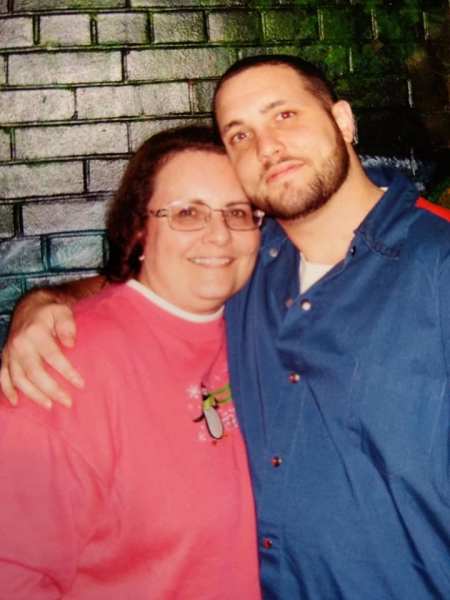
I picked him up at the correctional facility, we loaded his belongings into the car and than took our last two prison photos, a “selfie” of the two of us, and then one of him in front of the facility.  Every time I (and my now deceased husband) visited we paid to have photos taken of us together and one of Patrick alone, so this was our last prison photo shoot.

Our first stop was a gas station/McDonald’s combination where he got a McGriddle sandwich — also one of my favorites.  When he asked if he could have bacon added to the sandwich the girl responded “you can have whatever you want” and Patrick responded “those are words I’m not used to hearing.”

I had purchased him a cell phone, but phones have advanced considerably in the past six years.  He was on the phone talking as we were crossing the Mackinac Bridge and I heard him say that the water looked really cool with the ice on it and “if I wasn’t on the phone talking to you I could take a picture.”  He got instructions on how to stay on the phone and take a photo at the same time.

Two years ago my husband/Patrick’s father passed away, and I had obtained permission from the parole agent to make a few stops, Great Lakes National Cemetery in Holly being one, where Patrick saw his father’s grave-site for the first time.

We then headed to Fort Gratiot, he did not have to check in with the parole agent until the next morning, and we had permission to go shopping at Kohls to get him some clothes and then out to dinner.  We ended up spending about three hours in Kohls.

IMG_20180320_160215167

Patrick tries on a hat at Kohs

Patrick helped me pick out short outfits for my grandchildren’s Easter baskets, then we shopped for clothing for him.  He had changed sizes while incarcerated and had to try on a few things.  A pair of tennis shoes, four pair of jeans, a pair of shorts, one shirt (couldn’t find many he liked), some boxers, and socks and we felt he had a nice start.  I had already purchased him a nice pair of fleece pants, hoodie, polo, and a v-neck t-shirt prior to picking him up.  During our shopping Patrick had to exit the building and stand in an open area of the parking lot so the satellite could take a picture of him/his location.  He was told that happens frequently in large department stores or malls if in for a while.

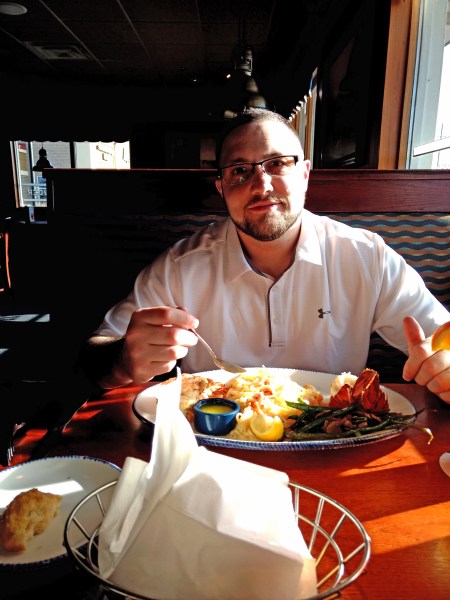
Next stop was Red Lobster.  Lobster Fest is going on, and we had the same meal — two different kinds of lobster and green beans with mushrooms, and of course salad and biscuits.  The place was quiet, the service was good, the food was fantastic.

IMG_20180320_173823262

Dinner at Red Lobster

We were on our way home when my daughter called and said her boyfriend had the truck torn apart and needed to pick up a hose to complete it, could I swing by, pick him up and take him around the corner to the auto store.  I went by her house, dropped off Patrick, picked up Rob and took him to the auto shop, then went back around and dropped off Rob and picked up Patrick and we came home and unloaded the car.

The evening was finished off with Caroline (my daughter) and her three kids coming over for a while, and then Patrick and I watched a bit of TV.  It was a wonderful day for me, and I’m sure a great first day of freedom for him as well.

Leave a comment

Filed under celebration, children, communication, Coping, decisions, Discoveries, events, Family, food, home, kids, Life Changing, Life is a Melting Pot, memoir, parents, travel, Upper Penninsula

Freedom on the Horizon

For the past six years my son, Patrick, has called me every week, sometimes more than once a week, and each time we engage in a 15 minute conversation.  He always calls me.  I am not allowed to call him back.  We try to exchange as much information as possible in those weekly conversations.  Things that need to be handled, questions, and some general fun information on what is going on in each other’s life.

This past week Patrick called me in the middle of the day while I was at work.  It was a very special call and he was bursting with good news.  He finally received notice on the outcome of his parole hearing, which I talked about in All We Can Do Is Wait.  He is being paroled!  On March 20, 2018 I will be picking Patrick up from the prison and driving him home.

He will be on a two-year parole and is being released on a tether.  It is a six-hour drive home and Patrick will need to report to his parole agent here in our county that same day.   He will need to get a driver’s license.  The majority of his clothes will not fit as he has gotten taller and broader in the past six years.  Patrick was twenty-four when he went in, and will be thirty when he comes out.

Patrick and Grace taken during prison visit October 30, 2017

Patrick and Grace, October 30, 2017

It is exciting to have Patrick coming home.  In the time he was incarcerated he lost two daughters (my granddaughters) to foster care/adoption.  He also missed the funeral/memorial services of one grandmother, two grandfathers, and his father (my husband).  In addition to a general loss of freedom, those who are incarcerated can lose much on a personal/emotional scale as well.

We are both looking forward to the day of Patrick’s parole with excitement, but I think also a bit of trepidation.   Neither of us are the same people we were when he was arrested all those years ago.  There will be an adjustment period as he will be living with me initially while he gets his feet under him.  My home will need to meet the requirements of his parole.   He is used to living under the constant scrutiny and control of a prison and will now have the ability to enjoy freedom within the confines of his parole requirements.    He is used to living with all men.  I am used to living alone.  It will definitely be an adjustment.

The countdown has begun.  Seventy-seven days to go, but who is counting.  Freedom is on the horizon.


4 Comments

Filed under anniversary, celebration, communication, Coping, decisions, Family, habit, home, impressions, Life Changing, Life is a Melting Pot, parents, reality, time

It’s Just Another Day

As I write this only a few hours before the ringing in of 2018 it occurs to me that millions of people are getting together with friends, going to parties, visiting bars, or participating in numerous other activities to ring in the new year.  Year after year I have spent New Year’s Eve the same way — home doing my normal activities until around 11:30 pm when I switch to Dick Clark’s Rockin’ New Years Eve to watch the ball drop in Times Square.  Some years I go to bed immediately after, other years I continue to watch the celebration for an hour or two.

New Year’s Day arrives.  I might flip on the parades to watch a bit.  I change over my calendar to the new year, and empty out my “Good Things” jar.  Overall the day is treated like pretty much any other stay-at-home day, doing whatever activities I choose or need to handle.

best-quote-for-new-year-2018Do I set goals for the new year?  Usually.  Do I achieve them?  Sometimes.  Even though for the most part New Year’s Eve and New Year’s Day are just another day, they still contain a bit of tradition that is repeated year-after-year.
As I was writing this I looked up and saw my handwritten list of 2017 goals I had set.  Lets just say I had good intentions and leave it at that.  That list just got folded in half and tossed in the wastepaper basket.

I’m thinking instead of setting goals maybe as I go through the year I should make a list of things I accomplish.  In fact, now that I think of it, that would end the year on a much more positive note.  No depressing list of goals I did not achieve to toss into a wastepaper basket.  Instead I will be able to review the year with a list of things I completed — assuming of course I do something productive in the next twelve months.

Here’s Wishing Everyone A Productive and Happy New Year!


Leave a comment

Filed under anniversary, celebration, decisions, Discoveries, events, Festivals, habit, Holidays, impressions, Life Changing, Life is a Melting Pot, reality, time

Do I like it or not?

We are having our first snowfall of the year…well not really.  We had a few flurries in the air a couple times earlier this year, but nothing that stuck and it has been unseasonably warm until now.  We are getting dumped on.

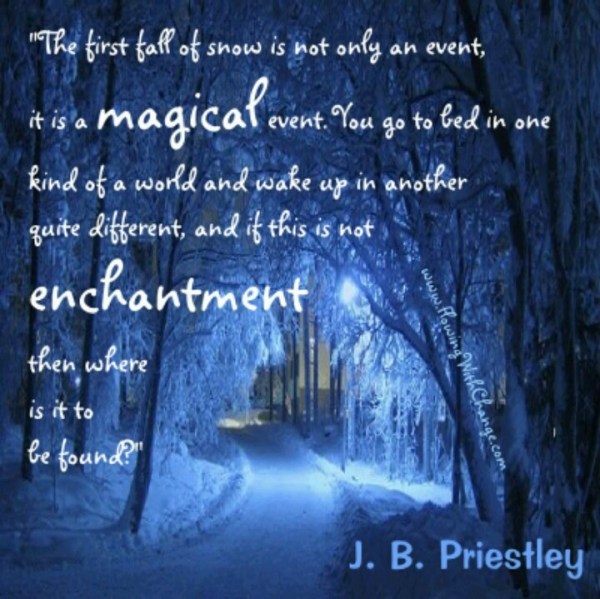
The first fall of snow is not only an event, it is a magical event. you go to bed in one kind of a world and wake up in another quite different, and if this is not enchantment then where is it to be found? J. B. Priestley

The First Fall of Snow

So with the snow falling and sticking to the roads and people nervous as they always are on the first bad roads of the season, we had to make a 40-mile round trip to pick up my daughter from work due to her car being in for service.  What are my thoughts?

  • People constantly refer to how bad the roads are
  • Some people are very nervous and drive extremely slow
  • Some people are idiots and drive a maniac speeds
  • My car appears to automatically turn of Max Defrost when it is turned off, so auto-start doesn’t give you the max benefit when used.
  • Heated car seats are the best
  • If you forgo using the brush for mittens because the snow is fluffy, you will regret it later when your mittens are wet and fingers feel cold.
  • Freshly fallen snow on bushes and trees with Christmas lights on them is pretty.
  • There is something about snow that puts you in the Christmas mood
  • Yikes!  Only 12 days until Christmas and I’m not decorated and have more shopping to do.
  • Who am I kidding, I wish I were somewhere on a beach, somewhere tropical, not in the midst of a snow storm.

So, I assembled my Christmas tree last night, and I should have put the lights on tonight but it still remains naked.  I’ll tackle that project tomorrow night.  For tonight, I’m going to crash.

If you are in the midst of a snowstorm, stay warm.
If you are somewhere tropical, I wish we could trade places.


Leave a comment

Filed under celebration, Discoveries, events, exploration, habit, home, kids, Life is a Melting Pot, memoir, nature, reality, Weather, winter

Tradition with a Twist

As we celebrate Thanksgiving the minds of many is already on what has to be done in preparation for Christmas…the shopping, baking, decorating, and the traditional Christmas card mailing.

I have noticed over the years that the number of cards received has dropped tremendously.  Is it because people are too busy to bother?  Is it because people think an email “Happy Holidays” is as good as a traditional snail mail greeting?   Is it because the price of Christmas cards has become so outrageous, and then once bought and prepared the postage still has to be purchased?  The words Tradition and Change

It could be any or all of those reasons, but I tend to believe the cost of cards has had a huge impact on the traditional sending of the card.   The last time I purchased cards, which was several years ago, it was over fifty dollars just for the cards.  I had always sent the traditional card with a newsletter on our happenings for the past year typed and included, and usually a bit of a handwritten personal note on the card as well.   Then life happenings put me in a position to change all that.

In 2010 I did not get my traditional cards bought and the holiday crept up on me.  Still I did not want to miss the traditional sending of the holiday greetings, so I did it with a twist.  I used my Publisher program to make a Christmas Greetings newsletter.  I set it up to read like a newspaper with various topics and column headings and included a few pictures of the family as well.  A separate column was set up where I wrote about each of my adult children and my grandchildren.  Other topics might have been travel, house remodeling/upgrades, and other such items.  I then mailed the newsletter, with no card, in regular #10 envelopes.  I folded them so that the “Christmas Greetings” header was visible when it was pulled from the envelope to give it a bit of holiday feel.

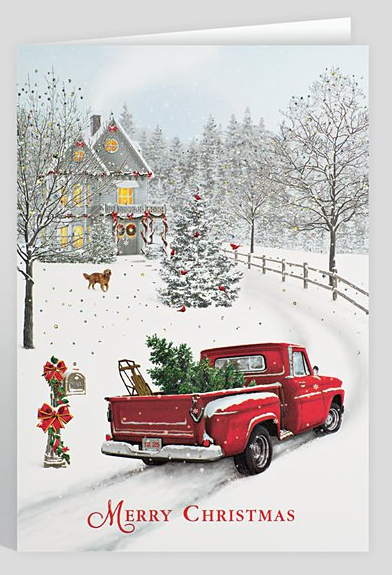
My newsletter was well received.  People enjoyed getting lots of news on the family.  I also heard that the newsletter format was liked because it was a rather long letter, but they were able to pick up and read various columns and then sit it down and finish later without loosing where they had been.   I have not purchased any Christmas cards since then.  Every year I continue to do the Christmas newsletter.  It is printed back-to-back, which cuts down on paper.  Some years it is one sheet (2 pages), other years it has been 2 sheets (4 pages).  A red pickup truck with a Christmas tree in the bed drives down a snow covered driveway toward a large farmhouse decorated for christmas. The ground and trees are covered with snow. A dog walks across the front yard. Red bows and wreaths hang from the mailbox, a pinetree in the front yard and the house.

What has happened over the years since I started this?  Last year I received three “letters only” Christmas greetings.   So far I am the only one using newspaper format, the others were written in the traditional letter style, but they were full of information and happenings from throughout the year.   I enjoy receiving Christmas newsletters.  It is nice to hear about what people you are away from are doing, and it is more personal than a standard card.  It shows you took time, put effort into the greeting, even if it is a letter that has been printed and photo copied.  It still took a bit of time to compose that newsletter.

As we enter the holiday frenzy I challenge you to do tradition with a twist.  If you have already purchased your Christmas cards, then enclose a short newsletter about the past year inside each.  If you have not purchased cards, consider composing a Christmas Greetings newsletter and mail those out to family and friends instead.  You may find, as I did, that in a couple years you start getting those in return as well.  Tradition with a Twist!

Leave a comment

Filed under assumptions, celebration, communication, decisions, Discoveries, Family, freindship, friends, friendship, Holidays, Life is a Melting Pot, time, Writing

Celebrating Independence Day

I want to wish everyone a Happy 4th of July — the celebration of the birth of the United States of America.  Many people today do not understand the significance of the holiday, nor how it came to be celebrated in the manner it is.

I write a column for The Lakeshore Guardian and for the July 2017 I wrote about the history of our celebration and the changes that have taken place since the very first time festivities took place in the year of our independence, 1776.  You can read the column by clicking on Celebrating Independence Day, which will take you directly to my column.  While there feel free to click on Articles by Grace Grogan which will take you to a 4-page listing of the columns I have done for that paper.  There is no subscription fee for the paper so feel free to view at your leisure.

If for any reason you have difficulty using the links above, I have scanned and attached the Celebrating Independence Day column below, which you should be able to click on and enlarge for easier reading.

Wishing you all a wonderful, happy, 4th of July Celebration.

Celebrating Independence Day001


Celebrating Independence Day002

Leave a comment

Filed under celebration, events, Festivals, genealogy, Holidays, Life is a Melting Pot

Cherish Surprises

It is easy to get wrapped up in the mundane routine of everyday life.  You get up, have breakfast, check your email, pack your lunch, drive to work, drive back home, and so on.  Your habits are routine, your interactions with others are routine.  It is all the same.

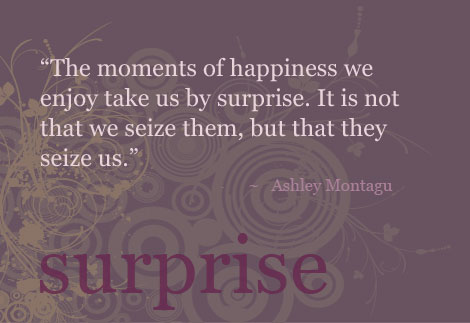
Don’t let monotony drag you down.  Even when each day is a repeat of the prior one, you can bring some variety into your life, or into the life of others.  By doing one, you create the other.  The end result is you will both probably benefit from the interactions.    surprise - momens seize us

Now if you are wondering what can you do to create surprise in someone else’s life, think about what things you find to be a pleasant surprise.  Moments you cherish.  It can be anything big or small.  It is something that creates a moment of pleasure, of surprise, it makes you smile and brightens your day.    At the same time, if you tend to overlook those moments when they happen to you, learn to cherish them.  What am I talking about?  Easy.

A phone call from someone when you least expect it, an impromptu opportunity to get together with a friend, finding a $5 bill in your coat pocket, an unexpected opportunity to travel, a handwritten letter in the mail, when a child brings you a bouquet of dandelions, a wild animal standing near the roadway, spotting a rainbow, and the list goes on.  There are no set rules, whatever makes you happy, whatever makes you smile, that is your surprise.

To cherish the surprises, you need to be alert to the small things in life that we often overlook.   Be more attentive.  Enjoy life and cherish surprises.

1 Comment

Filed under celebration, exploration, flowers, freindship, friends, friendship, home, Life Changing, Life is a Melting Pot, mind

Benefits of Hitting a Brick Wall

When I started this blog my intent was to begin building a reader base and to also write a book about the events that surrounded my husband and I attempting to foster and adopt our granddaughters.  We were denied contact, denied the ability to foster, DHS fought the recommendation in our favor on adopting the oldest child, and the girls were eventually adopted out to strangers, not family.  I wrote about it in Attempted Adoption: An Emotional Whirlwind three years ago.

I also began a memoir at the same time about the events surrounding that time in our life.  I got the first draft of the first four chapters written and then my life turned into a turmoil and I sat it aside.  I have had it tumbling around in my brain and do want to get back into the writing.

At the time I was working on those first four chapters I knew something didn’t seem right but I couldn’t figure out what it was.  I have just completed reading  The Truth of Memoir by Kerry Cohen and now know what was wrong.   I was writing when I was still angry at what happened.  If you write from an angry/frustrated viewpoint you do not treat the people in your book fairly.  I wanted to get back at Child Protective Services, Department of Human Services, Michigan Children’s Institute, the guardian ad litem, the judge…everyone who had a part in denying us our grandchildren.  There were other people who also frustrated me, such as my son’s ex-wife who was addicted to pain killers, which played a roll in the children being taken, and my son who was caught doing home invasions and went to prison for a lengthy enough period of time that his parental rights would be terminated.

When I started the book I felt it important to tell our story, to help people realize that this is a corrupt system and it is a nationwide problem.  At the same time I was out to make those I felt treated us unfairly look bad.  While their behavior may have been deplorable, I still need to treat them with fairness in the book, meaning I need to stress that it is my viewpoint.  I also need to make allowances for the fact that these people were doing their job, and recognize that it can be a pretty horrid job to be involved in.  While emotion is important to a memoir, so is understanding and fairness.

Memoir - not about blame or hurtSo what do I do now?  I pick up where I left off and keep on writing.  When I have completed the first draft I will go back and re-work, edit, and tweak every chapter.  From a legal standpoint I have to determine for which persons I will use real names and which people will have their name changed.  As I work my way through the writing and editing process I may on occasion share a small section here as a post.

My brick wall was life, but in the end it was a good wall to hit when it came to my writing.  I have had time to process the events now.  While I may not agree with the process and outcome, I can now deal more fairly with each person in my memoir.  The benefit of hitting that wall is that my writing will now be better because of it.


3 Comments

Filed under Adoption, celebration, Child Protective Services, children, Coping, CPS, Department of Human Services, DHS, education, Family, Foster Care, Life is a Melting Pot, memoir

Keep the Magic

Think back to when you were a child and the magic that Christmas held.  The excitement and anticipation of a visit from Santa.  The traditions that went with the season.

Remember getting toy wish books?  Once they arrived my sister and I would pour over them for hours, looking, looking again, and writing out lists of what we wanted for Christmas.  Inevitably the list was lengthy and mom would say we needed to shorten it down…the agony of it all!  children-become-a-child-at-christmas

Traditions of the holiday stand out in my mind.  Making Christmas cookies and decorating them, followed by eating them for breakfast as we opened gifts.  Decorating the house was always fun.   In the early years we would trudge through the snow at a Christmas tree farm to find the perfect tree, which Dad would then saw down.  Of course they always looked smaller in the woods then they did in the living room.  One year Mom kept saying the trees were too small.  The “perfect” one had to be sawed considerably shorter after Dad brought it in the house, not to mention the fact that it was so big around it stuck out about one-third of the way into the living room from the corner where it stood.  It was huge!

Dad would put the tree into a stand and then we would have to let it sit for 24 hours to let the branches “drop” as the tree warmed up.  After that the decorating could begin…lights, ornaments, garland, and icicles.  The tree decorating was usually stretched out over several days, as we were in school and Mom also worked during the day.  Evenings were spent viewing the tree, seeing a spot in need of an ornament and then finding the perfect one to fit that area.    magic-of-christmas-when-children-are-around

When Hallmark began their dated ornaments Mom started a tradition of purchasing a dated ornament for my sister and I every year.  Those were wonderful to have as we got married and moved out and many of those oldies hang on my tree every year.  When I had kids I kept the tradition, purchasing each of them a dated ornament every year…something I continue to do even now when they are 28 and 32 years old.  Of course I also purchase one every year for each of my grandchildren.  My daughter has also tried to maintain the tradition with her children.

Christmas morning when growing up was always fun.  The discovery of wrapped gifts under the tree.  Going through our Christmas stockings to see what small hidden treasures were there.  Then of course spending the rest of the day playing with new games, reading new books.  Enjoying a day of family fun.

Over time childhood moved into teen years, and we no longer believe.  Gifts become more useful.  Then we become adults and Christmas is nice, but something is missing, at least for a while.  All good things come to an end…or do they?

magic-light-in-a-childs-eyeEventually we get married, have children, and the fun starts again.  This time we hold the magic and enjoy watching a child’s eyes sparkle with excitement when they talk about their Christmas wishes, Santa Clause and the fun of the holiday activities.  We relive the magic through the eyes of our children.

Too soon our children grow, become teens, grow into adults and move out on their own and Christmas once again lacks the magic, at least for a little while.  Then the grandchildren are born and the cycle begins again.

No matter how old you are, keep the magic.  If you have no children or grandchildren, go where there are children.  Watch the lines for Santa, volunteer at organizations that cater to children, work at a toy give-away,  contact charity organizations and volunteer your services.   Keep the magic alive.

Keep the Spirit * Keep the Magic
Look at Christmas through the eyes of a child

belive-in-the-magic-of-christmas


2 Comments

Filed under celebration, children, events, Family, grandchildren, Holidays, kids, Life is a Melting Pot, memoir

Thanksgiving Solo

Thanksgiving is traditionally a time when people gather with family or friends, enjoy a football game, a parade, fellowship and of course, food.  Over the years I have participated in large family gatherings, small family gatherings, dined with friends, or gone out to a restaurant.  This year, for the first time ever, I am doing Thanksgiving solo.  That was my choice.

A year ago I cooked a Thanksgiving dinner and had my daughter, her three children and her boyfriend over to join my husband and I.  Ron was battling cancer; a battle he lost eleven days later.  Ron didn’t feel well; he didn’t want my daughter and the grandchildren here but I insisted on having Thanksgiving with them.  Why?  Because I knew the boys, who at that time were 9 and 4, needed it.  Thinking back it may have been the last time they saw him.  thanksgiving-pumpkin-pie

So now we move forward a year.  I had surgery on my ankle a week ago, so I informed my daughter that I would not be preparing Thanksgiving dinner this year.  I let her know that my intent is to stay home and crash.   As it turns out my daughter has to work long hours on black Friday, so she and her boyfriend decided to stay home and do their own turkey.   Why am I not joining them?  For one I can’t get into their house.  Secondly I can’t go anywhere without a chauffeur.  Third I don’t want the hassles of the mess that comes with cooking, cleanup and three children in the house.   I prefer to go the quiet, solo route, at least this year.

So what will I do?  I purchased a stuffed chicken breast and will fix that with some sweet potatoes for myself.  It isn’t a turkey, but at least it is poultry!   I will read, do paperwork, write, or just put my feet up and watch the Thanksgiving Day Parade on TV.  Time will tell as the day unfolds.

I hope all of you have a very Happy Thanksgiving, complete with turkey, stuffing, and of course pumpkin pie….in fact, eat an extra piece of pie for me!


Leave a comment

Filed under celebration, decisions, Family, food, home, Life is a Melting Pot, Meals