Tag Archives: social media

Cherishing Front Porches: Memories and Connections

When was the last time you sat on the front porch of your home, waving at your neighbors as they passed by, or inviting them up to chat and share a glass of lemonade? 

I have always loved front porches, the big kind that holds several chairs. When I lived in St Clair, Michigan, I rarely sat on my private patio in the back. I preferred the front porch, where I often sat reading a book until it got dark. I was not in a neighborhood, but on a state highway, so I only had cars buzzing by.

My love of sitting on the front porch is something I developed as a toddler. Back then, my grandmother was my babysitter. I remember sitting on the porch at various times of the day, watching the birds in the yard, migrant workers across the street playing, and watching the sun set. Red sky at morning, sailors take warning. Red sky at night, sailor’s delight. Hmm, wonder where I learned that?

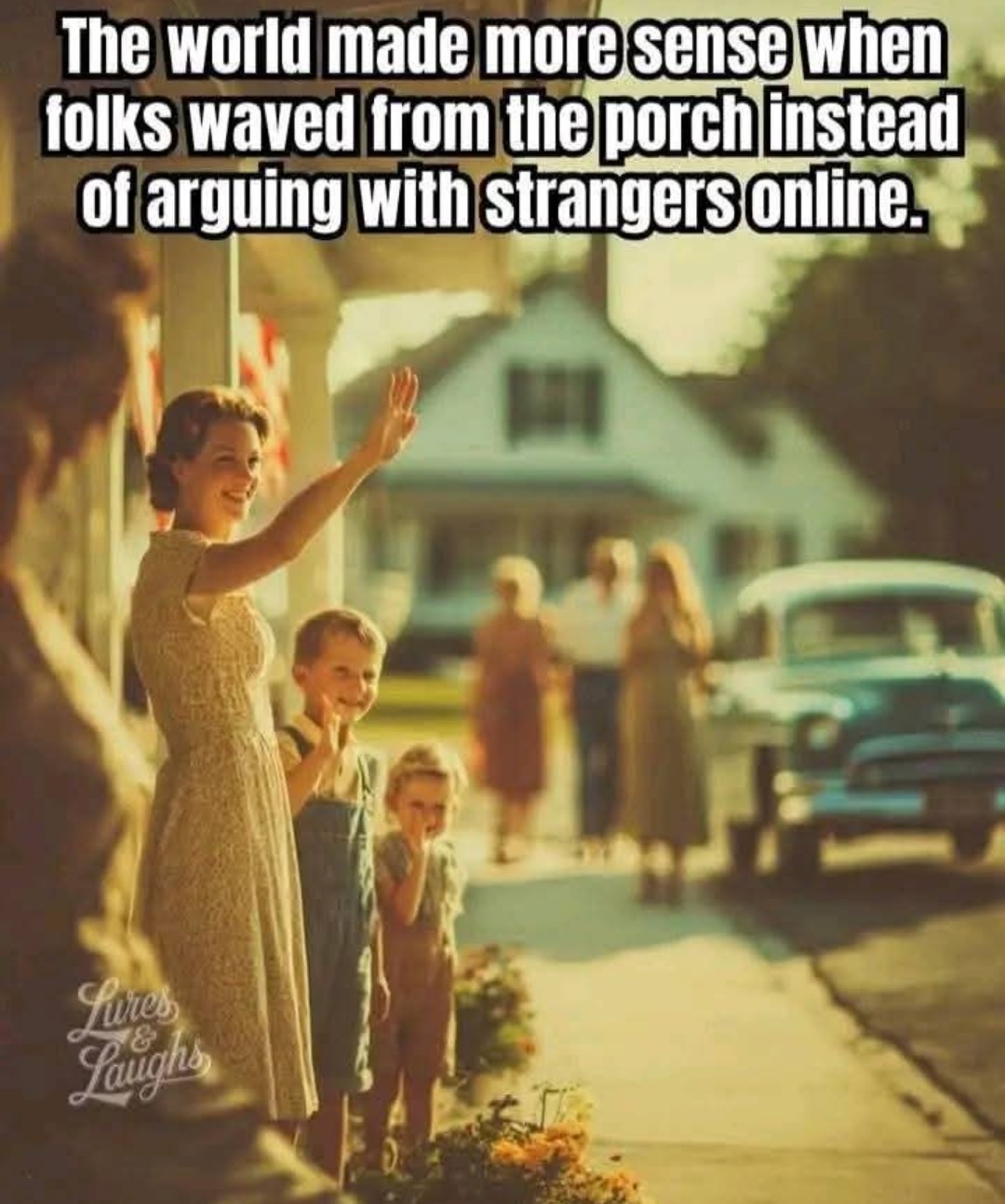
The world made more sense when folks waved from the porch instead of arguing with strangers online.

As a teenager, my best friend in high school lived in a large, older home with a large front porch. I loved that porch! We would sit on it talking with friends, shouting out to cute guys that drove by, and just enjoying life. The house I grew up in only had a small stoop. I envied April, living in a home with a large porch that looked out over the street.

I no longer have a front porch. I always intend to sit outside on my lawn chair, and those times when I make it out there, I enjoy sitting in the fresh air and reading a book. I don’t get out as often as I want; life gets in the way, even in retirement. I, like many others, spend a good deal of time on social media, sharing trivial quotes, travel, pictures, news articles, and day-to-day activities with distant friends and family. I participate in public forums, where political discussions can turn hostile. People have lost the etiquette exercised during face-to-face conversations. It is so much easier to be insulting and rude when done through an electronic device.

That image takes me back to another time, when life was more relaxed and friendly. Kids played outside; they rang their friends’ doorbells to see if they could come out, rather than having scheduled play dates arranged and monitored by their parents. There were neighborhood block parties, where everyone got together, brought a dish to pass, and adults enjoyed socializing while the kids played. You knew your neighbors, and your neighbors knew you, and everyone got along. In my opinion, it was a better time.

Leave a comment

Filed under backyard, communication, Family, friendship, home, kids, Life is a Melting Pot, memoir, Michigan, parents, play, summer, time

Five Problems With Social Media

Social media ball with various images on it

When I was growing up, there was no social media. No one owned cell phones or computers, and phones were attached to a wall in our home.

Fast-forward to today; there are numerous social media platforms on which you can be active. While there are many positives to electronic vs personal contact, including regular contact with distant family and friends, there are also negatives. Here are five problems with social media.

1. Rude Behavior

People can hide behind the wall of a social media platform. Even those you know are more likely to behave rudely. When it is people with whom you have no personal relationship, bullying becomes even worse. When people converse in person, things you disagree with are politely disputed or let pass. Under the guise of a social media platform, people are more likely to insult and attack those with whom they disagree, referring to them as stupid, ignorant, old, or in any other way demeaning them.

According to an article in Psychology Today, anonymity contributes to rudeness and trolling. However, the lack of eye contact is the chief contributor to a person’s inability to control inappropriate behavior online. Before the advent of social media, people tended to be more courteous, even when disagreeing on specific points. Social media allows people to hide behind their computers and be aggressive and rude.

2. Time Spent/Wasted

The average user between 16 and 64 spends approximately 2.5 hours on social media platforms daily, with YouTube and TikTok experiencing the highest usage. That doesn’t sound like much out of 24 hours until you consider that it adds up to 14 to 17.5 hours per week that we no longer spend on other activities.

Even more concerning is that teens spend an average of 4.8 hours on social media daily.  That is over 33 hours a week! When you consider how easy it is for adults to fall into bad online behavior, think about how vulnerable teens are to cyberbullying and its impact on their self-esteem. Suicide rates among teens have increased during the social media era, and about 42% of teens admit that social media use keeps them from connecting with their friends in person.

3. Political Hostility

Before the advent of social media, politics adhered to the rules of proper etiquette. Etiquette traditionally held that three topics were never discussed in polite company–religion, politics, and money. Social media has eroded the belief in being courteous and following the rules of etiquette. This has impacted political discussions and encouraged people to become outright hostile toward those with differing beliefs.

A University of Michigan study found that political anger and cynicism are rising in the United States and democracies worldwide. Social media contains a lot of political information and news, but much of the content is toxic rather than factual. These toxic news streams are often hostile and insulting, which increases anger and bad behavior toward those with differing beliefs.

When was the last time you held a cordial exchange of political information on a social media platform with someone supporting an opposing candidate? It may start okay, but eventually, one person will become insultingly aggressive and argumentative. This undermines the ability to exchange information, leading commentators to prioritize presenting their side over engaging in an open-minded exchange of facts.

The problem is that algorithms reward hostile behavior because they perceive heated exchanges as more engaging. This shifts political attacks to the forefront of media platforms, increasing their visibility and distorting public opinion. People should conduct research using various sources rather than relying on social media when making decisions about election candidates or policies.

4. Cyberbullying and Cyber-Harassment

Cyberbullying is bullying that is done through SMS, text messaging, apps, gaming, or social media platforms. It encompasses sending, posting, and sharing false, negative, harmful, or mean content about another person. The information shared can be personal or private and is done with the intent to cause that person embarrassment or humiliation. This behavior can cross the line into criminal or otherwise unlawful behavior.

Examples of cyberbullying:

  • Sharing embarrassing pictures or videos online
  • Posting rumors on social media
  • Sharing someone else’s private information online
  • Threatening someone online
  • Creating fake accounts and posting information to embarrass someone

Cyber-harassment is behavior intended to torment the recipient. This occurs on public forums and is carried out by the harasser to seek peer approval or build their image to appear superior and vital.

Examples of cyber-harassment:

  • Threatening or harassing emails or instant messages
  • Using electronic technology to bully, harass, or intimidate
  • Spreading rumors
  • Sharing private information
  • Spreading hurtful information
  • Intentionally provoking or annoying someone online

Visit the Stopbullying.gov website to learn about the laws and policies against bullying in your state. Click on your state for additional information about state, commonwealth, and territory cyberbullying laws and policies. Seven states have laws only; most states have laws and policies.

5. Addiction

Although not formally recognized in the medical profession, social media is more addictive than cigarettes or alcohol. Addiction can lead to negative consequences that impact mental health. The main tell-sign is an obsessive need to check and update social media platforms frequently to the extent that it disrupts real-world relationships and activities.

It is easy to become addicted because social media platforms are designed to trigger the release of dopamine. This triggers a feeling of pleasure, reinforcing the desire to repeat the process. Any positive feedback received, such as likes, comments, and shares, validates and encourages repeat usage.

Signs that you may be addicted to social media include spending an exorbitant amount of time on your platforms, sometimes to the extent that you forgo other responsibilities or activities. Your reliance on social media may become so obsessive that you feel compelled to check it constantly, and any inability to do so leaves you feeling anxious and stressed. This can also lead to depression if you find yourself comparing your abilities with those of others online.

To manage your social media interactions for better mental health, set time limits for platform use and plan regular breaks when you engage in real-life relationships and activities. Establish times when social media is not accessed, such as during meals or when socializing with friends and family. It is also helpful to turn off notifications so you are not constantly distracted.

Social Media is here to stay. In 2005, only 5% of Americans were using social media; that number grew to 72% by 2021. Over 4.8 billion people worldwide are active on social media daily, and estimates are that by 2027, that number will reach six billion. It is essential to exercise caution when using the platform’s responsibility.  We must not allow ourselves to fall into a pattern of abuse toward others, nor should we tolerate such behavior from others. If you or someone you know becomes a victim of cyber harassment or bullying, report it to the appropriate legal authorities.

Leave a comment

Filed under communication, Coping, Family, habit, handicapp

Super Bowl Advertising–Could the Cost Be Better Spent?

I recently heard a comment that a 30-second spot for advertising during the 2025 Super Bowl was $8 million. In addition to the game-time advertising, Fox Network, which aired the game, also sold pre-game ad slots for about $4.5 million each and post-game ad spots for around $4 million each. Fox sold out its ad inventory early. Some companies, including Busch Light, ran two ads during the game, doubling their costs.

Super Bowl advertising is expensive because the advertiser has the potential to reach about 100 million viewers. While the added revenue generated by these ads is great for the big-name companies that can afford it, I wonder how many people those companies could help by using those funds in another way, especially when I learned their actual bottom-line cost.

product advertising image

In 2025, 57 commercials aired during the game, earning the Fox Network approximately $456 million in game-time advertising revenue. The year 2025 was record-breaking, and the combination of pre-game, game-time, and post-game advertising generated almost $700 million in revenue for the network.

Fox makes that for the advertising spot, but the cost for the companies who advertise is considerably higher, and so is Fox Network’s revenue. The ad agency cost for Super Bowl work is an average of $3 million to $6 million, film production costs are $3 million to $4 million, and post-production work such as visual effects, sound, and editing is around $1 million. Music licensing expenses are between $3.5 million and $5 million.

Those advertising costs do not include the fees that must be paid for the ad spokesperson. A non-celebrity will run about $250,000, a B-list celebrity about $1 million, and a more realistic celebrity appearance is between $3.5 million and $5 million.

In addition to those production and celebrity costs, advertisers need to spend additional funds on digital and social media ads and any additional activations, which adds another $3 million to $10 million to the final cost.

Now, remember that $8 million 30-second ad? Fox Network requires advertisers to commit an additional $8 million for media commercial time for the upcoming year, which means that the 30-second spot is a $16 million commitment.

The final cost for purchasing a Super Bowl Ad is about $40 million per ad. With 57 ads sold during 2025, that works out to about two billion two hundred eighty million dollars ($2,280,000,000).  

I realize my thoughts about how that money could be better spent will never materialize because Super Bowl ads generate a lot of revenue for advertising companies. That doesn’t stop me from wondering what would happen if those companies produced low-cost commercials notifying watchers that rather than spend $40 million on creating an advertisement, they spent the minimum advertising contract and created a simple ad to inform consumers they have donated the difference in expenditures, approximately $24 million, to homeless shelters, food banks, soup kitchens, building low-income housing, natural disaster relief, etc.

If you saw an advertisement like that, would it make you more or less inclined to purchase their products? Think how beneficial this type of action could be to the citizens of this country. Making this country great means helping others improve their lifestyle and achieve success. Is a $40 million commercial helping America? Could those funds be used better elsewhere?

As of January 2024, the Department of Housing and Urban Development reported over 771,000 homeless people in the U.S. Reasons for this status include ending COVID-19 relief programs, higher housing costs, and immigration to big cities. People experiencing homelessness include almost 150,000 children under 18.  

According to the Working Poor Families Project, 47.5 million people in the U.S. live in low-income working families, including 23.5 million children. In 2011, more than four in 10 working families were low-income working families in Arkansas, Mississippi, and New Mexico. Between 2007 and 2011, low-income working families increased by 5% in Alaska, Arizona, California, Connecticut, Florida, Georgia, Illinois, Michigan, Nevada, and South Carolina. These families spend more than one-third of their income on housing and, in doing so, exceed the accepted guideline for affordable housing.

What are your thoughts? Please comment below.

Leave a comment

Filed under Coping, decisions, events, impressions, Life Changing, reality

What Is Our Future?

When I look at what is happening within the United States over the past few years, combined with the conduct and verbiage of political figures and citizens, I believe it won’t be long before this country finds itself in the midst of a civil war.

Civil war includes conflicts over government control and may involve military coups, insurgents from within the government, and challengers from outside the established government. Civil wars also include ethnic conflict and aspirations for social transformation.

Why do I believe we are headed into a full-blown war within our country? Look around you; there is hostility and violence everywhere. People within the government no longer believe in the very foundation this country was built on. Thomas Jefferson wrote in the Declaration of Independence, “Governments are instituted among Men, deriving their Powers from the Consent of the Governed.”

Part of allowing the governed to determine rights was placing control of elections on the states. It also prevented many citizens from being able to exercise that right. Initially, only white men who owned property could vote. Over the years, amendments expanded rights to blacks and other minorities, including women and non-property owners.

Leading up to and following the presidential election of 2020, we saw many things this country’s citizens fought hard to overcome come back to fruition. A desire to overturn the government and eliminate our freedoms began when the President of the United States began putting into his followers’ minds the belief that the election process is unfair. That the election was stolen.

How can an election be fair only if you win but not if you lose? That was his way of thinking, and people believed him. Now other republican candidates are following his example and have said they will only agree with election results if they are the winner.

Has anyone given consideration to what Trump’s claims of a false election cost the taxpayers?

When Trump refused to accept his loss and filed 62 lawsuits in federal and state courts attempting to overturn the election of Biden to the presidency. Trump was defeated in 61 cases. The only “win” was in Pennsylvania, where a Judge ruled that voters cannot go back and “cure” their ballot after failing to provide proper identification within three days of the election. This ruling didn’t change the outcome of the election.

As of February 2021, Trump’s election fraud lawsuits cost taxpayers more than $519 million. That is money out of your pocket to subsidize his refusal to recognize the will of the people.

Trump’s refusal to accept election results caused violence at the Capitol on January 6t. The main goal was to prevent the reading of the electoral votes to officially declare Joe Biden the winner of the presidential election. That was a direct attack on our government. Trump’s goal was to remain in office, thereby destroying the very basis on which this country was founded in 1776. Had they been successful, the freedoms you know today would no longer exist.

Trump’s rhetoric about a false election still rings out today, with other republican candidates saying they will only believe the election results if they win but not if they lose. You can’t have it both ways. Either we have a good election system, or we don’t. It can’t be fair “only when I win.”

That isn’t to say a candidate cannot question election results. It has been done many times in the past by both parties. The difference is whether the losing candidate accepts the findings or whether they refuse to accept defeat and continues fighting.

Social media hostility has become a very real problem in this country.

Studies and interviews with policy experts, activities, and social media industry professionals show that platforms such as YouTube, Twitter, and Facebook do not cause political polarization, but they do exacerbate it. When people view political content on social media, it makes them more upset and angry, causing them to develop stronger support for their own position.

In 2018 there was a major overhaul of Facebook’s recommendation algorithm. As a result, Facebook became an angrier place. The new algorithm prioritizes controversial content, resulting in otherwise peaceful people becoming trolls because of social media interactions.  

In addition to making people angrier than normal, those angry people are more likely to believe false information on social media. Hostile people in political discussions share misinformation. This doesn’t mean they believe what they share, but rather they refuse to admit their original belief was wrong. This behavior contributes to a disproportionate amount of misinformation, toxicity, and violent content because it is easier to inspire anger than positive emotions.

Studies in the United States and Denmark reveal that people who behave like jerks online are also jerks in person. People obsessed with politics are often frustrated, offensive, and angry, ranting about politics in person and online. The majority of these political posters are status seekers who crave a higher social status. Their main goal is to intimidate others into recognizing them, which serves their own personal agenda.

Discrimination Still Exists

The country has come a long way from the days of slavery, but discrimination still exists against people because of race, gender, religion, and for being LBGTQ. Violence against Jews in the U.S. has been the highest since the 1970s, with 2,107 incidents of harassment, vandalism, and violence against Jews in 2019.

The negative attitude about people who are not white dates back to the original days of voting, when only white male property owners could cast their votes. Some of this hatred has been invoked by our former POTUS blasting discriminatory comments about Mexican immigrants being criminals and rapists, proposing a ban on Muslims trying to enter the U.S., suggesting a Judge recuse themselves because of their Mexican heritage, joking about the Trail of Tears, pandering white supremacists at a Virginia rally, and claiming Kamala Harris doesn’t meet V.P. requirements because of her black heritage.

This kind of behavior should never be tolerated by anyone in this country. Trump claims he is “the least racist person” in the country, but his behavior says otherwise. The real danger is when he makes racially discriminatory remarks, his words impact those who follow him and negatively impact their behavior. Even though he no longer leads this country, his base follows his every command, which is dangerous.

This country was built on free-thinking people. If people do not think for themselves and follow one person’s commands, freedom will cease to exist, and the United States will become a dictatorship.

The Border Crisis is Real

There is no denying the high number of undocumented people crossing into our country. However, one must consider the failures of the prior administration regarding our border.

Before his 2016 election, Trump claimed he would build a border wall, securing our borders at less cost. That was a false claim and ended up costing taxpayers more money than ever before. Trump stifled competition among would-be builders, resulting in the wall costing five times more during the Trump administration than during the 16 years of the Bush and Obama administrations.

The reason for such as substantial cost increase? No bid contracts were awarded to a small group of pre-selected construction firms owned by donators to either Trump or other republican campaigns. Had contracts been submitted for competitive bids, costs to taxpayers would have been substantially less.

  • 2007 to 2015 (Obama Administration)—the government spent $2.4 billion to build 653 miles of the border fence, including gates, roads, lighting, and other infrastructure
  • By October 2020, the Trump administration spent $15 billion in contracts to build 738 miles of the border fence—$20 million per mile. This is contracts paid, not fence built
  • As of October 2020, the Trump administration completed repairs to 360 miles of fence in California and Arizona—no new fence was built

The biggest immigration problem is in Texas, where drugs and immigrants cross the 1,200-mile border along the Rio Grande.

When Trump was unsuccessful in using proper channels through congress to fund his wall, he declared a state of emergency, shifted billions of dollars from the Department of Defense and Treasury Department, then waived 10 federal contracting laws when attempting to fulfill his campaign promise. Oh, and Mexico hasn’t spent so much as a penny on it.

Destruction of Public Lands and Depletion of Water

The majority of the Arizona-Mexico border is on public lands the government set aside for special protection because of ecological value. This includes the San Bernadino National Wildlife Refuge, Cabeza Prieta National Wildlife Refuge, San Pedro National Riparian Conservation Area, and the Organ Pipe Cactus National Monument.

Construction crews for Trump’s border wall spent months dynamiting, drilling, pumping, clear-cutting, and excavating public lands in numerous spots, including Guadalupe Canyon in Arizona. This was only to build roads for construction equipment. The beautiful Saguaros of the Sonoran Desert, protected by law, were lying in heaps next to construction areas. The damage is permanent. Natural migration of javelina, deer, bobcat, mountain lion, and bighorn sheep, and access to their natural water supply is impacted by steel beams installed along main migration corridors.

Natural water supplies are depleted because of border wall construction. This includes the Quitobaquito, a rare desert spring in Organ Pipe Cactus National Monument. Between February 2020 and February 2021, 45 million gallons of water were withdrawn. Artesian-fed wetlands and springs in the San Bernadino National Wildlife Refuge were losing about 700,000 gallons per day as of February 2021 due to construction pumping.

This is only just a touch of how much damage to our water supply and natural wildlife this wall has caused. If you haven’t seen the beautiful national parks along our southern border, it’s too late. Trump destroyed them.

The Bottom Line

The problems above and other issues, including abortion, changes in voting requirements, intimidation at voting polls, police brutality, and more, are inciting the citizens of this country. The anger that Trump incited, leading to the January 6th attack on the capitol, continues and will likely lead us into a civil war.

Look back 10-20 years and the events taking place in this country compared to now. Did you feel safer in 2010 than you do now? If so, that is an indication that the country is floundering.

I’m not going to tell you whether to vote republican or democratic. That is your choice. The proper choice is to look at each individual candidate. What do they stand for, and what are their beliefs and goals? Do they align with your desires for this country?

If the answer is yes, they are the candidate to vote for. Ignore their political alliance, and vote for the best person, not the party. That is how to maintain a politically sound, safe, and free country. That is how we prevent another civil war.

Leave a comment

Filed under border wall, Election, Life is a Melting Pot, nature, reality, Trump, Voting

5 Problems With Social Media

The most frequent use of our phones is social media. The average person picks up their phone 58 times per day, which includes sending or looking at text messages, checking email, placing calls, playing games, and social media. The total daily time spent on smart phones averages between three hours fifteen minutes to four and a half hours on their phone every day.

Social media is addictive. I became multi-connected for the purpose of promoting my photography and writing. The most addictive for many is Facebook, with a few others close behind.

What are the problems with social media?  Let’s take a look.

1.         Addiction

Social media is used for everything from personal connections to business promotions. It has become a necessity of life. The problem is many people are unable to walk away from it, even for a short period of time. Those are the addicts.

You see them everywhere. Have you ever been in a restaurant where people are sitting at a table together, but everyone is on their phone? Why are they unable to put down their phones and converse with each other?

We all know people who if you make a comment and tag them, they respond immediately regardless of whether it is morning, night, or the middle of their workday. They can’t resist the “ping” that tells them they have a notification for something.

Addiction came to my attention recently when I responded to a political question on Facebook. The poster said, “you didn’t answer within 12 hours.”  She had a time limit on when anyone could give an answer!

That shows she is addicted to social media and assumes everyone else lives their lives wrapped up in it as well. I hadn’t looked at Facebook posts within that amount of time so my answer was, to her, invalid due to being “late.”

I will admit, I sometimes will “share” things to Facebook without going into the program, so I probably fall into a posting habit trap.

2.         Brain Saturation

Social media is a means of sharing information that 50 years ago no one cared about. Do we really need to know that someone is out to dinner and where? Do we need to see a photograph of what they cooked for dinner? Is it important we know they got their hair cut, had a pedicure, got new glasses or went to the doctor?  

That is there life, not ours. This is the type of useless information we now know about everyone we are connected to. We are all guilty of sharing those tidbits at least part of the time. Probably now more than ever due to social distancing orders. Social media is now providing us with human connections that we are unable to get on a more personal level.

3.         Lack of Face-to-Face Interaction

While this is a benefit during the Covid-19 pandemic, it also creates social distancing. Zoom meetings are a wonderful way of connecting from the comfort of your own home, and remote work is great, especially when you live on the road as I do. The concern is whether we will become withdrawn from society as a whole.

Will face-time phone calls replace getting together? Will we remain socially distanced by having our conferences and meetings held remotely, or will we return to in-person gatherings that require more forethought and planning?  Hopefully it will become a combination of the two.

I think the virtual meetings have benefits. There are those who are unable to make it to in-person meetings due to health or distance. Those virtual meetings add personal human connections to their lives.  However I also think nothing can replace in-person interactions we have without the assistance of a computer or phone.

4.         Cyber-Bullies

Social media brings out the hostility in people. When you are not looking at someone face-to-face it is much easier to be rude. This has happened frequently during the presidential race, most likely inspired by our own president using social media to cyber-bully everyone from people in his own administration to leaders of foreign nations.

I have been called racist, old, a murderer (when discussing right-to-choose re abortion), idiot, ignorant, etc. all because of my political views. Would those same people have said those things to my face? Most likely not. Have I said things on social media I most likely would not have said in person? Yes.

The point is, social media provides a protective barrier that allows people to let down their guard and be rude to people in a way they otherwise would not be. This is especially true because the majority of people are connected through groups, etc. to people they never have and probably never will see in person. If you wouldn’t say it in person, you shouldn’t say it on social media.

5.         Personal Privacy

There are people that post all their personal issues online. If they have a fight with their spouse, it is out there. If they have an encounter with someone at the grocery store, they rant about it online. Have a dispute with your neighbor, it is out there for the world to see. Your child runs into a problem at school, everyone on Facebook knows about it.

People have lost their desire to keep private matters private. They no longer consult with their best friend for support, they now post it on social media for 200 of their closest acquaintances to chime in on and/or share with their social media acquaintances.

Everyone should give consideration to the delicacy of the information they are sharing about their personal relationships prior to posting.

So Where are We Now?

Social media is here to stay. We are a cyber-connected world now, and if you haven’t embraced it thus far, eventually you will be forced into it. The world revolves around our ability to be online for banking, paying bills, work, and communicating.

What social media platforms are you connected to? What are your favorites? What is it you like about them?  Enjoy cyber-life, but don’t forget about real life in the process.

My Social Media Platforms:

I invite you to check out some of my pages and subscribe to my blog and/or YouTube channel.

Facebook Photography Page – I share photographs I have available for sale, sometime videos I have posted onto YouTube, and other tidbits of information on my Times Gone By Photography Facebook page.

Facebook Grace Grogan, Writer Page – Where I share links the genealogy column I write for The Lakeshore Guardian, links to my blogs that are posted here on WordPress, and other things connected to writing.

Fine Art America – this is the place to view all my photographs I have available for sale, which can also be placed on various items such as shower curtains, throw pillows, mugs, beach towels, tote bags, etc.  

Fine Art America – Ron Grogan – This is the page my deceased husband had for viewing and selling his photography, which I continue to manage

Pinterest – a collection of tidbits, including links to my writing and photography

LinkedIn – my business profile, I also share my photography, blogs and genealogy column here. https://www.linkedin.com/in/grace-grogan-0870a433/

WordPress – this is where you will find my personal blog, Life is a Melting Pot 

Instagram – This is where I post photos, mostly pictures taken with my cell phone or older photos from the past.

Twitter – I am not a frequent user, but do share my videos, photographs, and blog here.   https://twitter.com/glgrogan?s=03

YouTube Channel – Rolling Thru North America Travel With US! is a joint page with Paul Cannon and contains videos and slide shows of our travels throughout North America.

Leave a comment

Filed under communication, decisions, freindship, friends, friendship, habit, Life is a Melting Pot, mind, reality

Life is Bigger Than That

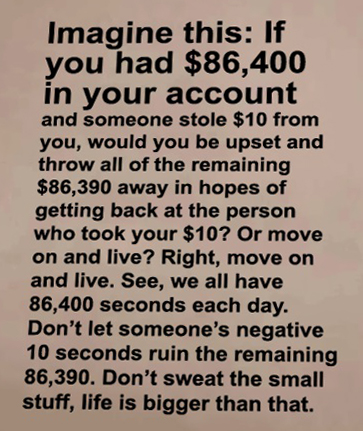
The thought below struck me as being important when I first saw it as it carries a lot of meaning.  So many people spend time making big issues out of small things.  Way too much time is spent stressed over things that a few months from now won’t even matter.  a.imagine this

We have 86,400 seconds per day to spend either happy and positive or negative and stressed.  So often people who are having a bad day take it out on those around them, and in the process ruin the other person’s day as well.

We all have those occasional days where one thing goes wrong, then something else goes wrong, and before you know it you have had an entire day of things going wrong.  Have you ever considered your attitude when this is happening?  Do you laugh it off and keep going or do you get frustrated, stressed out, angry, and rude?

Taking control of your attitude in moments of stress has a huge impact on your own personal happiness.   Don’t allow the behavior of others to impact your mood; and more importantly don’t let your behavior have a negative impact on others.

One prime example is in this era of social media is people who feel the need to post their personal arguments for public scrutiny.  What is this accomplishing?  Sympathy from others who are not involved?  Quite often I will read posts and wonder why someone felt the need to post something.  Have they considered the emotional harm to the person they are complaining about, who is most likely a friend, spouse, or other family member?  Have they forgotten that once on public media it is never lost and can re-surface at any time?  When posting on social media give consideration to the positive v. negative impact your posting may have, especially on those who you are closest to, those who deserve your love and protection, not public criticism.

As you go through your week remember that when life gives you a bowl of pits instead of cherries, when your parade gets rained on, or when a hurricane blows through you life, to keep a positive attitude and laugh at the blunders.  Search for the positive in the negative and move on.  Chances are 12 months from now you won’t remember it happened.   Don’t sweat the small stuff, live is bigger than that.


Leave a comment

Filed under assumptions, Coping, decisions, Discoveries, Family, freindship, friends, friendship, habit, impressions, Life is a Melting Pot, mind, reality

Remember The Good Ole Days When People Talked To Each Other?

Have you ever looked around at people when out in public?  Have you considered your own conduct when socializing with others?  What about the way you make and maintain friendships?  We have become a society in which a large portion of our social interactions are electronically based.

I think there is both a positive and a negative to this development.  Social media…blogs, Twitter, Pinterest, Facebook, Google+, Stumble On, etc. are all great places for exchanging information and keeping in touch with others.  Social media is especially helpful in allowing families to stay in touch when they reside in various spots around the country and/or world.  I spend a fair  amount of time on Facebook and Pinterest so I am not at all opposed to it, but I do have some concerns.social-interaction-pay-attention-on-twitter

People are losing the ability and/or willingness to deal with people on a personal level.  They are unable to tuck their cell phones away and simply have a meal or conversation without repeatedly checking their phone.  Not because they are receiving phone calls, but because they are viewing their media feed, texting, posting articles, or other such activities.

I will admit to on occasion doing the “check-in” post letting my friends know where I am at and/or what I am doing.  Pictures of meals, selfies of people and who they are dining with have become common place.  People don’t sit at a table and converse with each other, they sit across from each other, each on their phones a/k/a social media.

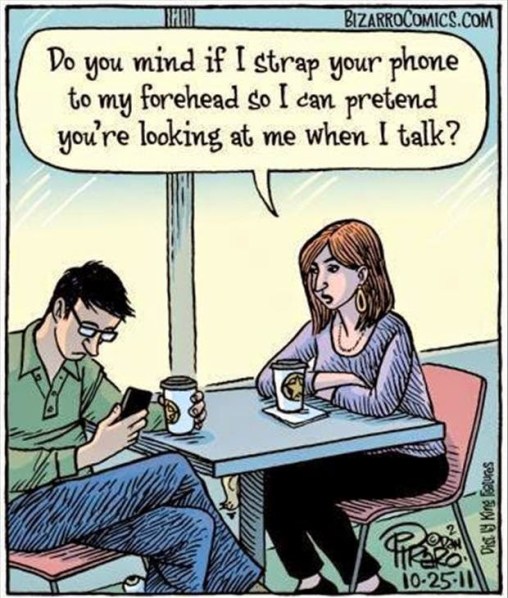
social-media-strap-phone-to-foreheadA couple years ago my husband and I were in a restaurant that was quite busy and we had to wait for our table.  I was looking around the restaurant and I  mentioned to him that he and I looked very out of place.  The reason being we were the only two people in the entire restaurant, both the dining and bar areas, who were not on our phones.  We were talking to each other instead!  That is sad….people are losing the human connection.
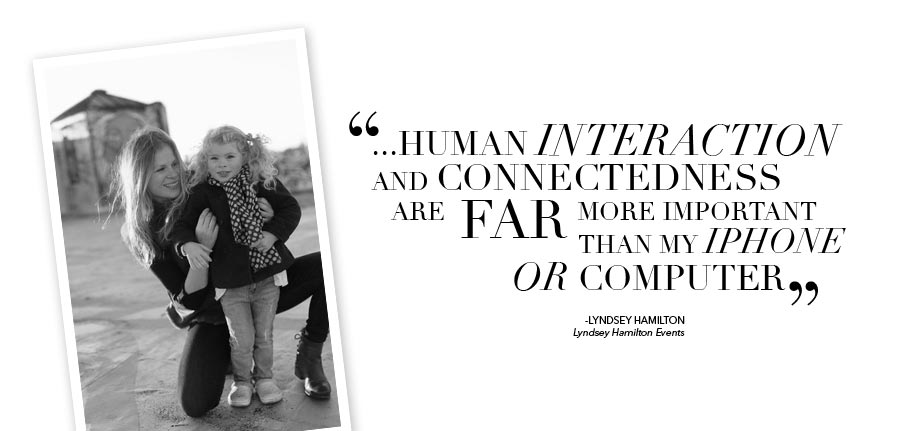
It has gone so far that some restaurants have pads attached to the tables for games, order placing, paying bills, etc.  No human interaction.  What kind of message is this sending to our youth, and what will the overall affect be on society?

There is nothing on social media that cannot wait.  If your family really needs to reach you they will call.  The jokes, posts, news articles, photographs, and more that are posted on a regular basis do not have to be reviewed every ten minutes, thirty minutes, or hour.  If you miss a few the world is not going to come to a screeching halt.  Heck, people have become so self-absorbed they probably won’t even realize you are missing.

So what should you do instead?  Take a break.  Go to dinner, have a conversation, go for a walk, and don’t check your phone and/or post for at least an hour or two.  At first it may seem difficult, depending on how much of an addict you are.  However I would be willing to bet that you will find it refreshing and strive for more unconnected periods of time.  You may end up like me, wondering why people can’t just step away at least a few hours a day.  social-interaction-human-more-important

Look at it this way.  Life is meant to be experienced live, not through the power of electronics.

4 Comments

Filed under communication, Discoveries, exploration, freindship, friends, friendship, habit, Life Changing, Life is a Melting Pot, mind

Too Busy for Friends

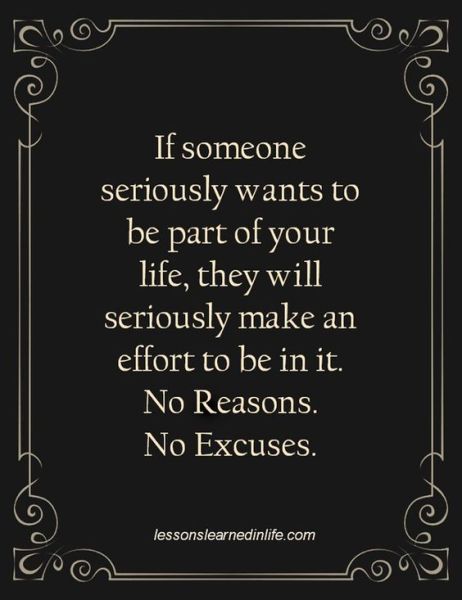
I saw a quote that made me wonder about friendships/relationships.  The quote dealt with people who make excuses that they are too busy to respond or don’t put forth an effort to maintain contact.  If a person is interested in being a part of your life, then they will make some effort to be in it.  life - if someone wants to be in it they will make time

This involved both self reflection and viewpoint on people I deal with.  I realized that because my husband and I enjoyed spending the majority of our free time together without the involvement of others I am in the habit of doing things on my own rather than calling a friend to go with me.  Now that my husband is deceased I need to train myself to make contact with people, become more social.  Habits are hard to break and I am concerned that people may view my lack of initiating contact as lack of interest.  I need to break the mold and step outside my safety box into new thinking.

I realize that people who reached out to me about getting together for dinner, etc. may think I’m not interested in maintaining the friendship when I don’t reciprocate with similar suggestions,  when in reality it is because I need to reprogram my brain to reach out to others for friendship.  I will say that when people suggest a get together I am happy to join them.  I am also responsive on social media or email, and will make first contact on social media.  I am not totally unsocial, I just have areas that need improvement.  I did take a step in the right direction last week when a couple artists were talking about going out to dinner after an event and I asked if I could join them.   It was a wonderful, fun evening.

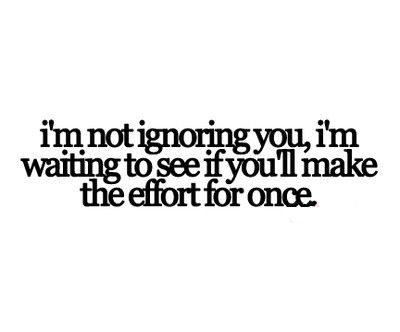
life - ignoring you - will you make an effortNow on the other side of the coin, we all know people we have made the effort to maintain contact with and yet the responses are not forthcoming or we get excuses of “I was going to write/call/respond but have been busy.”  I can understand that from time to time, but when the lack of response become repetitive you have to wonder where you fall on their list of friendship priorities.  Somewhere you have to draw the line and decide you are moving on and if they want to be a part of your life they will notice your disappearance and seek you out.  If they don’t you haven’t lost anything.  Life - Priorities - your place on their schedule
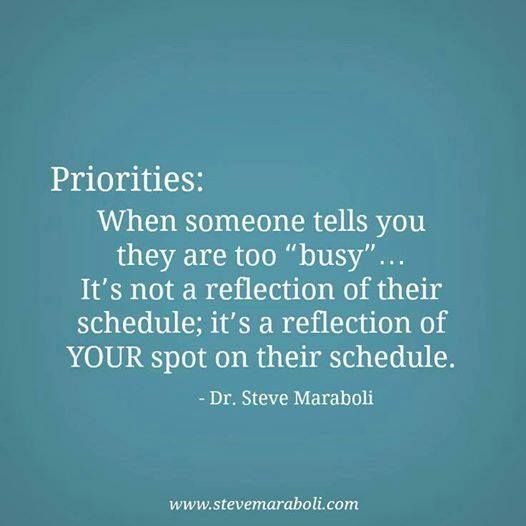
We live in a busy, fast-paced world where people don’t interact on a personal level so much as on a social media level.  We need to re-establish the art of friendship.  Reach out to people.  Respond when they reach out to you.  When you are with a friend put down the phone and talk to the person you are with.  Make people you want to spend time with a priority in your life.  If people don’t make you a priority in theirs then you know where you stand and it is time to move on.


Leave a comment

Filed under assumptions, decisions, Discoveries, Family, freindship, friends, friendship, impressions, Life is a Melting Pot, mind