Category Archives: Canada

Why Didn’t the U.S. Adopt the Metric System? – Part 3 of a 3 Part Series

In Part 1 of this series, I explained how I became curious about the planned conversions from the Imperial to the Metric systems of measurement in Canada and the United States. In Part II, I provided a history of Canada’s laws that enforced the conversion and where the country stands now in utilizing the Imperial versus Metric measuring systems. Now, let’s examine the United States’ history regarding the metric system, followed by my opinion on why it failed to implement the planned conversion.

The United States is a muddled mess when it comes to its measuring system. This inconsistency and lack of follow-through dates back to our founding fathers and continues through our failure to complete the transition to the metric system in the 1970s.

History:

 When the American Colonies were being formed, the Founding Fathers decided to use an antiquated measurement system they inherited from the British Empire. Article 1, Section 8, of the Constitution of the United States provided that Congress should have the power “to coin Money… and fix the Standard of Weights and Measures.” Thomas Jefferson, Secretary of State in 1790, endorsed the use of a decimal system of measurement. The only fear was that the United States would be unable to verify the metric units without sending a delegation to France, which would be costly.
The metric system originated in France. The goal was to establish a uniform standard for all measurements and weights. The unit of length was a portion of the Earth’s circumference, and volume and mass were derived from the length unit. This was achieved by multiplying or dividing by 10 and its powers. Ten is much easier to work with than dividing by 16 (to convert ounces to pounds) or 12 (to convert inches to feet). The metric system is a decimal system with a base of 10, allowing for calculations by shifting the decimal point.

The French government officially adopted the metric system on April 7, 1795. A scientific conference was held from 1798 to 1799 to validate the system and design prototype standards, with representatives from Denmark, Italy, the Netherlands, Spain, and Switzerland in attendance. The adopted standards became official in France on December 10, 1799.

The United States was snubbed by France when it invited the other dignitaries to travel to Paris to learn the metric system in 1978. This snubbing was due to the U.S. entering into the Jay Treaty of 1796 with Great Britain, a French rival. France viewed this as a violation of its own treaty with the United States. It retaliated by seizing American merchant ships and refusing to invite them to the conference on the metric system.

The United States, having not taken part in this gathering, adopted the U.S. Customary System as our official form of measurement under Secretary of State John Quincy Adams in 1821. Part of the reason for this decision was fear that the metric system might fail following Napoleon Bonaparte’s reign during the early 19th century. Napoleon imposed the metric system on the countries he conquered, making it a symbol of French control. When European countries revolted against French control, they returned to their original means of measurement. Even with this revolt against France, the metric system continued to grow in popularity. By the end of the American Civil War in 1865, most of Europe had adopted the decimal-based measuring system.

The metric system was gaining popularity worldwide, and although we had not been invited to the 1798 gathering in France to learn about the system, President Andrew Johnson recognized its importance. In 1866, President Johnson signed the  Kasson Act, making it “lawful throughout the United States of America to employ the weights and measures of the metric system in all contracts, dealings, or court proceedings.”

France held another meeting of the world’s leading nations to discuss a new international version of the metric system, and the United States received an invitation and sent delegates. During the 1875 meeting, the United States and 16 other countries signed the Treaty of Metre, establishing the International Bureau of Weights and Measures. The treaty also created the International Committee for Weights and Measures to oversee the Bureau and the General Conference on Weights and Measures to consider and adopt changes. A lab in Sevres, near Paris, was selected to house the international metric standards. The U.S. received its copies of these documents in 1890.
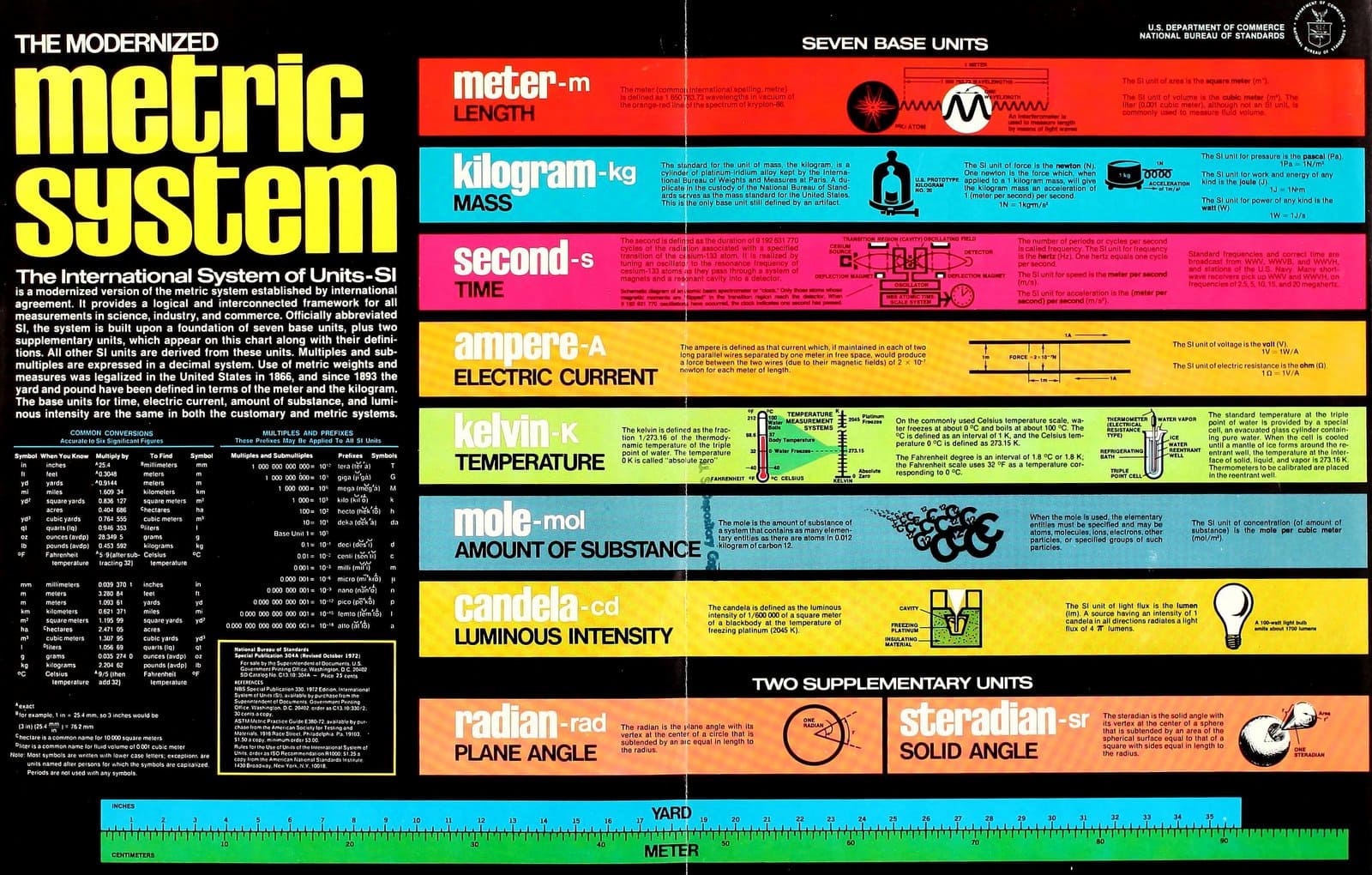
The Mendenhall Order of 1893 stipulated that the fundamental standards for length and mass in the U.S. would be based on metric units. This means the U.S. officially and legally recognized the metric system 159 years ago when Tomas Jefferson, in 1790, endorsed the decimal system of measurement. That standard was confirmed 132 years ago with the signing of the Mendenhall Order.

Current U.S. Standards

If you are like me, you probably read those last two dates and went “what!!!” If this has been our standard for over 132-159 years, why are we still not using the metric system? In my opinion, it is a combination of laziness, unwillingness to invest financially in the change, and, most importantly, lawmakers who were weak in committing to the change and developing a law that would mandate the conversion. Here is what happened that led me to that thought process:

Fast forward 78 years from the entry of the Mendenhall Order to 1971. The United States is still operating under the Customary Imperial system. The U.S. National Bureau of Standards recommended in 1971 that the U.S. transition to the metric system over the course of 10 years. This would mean that by 1981, the country would be fully converted to the metric system. The first problem was the weak law that enacted this process.

The Metric Conversion Act was signed into law by President Gerald Ford on December 23, 1975. It states that the metric system is “the preferred system of weights and measures for United States trade and commerce.” Still, it permits the U.S. customary units in all activities. It states that all conversions to metric are “completely voluntary” rather than establishing the 10-year deadline recommended by the U.S. National Bureau of Standards. Schools began teaching children the metric system, and some businesses made the change; however, the majority of conversions never took place.

Due to the U.S. failing to complete the conversion to the metric system, conducting business with foreign countries became more difficult. In 1988, the Omnibus Trade and Competitiveness Act amended the 1975 Metric Conversion Act. Federal agencies were now required to use the metric system in business activities, including procurement grants, by the end of the 1992 fiscal year. It designated the metric system as the preferred standard for trade and commerce and assigned the Federal Government the task of helping industry make a voluntary conversion to the metric system. The problem is that the conversion remains voluntary, and the private sector has no obligation to implement the change.

The result of these non-mandatory laws is that they left the United States out of sync with the rest of the world. It also means that some industries made partial or complete changes, while made no change at all. The United States is a hub of various measuring standards that are not mutually compatible.

Today, the U.S. uses the SI (International System of Units) on a daily basis. About 30% of products manufactured in the U.S. use metric units. Pharmaceuticals are all metric, and beverages show both U.S. customary and metric units. Film, tools, and bicycles are metric. U.S. coins & currency are produced using metric specifications. Wine and distilled spirits have been using only metric measurements since the early 1980s. Packaging uses metric units to provide net quantity, nutrition, and health-related information for prescription drugs, over-the-counter medications, vitamin supplements, and other products. The U.S. lighting sector uses metrics for light output (lumens), peak beam intensity (candela), beam distance (in meters), and impact resistance (in meters).

Understanding Imperial Standards

This article begins with Part 1, which explains my curiosity about how our current measures were established. I’ve taken a wide-ranging approach to the subject, due in part to my curiosity and love of history, and partly because I believe that to understand where we are, we must know where we came from.

While all this history is fascinating, it still didn’t answer my question of how the Imperial System of measurements was established. These measurements appear to date back to around 450 CE (Common Era; a secular version of AD). It was then that the Germanic tribes invaded England and established a system of measurement that remains in use today:

  • An inch (ynce) was the length of three (3) barleycorns.
  • A foot was initially based on the length of a human foot. This led to inconsistencies in measurement, so the 12-inch foot was officially codified by King Edward II, likely because 12 has more factors, making it easier to subdivide for carpentry and construction.
  • A yard was established as a 3-foot construction standard.
  • An acre means a field and was considered the size of a field that a farmer could plow in one day.
  • A gallon represents the volume equivalent to eight pounds of wheat.
  • A mile was established by the British Parliament as eight (8) furlongs, or 5,280 feet. A furlong was a length based on a single furrow in a plowed field and was standardized by England’s government around 1300.

The United States is the only industrialized nation that hasn’t made the metric system compulsory. While cost is one factor, the main reason is the failure of Congress to make the metric system mandatory in all 50 states, the District of Columbia, and all U.S. territories. The U.S. made the conversion voluntary in laws enacted in both 1866 and 1975. The country has failed to adopt a unified system of metric measurement for transactions that affect the lives of ordinary citizens.

This has led to a hubbub of mixed measuring standards:

  • A football field is measured in yards, but footraces are measured using meters.
  • Mechanics use horsepower to measure an automobile engine’s power, but the same engine’s displacement is in liters.
  • Air pressure is expressed in pounds per square inch, which is equivalent to millibars for air pressure aloft, and inches of mercury for surface atmospheric pressure.

In the U.S. Customary System, there are over 300 different units used to measure various physical quantities. The failure of Congress to make conversion to the metric system mandatory has resulted in the U.S. being a hodgepodge of imperial and metric systems.

Basic Measurement Conversions:

1 mile = 1.6 kilometers.
1 foot (12 inches) = 30 centimeters
1 inch is about 25 millimeters or 2.54 centimeters
1 yard (3 feet) is almost 1 meter
1 kilogram is just over 2 pounds
1 pound is about 454 grams
In the U.K., 14 pounds = 1 stone

Converting Fahrenheit to Celsius is easy:
0 degrees Celsius (°C) is equal to 32 degrees Fahrenheit (°F)
24 degrees Celsius is equal to 75 degrees Fahrenheit
To convert Celsius to Fahrenheit, use the formula of (c x 1.8) + 32

If you want to know more, you can use the World Wide Metric Conversion Calculator for converting pressure, temperature, length, weight, and volume. Just enter the measurement you have, and it will fill in all other boxes within that area.

In closing, should the United States have enacted firmer laws mandating the change to metric? Do you think it would be better if we were on the same measuring system as the rest of the world, or do you like being a stand-alone country using the U.S. Customary System adaptation of the British Imperial System? Share your thoughts in the comments below.

Leave a comment

Filed under assumptions, Canada, communication, decisions, Discoveries, education, habit, Michigan, reality, travel

Why Didn’t the U.S. Adopt the Metric System? – Part 2 of a 3 Part Series

In Part 1, I explained how I became curious about the reasons the U.S. did not convert to the metric system at the same time Canada was making the change, leaving us as one of only three countries in the world that do not use the metric system of measurement. This section explains what Canada did to ensure it completed its commitment to switching from the Imperial to the Metric system during the late 1970s and early 1980s.

In January 1970, the “White Paper on Metric Conversion in Canada” established the Canadian government’s policy regarding its conversion to the metric system. The document specified that Canada would utilize a single, coherent measurement system based on metric units for all purposes. They then developed the “Weights and Measures Act” in 1971 to recognize the International System of Units (SI) for use in Canada. The “Consumer Packaging and Labeling Act” in 1971 required the use of the metric system on most consumer packaging labels.

The change from Imperial to Metric took time in Canada and began in the mid-1970s. I was a high school student in the United States and didn’t concern myself with what was going on in Canada. I do remember them telling us that we needed to learn the metric system because the country was changing to that form of measurement. I also recall that there were many objections to making the switch. We did incorporate some changes rather quickly, the main one being the switch to one- and two-liter bottles of soda. I don’t remember many other changes being made.

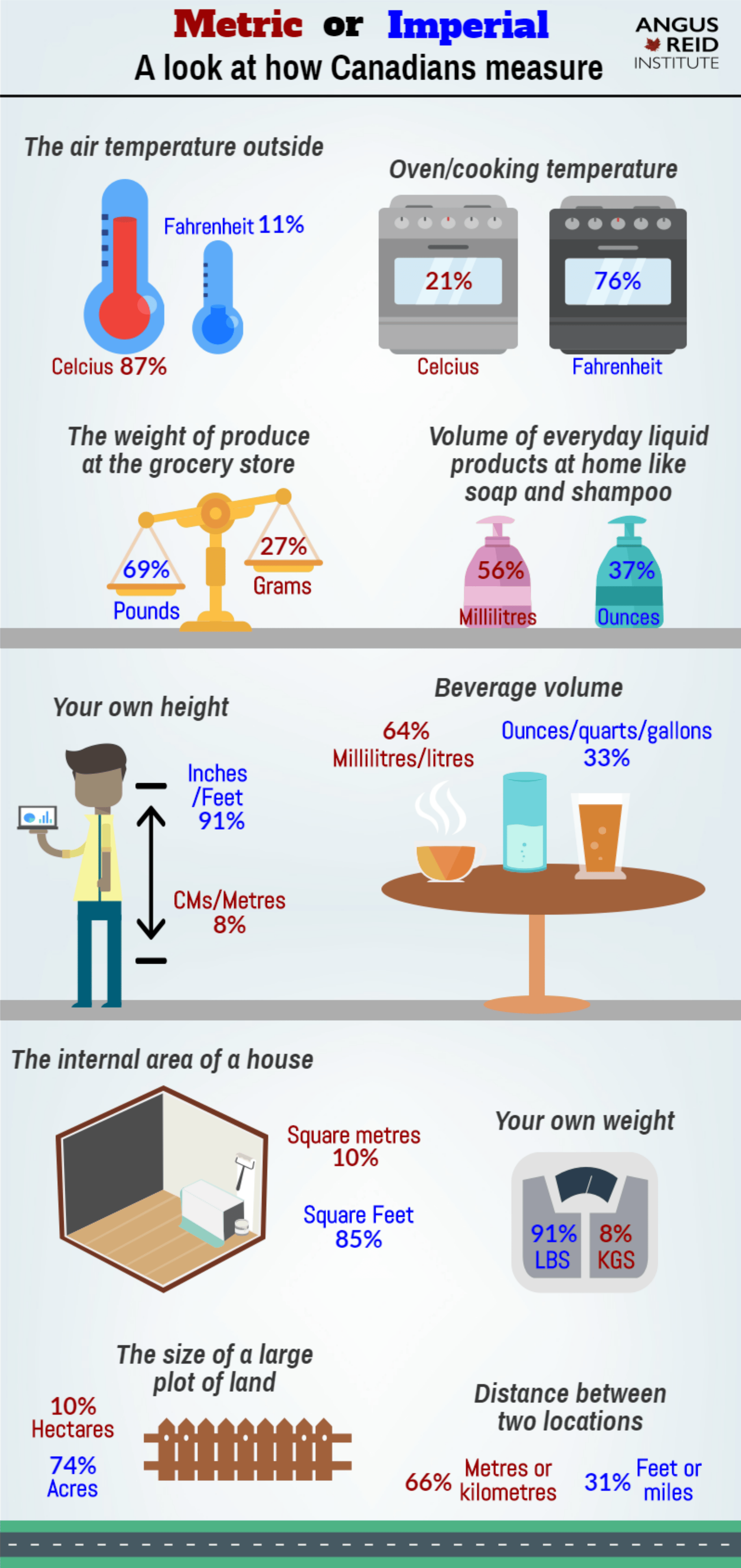
A look at how Canadians Measure

In Canada, things were rolling along at a gradual but steady pace:

  • Temperatures in Celsius beginning April 1, 1975
  • Rain and snowfall in millimeters and centimeters starting September 1975
  • Road signs showing speed limits in kilometers in September 1977
  • Speedometers and odometers in cars are manufactured in metric units beginning January 1979
  • Gas stations were pricing and dispensing gasoline and fuel in liters in 1979
  • Fabrics and home furnishings were required to be advertised and sold in meters and centimeters beginning in December 1980
  • Conversion of food weight measurements for advertising and pricing in metric units, starting December 1983.

We tend to assume Canada is solely metric, rather than the melting pot of systems that actually exist there. Canadians still use imperial units rather than metric in some areas. In 1985, Canada exempted some small businesses from the requirement of metric sales. Other requirements were also revoked, including the use of metric alone for measuring gasoline, diesel fuel, and home furnishings.

Even given these leniencies to a complete change, if you travel to Canada, be prepared for your speed limits and mileage signs to your next stop to be in kilometers, gasoline is sold in liters, and if grocery shopping, have a calculator/cell phone handy to make conversions from metric sizing to imperial sizing. This information is especially helpful when determining the size of ingredients for a recipe.

Being a lifelong resident of the United States, I didn’t delve as deeply into Canada’s history of its measuring system conversion as I did into my own country’s. Watch for Part III, where I’ll give the United States’ history and why it failed to complete the conversion.

Leave a comment

Filed under Canada, communication, decisions, education, employment, impressions, Life Changing, time

Why Didn’t the U.S. Adopt the Metric System? – Part 1 of a 3 Part Series

Listening to a weather forecast on a Canadian TV station, the temperatures are given in Celsius. Paul, who grew up in Canada, makes the mental conversion easily. Paul grew up using the Imperial system of measurement, which is used in the United States. After he was an adult and had immigrated to the U.S., Canada converted to the metric system. Paul is an electrician, a profession that uses the metric system of measurement. That, combined with his frequent travel to Canada, means he is familiar with both systems and believes the metric is a more accurate means of measurement.

Paul frequently comments that the U.S. was supposed to make the conversion to the metric system when Canada did, but failed to fulfill their promise. I recall being in grade school when we were told that the United States would adopt the metric system. I wondered how valid Paul’s repeated comment was, so I delved into researching the topic.

 Canada was making the transition at the same time and completed their conversion between 1970 and 1985. The United States never finished the conversion, despite agreeing to do so, and continues to use the Imperial System today. That made me wonder, why did Canada succeed, and we didn’t?

In my opinion, the U.S. failed to complete the conversion due to a lack of effort and unwillingness to invest in implementing the change. Businesses opposed the cost of having to retool and adjust standardized measurement systems, including bolts, pipes, and nuts, to metric measurements. The Metric Conversion Act of 1975 [ https://usma.org/laws-and-bills/metric-conversion-act-of-1975 ] made the metric system preferred, but not mandatory. This, combined with public resistance and the government’s inability to enforce the change, led to the failure to implement the change.

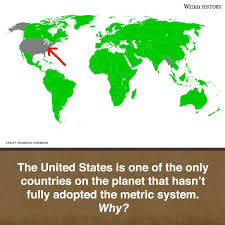
As of today, the United States is only one of three countries (the United States, Liberia, and Myanmar (Burma)) worldwide using the Imperial measurement system. The Imperial system [ https://www.britannica.com/topic/Imperial-unit ] (also known as the British Imperial system) originated from the British Empire, which ruled many areas of the world between the 16th and 19th centuries. Although the U.S. Founding Fathers made numerous changes in governing style when obtaining independence from Britain, they decided to maintain the Imperial system of measurement, despite the metric system growing in popularity.

A chart showing the Imperial vs Metric measurement and weight differences.

Rather than adopting it in its original state, the United States devised its own version of the Imperial system, known as the U.S. Customary System. It uses measurements of feet, pounds, and miles, but differs slightly from the British Imperial system. The most substantial difference is in volume:

  • The U.S. Customary fluid ounce is 29.573 ml; the British Imperial fluid ounce is 28.413 milliliters.
  • The U.S. Customary pint is 473.176 ml (16 fl. oz); the British Imperial pint is 568.261 ml (20 fl. oz).
  • The U.S. Customary quart is 0.94 L (32 fl. oz); the British Imperial quart is 1.13 L (40 fl. oz).
  • The U.S. Customary gallon is 3.78 L (128 fl. oz); the British Imperial gallon is 4.54 L (160 fl. oz).

The reason for creating the Customary version of the Imperial system was that the metric system was not yet fully developed. The Founding Fathers had a desire to establish a unique national identity and infrastructure, and tweaking the system to make it unique to the U.S. was their way of achieving this goal.

Myanmar (Burma) and Liberia use the Imperial system but are transitioning to the metric system; neither has a predicted completion date. Once their conversions are final, the U.S. will be the sole user of the Imperial system. In 2021, the British government announced plans to return to the Imperial system during its exit from the European Union. The changeover began but was abandoned in 2024 after consulting with the public and discovering overwhelming support for using metric units. They do still use the imperial system for things such as beer sales, road speed, and distance signs, and body measurements.

Although I found the metric system difficult to learn as a child, our government failed its citizens by not enforcing a complete change in the 1970s. A full conversion would have served business owners better in international trade negotiations and put us on equal terms with all foreign lands in understanding measurements when traveling.  

All countries worldwide, including the U.S., Myanmar, and Liberia, have adopted or legally sanctioned the International System of Units (SI), the modern form of the metric system. Canada and the United States are both melting pots of the Imperial and Metric measurement styles.

Watch for Part II and Part III in upcoming blogs, which will deal with the law and the Canadian conversion, the laws and the United States conversion, and where the United States stands today.

Leave a comment

Filed under Canada, communication, decisions, Discoveries, education, home, Life Changing, Life is a Melting Pot, Michigan, reality, travel, Weather

Not Smart Enough

Imagine back to when you were in the 8th grade, about 14 years old. You must make a decision that impacts the balance of your time in school. You can take a vocational program, which you attend to grade 12, or a university prep program, which you attend to grade 13.

Once you make your decision, you cannot change to the other program. Now, consider being that 8th grade boy and before you make that decision your school principal informs you that you aren’t “smart enough” for college, so you better go vocational.

That is the way school in Owen Sound, Ontario, Canada was in the mid-late 1950s when Paul Cannon attended. He followed the advice of his principal. The question is, after hearing the principal’s assessment of his abilities, what did Paul do with his life?

The Teen Years

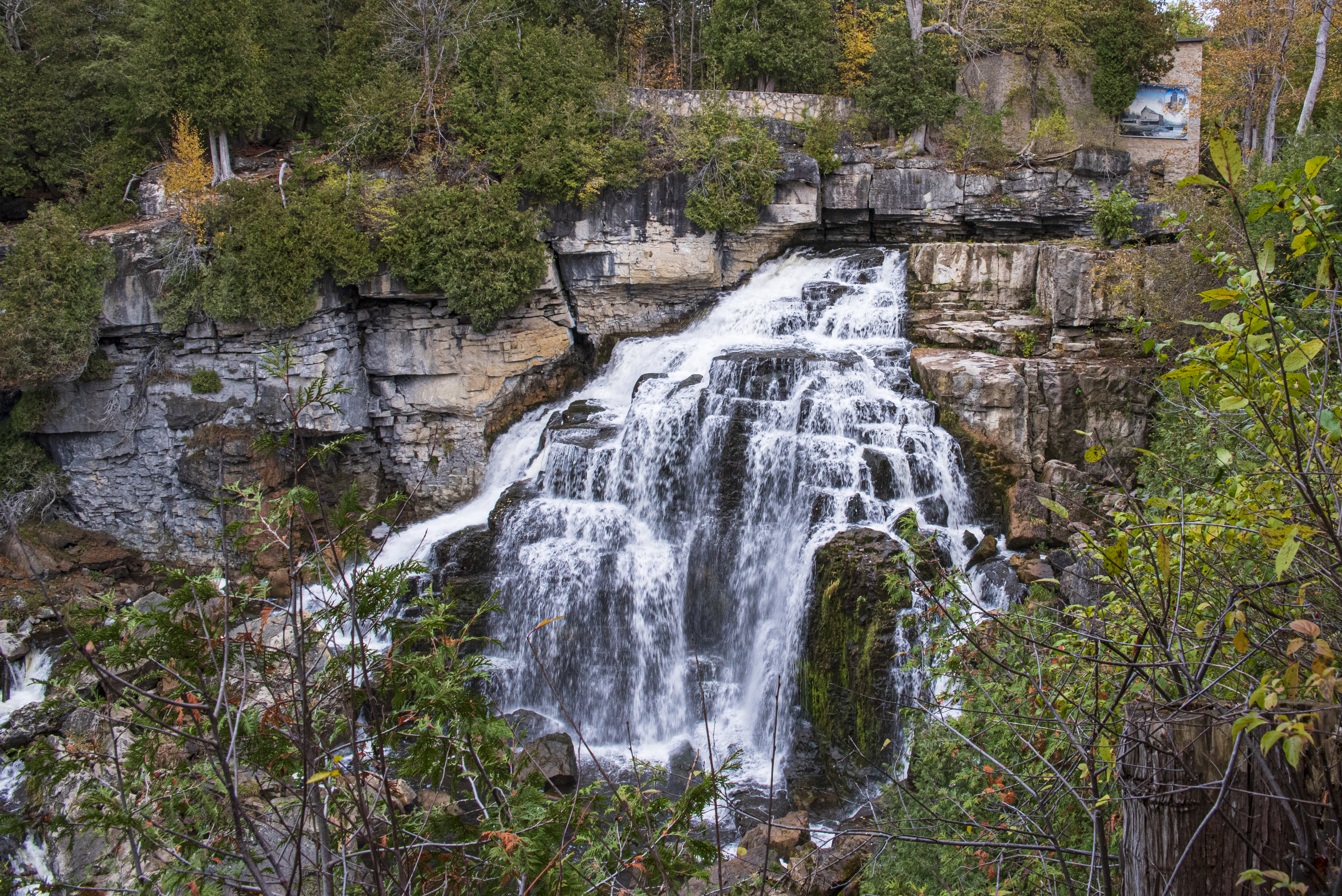
Paul was not afraid of water, and unbeknownst to his mother he and his friends would climb Inglis Falls in the summer. This was the largest of the four waterfalls in town and has a 59-foot cascade. I’ve seen in the fall with a slow flow of water. It is huge! 

Inglis Falls in Owens Sound, Ontario, Canada
Inglis Falls in Owens Sound, Ontario
Photo by Grace Grogan

When Paul was about 14-15 years old he became certified as both a swim instructor and a lifeguard. He worked as a lifeguard at the community pool and taught swimming to adults and children both there and at the YMCA.

Paul was interested in science and technology, and around age 16 he and three friends learned about an Army surplus store in Toronto selling non-working ham radios for parts. The store had ten radios, and they purchased them all. The intent was to build two or three operating ham radios from the parts, and they did!

Paul and his friends had fun communicating on the radios for about a year. None of the teens had taken the required test to become licensed ham radio operators so were broadcasting illegally. An officer tracked them down and removed the tubes, rendering the radios inoperable.  Years later as an adult Paul took the test and became a licensed ham operator.

Paul always had an interest in aviation and was a cadet in the Civil Air Patrol (CAP) in Canada growing up. The group’s intent was to introduce 12-19 year old students to flight. As a CAP cadet, Paul received education regarding citizenship, leadership, physical fitness and general aviation. In Canada today one out of every five pilots is an ex-air cadet and 67% of commercial airline pilots began as air cadets.

Bush Pilot

When Paul was 16-17 years old he got a summer job working for a bush pilot in a nearby town. That first summer Paul performed miscellaneous jobs and ran errands. When the summer ended the owner told Paul if he returned the following year the owner would teach Paul to fly.

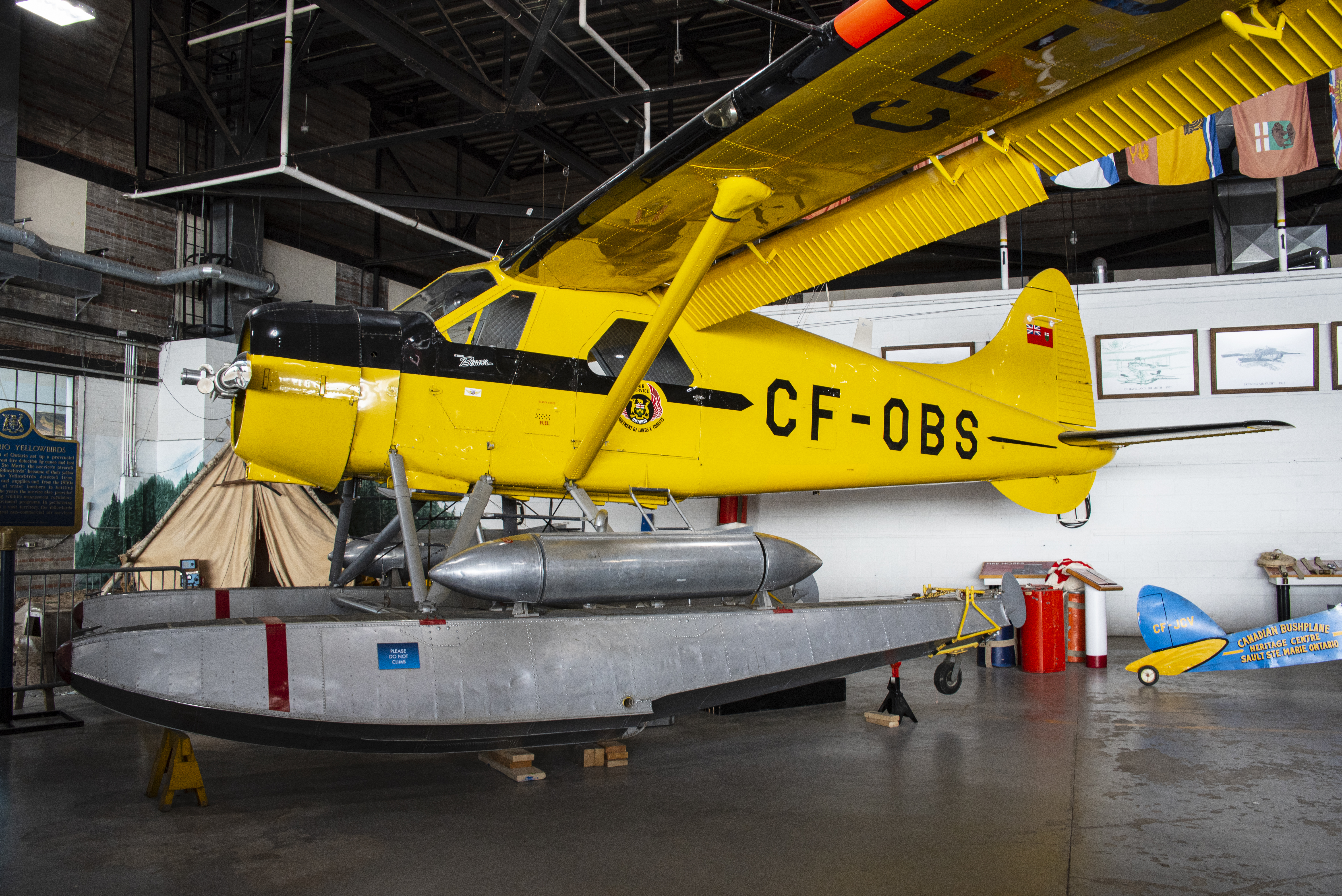
Paul returned and became a bush pilot, flying a Beaver pontoon plane. Bush pilots fly in remote areas, and Paul’s job was to deliver supplies to cabins in the wilderness. You have probably seen this in movies where a plane lands on a body of water, docking near a cabin to leave supplies.

All pilots must learn how to read the weather, and because pontoon pilots land on water, they must also evaluate the water’s surface before touching down. Accommodations must be made for wind direction, the direction and speed of the current, and any obstacles that may affect their landing. Once on the water the pilot must follow all marine rules.

On one flight Paul was landing to leave supplies at a not-yet occupied cabin when the engine on his plane blew. Oil splattered the windshield and the plane stopped before he was near shore. Pontoon planes must carry a paddle for this type of situation. Paul shut down all systems on the plane, then climbed out to sit on one of the pontoons, straddling it like a horse. Paul then paddled his way to shore. If you think rowing a boat is difficult, try an airplane! 

There was no radio communication, so Paul unloaded the supplies into the cabin and hunkered down for the night. His boss had expected him back before dark, so when Paul didn’t return the owner went out the next morning, flying Paul’s route. When he spotted Paul’s plane, he touched down so see what was going on. Paul already had the cowling off the plane, but neither Paul nor his boss had the tools or knowledge to repair the engine.   

Beaver Pontoon Airplane
Photo by Grace Grogan

The owner said he would be back, and when he landed the second time he was accompanied by a mechanic and tools. The owner left Paul and the mechanic to work on the engine. The two spent another night at the cabin before repairs were complete. The plane Paul flew only had one seat, the pilot’s. Once the repairs were complete, the mechanic strapped himself onto the top of a cargo box in the plane and rode back with Paul.

Bush pilots are required to carry a bush pilot’s rifle because situations such as the one above or an unanticipated stop in the wilderness can put you in danger. If Paul was flying his route and saw severe weather ahead, he would land the plane and beach it. Using ropes he would tie the plane to trees to secure it during the storm. When performing these tasks, he always had to be on the lookout for bear.

Paul continued working as a bush pilot for a year after graduating high school, then left for Toronto to attend college.

Radio College           

Radio College of Toronto, Ontario trained students in electronic engineering technology and had a focus on tubes and digital electronics. Electronics technology was the wave of the future in the early 1960s.

While Paul was attending college, he lived in a boarding house with 17 other men. They were housed two to a room, with no locks on the room doors. The home was run by a single woman who ran a tight ship. She made all beds every day and washed the sheets once a week.

Board included breakfast and dinner Monday thru Friday. Paul quickly learned that when sharing a table with a large group of men there were no second helpings. You better get a sufficient amount the first time a dish went around the table. Lunch and weekends boarders were on their own for meals, but could use the kitchen and food she had as long as they cleaned up afterwards. This was a very different type of living than Paul had growing up as an only child.

One evening Paul and his roommate heard a knock on their door, which immediately flew open and in rushed the landlady. She didn’t say anything but hurried over and threw open the window, reached into her pocket to grab a pair of scissors and reached out. The next thing Paul heard was glass breaking on the sidewalk below. Apparently one of the borders owed the landlady money, and she suspected he might try to slip out. By cutting the string to the bundle of belongings the border was lowering from his third-story window, the landlady made it clear she knew what he was up to. No one knows if she collected the money owed her or just enjoyed a bit of revenge.

Paul rode the streetcar to and from college, and sometimes hitch hiked his way back to Owen Sound on weekends to visit his parents. If living in a boarding house and using public transportation bus wasn’t enough of a challenge, Paul was doing this on crutches. Paul played B-Team Hockey and did competition ski jumping. Unfortunately, he landed a jump wrong, breaking his ankle.

Paul quickly learned that in a time of need, crutches make a great weapon. One day Paul got off the streetcar and some guy, thinking he had one-up on Paul, knocked Paul’s books out of his hands. Paul may have been a bit disabled, but not unarmed. He swung one of his crutches around and clobbered the guy. A police officer saw the exchange, came over to pick up Paul’s books and make sure he was okay. When Paul left the scene his attacker was in the back of a police vehicle.

Using city transportation when dating was something Paul learned could be difficult. On one date Paul took a girl out, then escorted her home, staying to visit until about midnight. Big mistake!  When he got to the bus stop he had missed the last bus in that area, so he walked down to the next line, just in time to miss the last subway of the night. He ended up walking all night to get back to the boarding house. Thank goodness it happened on a Friday night, and he was able to sleep when he arrived there the next morning.

Work and Electronics

After graduating from Radio College, Paul took a position installing and repairing x-ray machines throughout Canada. This took him into every Canadian province, a position that nurtured his love of travel and photography. His goal was to emigrate into the United States, work his way west and eventually end up in Australia. He didn’t make it past Michigan.

Immigration into the United States took about a year. Paul needed to find a job that would hold the position for six months while he completed the immigration process. He was about 23 when he got his first job in Michigan doing the same thing as in Canada. Paul was living the bachelor’s life, driving a convertible and working in hospitals throughout the tri-state area of Michigan, Ohio, and Indiana, where there was plenty of female staff to date.

Many people do not realize that immigrants must register for the draft six months after they become permanent U.S. residents. Paul registered during the Vietnam era and knew how to fly the same type of plane being used in the war. Each year he was obligated to check in at the military office, and each time he met new criteria for a waiver so was never drafted.

Career Change

Paul was talking with an electrician and learned they made more money than Paul  was in the electronics field. Paul purchased code books and studied to become an electrician. Though not licensed, he got a job working for Morgan Electric. When a client requested a special electrical job, Paul volunteered for the assignment. The client was impressed with Paul’s work and offered him a job working for their company.

Paul made the job change. Always looking to advance, Paul later applied and got a job in skilled trades as an electrician at the Ford River Rouge plant. Unfortunately the plant did layoffs before Paul had 90 days in.

Needing work and the economy being bad, Paul took a job working on an ambulance. It was on-the-job training, they were not paramedics. The crew would perform basic first aid and transport patients to hospitals. This was during the 1967 Detroit riots and runs were often into dangerous areas. It wasn’t all bad though.

One run was to Governor Romney’s home. The governor’s wife had fallen and injured herself, requiring an ambulance transport. Paul also delivered two babies during his time on the ambulance. One laboring woman looked at him and said, “it’s my first” and he responded, “mine too.” 

When Paul’s father notified him Pittsburgh Glass Works was opening a plant in Owen Sound and needed skilled trades workers, Paul applied and was the first electrician hired. He moved back to Owen Sound and lived there for two years. The glass plant job gave him experience in trouble shooting factory machinery, which would pay off later.

When the economy improved Paul moved back to Michigan and took a position at Allied Chemical in Mount Clemens. An electrical inspector saw his work and volunteered to sponsor Paul for taking his journeyman’s test. You cannot take this test until you have verification of 10 years of experience working as an electrician and a sponsor. Paul passed the test and immediately began studying for his master’s license.

You must work as a journeyman for a minimum of two years before taking your master’s exam. When Paul reached the qualification period he took the test and became a master electrician. Paul then started his own electrical contracting business, Trojan Electric. This electrical contract work was in addition to his full-time employment. His business was lucrative enough to necessitate employing a work crew.

While working at Allied Chemical in Mt. Clemens, Paul saw an ad for skilled trades at the Ford Motor Company Paint Plant. Paul applied and went into Ford as a re-hire. He remained at Ford as an electrician in skilled trades for the balance of his working life, retiring out of the Ford Utica Trim plant.

Back to Flying

After Paul immigrated into the United States, he checked into getting his pilot’s license. The bush pilot Paul worked for never had him keep a pilot’s logbook, so there was no record of his time in the air. Paul had to start over. Lessons were easy because he knew how to fly, he just had to master landing on solid ground.

Pilots must learn navigation and weather patterns, plus cloud types and cloud levels for flight. Paul can look down the road when driving and recognize rain that is coming down but not reaching the ground. He can also see it ahead and predict the time the vehicle will drive into it. Navigational training allows him to know the direction he is driving based on the sun.

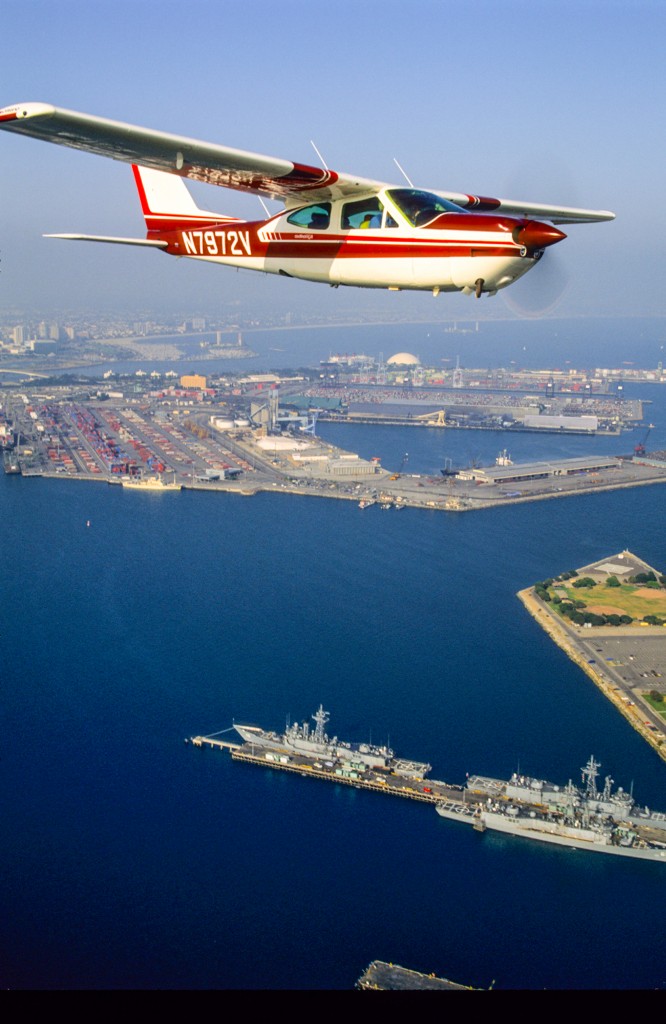
Paul purchased his own plane, a Cessna 177 RG (RG means retractable gear) and served as an adult member on the Civil Air Patrol (CAP). The Civil Air Patrol is an Auxiliary of the U.S. Air Force that was founded in 1941 to mobilize civilian aviation resources for the national defense.

Cessna 177 RC
Cessna 177 RG
Photo obtained off Internet

Paul underwent training in CAP to fly both counter drug operations and search and rescue. He enjoyed his time working on missions, which often ran one to two weeks at a time. He also volunteered his time working with CAP cadets, taking them up in his plane for a ride or assisting at special cadet outings. The CAP has the same officer ranks as the Air Force, and by the time Paul retired from service he had achieved the rank of Major.

Paul’s love of aeronautics led him to volunteer his time at the air show held each year in Oshkosh, Wisconsin. He worked in the sound center manning the sound control for the music and announcers during the air show. This required balancing the voice and music, plus timing the music for the air acrobatics of the plane.

Paul learned to be prepared for the unexpected. A woman was narrating her husband’s performance when his plane crashed. Her reaction was a blood-curdling scream into the microphone. Paul immediately cut the sound.

Paul enjoyed his time at the air show, meeting celebrities and working with pilots to time their music to their performance. It was a week of both work and fun, affording him full access to the air show grounds.

In His Free Time

When Paul was ready to move out of the city, he purchased five acres of property in St. Clair, Michigan and built a home. Paul was the contractor for the job. He ran all electrical wiring in the home and finished the interior. This included building the staircase leading to the second floor and installing all kitchen cabinets and countertops. He did this while working full-time at Ford Motor Company and running Trojan Electric.

In addition to volunteering his time with CAP, Paul participated in a computer club and remains a member of the Blue Water Shutterbugs Camera Club. Paul served as treasurer in both clubs. His photographs are sold on Alamy and Fine Art America, and for several years he sold them in fine art shows. Paul spent several years teaching photography, originally in a classroom setting, then one-on-one. He customized lessons to fit his student’s needs, including how to operate a camera, how to take better photographs, and how to process photos in Photoshop.

Paul Cannon now lives and travels throughout the United States and Canada in a 35-foot motorhome, towing a Jeep Rubicon. I am lucky to be living and traveling with him on his latest adventures. We enjoy visiting new places and navigating off-road trails. We produce videos of our adventures and share them on our YouTube Channel, Rolling Thru North America, Travel With US!

Not Smart Enough?

Can you imagine if Paul had only been “smart enough” for college what he might have done with his life? Maybe it is a good thing he did not attend a 4-year college. Paul may have not been ‘smart enough” in his principal’s eyes, but what he has accomplished in his 78 years of life has been diverse and interesting.

Writer’s Note:  This was originally written entirely from memory based on information I garnered from Paul over the past six years. After publication Paul read the above and advised me of some minor corrections needing to be made. Those changes have been made and the writing is now accurate.

Leave a comment

Filed under assumptions, Canada, career, children, decisions, Discoveries, education, employment, exploration, Full-Time RV, hobbies, home, impressions, Life Changing, Life is a Melting Pot, Michigan, Photography, time, travel

DOCUMENT YOUR PART IN HISTORY

I look around, the place has more people than normal for this time of year, but it is still pretty well emptied out. Why wouldn’t it be? Who wants to stay where the summer temperatures go as high as 120° Fahrenheit?

Yet, here I am. Our original plan was to leave here at the beginning of April and visit several national parks and scenic areas through several states before heading to Michigan to visit family. Then head south and west again, hitting Sault Lake City and Colorado Springs for photography and RV conferences before going for a three-month stay on South Padre Island, Texas, followed by winter back here in Yuma, Arizona.

Those plans have been crushed by the Coronavirus shutdowns. We have extended our stay here in Yuma until at least August 3rd. We are trying to secure reservations in Michigan for somewhere between mid-August to early October, but so far have not had any luck. The state is still locked down and the few campgrounds that are open do not have long-term spots available.

Time will tell if we travel, where we will be, and when we will get there. When you live full-time in an RV, campgrounds are an essential part of life.

We are living through an event that will be written about in history books. Have you recorded your stay-at-home location and changes in lifestyle? Have you noted the schools closing, people doing work-at-home because businesses closed, hospitals overrun with patients, people wearing face masks and gloves to protect those around them?

If you have young children, have you recorded their thoughts on what is going on around them? These are memories that may be forgotten over time but will be important to future generations.

This slideshow requires JavaScript.

Paul and I are hanging tight in Yuma, Arizona. I walked around the park and took snapshots of the camp, documenting the place that was full when we arrived in February and is now almost empty. A lot of the people here in the winter are Canadian snowbirds who were ordered to return to Canada in March or lose medical insurance due to the pandemic.

So where are you? Have you documented the event? Leave me your comments below.

Stay Safe!

Leave a comment

Filed under Activities, assumptions, backyard, Canada, communication, Coping, decisions, Discoveries, environmental, exploration, flowers, Full-Time RV, home, impressions, Life Changing, Life is a Melting Pot, memoir, Michigan, reality, spring, summer, time, tourism, travel, winter

SEVEN WEEKS AND ROLLING

This slideshow requires JavaScript.

Hard to believe it has been seven weeks since I started my new lifestyle of living on the road full time in a motor home (a/k/a full-time RV).  In that amount of time I have visited Ontario, Quebec, New Brunswick, Prince Edward Island and Nova Scotia, Canada and Bar Harbor/Acadia National Park, Maine in the United States.

One thing you have to do when living this way is be conservative, be flexible, and enjoy life.  Sometimes things go well, and other times the best laid plans can be foiled.  Highlights of my travels and learning curve:

  1. The best laid plans can be foiled when you make a day trip three hours away only to discover that town’s power is out and all businesses (including museum you wanted to visit) are closed.
  2. Pulling off for a quick lunch break takes more planning in a 35-foot motor home towing a vehicle than it does in a car.
  3. Ottawa, Ontario is the capitol of Canada and is a very interesting city, but bring your walking shoes.  There is one parking lot in the entire city and a lot of area to cover.   If you take a double decker bus tour it is a great way to get around, but you may end up with a tour guide who has a strong French accent and is difficult to understand.
  4. Canadians are very pro recycling The question in grocery stores is “Do you have your own bag?” not “paper or plastic?”  Some stores charge you for use of their bags.
  5. You can not stock up when items are on sale.  There is no extra room beyond the refrigerator and pantry.
  6. There is a large percentage of people in Canada who hang their laundry outside to dry….many on pulley-style clotheslines.
  7. When living in an RV, laundry is a necessary evil that must be done in a laundromat (most campgrounds have them) every 2-3 weeks.
  8.   You can live in a house for years and never wave at your neighbors, but in a campground everyone waves at everyone else.
  9. The architecture and culture of Quebec City, with its fortification wall, Citadelle, and French influence is like taking a step into another country.
  10. When you travel full time you need down time.  This is not a vacation, it is a lifestyle.
  11. When you give up on the road signs being true and think you will never see a moose, one shows up on the side of the road and you do not have the camera ready.
  12. No matter how many times you see them, the difference between high tide and low tide at the Bay of Fundy is amazing.  This is where you see the world’s largest tides.
  13. Getting your mail an average of once every four to six weeks takes planning so it arrives in a city where you plan to be at the appropriate time.
  14. A GPS can be your best friend and your worst enemy.  Our Trucker GPS in the RV took us down a road that had been re-done two years ago and no longer goes through — it is now a dead end.  When towing you cannot back up because it damages the tow unit, so we had to disconnect the jeep, turn the RV around and then re-connect before we could continue.  Of course it would have helped if Ellsworth, Maine had put up a “Dead-End” sign, as a woman on the road said it happens all the time and they have been after the city to do something.
  15. In many spots what is promoted as a “scenic drive” is overgrown with nothing to see.
  16. Convection oven cooking is not difficult, just different.  The three burners on the stove-top is much harder to adjust to as it does not easily accommodate large pans.
  17. I have not adjusted to the feel of the motor home when driving in high winds or uneven pavement.  That one is going to take some time!
  18. This is an awesome way to live and I’m glad I took the plunge and jumped in with both feet.

As time goes on I look forward to sharing more of my travel adventures with everyone.


Leave a comment

Filed under Activities, assumptions, Canada, Coping, decisions, Discoveries, environmental, exploration, freindship, friends, friendship, Full-Time RV, habit, home, impressions, Kitchen, Life Changing, Life is a Melting Pot, Meals, memoir, nature, Photography, reality, spring, summer, time, tourism, travel, vacation, winter, Writing

My First Week as a Nomad

My first six days as a Nomad were interesting, fun, and sometimes frustrating.  In many ways it feels more like a vacation rather than a lifestyle change.  It is relaxing and interesting, and sometimes not at all what is planned.  If I can experience all this in six days, I can’t imagine what the future will bring.

On Monday we left Port Huron, Michigan and traveled to Sault Ste. Marie, Ontario, Canada.  Our original plan was to stay only two nights, but after reviewing travel information about the surrounding area decided to extend our stay to a total of four days.

On Tuesday we visited the Bush Pilot Heritage Centre in Sault Ste. Marie.  Paul was a bush pilot when he lived in Owen Sound, Ontario as a teen so this was on his “hit list.”  The museum was interesting, with several planes on display inside the hanger where the museum is located.  We viewed two movies, the first was an “on board” experience with a bush pilot, and of course took the rider through a series of mistakes and mishaps that can happen on a plane, including an unexpected storm, dozing off with the plan on autopilot, and more.  The second movie was in 3D and took you into the heart of fighting forest fires.  You experienced time in flight with the commander of the entire firefighting operation, in flight with a pilot doing water drops, and on land with a ground firefighting crew.  Both movies are well worth the time it takes to view them.

A small town about four hours northwest of Sault Ste. Marie is the home of Winnie-the-Pooh, and houses a statue of Winnie, as well as a Winnie-the-Pooh and Railroad Museum.  I wanted to go there so a day trip was planned.  Part of the trip goes along the shore of Lake Superior, and we figured we would find photo ops along the way.  A visitor guide worker had told us about an off-road trail on that stretch which Paul wanted to check out.  We didn’t locate the trail she used, but did access a logging trail, which about 20 minutes in we decided was not offering any photo ops so turned around and continued on our journey.

We did find a couple spots to stop and take photographs of Lake Superior, and a small rapids and river we walked in and photographed.  It was interesting that this entire route had very few towns, gas stations, or any other type of business or rest area to stop at.    So scarce they were practically non-existent.  We saw a rest area/visitor center which made a good stop for a few minutes.  They had a small gift shop where Paul decided to pick up a couple energy bars to tie us over until lunch, which we planned to eat in White River.  That purchase turned out to be a very good decision.

This slideshow requires JavaScript.

We munched on our energy bars, and decided to stop for gas as we rolled into White River, because we would need it to make the full journey back to Sault Ste. Marie.  There were barriers up across the gas pumps and an attendant walked over and informed us that the pumps were not working because the entire town of White River had lost power and nothing was open.  We drove through town and took pictures of the Winnie-the-Pooh statue.  The attendant was correct, absolutely everything, including the museum we had just driven four hours to visit, was closed so we started our journey back.

Not too far south of White River was a small gas station with full-service pumps.  The attendant there shared that the last time White River lost power they were out for a week.  He also let us know that there was a restaurant on Hwy 17 just south of Wasmus where we could get lunch/dinner.  By now it was after 2:00 pm and we were definitely getting hungry.

We drove the two hours south and located the restaurant.  Our luck had not yet changed; on the front door hung a sign that they were closed until 5:00 pm.  It was only 4:30 so we decided to drive on.  We were not far from our campground when we found The Voyageur Lodge, which included a small restaurant.  The menu was limited, but the food very good.  Paul had an open face hamburger, which had gravy to which he added mushrooms and onions.  It normally included fries and coleslaw, but he switched the fries for onion rings, which he said were very good.  I opted for a fish sandwich which also came with fries.  The sandwich was made with whitefish which was lightly breaded and very nicely done.    We shared a butter tart for dessert, also very tasty.

Our final day in Sault Ste. Marie we drove into town and visited the historical canal sight.  At the end of the island was a swing damn, one of only nine built and the last in existence.  It is used in emergency situations if there is a problem with the lock.  This is also where the lock is located for small boats, and we were lucky enough to see two of the Soo Locks Tour boats use the lock at the same time.  The difference in elevation between Lake Superior and Lake Huron is 21 feet, so quite interesting to observe the lock in operation.   A nice way to finish out our stay.

Friday morning we said goodbye to Sault Ste. Marie and drove east through Ontario, stopping at a small campground in Lavigne, Ontario.  We are here only for two nights.  One day of rest and computer work before continuing our journey to Ottawa, the capitol of Canada, where we plan to spend four days.

We did take some time from our paperwork to photograph some very decorative scarecrow displays around town.  These have been prepared as part of a plowing competition in September. I finished out our last night in Lavigne with a walk around the park, taking a few photographs of Lake Nippising, which the campground is located on.

So far my life as a nomad has been interesting and relaxing, even if Winnie-the-Pooh’s hometown did leave me a bit frustrated.  I guess in this lifestyle you simply have to go-with-the-flow when rocks appear in the river.

Leave a comment

Filed under Activities, Canada, decisions, Discoveries, education, exploration, impressions, kids, Life is a Melting Pot, memoir, Michigan, nature, summer, tourism, travel, Upper Penninsula, vacation