
The calls begin around 6:00 am and last until around 7:00 pm. This happens every year during open enrollment. I receive a plethora of spam calls, and this year it is a major overload. I counted them one afternoon and had already received 58—and they kept coming for a few more hours. Why? Does everyone experience this? Why are they getting through spam blockers?
I learned that spam blockers can’t block every call because spammers constantly change how they bypass security systems. This includes changing or “spoofing” the numbers they use, displaying a new random number, especially one that matches your area code. Your phone then does not recognize it as a blocked number.
I also learned that auto-dialers rotate through different numbers and that blocking one number on your phone only stops calls from that specific sequence, so the caller dials from a fresh number. If the spammer uses a new number that has not been flagged or reported, your phone does not recognize it as spam, and it rings through.
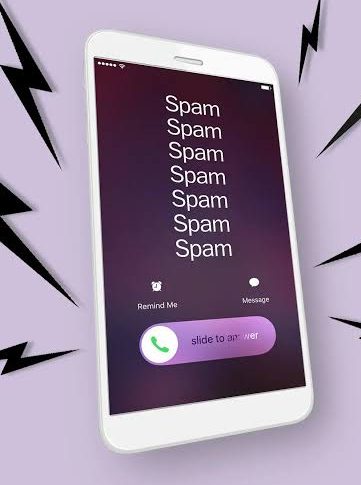
One thing that can increase calls, and I am guilty of, is answering or interacting with a robocall. By answering the phone, you confirm you have a live and active number. That information is then shared with other lists, which increases the volume of future calls. However, I must say, it is sometimes fun to kill time by asking them questions they won’t answer… more on that later.
Even if you put your number on Do Not Call Lists, that doesn’t stop illegal offshore scammers who ignore U.S. government regulations from calling.
One option is to set your phone to silence unknown callers, but I am always concerned about a business I have contacted that isn’t in my contact list, or someone calling from an unknown number due to an emergency. I think you should give that option serious consideration before enabling it.
My phone is set not to ring for spam, but about 95% of the calls still get through. Then you either listen to the phone ringing constantly or take the time to deny or answer the call. What do you do? We aren’t even going to mention the time it takes to block more than 50 calls a day and then delete them from your “recent calls” list. Whew!
Of course we already know why I’m getting all those excess calls: 1) auto-dialers using different numbers and 2) my own stupidity in answering some of the calls.
What I’m wondering is, do they think I’m going to survive or die? I get calls regarding Medicaid, end-of-life insurance, taxes I allegedly owe to the IRS, and car insurance. Where does my health stand on those lists? Will I live a long time because of Medicaid, or die soon so they need to sell me insurance to help pay my bills and bury me? I do get them to hang up quickly when I tell them I haven’t owned a car in seven years, so why would I need auto insurance?
One of my favorites is the Medicaid “we have your file flagged.” It is interesting how fast they will disconnect if you say you haven’t provided HIPAA authorization and ask how they got your file. They get confused when you ask what company they are calling from, or when they say they are calling “your area” and you ask which area they mean. I often get transferred to a live agent, but when I push them on the question, they hang up. Let’s face it, robo calls can be fun to mess with, but then you’ll receive more of those annoying interruptions.
Now, I will say that for a while I didn’t answer any calls, but that didn’t stop their persistence and constant calling. I sometimes wait until the end of each question and blow a whistle into the phone. Those callers hang up pretty fast. However it still logs in as a live/active number so the scammers persist.
One of the first questions a robo call frequently asks is “Can you hear me?” They want you to say “yes,” which they record and can use to create a fake sales confirmation. It is better to use an official audio confirmation response of “five by five.” This professional audio check response means the volume and clarity are coming through clearly. Use this answer because they can’t use it in a sales-scam recording to prove you said “yes” to taking their product.
Spam Caller: We have your file flagged, then they proceed to ask your age and if you have Medicare parts A & B
My Response: If you have my file, you already know that information
Spam Caller: We are calling your area
My Response: What area are you calling?
Spam Caller: We are contacting people in the Port Huron area to make sure they get their food benefits and/or reimbursement on their Social Security Check
My Response: I don’t live in the Port Huron area.
It is especially fun when they transfer you from automated calling to a live manager. One of my favorites was the day the caller ID showed PEI (Prince Edward Island), when I told the ‘live’ person that I don’t live in Michigan, and when he told me they are based in Miami and service the entire country. When I asked him, “Why would I purchase anything from a phone number generated out of PEI with no company name attached, who has informed me they are based in Miami but wants to sell Medicare for the Port Huron area?” He hung up. Imagine that!
There is no official “normal” number for how many spam calls an American receives. The Pew Research Center reports that 31% of American adults receive at least one spam call per day; 21% receive several a day, and a lucky 68% get at least one per week. One in five Americans, like me, receives several spam calls a day. There’s no relief in sight. US robo-call volume has hit a six-year high, so several scam calls per week is now the current baseline.
The sad part of this is that, while I find it extremely annoying and can have a little fun messing with them but not revealing any personal information, people who are vulnerable get taken for thousands of dollars they can’t afford to lose every year. Reports from Truecaller show that about 21% of Americans lost $25.4 billion in telephone scams during 2023. The survey also found that young adults (ages 18-44) are three times more likely to lose money to phone scams, with 33% becoming victims of at least one scam.
It is easy to assume you won’t fall prey, but the numbers are staggering:
* 1 in 5 Americans (21%) lost money as a result of a phone scam in 2023; average loss was $452.00
* Men are more likely to fall victim to a scam (men 25% likely; women 18% likely)
* Young adults are three times more likely to lose money through phone scams than adults 45+ years
* Black and Hispanic Americans are two times more likely than White Americans to lose money as the result of a phone scam in 2023 (39% Black, 30% Hispanic, 15% White).
While these statistics are more disheartening than enlightening, there are techniques you can try to hopefully reduce the number of spam calls you receive. I haven’t used all of these, but I have used some, so I’m sharing the link to 8 Ways to Shut Down the Spam Texts and Robo Calls That Are Driving You Crazy with a grain of salt and a “hope for the best” attitude.
Do you receive a lot of spam calls? Have you successfully reduced or eliminated them? Share your thoughts in the comments below.


