
I’ll admit, I’m a bookaholic—a person with a deep love for reading and an insatiable desire to buy and collect books, or both. There are various other terms for people with this obsession, depending on how far they take it. For instance, a bibliophile loves physical books, viewing them as objects, while a lectiophile’s affection is for the act of reading in any form, be it books, magazines, blogs, etc. Tsundoku is a Japanese term for people who habitually buy books but never read them.
My book collection is not as extensive as it used to be, and that includes both read and unread volumes. When I lived in my house, I had tubs of read books I didn’t want to part with stored in my basement. In my bedroom there was a 7-foot bookshelf, double- and triple-stacked with unread books, and still I purchased more.
When I sold my house to live and travel full-time in a 35-foot motor home, I was forced to reduce my collection. It was a long, painful day of sorting and re-sorting until I reduced my collection down to fit into a plastic tub that would hold what I had room for. I laid out all the unread books on my bed and sorted them into two piles, the ones I could part with, the ones I wanted to keep. The “keep” pile didn’t fit into the plastic tub. I then took my “keep” pile and sorted it again into keep and part-with piles. I repeated this process about four times, each more painful than the prior one, before they finally fit into the plastic tub. Believe me, it was packed tight, filling every little space to get as many in as possible.
Most of the books that didn’t make it into the plastic tub, went into my estate sale. Most of the tubs in my basement went into the estate, sale, but some books I gave to my kids. There were many good books, copies with author signatures, the complete works of Mark Twain, Poor Richard’s Almanacs, the original, hard cover set of The Chronicles of Narnia, all of the hardcover Children’s Book of the Month Club books from when my children were growing up, and more. I gave my son his favorite childhood book, Home for a Bunny, falling apart from continuous use.
Now I own a park model, which is only 406 square feet of living space, so my storage options are still tight. The RV Park where it is located has a free book exchange, and there are a lot of readers in the park. I regularly contribute books I’ve read and pick up books I haven’t read. My constant accumulation doesn’t stop there; I have a habit of buying books whenever I travel. My newest obsession is visiting used bookstores, so I doubt I will ever run out of reading material.
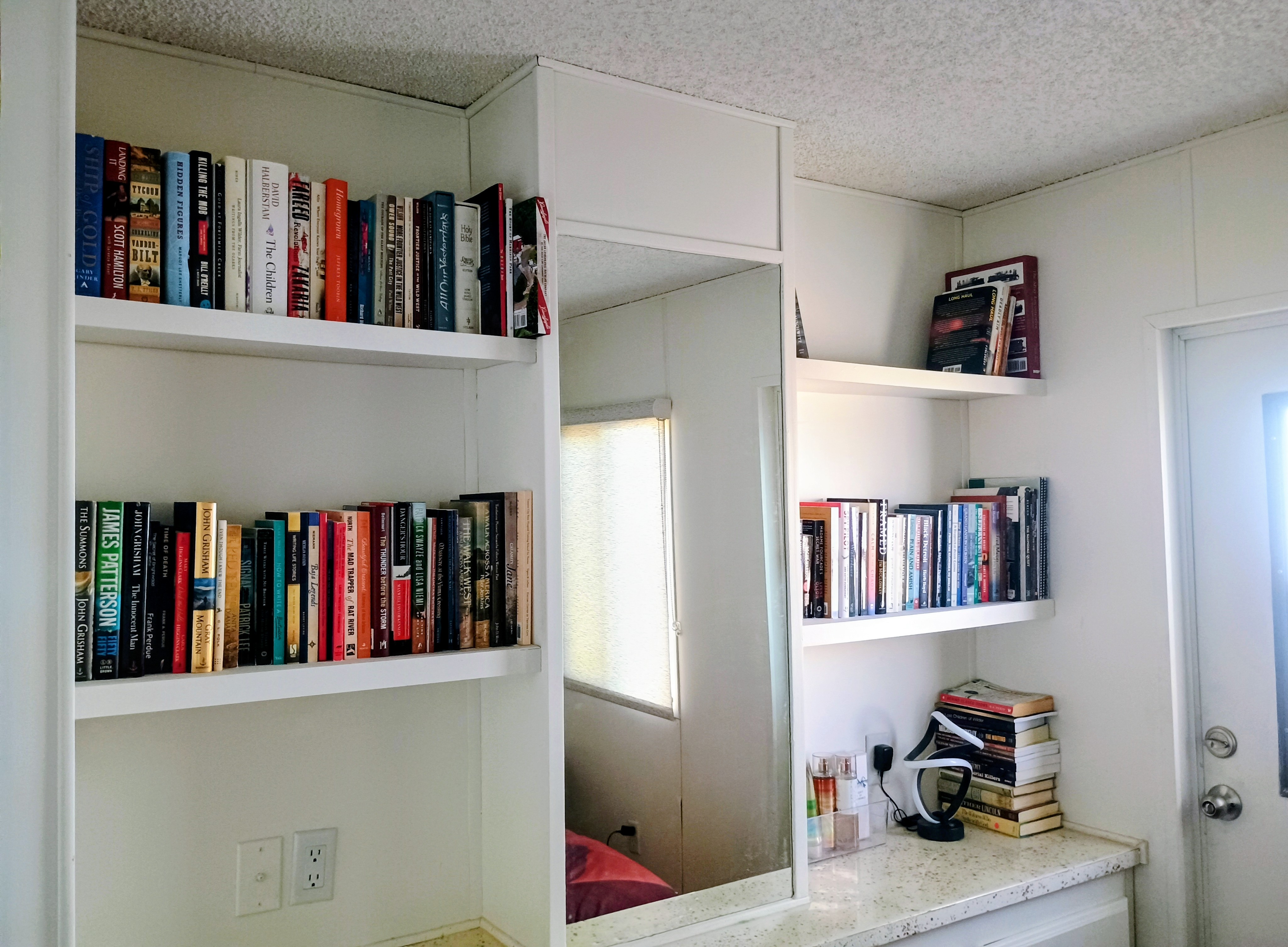
I recently stumbled across an article titled The Benefits of Buying Books You’ll Probably Never Read. I never purchase a book without the intent of reading it, but I know that I may not read it immediately, or a year from now, or five years from now. I sometimes own books that are 10+ years old before I read them. Why? The topic is of interest to me, but I may not be in the mood to read it immediately. I like to “shop” my bookshelf to see what catches my eye as a read-now topic when selecting my next book. Remember that tub I brought from my home in 2019? Most of those books are still in it because I had an additional 15-20 books I brought and placed inside the RV for easy access, plus I purchase additional books every year during my summer travels. I periodically pull a few out of that plastic tub, but who knows when I’ll get through them all.
As I said above, I’m a bookaholic—a person with a deep love for reading and an insatiable desire to buy or collect books, or both. Because of my limited space, I no longer go to extremes —in my opinion — but others may dispute that. I consider myself a bookaholic who reads many but saves few. That said, the article about the benefits of buying books you’ll probably never read piqued my curiosity. This is especially true since I always thought it would be awesome to own a huge mansion with a designated library filled with books, along with a writing desk and comfy chairs near a fireplace for reading. I know —it’s a big dream for someone who has downsized into a small home.
I do love bookstores and museums, historical spots, and tourist attractions with book sections in their gift shops. Purchasing anywhere from 10 to 25 books while traveling is not unusual. Where do I fall mentally for this practice?
The Japanese Tsundoku practice has evolved to take on a positive connotation, with the act of surrounding yourself with books seen as a good thing. It indicates you have a fruitful relationship with knowledge and signals your need or desire for continuous discoveries and learning. Once I learned I’m mentally in good shape due to my book-buying habit, I decided to roam a bit further into this topic.
According to Psychology Today, the number and types of books you read can reveal insights into your intelligence, self-control, ambition, time management, and overall outlook on life. The article references a 2014 study published in Child Development that found that stronger early reading skills may predict higher verbal and nonverbal intelligence later.
A 2018 Pew Research Center study found that 67% of adults in the United States read an average of 12 books a year. Intelligent, highly successful adults are usually avid readers and far exceed the average. This is supported by the reading practice of well-known business people, such as Bill Gates, who reads about 50 books per year, and Elon Musk, who read the entire Encyclopedia Britannica by age nine and science fiction for over 10 hours a day as a child. Billionaire Warren Buffett spends an average of five to six hours per day reading. While the article only sighted successful men, I decided to delve into the female side of this.
Oprah Winfrey (mid-2025 ranked number one on Forbes list of America’s Richest Women Celebrities and number four on Forbes World’s Billionaires list) was reading by the time she was three and, like many top businesspeople, follows the 5-hour rule. This means reading at least one hour a day, or five hours a week. Taylor Swift (ranked number nine on Forbes World’s Celebrity Millionaires List 2025) is an avid reader and supporter of literacy and libraries. She was only 24-years old (she is now 35) when she partnered with Scholastic Books to make book donations to libraries in her hometown of Reading, Pennsylvania and current residence of Nashville, Tennessee. Francoise Bettencourt Meyers is a French entrepreneur, philanthropist, writer, billionaire heiress, the second richest woman in the world. She is also an avid reader and the author of several books and is known for being a reclusive intellectual who spends her time at home reading and playing the piano.
While I haven’t yet achieved millionaire status (one can hope), my reading level usually meets the 5-hour rule. If things go according to plan, I have 1-1/2 to 2 hours of reading time every morning before Paul (my partner) gets up and turns on the TV, interrupting my quiet time. Depending on my schedule, I sometimes spend an hour or two outside reading in the afternoon, and a trip to the laundry mat gets me about two hours of reading time. If I’m alone for any meals throughout the day, I read while eating.
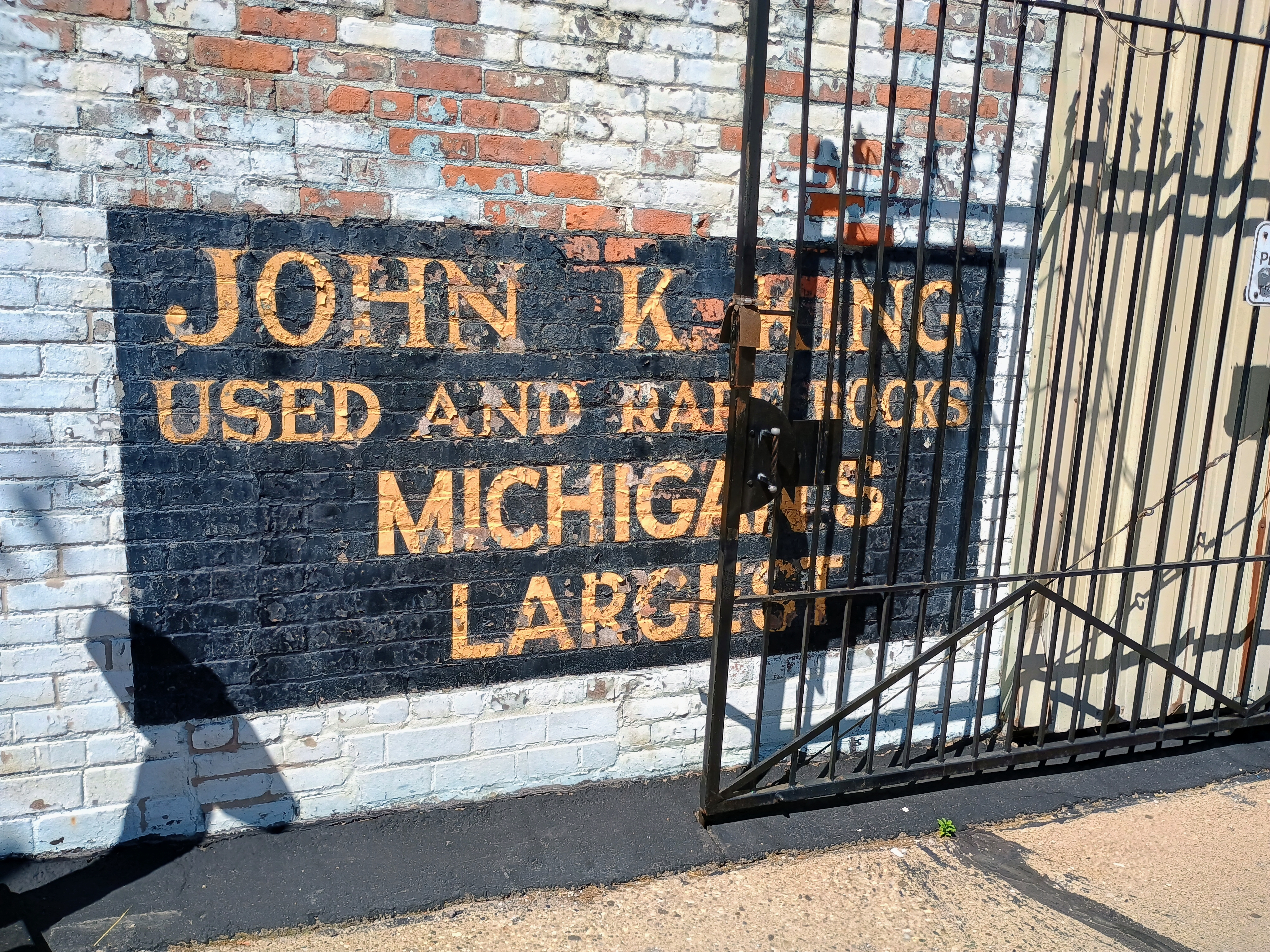
For several years, I have kept a list of the books I read during the year. At the end of each year, I print the list and place it in the “All About Me” notebook I keep. The total number of books I read in a year range from 6 to 26. I’m going to beat that this year, as I’m already working on book 26 with two months of reading to go. Yippee! I love breaking my own record.
According to the Psychology Today article, I am an optimist. I don’t view my unread books as a burden or failure of self-control and time management. I see them as a future opportunity to engage with their content. I primarily read non-fiction, so most of my reading is a learning experience. I do blend a few pieces of fiction into the mix for fun. While I have more books than I could read in a year, collecting them is not compulsive hoarding, nor is it damaging to my social interactions.
With few exceptions, I now donate the majority of books I have read rather than keeping them, due to space limitations. I enjoy visiting used bookstores, where you can buy books at much lower prices. I maintain my membership with Barnes & Noble, though, because sometimes I have to purchase and read a new release. The Psychology Today article suggested slowing down the rate of acquisition and becoming more selective, not purchasing a new book until you’ve read one of a similar size. I don’t think that’s possible. I can’t wrap my head around such a ridiculous limitation.

 --- LIFE IS A MELTING POT --- Grace Grogan...Writer, Photographer